

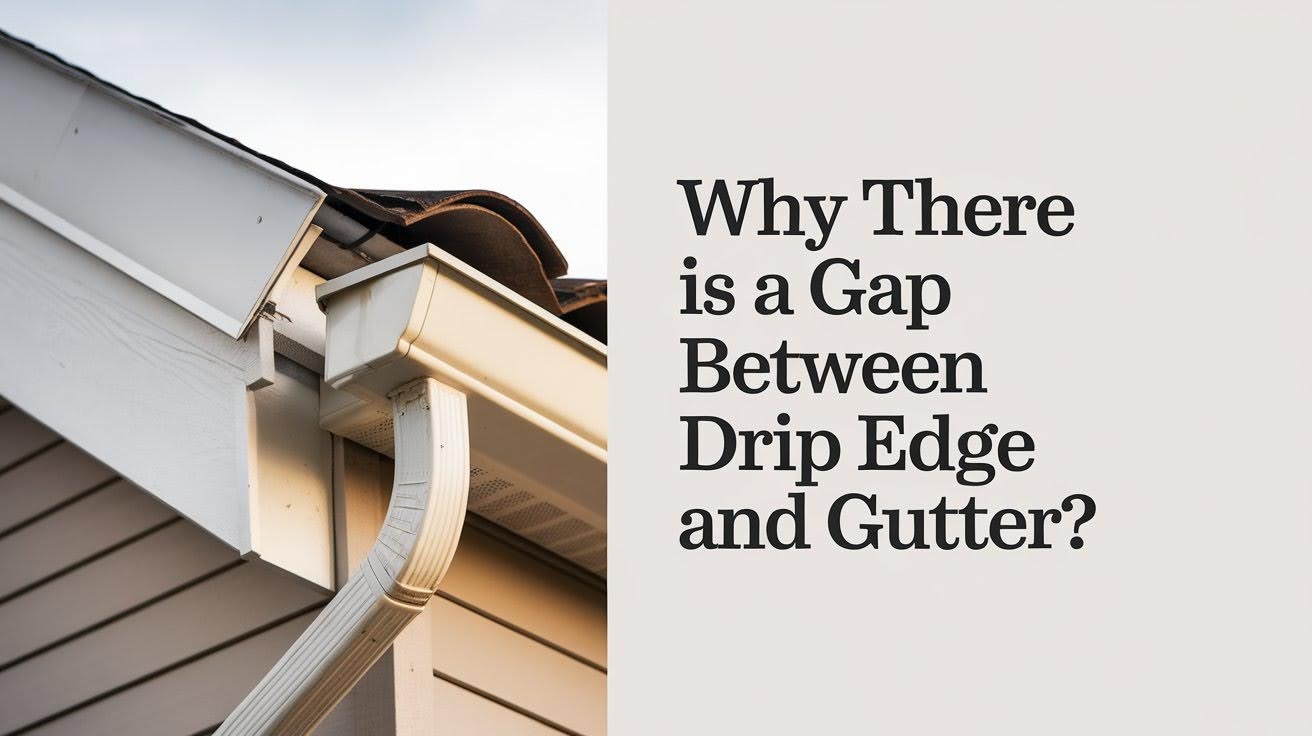
Together, your gutter and drip edge guard against water damage to your roof. But sometimes a gap appears between them, and you might be wondering if that’s normal or a problem.
This guide describes the causes of the gap between the gutter and drip edge as well as what to do about it.
I’ll discuss the reasons behind these gaps, when they’re appropriate, and when they should be closed.
You’ll find how to spot issues, stop water damage, and safeguard the structural integrity of your house.
Let’s examine this typical roofing problem and determine the best course of action for you.
Understanding the Drip Edge and Gutter Relationship
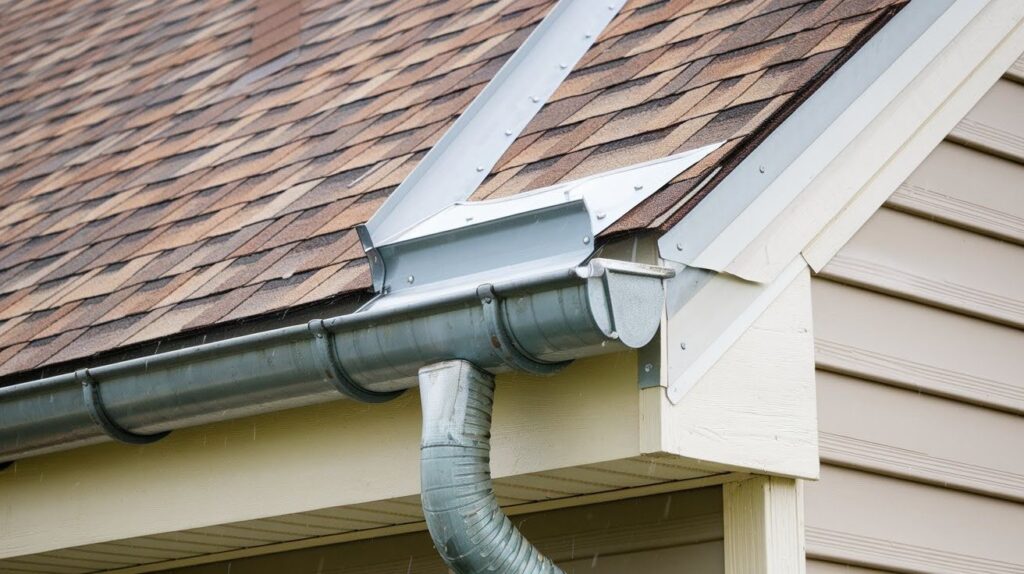
A drip edge is a metal strip installed along your roof’s edge that directs rainwater away from the fascia board and into the gutter. Common materials include aluminum, galvanized steel, and copper.
Gutters collect rainwater flowing off your roof and redirect it through downspouts away from your foundation.
They prevent water from pooling around your home’s base, which could cause foundation damage or soil erosion.
The drip edge and gutter must work together seamlessly. The drip edge typically overlaps or sits behind the gutter’s back edge, creating a continuous path for water to flow.
Correct spacing ensures water flows smoothly without splashing behind the gutter or missing it entirely.
Why Is There a Gap Between the Drip Edge and Gutter?
Gaps occur from intentional design, improper installation, sagging gutters, shingle overhang, weather damage, or debris buildup.
1. Builder’s Gap or Design Intent
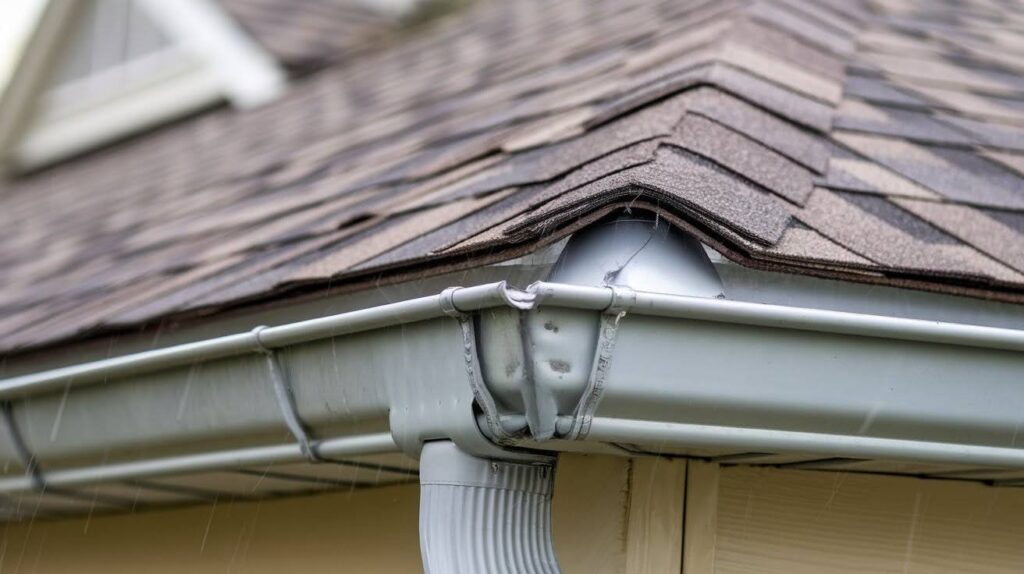
Sometimes a small gap is intentionally left between the drip edge and gutter to prevent water from wicking back under your shingles.
An acceptable spacing of around one-quarter inch allows proper drainage and ventilation. Not all gaps are problems when done correctly.
2. Improper Installation
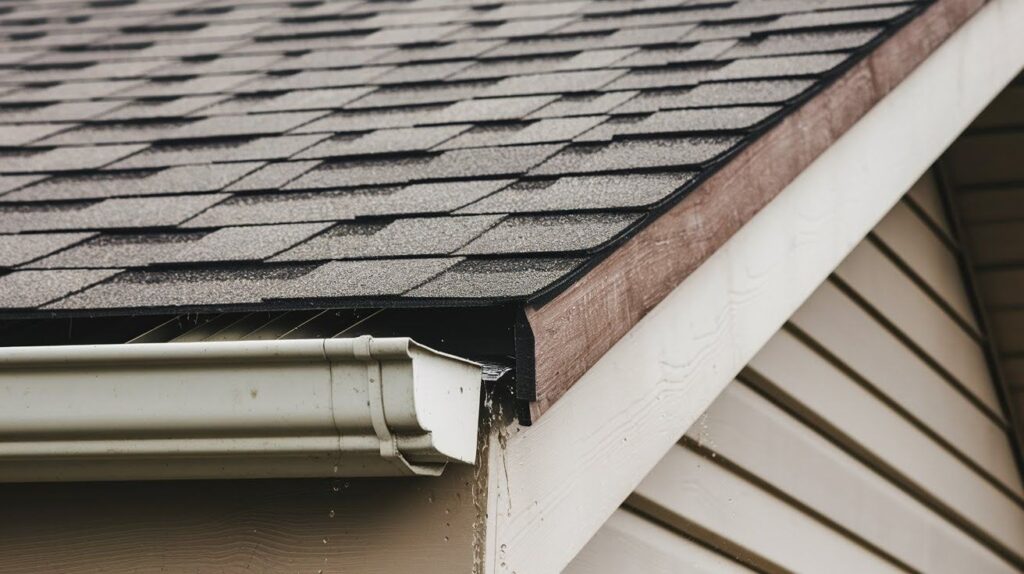
Misaligned gutters or incorrectly installed drip edges create unintended gaps. The drip edge should be installed before the gutter, not after.
Wrong angles or placement cause visible separation that leads to water management problems over time.
3. Sagging or Loose Gutters
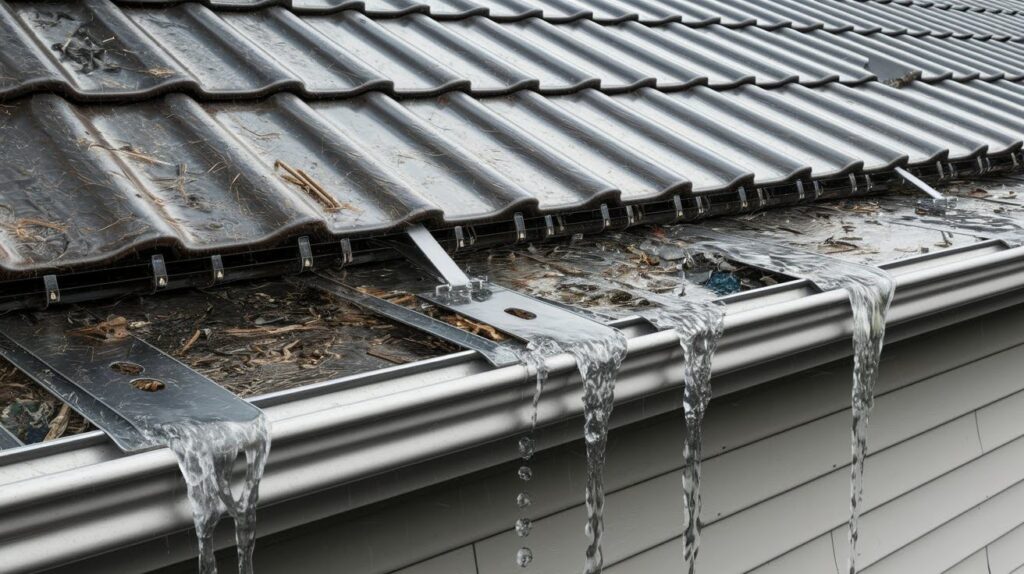
Over time, gutters pull away from the fascia due to weight from debris, standing water, ice, or snow.
This sagging leads to uneven spacing and leaks along the roofline. Loose gutter hangers fail to hold the system in proper position.
4. Roof Shingle Overhang
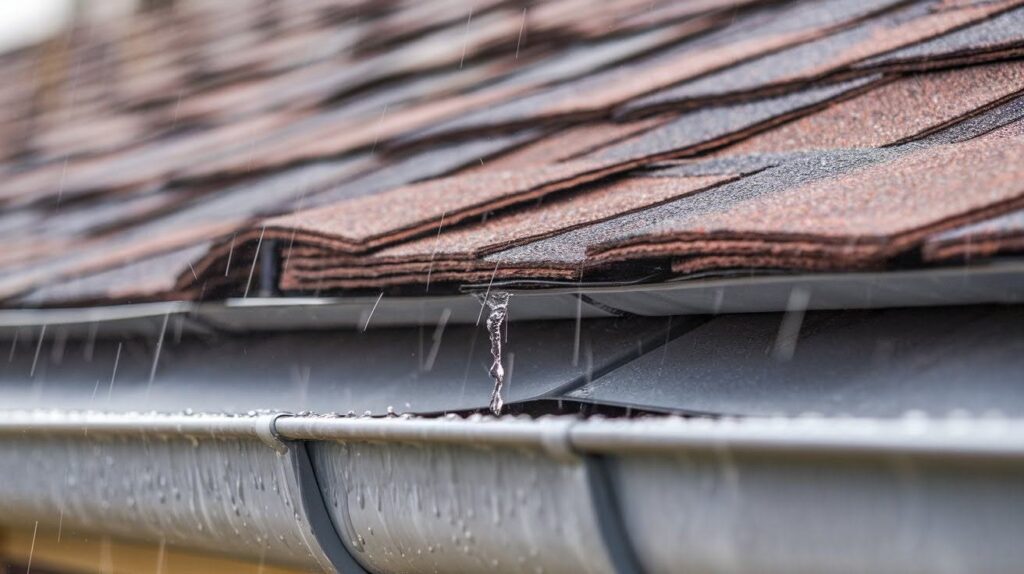
Shingles extending too far beyond the roof edge create a visible gap. The ideal overhang is about one-half to three-quarters of an inch.
Excessive overhang pushes the drip edge away from the gutter, causing water to drip between components.
5. Ice Dams and Weather Damage
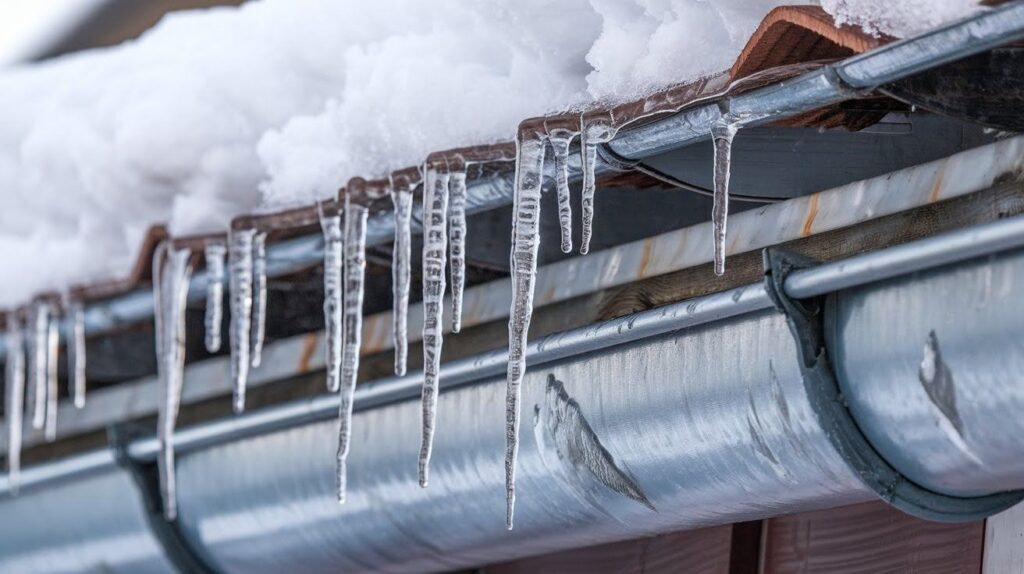
Ice buildup or heavy snow can lift or shift the drip edge out of position.
Thermal expansion and contraction over time also create separation as metal components expand in heat and contract in cold.
6. Debris or Clogs

Accumulated leaves and debris push the gutter outward from the fascia, widening existing gaps.
Clogs cause water to back up and overflow, with the extra weight straining hangers and brackets. Regular gutter cleaning prevents debris-related separation.
How Gaps Between Drip Edge and Gutter Can Affect Your Roof
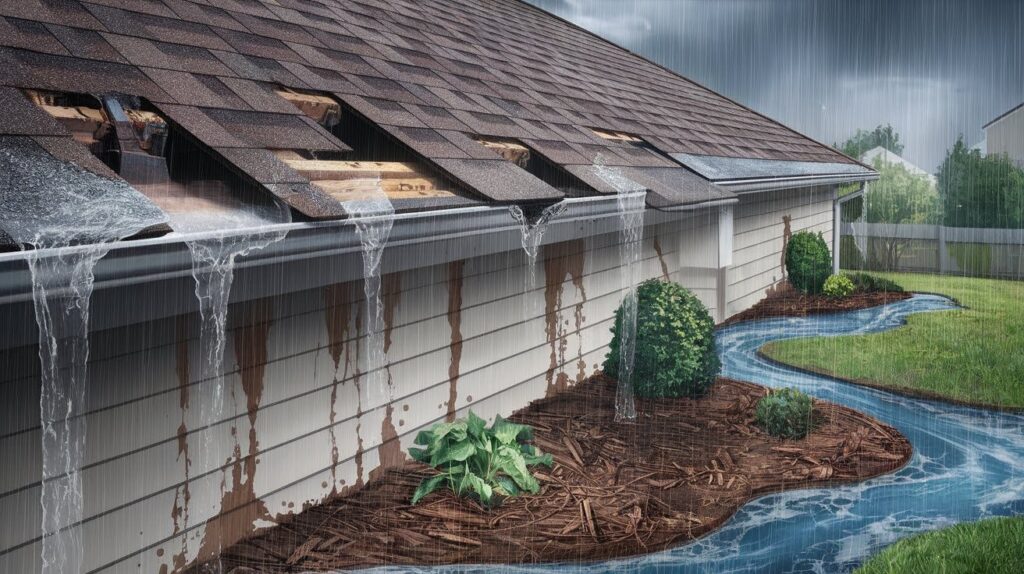
Gaps allow water seepage causing fascia rot, foundation damage, roof deterioration, and landscape erosion around your home.
1. Water Damage and Leaks
Water seeping behind gutters soaks into fascia boards continuously. Wood absorbs this moisture and begins rotting from the inside out.
Rot and mold issues develop quickly in damp fascia. These problems spread to other wooden components if left untreated.
2. Foundation and Siding Damage
Overflowing water causes foundation erosion around your home’s perimeter. Soil washes away, creating voids that compromise structural stability.
Siding stains appear where water cascades down exterior walls. Prolonged moisture exposure damages paint, wood, and other siding materials.
3. Roof Deck and Shingle Deterioration
Water infiltration under shingles leads to wood rot in the roof deck. The structural support beneath your shingles weakens and fails.
Structural decay spreads through roof components over time. What starts as a small gap becomes major repair work.
4. Landscape Erosion
Uncontrolled runoff damages flower beds and soil near the house. Concentrated water flow creates channels and washes away mulch.
Plants suffer from excessive water or soil loss. Your landscaping investment erodes with every rainstorm.
How to Fix or Prevent the Gap
Perform a visual inspection for sagging gutters, damaged drip edges, or debris buildup. Check during and after rain to see where water actually flows.
Realign gutters using new hangers or brackets and re-seat the drip edge properly under shingles and above the gutter.
Use roofing sealant for minor separations, applying it carefully without trapping moisture.
Adding a gutter apron or flashing can bridge the gap and improve water flow. These attach under shingles and extend over the gutter edge for extra protection.
Call a roofing or gutter specialist for complex repairs or major gaps. Professionals have the experience to diagnose root causes and avoid creating new problems.
Maintenance Tips to Prevent Future Gaps
- Clean gutters at least twice a year, in spring and fall, to remove leaves and debris
- Inspect drip edges and fascia regularly for signs of damage, rust, or separation
- Use gutter guards to reduce debris buildup and minimize cleaning frequency
- Check for sagging or separation after storms or snow to catch problems early
- Tighten loose hangers and brackets before small issues become major repairs
- Trim overhanging tree branches to reduce leaf accumulation in gutters
- Monitor for ice dam formation in winter and address causes promptly
Conclusion
I know how frustrating it is to see a gap between the gutter and drip edge because I’ve had gutter problems in my own house. Ignoring small gaps can result in costly repairs.
Costly water damage to your roof, foundation, and fascia can be avoided with routine inspections and correct installation. The majority of gaps can be filled with minor tweaks or expert assistance.
Make an appointment for an inspection right away if you’ve seen any obvious leaks or gaps around your roofline. Early problem detection protects your house and saves money.
Do you have any questions about gutter gaps? Post them in the comments section below!
Frequently Asked Questions
Is a small gap between drip edge and gutter normal?
A small gap of about one-quarter inch can be intentional to prevent water from wicking back under shingles. However, larger gaps indicate installation problems or component damage that needs correction.
Can I fix the gap myself or do I need a professional?
Minor gaps may be fixable with realignment or sealant if you’re comfortable on a ladder. However, significant gaps, sagging gutters, or structural damage require professional roofing or gutter specialists.
How often should I inspect my drip edge and gutters?
Inspect your drip edge and gutters at least twice yearly, ideally in spring and fall. Also check after major storms, heavy snow, or if you notice water stains on siding or fascia.
What causes gutters to sag and create gaps?
Gutters sag from the weight of debris, standing water, ice, or snow combined with loose or insufficient hangers. Over time, this weight pulls gutters away from the fascia, creating gaps.
Will gutter guards prevent gaps from forming?
Gutter guards reduce debris buildup that causes sagging and separation. While they don’t prevent all gap causes, they significantly reduce weight-related problems and make maintenance easier.
