

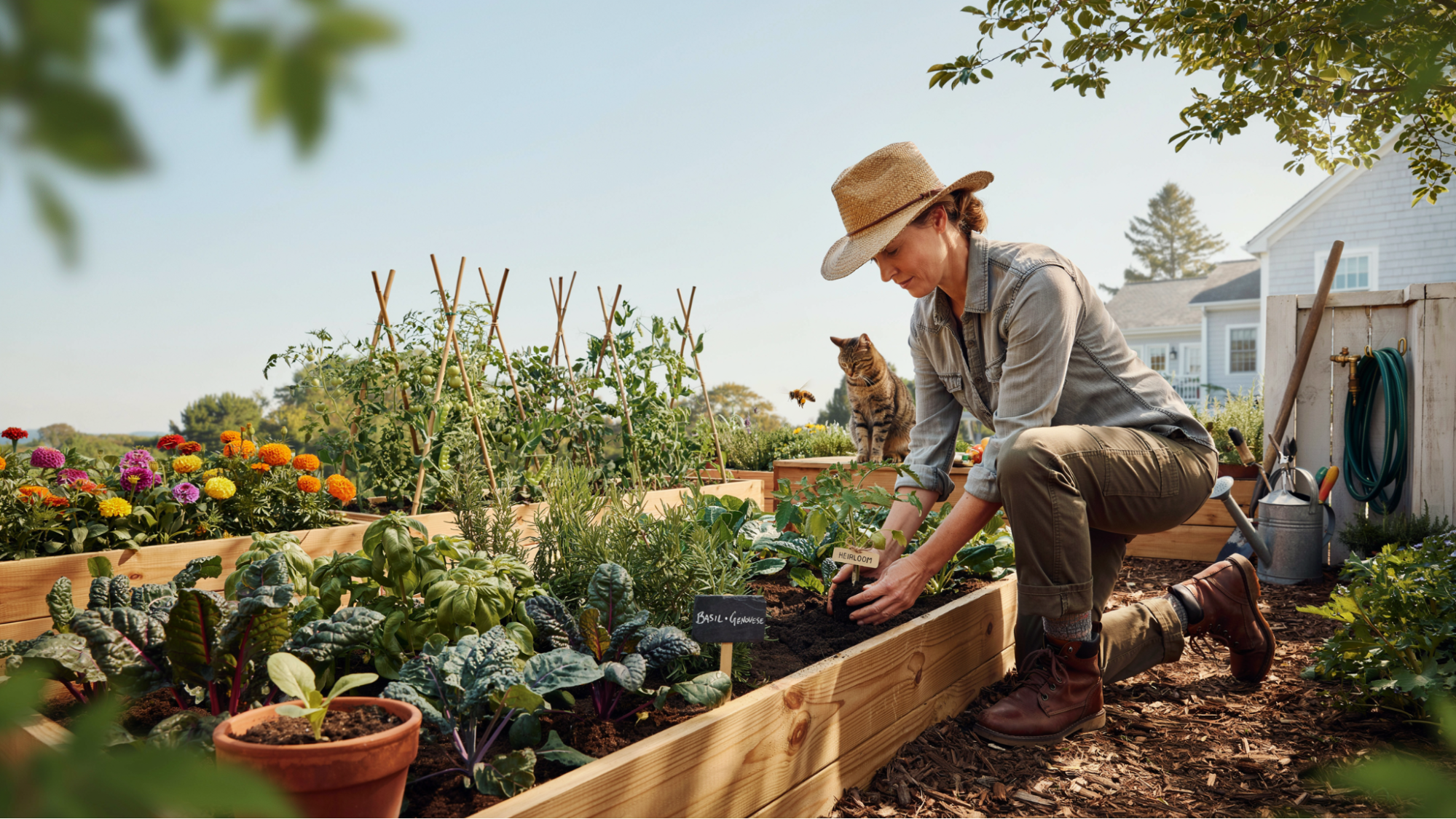
When you want to turn a bare patch of yard into a thriving outdoor space, following a step-by-step approach can help you create a vibrant backyard garden that’s full of life. Here’s how you can do it affordably and make it fun for the whole family.
1. Start by Understanding Your Soil
Healthy soil is the foundation of any great garden, and you don’t need fancy equipment to figure out what you’re working with.
Try the squeeze test. Grab a handful of damp soil and squeeze it. Clay will stay put in a ball, whereas sandy soil will fall apart in your hands. If it holds together but breaks apart with a gentle poke, you’ve got loam.
No matter what type of soil you have, you can improve it over time by adding compost you create yourself in a simple compost pile.
2. Choose the Right Plants for Your Climate
Once you understand your soil, think about what plants will actually thrive where you live. Native varieties and those suited to your local climate need less water and maintenance while also supporting local wildlife, such as bees, butterflies and birds.
Decide if you want to grow vegetables, flowers or both in your backyard garden. Pick what excites you and fits your lifestyle.
3. Give Your Kids Their Own Garden Area
If you have kids or grandkids, giving them their own little plot can be a game-changer. Let them help decide what goes in their space and how to theme it.
Your kids might want a fairy garden, plants in their favorite color or even a plant for each letter in their name. Gardening can show children the value of patience and responsibility while connecting them to nature in a hands-on way.
4. Plan for Year-Round Interest
A backyard garden that offers something beautiful in every season is a joy to experience. Here’s how to keep things interesting all year long:
- Spring bulbs: Tulips and daffodils bring early color after winter.
- Summer flowers: Bright blooms like zinnias and sunflowers are showstoppers.
- Autumn foliage: Plants with fall color keep your garden vibrant as temperatures drop.
- Winter structure: Evergreens and shrubs provide shape and interest when other plants are dormant.
5. Map Your Garden Based on Sun Exposure
Spend a day observing your yard and notice which spots get full sun, which get partial shade and which stay shaded all day. This simple step helps you place plants where they’ll be happiest, since sun-loving tomatoes won’t thrive in the shade and shade-loving plants will scorch in direct sun.
6. Setup for Success
Think about how you’ll organize your backyard garden before you start planting. Raised beds can make gardening easier on your back and knees, and they’re also great if your soil isn’t ideal.
A pro-tip is to fill the bottom of raised beds with twigs, leaves or cardboard before adding soil on top. This lasagna gardening method is budget-friendly and effective, especially when you’re just getting started.
Keep pathways wide enough for a wheelbarrow, and group plants with similar water and sunlight needs together. Label everything so you remember what you planted, and create a simple gardening calendar so you know what to do and when. Staying on top of tasks keeps gardening fun instead of overwhelming.
7. Build a Simple Compost Pile
Composting is easy to get started, as you don’t need an expensive bin or a fancy setup. Just pick a corner of your yard and start a pile with a healthy mix of green materials, such as kitchen scraps, and brown materials, including dry leaves or cardboard. Over time, the materials break down into rich compost that your soil will love.
8. Use Household Bits and Pieces to Enrich Your Garden
Your kitchen and home are full of things that can benefit your backyard garden. Used coffee grounds are a perfect example since they contain nutrients like potassium and phosphorus that enrich garden soil. Other household items you can use in your garden include:
- Cardboard: Lay it down under the soil to suppress weeds naturally.
- Egg cartons: Perfect for starting seeds indoors.
- Clear plastic containers: Put them upside down as mini greenhouses over seedlings.
- Grass and leaf litter: Use as free mulch around plants to help keep soil moist.
- Boots, boxes and buckets: Almost anything can be an upcycled planter if you drill drainage holes in the bottom.
- Pallets or leftover wood: DIY a vertical plant wall, a potting tray, a shelving unit or a compost bin.
9. Support a Backyard Garden Wildlife Haven
A truly thriving space is full of life beyond just plants. Bees, butterflies, birds and other wildlife make your garden more productive and enjoyable and attracting them is easier than you might think.
Set out a shallow dish of water for a simple birdbath or plant a small patch of native wildflowers. Build a bug hotel as a fun family project, leave some dead wood in a corner and let part of your lawn grow a bit wild. Backyards can be crucial oases for insects, birds and small mammals, especially in built-up areas.
10. Water Your Garden Wisely
Deep watering, less often, encourages roots to grow down into the soil, making for stronger plants. Before you water, stick your finger into the soil. If it feels damp an inch or two down, you can safely hold off until it dries out a bit. You don’t need to water your plants every day.
When you water, do so early in the morning when it’s cooler so it doesn’t evaporate in the heat. Add a layer of mulch around plants to help the soil hold moisture longer.
11. Deter Pests with Natural Solutions
You don’t need harsh chemicals to keep pests in check. Picking larger pests off by hand might not sound glamorous, but it works. If you have a variety of flowering plants in your backyard garden, you will probably also have plenty of beneficial insects, such as ladybugs, that eat the bugs you don’t want in your garden. Coffee grounds and ground eggshells are great slug deterrents.
12. Celebrate the Harvest
If you planted vegetables or herbs, make harvesting a moment. Even a small haul is something to be proud of and to share with family and neighbors. Enjoy what you’ve grown with simple recipes. The reward of eating something you grew yourself is unmatched.
13. Prepare Your Garden for the Off-Season
As the growing season winds down, do a little maintenance to set yourself up for next year. Add a final layer of compost to your beds and trim back perennial plants that need it. Take notes on what worked well and what didn’t, so you can plan even better for next season.
Enjoy Your Beautiful Garden Oasis
A beautiful and thriving backyard garden is built through small, manageable steps that anyone can take. Start where you are, use what you have and remember that imperfection is part of the charm.
