

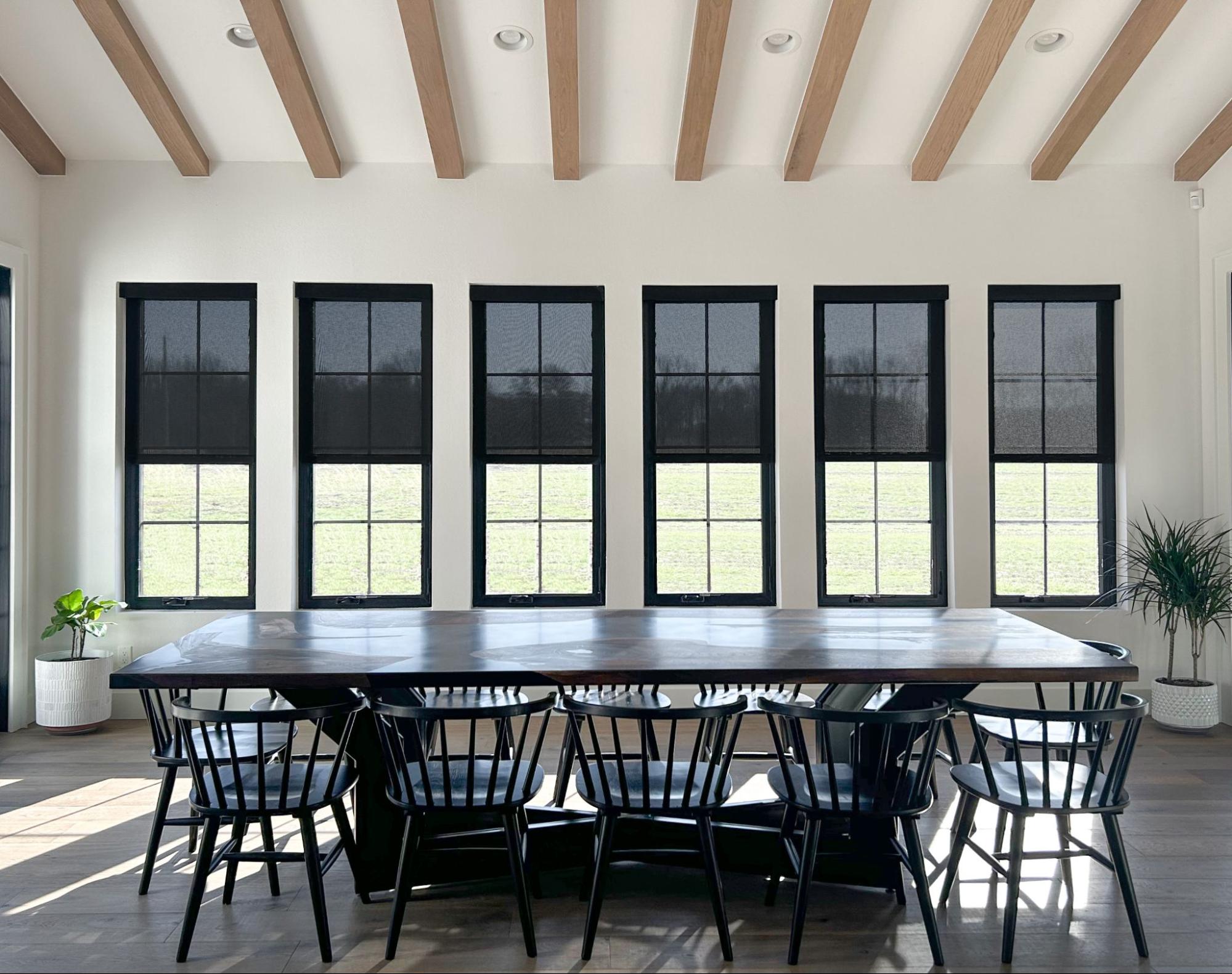
For years, sustainability conversations in the built environment have focused on efficiency: lower energy use, smarter automation, and reduced carbon footprints. In the smart-home sector (and particularly automated window shades) those talking points are familiar. Low-power motors and intelligent scheduling/programming are often touted as environmental wins, and for good reason.
But this focus only tells part of the story. Increasingly, durability and longevity — how long a product lasts before it must be replaced — are emerging as true markers of sustainable design. In the category of automated smart shades, longevity has quietly become one of the most important, yet least discussed, contributions to sustainability.
The earliest generations of automated shades were built when innovation was the priority and expectations were modest. With technology evolving rapidly, the earliest motorized shades often had lifespans that matched this fast-moving technology cycle rather than architectural timeframes. These short lifecycles increased waste and undercut long-term sustainability gains. But as understanding of sustainability deepened, so did awareness of the environmental impacts tied not just to energy use, but to manufacturing, installation, and disposal.
Today, sustainability is measured over an entire lifecycle: from the raw materials and energy used in production to installation and eventual end-of-life disposal. Products that fail prematurely can negate their operational energy savings because every replacement will trigger fresh manufacturing, shipping, installation, and disposal impact. This is where durability begins to reshape the sustainability conversation.
Smart Shades Aren’t Power Hungry
Smart shades are inherently low-power devices, especially when running on batteries or low-voltage wiring. The motors use very little power, primarily consuming energy only during the few seconds they are actively raising or lowering the shade.
What’s more, technologies such as Power-over-Ethernet (PoE) enhance this efficiency by delivering power and data through a single cable, reducing energy loss from separate power supplies and enabling centralized management. Low energy use remains an important sustainability benefit, but it has become viewed as “baseline performance” rather than a distinguishing feature.
One of the most compelling sustainability benefits of smart shades is their ability to respond dynamically to environmental conditions. A landmark study conducted by researchers at the Illinois Institute of Technology showed that automated, insulating window shades installed at Willis Tower in Chicago reduced total energy consumption by approximately 25% when compared to manual or static controls. This reduction spanned both heating and cooling seasons, highlighting the potential of automated shading to reduce energy demands in large buildings.
Additional industry research supports the idea that window shading controls can significantly reduce energy loads by optimizing natural light and temperature throughout the day. By integrating shading control with building systems, operators can lower HVAC use and reduce artificial lighting load, effects that compound across both commercial and residential settings.
The “Forgotten” Sustainability Metric
Durability is often overlooked because it is less visible than immediate energy savings, yet it may be the most important variable of all. Every product replacement carries environmental costs: raw materials extracted, components manufactured, products shipped, technicians dispatched, and old equipment discarded. High operational efficiency means little if the product does not endure long enough to justify its lower emissions and reduced resource consumption.
Over the past decade, product evolution has placed durability at the forefront. Materials used in today’s smart shades are engineered to withstand continuous environmental stressors. Fabrics resist ultraviolet degradation more effectively, while improved roller tubes and hardware maintain structural integrity through thousands of cycles. Motors are now rated for higher-duty cycles, with better torque and thermal management, significantly extending operational life.
Further, modern manufacturing practices incorporate tighter tolerances and modular designs, so individual components can be serviced instead of having to replace whole shade systems. Such advances have extended product lifespans from a few years to as much as a decade, transforming smart shades from short-term tech accessories into long-term building infrastructure.
Longevity Reduces Waste at Scale
When smart shades last longer, sustainability gains multiply dramatically. Fewer motors and fabrics end up in landfills, fewer replacement shipments traverse the globe, and fewer service calls disrupt buildings and consume resources. At scale — across office towers, hospitals, hotels, and multifamily developments — the cumulative environmental savings are significant.
This shift in durability also aligns with broader lifecycle sustainability strategies in building design. Building owners increasingly recognize that products designed to last are inherently more sustainable, as they reduce embodied carbon and minimize waste over time.
Increasingly, sustainable building strategies are integrating smart technologies like automated shading as part of broader climate action goals. By reducing demand for artificial lighting and mechanical heating and cooling, smart shades ease strain on energy systems and contribute indirectly to lowering greenhouse gas emissions.
The rapid growth of the smart shades market, at least in part, reflects the pursuit of these broad climate goals. Global demand is projected to accelerate from roughly $350 million in 2023 to over $2.8 billion by 2033, a compound annual growth rate of more than 23%. This growth underscores not just consumer interest, but recognition of these technologies as a principal component of future buildings.
A Sustainability Story That Endures
True sustainability encompasses every stage of a product’s life: design, manufacturing, installation, operation, maintenance, and eventual end of life. Durable smart shades score well across all these stages. They justify the energy invested in their production by staying in service for many years, reducing the frequency of replacement and minimizing maintenance interventions. Smart shades have evolved beyond convenience and automation. They now reflect a mature sustainability philosophy, one that posits that the greenest product is often the one that requires less frequent replacement.
Longevity is truly the forgotten hero of sustainable design in the smart home and smart building space. It may not grab headlines the way energy efficiency does, but it is rapidly becoming a defining feature of truly sustainable design.
ABOUT THE FOUNDER
Ryan Chacon is the Vice President and Co-Founder of PowerShades. With over 20 years of experience in the automation and controls industry, Ryan is an expert in engineering, product development, and IoT. Ryan currently holds 21 issued patents and two pending patents.
