

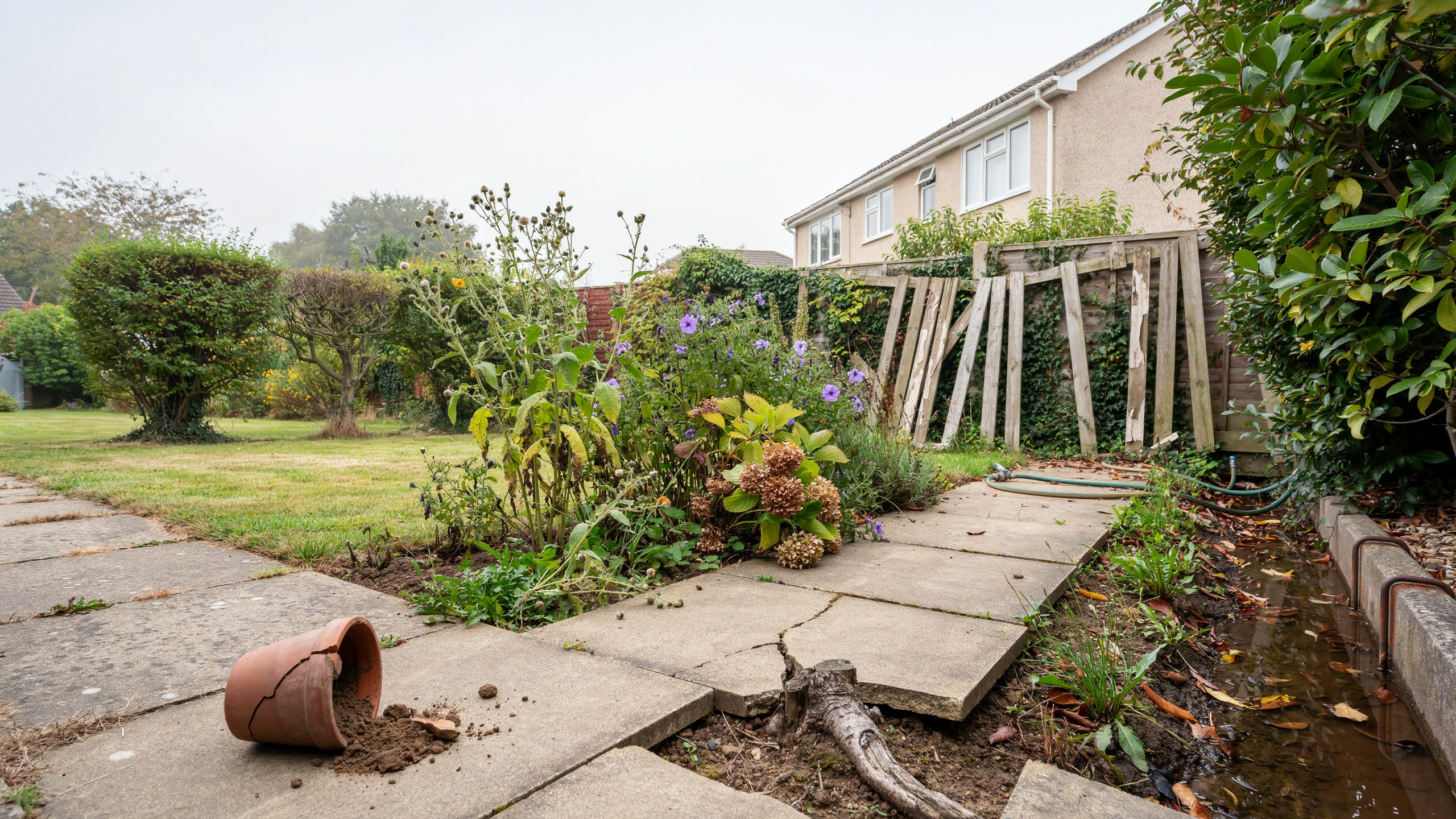
Gardens have a way of looking perfectly fine one week and completely out of control the next. You blink, skip a couple of maintenance sessions, and suddenly find your borders doing their best impression of a jungle.
And now that everyone is spending more time outdoors, dining al fresco and working from the patio, those problems are getting harder to ignore.
So, before another weekend slips by, here are seven problems that can end up costing you more than a few hours of work.
1.Overgrown Borders
If your borders have turned into a tangle of branches and unruly shrubs, they’ve been left too long.
When plants get this overcrowded, they start fighting for survival. They compete for sunlight and airflow, meaning the weaker, prettier flowers slowly suffocate while the most aggressive shrubs colonise everything in sight.
To make matters worse, the beneficial wildlife you actually want around, like pollinators and helpful insects, gets squeezed out, too.
Want to avoid a massive headache later? Keep up with a bit of light pruning.
The longer you wait, the harder the job gets. What could have been a quick 20-minute trim can turn into a full weekend of hacking back thick branches and trying to figure out if your favourite perennial is still alive under there.
2.Weed Infestations
If you pull a couple of young weeds today, it’ll probably take maybe five minutes. Leaving them alone for three months, though? That’s going to cost you an entire Saturday, half a bottle of ibuprofen, and all the patience you have left.
Weeds are opportunists. The moment you turn your back, they spread, seeding themselves into every gap and stealing water and nutrients from your plants.
Bindweed, ground elder, and horsetail are among the hardest weeds to deal with. Once they’ve established themselves, pulling them out by hand is rarely enough to stop them from coming back.
So, if dandelions are popping up through your patio cracks and chickweed is creeping across your beds, deal with them now. A stitch in time genuinely saves nine here.
3.Lawn Damage
You can’t fix a patchy, mossy lawn with a quick mowing session, no matter how optimistic you are about it.
Moss thrives in damp, shady, and compacted conditions, which describes most UK gardens for roughly eight months of the year. Add in bare patches from heavy foot traffic, and your lawn can start looking more tired than the average commuter on a Monday morning.
You’ll need to scarify, aerate, overseed, and top-dress the soil to bring your lawn back to life, which involves more effort and money than regular upkeep through the growing season. So, stay on top of things from spring onwards to avoid that big rescue mission entirely.
4.Drainage Problems
If puddles are still sitting in your garden long after the rain has stopped, you’ve got a drainage issue that won’t sort itself out.
Poor drainage suffocates grass roots, encourages moss, and creates the perfect breeding ground for fungal diseases. Standing water can ruin your borders, too, turning healthy soil into a waterlogged mess that most plants simply can’t survive in.
The causes vary; compacted soil, blocked drains, or a garden that slopes the wrong way can all be to blame. After a particularly wet winter, you’ll often see the worst of it in early spring.
But regardless of the underlying reason, ignoring the problem will only make things worse. Waterlogged ground weakens structures, damages root systems, and in serious cases, can even affect your property’s foundations.
5.Pest and Disease Outbreaks
Struggling plants are basically an open invitation for pests and diseases, and the longer you leave them untreated, the further the damage spreads.
Box blight, rose black spot, and vine weevil infestations are all common in British gardens, and they don’t waste time. A single infected plant can pass disease along to its neighbours within weeks.
Do you want to avoid this? Watch for discoloured leaves, unusual spots, chewed foliage, or plants wilting for no obvious reason.
Spot these early, and you’ve got a real chance of protecting the rest of your garden. Leave things too long, though, and you’ll probably end up ripping plants out and starting from scratch.
6.Damaged Hard Landscaping
That wobbly paving slab or leaning fence panel might not feel urgent today, but these small problems have a habit of growing into big ones.
Cracked paths become trip hazards. Loose fencing lets in every neighbourhood cat or, worse, lets yours escape on an unsupervised adventure. And timber that’s started to rot won’t stop just because you’re choosing to ignore it.
To catch wear and tear before it gets expensive, regularly check your fences, patios, decking, and retaining walls. A tube of sealant or a replacement fence post from B&Q can save you hundreds down the line.
And if you’ve already got a growing list of odd jobs, a garden maintenance service can tackle common garden neglect issues before they spiral into eye-watering repair bills.
7.Declining Kerb Appeal
You might not notice the change straight away, but buyers certainly will. When all of these problems start piling up, they can knock thousands off the value of your property.
Remember, first impressions matter, whether you’re planning to sell now or in a few years down the line. Overgrown borders, patchy lawns, crumbling paths, and worn fences can make even a beautifully maintained home look neglected from the outside.
Luckily, kerb appeal is one of the quickest things to turn around. A freshly edged lawn, tidy borders, and a pressure-washed path can transform the front of your home in a single weekend.
You don’t need a landscaping specialist. All it takes is a free Saturday and a decent pair of gloves.
Conclusion
Your garden doesn’t need to go from looking rough to show-home perfect overnight. Even sorting out one or two of these issues can make a noticeable difference, and many of them cost more in time and effort than they do in money.
So, pick the thing that’s been bothering you most and deal with it this weekend. Once you get started, you’ll probably wonder why you put it off for so long.
