

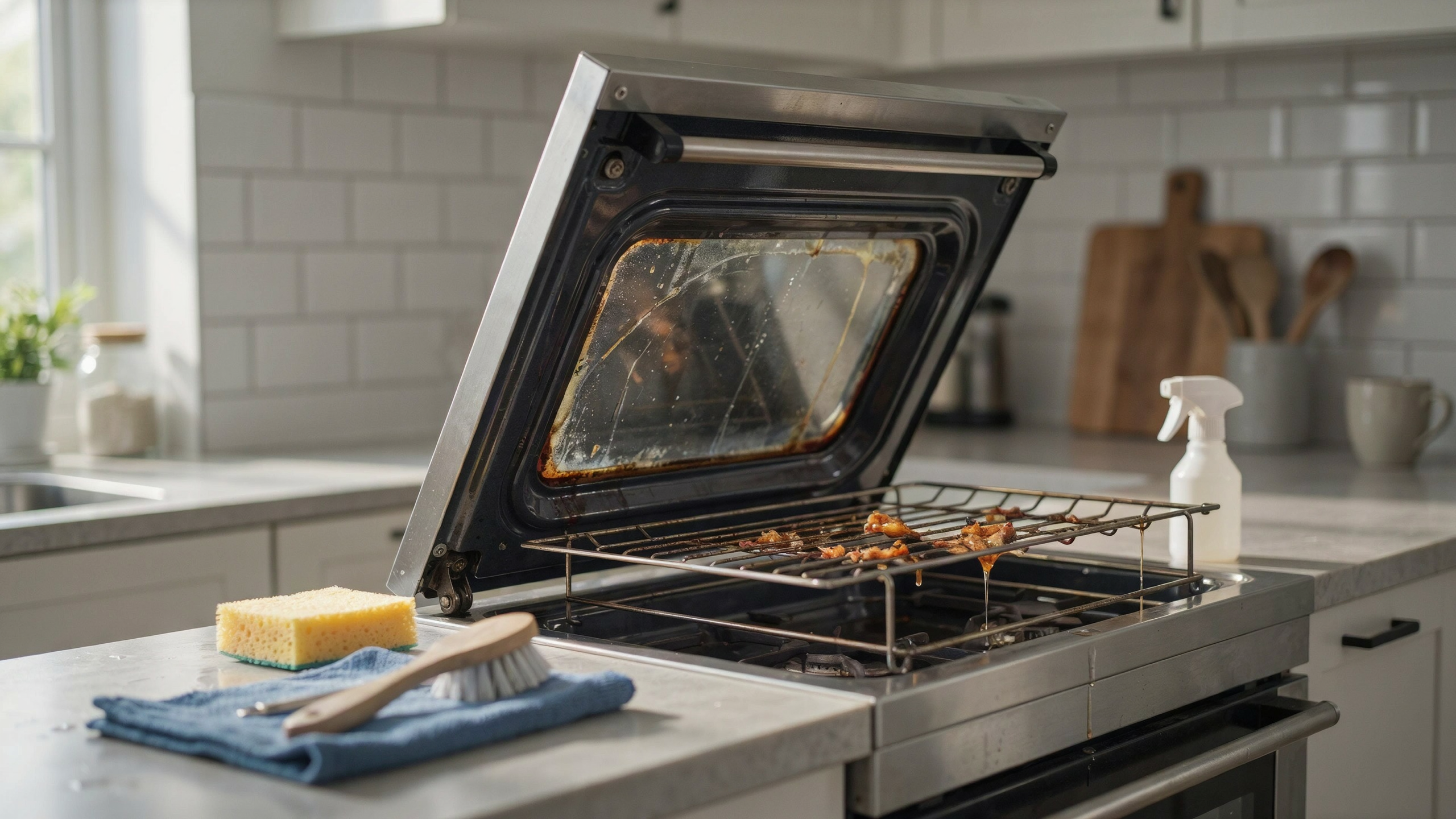
Everyone remembers to wipe burnt food from the oven floor or clean the door after a particularly messy roast. Yet some of the most important parts of an oven are hidden from view, making them easy to forget during routine cleaning.
Over time, grease, food residue, and dust build up in these neglected areas, affecting everything from cooking performance to unpleasant odours.
Giving these forgotten spots a little attention can help your oven work more efficiently, last longer, and produce better results every time you cook.
The Door Collects More Than Fingerprints
Most people clean the outside of the oven door but overlook the inside edges, rubber seals, and even the glass itself.
Grease slowly creeps into the corners where the glass meets the frame, while steam leaves behind a cloudy film that becomes harder to remove over time.
Dirty glass doesn’t just spoil the appearance of the oven. It makes it difficult to monitor food without opening the door, allowing heat to escape and disrupting cooking temperatures.
Keeping the door clean also helps protect the rubber gasket that forms an airtight seal. If grease and baked-on residue accumulate around the seal, it may gradually lose its flexibility, allowing heat to escape and forcing the oven to work harder.
Oven Racks Rarely Get the Attention They Need
Because racks are constantly exposed to dripping fat, bubbling sauces, and burnt food, they quietly accumulate thick layers of baked-on grease.
This build-up doesn’t just look unpleasant. It creates lingering burnt smells whenever the oven heats up and can even transfer residue onto cookware. Heavy deposits may also make the racks more difficult to slide in and out, particularly on older ovens.
Removing the racks occasionally for a proper soak allows grease to soften naturally, reducing the need for aggressive scrubbing that can damage protective finishes. Keeping them clean also improves airflow around food, helping dishes cook more evenly.
The Bottom of the Oven Is More Than a Crumb Tray
Many spills eventually find their way to the bottom of the oven, where they bake on repeatedly with every use.
What starts as a few drops of cheese or cooking juices soon becomes layers of carbonised residue. These burnt deposits produce smoke, unpleasant odours, and sometimes enough residue to affect the flavour of delicate dishes such as cakes or pastries.
Cleaning the oven floor before spills become heavily baked on is considerably easier than trying to remove years of accumulated grime.
Hidden Vents Keep Everything Cooking Evenly
Few homeowners realise their oven relies on unobstructed airflow to maintain a consistent temperature.
Vents allow hot air to circulate properly, especially in fan-assisted ovens. When grease, dust, or food particles partially block these openings, heat distribution becomes less consistent. The result can be browned edges, undercooked centres, or recipes that take longer than expected.
Regularly checking accessible vents helps maintain even cooking performance while reducing unnecessary strain on the appliance.
Don’t Forget the Oven Light
The oven light isn’t just there for convenience.
A grease-covered light cover makes it harder to see how food is progressing, encouraging people to open the oven door unnecessarily. Every time the door opens, valuable heat escapes and cooking temperatures fluctuate.
Cleaning the light cover occasionally restores visibility, allowing you to monitor dishes without interrupting the cooking process. It’s one of the quickest cleaning jobs but often one of the most overlooked.
Control Knobs Need Cleaning Too
Control knobs and touch panels are among the most frequently handled parts of any oven.
Hands covered in oil, flour, raw meat juices, or food residue leave behind invisible contamination throughout the week. Grease also works its way into small gaps around rotary controls, gradually making them feel sticky or difficult to turn.
Regular wiping helps maintain both hygiene and the smooth operation of the controls while keeping the oven looking well cared for.
The Rubber Door Seal Often Goes Unnoticed
One of the most overlooked parts of an oven is the rubber gasket that runs around the door opening.
This flexible seal keeps hot air inside the cooking chamber. As grease accumulates, the rubber can become stiff or damaged, reducing its ability to create an effective seal. Even small gaps allow heat to escape, forcing the oven to use more energy to maintain temperature.
A gentle wipe with warm soapy water is usually enough to remove surface grease without damaging the material. Avoid harsh chemicals or abrasive pads, which may shorten the seal’s lifespan.
Burnt Grease Doesn’t Stay Where It Lands
Grease has a habit of travelling.
As the oven heats up, tiny grease particles become airborne before settling on walls, fans, vents, hinges, and even the ceiling of the cavity. That’s why an oven can continue producing unpleasant smells even after obvious spills have been removed.
Regular cleaning prevents these invisible layers from becoming thick carbon deposits that smoke every time the oven is switched on. Keeping on top of grease build-up also makes future cleaning much easier because residue hasn’t had time to harden.
Regular Cleaning Makes Deep Cleaning Easier
One of the biggest misconceptions about oven cleaning is that it should only happen when the appliance looks dirty.
In reality, light but regular maintenance prevents grease from hardening into stubborn deposits. Wiping away fresh spills, cleaning racks every few months, and checking hidden areas before they become heavily soiled dramatically reduces the amount of effort required later.
Instead of spending hours tackling years of baked-on grime, you’ll usually only need short cleaning sessions to keep everything under control.
Professional Oven Cleaning Reaches the Areas You Can’t
Even with a regular cleaning routine, some parts of an oven remain difficult to access safely.
Professional services can help. Oven cleaning in Chiswick can dismantle removable components, clean areas behind panels where grease accumulates, restore heavily soiled racks and trays, and remove carbon deposits without damaging specialist coatings.
The result isn’t just a cleaner-looking oven but one that heats more efficiently, produces fewer cooking odours, and is more pleasant to use.
For heavily used family kitchens or ovens that haven’t been cleaned for years, professional cleaning can restore performance far more effectively than repeated DIY attempts.
Conclusion
The dirtiest parts of an oven are rarely the ones you notice first. Hidden seals, vents, racks, trays, and control panels quietly collect grease and food residue that affects performance, hygiene, and even the quality of your cooking.
By paying attention to these overlooked areas and cleaning them regularly, you can extend the life of your oven, reduce unpleasant smells, and enjoy more consistent cooking results.
When grease has built up beyond what household products can comfortably remove, a professional oven cleaning can help restore the appliance to its best.
