

Quick Answer: Outdoor weddings in Houston need more than a tent and a fan. Guest comfort depends on shade, hydration, and clean, climate-controlled restroom access. A luxury restroom trailer checks all three boxes and keeps the focus on celebrating, not surviving the heat.
You’ve planned the ceremony down to the last flower. The catering is locked. The photographer is booked. But if you’re hosting an outdoor wedding in the Houston area, there’s one guest comfort detail that gets skipped until the week before the event: the bathrooms. That decision affects every single person at your wedding, and guests notice it every time.
This guide covers what Houston couples actually need to think about when planning outdoor events, from the summer heat to restroom logistics to the small details that separate a memorable wedding from an uncomfortable one.
Why Is Guest Comfort So Hard to Get Right at Outdoor Weddings in Houston?
Houston’s outdoor wedding season runs from spring through fall, and nearly every date on that calendar comes with a challenge. April and May bring unpredictable storms. June through August means heat indexes that regularly push past 105 degrees. October and November are beautiful but book fast, and the humidity never fully disappears.
The problem isn’t just the heat. Outdoor venues don’t come with the same infrastructure as banquet halls. No central air conditioning. Limited permanent restrooms. Power access that may require a generator. Couples spend months coordinating catering and decor and often treat the logistical basics as an afterthought.
The result is guests who are hot, uncomfortable, and quietly counting down until they can leave.
How Do You Keep Wedding Guests Cool During a Houston Summer Event?
Cooling guests at a Houston outdoor wedding takes a layered approach. No single fix handles it on its own.
- Time the ceremony strategically. The heat index peaks between 2 and 5 pm. Ceremonies starting at 6 pm or later are far more comfortable for guests seated outdoors, and the lighting is better for photos.
- Set up shaded seating. Pergolas, sailcloth tents, and market umbrellas give guests relief between the ceremony and reception. Even partial shade cuts the perceived temperature significantly.
- Run hydration stations throughout the venue. Chilled water, lemonade, and cucumber water near the ceremony entrance and cocktail hour area reduce heat fatigue before it starts. Guests drinking alcohol need twice the water access.
- Use misting fans in open areas. High-pressure misting fans reduce ambient air temperature by 10 to 15 degrees in direct range. Position them near seating clusters and anywhere guests are standing for extended periods.
- Provide climate-controlled indoor relief. If the venue has an air-conditioned interior, designate it as a cool-down space during cocktail hour. Guests who need a break from the heat will use it and come back refreshed rather than leaving early.
The restroom situation sits right in the middle of all of this. A guest who walks across the property to a hot, poorly ventilated portable toilet loses comfort on every front: the walk, the wait, and the facility itself. That experience compounds everything else that’s already hard about a Houston summer event.
What Size Restroom Trailer Do You Need for a Wedding?
Stall count comes down to three variables: how many guests you’re hosting, how long the event runs, and whether you’re serving alcohol.
A standard planning baseline is one stall for every 50 guests at events running four hours or longer. Alcohol increases restroom usage significantly, so factor that in before you finalize your trailer size. Here’s a practical breakdown:
- Under 75 guests: A 2-stall trailer handles the traffic comfortably for a standard 4 to 6 hour reception.
- 75 to 200 guests: A 3-stall trailer is the right call. This is the most common configuration for Houston-area outdoor weddings.
- 200 or more guests: Book a 3-stall at minimum, or consider a 6-station unit depending on how spread out your venue is.
When in doubt, go one size up. A line at the restroom is one of the loudest complaints guests make after an event, and it’s completely preventable.
Couples in the greater Houston area can get exact sizing recommendations and availability for their date through a wedding restroom trailer rental in Houston from Mr. Niceday’s. J.B. and Noah Niday run every booking personally and walk you through the right size for your guest count before you commit to anything.
Is a Luxury Restroom Trailer Really Worth It Compared to Porta Potties?
The honest answer depends on the event. For a 5K race or a youth soccer tournament, a porta potty is practical and appropriate. For a wedding, the comparison doesn’t hold up well.
A standard portable toilet gives guests a plastic seat, a chemical tank, and a hand sanitizer pump. It has no running water, no air conditioning, no mirror, and no light beyond what filters through the walls. On a Houston summer afternoon, interior temperatures climb fast within the first hour of use.
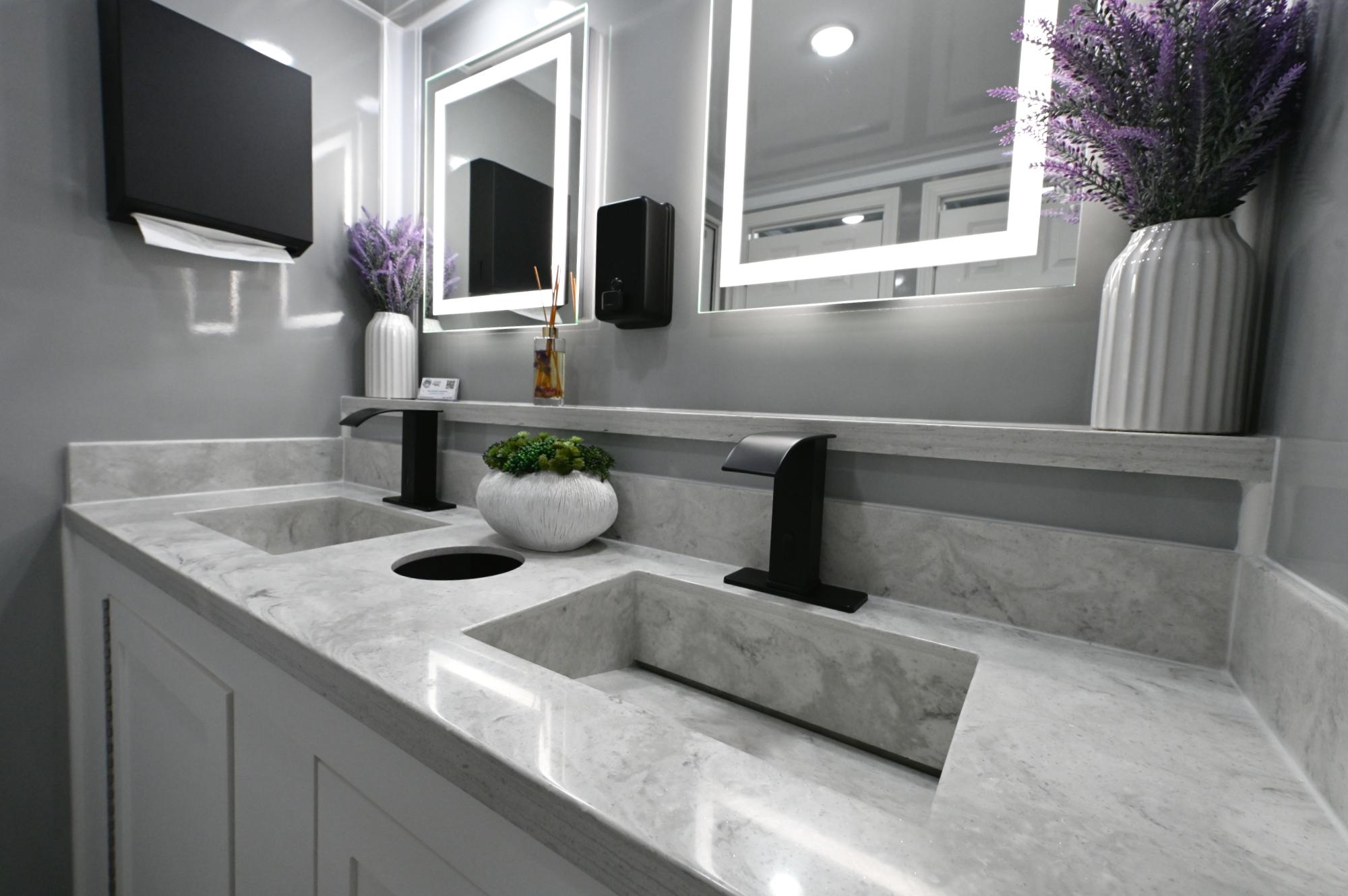
A luxury restroom trailer is a different experience entirely. Guests walk into a climate-controlled interior with flushing toilets, running water, mirrors, interior lighting, and finished surfaces. It looks like a clean hotel bathroom. Guests who use it often ask where you rented it because the experience is that much better than what they expected.
The cost gap is smaller than most couples assume. A 2-stall restroom trailer for a weekend wedding in Houston starts at $750. Four to five porta potties to serve the same guest count run $800 to $1,000 with none of the comfort. When the numbers are that close, the upgrade is almost always the right call for a wedding.
What Should You Ask a Restroom Trailer Company Before You Book?
Not every restroom trailer marketed as luxury is actually built for events. Some companies run industrial units with a fresh coat of paint. Before you confirm a booking, ask these questions directly:
- Does the trailer have working air conditioning? In Houston summer heat, a trailer without strong A/C becomes uncomfortable within the first hour. Confirm the unit has actual climate control, not just ventilation.
- Does your trailer require a water hookup or is it self-contained? Many venues don’t have water access near the event area. A self-contained unit with its own water tank removes a major logistics problem.
- What does delivery and setup look like? The company should handle all setup, and you should know exactly when the trailer arrives and when it gets picked up. Ask about the path to placement so there are no day-of surprises.
- What happens if something goes wrong during the event? A family-owned local company with an owner-operated team is more likely to pick up the phone on a Saturday night than a national franchise.
- Can I see photos of the actual trailer being delivered, not just stock images? Ask for real photos of the interior and exterior of the specific unit you’re booking.
Where Should You Place the Restroom Trailer at Your Venue?
Placement is something couples rarely think about until the truck pulls up. Getting it right matters for both logistics and aesthetics.
Position the trailer close enough to the main event space that guests don’t have to make a long trek, but far enough that it isn’t a visual focal point from the ceremony or reception area. Near the edge of the tent, adjacent to the cocktail hour space, or behind a natural screen of trees or shrubs all work well.
The trailer needs a flat, firm surface. Concrete, asphalt, and compacted gravel all work. Soft or uneven grass can create access problems for the delivery truck, especially after rain. Check the path from the road to the placement spot for low branches, tight turns, or steep grades before delivery day.
If your trailer requires a generator, position it away from the ceremony area. Generator noise during vows is the kind of detail that ends up in wedding stories for the wrong reasons.
What Are the Finishing Touches That Make Restrooms Feel Like Part of the Wedding?
A luxury trailer gives you a solid base. A few small additions turn it into something guests actually talk about.
- A small flower arrangement or lantern near the entrance ties it visually to the rest of the decor.
- A wedding bathroom basket stocked with safety pins, pain relievers, blotting papers, breath mints, hair spray, and bandages covers the common mid-event needs that guests always appreciate finding.
- A small framed sign with a welcome message or a line from your vows near the mirror adds a personal touch without much effort or cost.
- Scented hand soap and a candle (if allowed by the rental company) elevate the interior feel significantly.
None of these details are expensive. Combined, they make the restroom feel like a thoughtful extension of the wedding rather than a logistical necessity tucked behind the tent.
When Should You Book a Restroom Trailer for a Houston Wedding?
Houston’s peak wedding season runs from March through June and again from September through November. Inventory moves fast during those months, particularly on Saturday dates. Booking four to six weeks out is the minimum, but couples who lock in dates two to three months ahead get better availability and more flexibility on delivery timing.
Summer weddings in June, July, and August book later because fewer couples choose Houston’s hottest months for outdoor events, but the demand that does exist concentrates on the same small pool of evening dates. Don’t assume summer gives you more runway.
If your date is within two weeks, same-day or rush delivery options exist from local providers across the Houston metro. Planning ahead almost always produces a better outcome: you get the right trailer size, the right placement, and a company that has the full context of your event rather than a last-minute scramble.
The restroom setup at your wedding is the one detail every single guest will use. Plan it with the same intentionality you give to the florals and the food, and it becomes invisible in the best possible way. Get it wrong, and it’s the thing people remember.
