

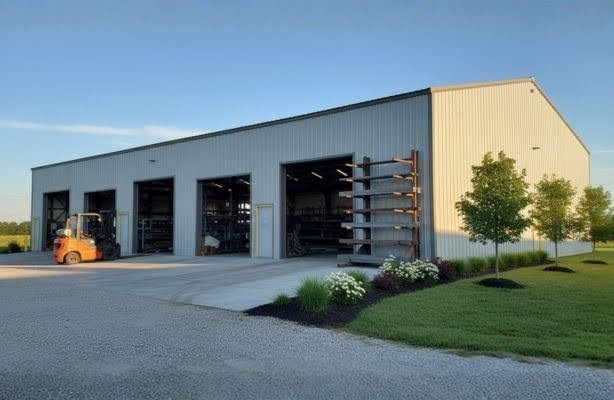
The metal workshop is the fastest-growing home addition in America right now, and folks who’ve watched the housing market for the last decade can see exactly why. Five years ago you’d only spot a detached metal building on rural acreage. Today they’re going up in suburban backyards, on hobby farms, and behind weekend properties from Texas to Pennsylvania. The reason is simple. They cost less, go up faster, and finally look the part.
Listen here. We work with homeowners every week at Metal America who started this journey looking at a wood frame shed kit and ended up with a real shop. Same money. Triple the building.
Why the Surge in 2026
Three things are pushing the metal workshop trend in 2026, and none of them are going to slow down. The pandemic-era hobbies got serious, traditional construction kept getting slower, and steel pricing actually held up better than wood.
- Hobbies outgrew the garage. Folks who picked up woodworking, motorcycle restoration, 3D printing, or small-batch fabrication during the pandemic still want a real space to do it. A two-car garage runs out of room the second you add a workbench and dust collection.
- Stick-built additions are slower than ever. A traditional framed addition takes 8 to 14 months from design to certificate of occupancy in most counties. A prefab metal workshop can be standing in under 60 days.
- American steel held its price. The 25 percent steel tariffs that hit in 2025 had everybody bracing for sticker shock. Domestic manufacturers absorbed most of that pressure by sourcing American, and retail prices on small workshops barely moved.
What a Metal Workshop Actually Costs
A turnkey metal workshop with delivery and install runs between $7,500 and $27,000 depending on size and configuration. Below are the real ranges we see in 2026 on residential builds. These numbers include the building, the freight, and the install crew.
| Workshop Size | Use Case | 2026 Turnkey Range |
| 20x20x9 ft single bay | Hobby user, hand tools | $7,500 to $11,500 |
| 24x30x9 ft two bay | Power tools, project car | $13,800 to $19,400 |
| 20x30x10 ft three bay tall door | Lift bay, tall pickup | $18,900 to $25,700 |
| 24x35x9 ft windowless secure | Toy storage, equipment | $20,300 to $27,000 |
Compare that to stick-built and the gap gets ugly fast. A comparable wood frame detached shop with similar finish-out runs $55 to $95 per square foot in most markets. That puts a 720 square foot project north of $40,000 before you’ve even painted the trim. The prefab metal route is 40 to 60 percent cheaper for the same usable footprint, and that gap has held even with lumber prices settling down.
Don’t Buy Too Small
The single biggest regret we hear from workshop buyers is sizing. Folks shop for the building they need today, not the one they’ll need in 18 months. Y’all are going to grow into the space faster than you think.
Use this rule of thumb when you size your shop. Round up, never down.
- Hand tools and a workbench. 20×20 minimum, 400 square feet
- Power tools, single project car or motorcycle. 24×30, 720 square feet
- Two car capacity plus a dedicated work zone. 30×40, 1,200 square feet
- Small business out of the home. 40×60 or larger, 2,400+ square feet
Wall height matters as much as floor area. A 9 foot eave is the residential default, but if you ever want a lift, a tall pickup, or a mezzanine for storage, plan 10 to 12 feet up front. Adding height later isn’t practical, so this is the one decision you don’t get to redo.
Site Prep Basics Every Homeowner Should Know
Most prefab metal workshops sit on a concrete slab or a compacted gravel pad. The choice usually comes down to whether you’re running power and water (slab) or just storing equipment (gravel). Either way, get the prep right or you’ll pay for it twice.
Here’s what your pad needs before the truck shows up.
- Level within 2 to 3 inches across the full footprint
- Truck access with 12 to 14 feet of overhead clearance
- Local building permits and HOA approval already in hand
- Setback distances confirmed with the county, side and rear yards
Design Choices That Complement a Home
Modern metal workshops don’t have to look industrial anymore, and that’s the change most folks haven’t caught up to yet. The old objection was that they read like a feed barn next to a residential house. Not true today. You’ve got 29 standard siding colors including soft tans, sage greens, and slate grays that read straight residential. Wainscot, vertical trim, decorative gable ends, and architectural metal roofing in shingle profiles round it out.
Match the roof pitch to the house, pick a complementary siding color, and most neighbors won’t tell from the street that it’s prefab. That’s the whole game.
The Property Value Question
Appraisers treat detached metal workshops the same way they treat detached garages. They count as finished outbuilding square footage, plain and simple. In rural and suburban markets, a quality workshop typically returns 50 to 80 percent of its build cost in resale value, and listings with workshops sell faster. That’s especially true in markets full of tradespeople, hobby farmers, and remote workers.
Honestly, the resale return is the wrong way to think about it. Most workshop owners use the building daily for years before they ever consider selling. The investment pays you back every weekend.
Quote to Install Timeline
Most residential workshops take 30 to 75 days from initial quote to a finished building on your pad. Permits and weather drive most of the variation. The actual erection takes one to three days on-site once the components arrive. Most metal building companies bundle delivery and installation into the price, so you’re not coordinating separate freight, crane, and crew vendors yourself.
Bottom Line
The detached metal workshop has gone from rural utility building to mainstream home addition in under a decade. For most homeowners weighing a project in 2026, prefab metal beats stick-built on cost, timeline, and design fit. If you’ve been pricing a wood frame shed and the numbers aren’t working, this is the alternative worth running side by side. Don’t buy too small, don’t skimp on the pad, and don’t let the old industrial reputation talk you out of a building that’ll outlast your house.
About the author: Logan Hermer is the Director of Web Development at Metal America, an American-made metal building company headquartered in Austin, Texas. He works with homeowners across the country on workshops, garages, carports, and barndominium projects, and writes about the residential metal building trend.
