

If you’ve ever walked into your garage and noticed a musty smell or strange dark spots on the walls, you’re not the only one. Mold in garages is pretty common, especially in areas with lots of humidity or rain. It can appear quickly and spread before you notice.
People don’t usually check their garages often, so mold can grow without being noticed. It’s often caused by moisture, poor airflow, or hidden leaks. The good news is that once you know why it’s there, you can fix the problem and stop it from returning.
What Causes Mold in a Garage?
Mold doesn’t show up for no reason. It needs moisture, a surface to grow on, and the right conditions. Garages often have all of these, making them an easy place for mold to grow.
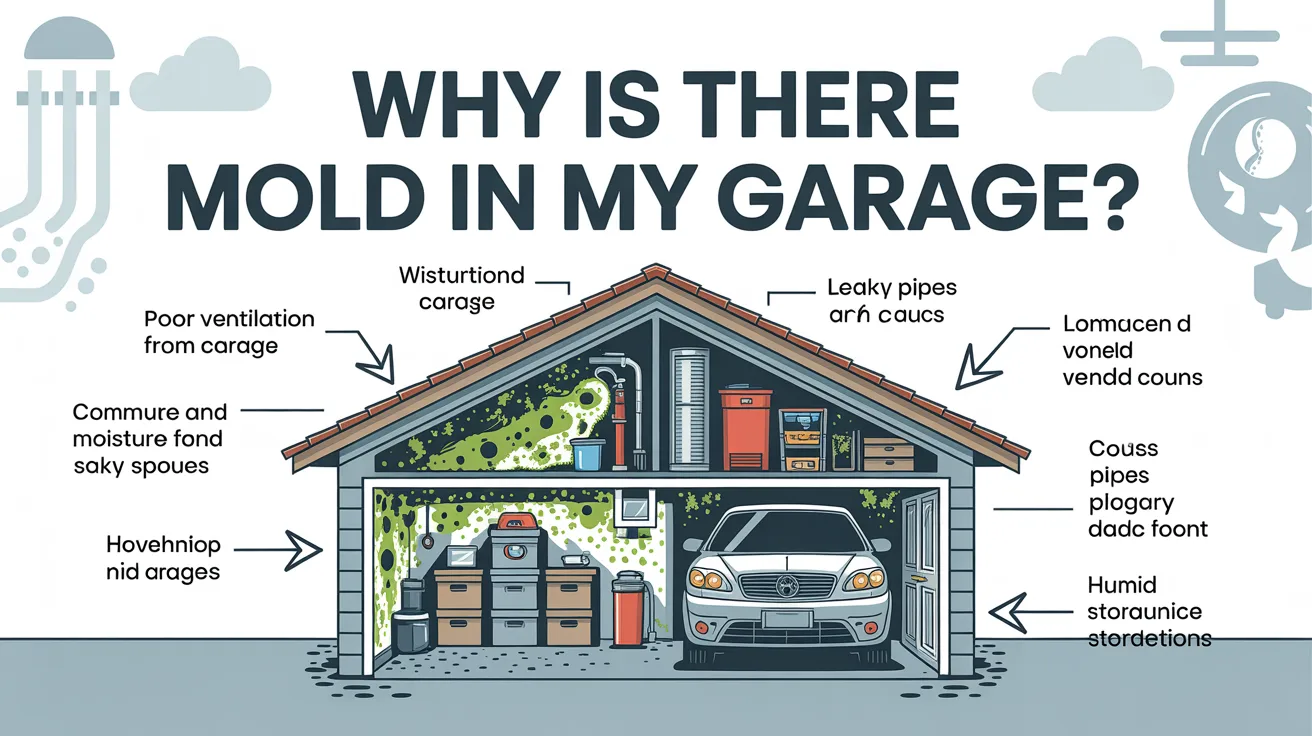
The hard part is that the cause isn’t always clear. Sometimes it’s just damp items, but other times it’s a hidden problem like a slow leak or not enough ventilation. Here are the most common reasons mold shows up.
Excess Moisture and Humidity
Moisture is the main reason mold grows in garages, especially in humid areas. When warm air hits cooler surfaces, condensation forms and creates a good spot for mold. Even small amounts of moisture can lead to mold over time.
Poor Ventilation
Garages usually don’t get much airflow, especially if they stay closed most of the time. Without fresh air moving through, moisture gets trapped inside and builds up. This creates a damp space where mold can grow quickly.
Water Leaks and Damage
Leaks from the roof, walls, or even pipes can slowly introduce water into your garage. You might not notice it right away, especially if it’s behind walls or in corners. That hidden moisture becomes a breeding ground for mold.
Storing Damp or Wet Items
Wet shoes, tools, cardboard boxes, or even your car after rain can bring moisture into the garage. If these things don’t dry out, they make the air more humid. Mold can then grow on them and on nearby surfaces.
Common Signs of Mold in Your Garage
Sometimes mold is easy to see, but other times it’s harder to notice. Knowing the signs can help you catch it early before it spreads. Checking your garage now and then can help you avoid bigger problems.
Most signs are easy to spot once you know what to look for. It’s not just about seeing mold; changes in smell or air quality matter too. Here are the main things to watch for.
- A strong, musty, or damp smell that doesn’t go away
- Black, green, or white spots on walls, floors, or ceilings
- Peeling paint or discoloration on surfaces
- Allergy symptoms like sneezing or itchy eyes when you’re in the garage
Is Mold in the Garage Dangerous?
Many people think mold in the garage isn’t a big deal since it’s not in the main living space. But it can still cause problems if you don’t take care of it. Mold spores can spread and affect other parts of your home.
Mold can cause allergies, coughing, and irritation. If someone in your home has asthma or a weak immune system, it can be even worse. Even mild symptoms shouldn’t be ignored.
Mold can also damage your garage. It can weaken wood, drywall, and other materials over time. A small patch can turn into a bigger repair job if it spreads.
How to Get Rid of Mold in Your Garage
If you see mold, it’s best to take care of it right away. The longer you wait, the more it spreads. You can usually handle small areas yourself, but for bigger problems, it’s smart to get reliable help with mold removal and cleanup.
Before you start cleaning, make sure you understand the size of the issue. If it’s just a small patch, DIY methods usually work fine. But if it keeps coming back, there might be a bigger moisture problem behind it.
DIY Mold Removal Steps
Wear gloves and a mask to protect yourself from mold spores. Use vinegar or a store-bought mold remover to scrub the area. After cleaning, dry everything completely to stop mold from coming back.
When to Call a Professional
If mold covers a large area or keeps coming back, call a professional mold removal company. They can find hidden moisture and remove mold safely. This is especially important if mold is inside walls or affecting the structure.
How to Prevent Mold in Your Garage
Getting rid of mold is important, but stopping it from coming back matters just as much. Prevention means controlling moisture and improving airflow. Even small changes can help a lot.
Treat your garage like any other part of your home. If it stays dry and has good airflow, mold is less likely to grow. Regular maintenance is important.
Improve Ventilation
Open your garage door often to let in fresh air. You can also add vents or a fan to keep air moving. Good airflow helps lower moisture.
Control Moisture
Fix leaks as soon as you find them, even small ones. A dehumidifier can help keep humidity low. Keeping your garage dry is the best way to stop mold.
Store Items Properly
Don’t store things in cardboard boxes because they hold moisture. Use plastic bins and keep items off the floor if you can. Make sure everything is dry before storing it.
Regular Maintenance
Check your garage every few weeks for signs of moisture or mold. Look at corners, walls, and ceilings where problems often begin. A quick check can help you catch issues early.
How to Identify Mold vs. Mildew
Mold and mildew can look alike, but they aren’t the same. Knowing the difference helps you pick the right way to clean. It also shows how serious the problem is.
Mold is usually darker and can look fuzzy or slimy. It grows deeper into surfaces and spreads faster. Mildew is lighter in color and stays on the surface.
Mildew is easier to clean and usually less harmful. Mold is harder to remove and can cause more damage over time. If you’re not sure which it is, treat it like mold and be careful.
When Garage Mold Becomes a Bigger Problem
Sometimes mold stays in the garage, but it can also spread. That’s when it becomes a bigger problem. If it reaches other parts of your home, it’s harder and more expensive to fix.
Mold can travel through the air or stick to things you bring inside. This means mold in your garage can slowly affect your indoor air quality. It can also damage items you store, like tools, furniture, or boxes.
If you see mold spreading or coming back often, don’t ignore it. This usually means there’s a bigger moisture problem that needs fixing. Solving the root cause is the only way to stop it for good.
Conclusion
Mold in your garage usually happens because of moisture, poor airflow, or hidden leaks. Once you know the cause, you can take simple steps to fix it. Acting early makes things easier and less stressful.
Regular checks, better airflow, and keeping things dry make a big difference. You don’t need anything complicated, just be consistent. A little effort now can save you from bigger problems later.
If the mold feels out of control or keeps coming back, it’s okay to ask for help. Sometimes calling a professional is the quickest way to fix the problem for good.
