

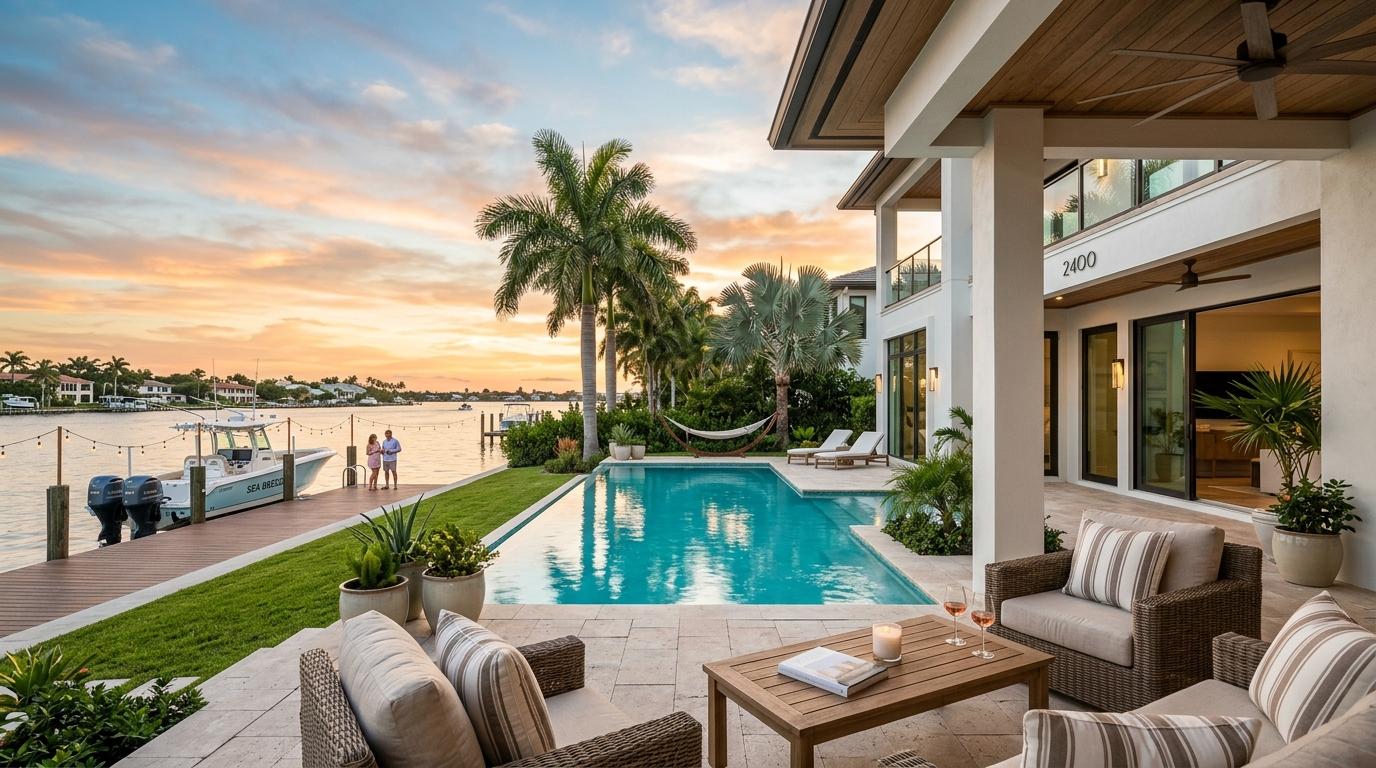
Florida's enduring appeal is built on a foundation of more than 200 days of annual sunshine, world-class beaches, and the financial advantage of having no state income tax. This combination has driven consistent population growth for decades. The state now stands at approximately 23.4 million residents as of 2025—up roughly 9% since 2020—and projections indicate it could reach 26 million by 2035. Consistently ranking as the nation's top retirement destination and a premier market for real estate investment, Florida continues to attract retirees, out-of-state relocators, and local renters ready to own. As the housing market stabilizes in 2026, understanding the distinct advantages of new construction over older properties is critical for buyers looking to pursue long‑term homeownership in Florida.
Population and housing data compiled by the Florida Housing Data Clearinghouse, managed in partnership with the state, show both strong in‑migration and rising pressure on housing supply, which is why understanding the long‑term costs of ownership versus renting is so important for Florida buyers.
The Hidden Costs of Older Florida Homes
Purchasing a home in Florida carries unique considerations that are often overlooked by out-of-state buyers. While the charm of older, established neighborhoods is undeniable, the financial reality of maintaining an aging property in a subtropical climate can be staggering. Florida's high humidity, intense summer heat, and exposure to severe weather systems accelerate the wear and tear on homes built decades ago.
Older homes frequently harbor significant deferred maintenance costs. Aging roofs, outdated HVAC systems struggling to cool inefficiently insulated spaces, and pre-modern building codes leave these properties vulnerable to storm damage. In 2026, buyers of older homes are increasingly finding that the cost of insurance—if coverage can be secured at all—is prohibitively expensive unless major structural updates, such as roof replacements and impact-resistant windows, are completed immediately after purchase. Florida's homeowner's insurance market remains one of the most challenging in the country, and that pressure falls hardest on owners of older stock.
The Financial Case for New Construction
For Florida buyers, the decision to purchase new construction is not merely a matter of convenience; it can be a meaningful financial safeguard. New homes are constructed to meet or exceed the state's stringent modern building codes, which are designed specifically to withstand hurricane-force winds and severe weather. This structural integrity translates directly into more accessible and affordable homeowner's insurance policies—a meaningful advantage in a state where insurance costs can make or break a monthly budget.
New construction also eliminates the immediate threat of catastrophic repair bills. A new home comes equipped with a brand-new roof, a high-efficiency HVAC system, and modern plumbing and electrical infrastructure. These components are backed by comprehensive structural warranties—typically covering major systems for two years and structural defects for up to ten years. That kind of protection allows buyers to plan their finances with confidence rather than absorbing surprise costs in the first years of ownership.
New Construction Communities Across Florida
Florida is a diverse state, offering a range of lifestyles from the bustling Gulf Coast to quieter inland markets. Understanding the nuances of these distinct regions helps buyers identify the right fit for their specific needs and budget.
Across the state, new construction developments from builders like LGI Homes in Florida give buyers options that range from Gulf Coast metros to quieter inland markets, all built to current codes and energy standards that are designed for the state’s subtropical climate.
| Region | Market Characteristics & Lifestyle Appeal |
| Tampa Bay | A vibrant, rapidly growing metro area offering Gulf Coast beaches, a strong culinary scene, and major professional sports teams. The median sale price for single-family homes in the Tampa MSA (including St. Pete and Clearwater) was approximately $400,000 in late 2025, with prices having moderated slightly — down roughly 1.5% year-over-year — after years of rapid appreciation. |
| Orlando | Driven by tourism, hospitality, and an expanding technology sector, Orlando attracts first-time buyers and young families. Zillow pegged the average home value at $374,136 in late 2025, while median sale prices tracked closer to $400,000 — the market offers a dynamic environment with steady job growth across multiple industries. |
| Jacksonville | As Florida's largest city by land area, Jacksonville provides more space and a lower cost of living than South Florida. It features the largest urban park system in the country and a strong military presence that supports consistent housing demand. |
| Central & Coastal Markets | Markets like Fort Myers, Sarasota, Daytona Beach, Fort Pierce, Lakeland, Ocala, and Winter Haven offer a mix of active adult communities, coastal living, and quieter inland options well-suited for retirees and remote workers alike. |
Energy Efficiency in a Subtropical Climate
The financial benefits of new construction extend beyond avoiding repair costs. In a state where air conditioning is a necessity for the majority of the year, energy efficiency is not a luxury — it is a monthly line item. According to industry data, homes built to current energy codes can be significantly more efficient than older properties, translating to real savings on utility bills year after year.
New homes feature advanced insulation, double-pane Low-E windows that reflect solar heat, and programmable thermostats that optimize energy use around occupancy patterns. These integrated technologies reduce the monthly cost of cooling the home in ways that older properties simply cannot match without expensive retrofits. When buyers choose a builder that includes these features as standard rather than expensive add-ons, the long-term value of the investment is far easier to calculate.
Frequently Asked Questions
Why are so many people moving to Florida in 2026?
Florida offers a compelling mix of warm weather, beautiful beaches, and no state income tax. The state's population reached approximately 23.4 million in 2025 and is projected to reach 26 million by 2035, driven by retirees, remote workers, and relocators seeking a high quality of life and a favorable tax environment.
What are the risks of buying an older home in Florida?
Older homes often require expensive updates to roofs, HVAC systems, and windows to meet current insurance requirements. They are also built to older, less stringent building codes, making them more vulnerable to severe weather and less energy-efficient — both of which carry ongoing financial consequences in Florida's climate.
How does new construction help with Florida homeowner's insurance?
New homes are built to the latest hurricane and building codes. Insurance companies typically offer lower premiums and easier approval processes for homes with brand-new roofs, impact-resistant features, and modern electrical systems — an advantage that has grown more significant as Florida's insurance market has tightened.
What is the median home price in Tampa Bay in 2026?
As of late 2025 and into 2026, the median sale price for a single-family home in the Tampa MSA (Tampa–St. Pete–Clearwater) is approximately $400,000, having stabilized after a period of rapid appreciation. Single-family prices are down roughly 1.5% year-over-year, offering buyers a more measured entry point than the market peaks of recent years.
Do new construction homes come with warranties?
Yes. Reputable builders provide comprehensive warranties that typically cover workmanship for one year, major systems such as plumbing and HVAC for two years, and structural defects for up to ten years — offering significant financial protection compared to purchasing an older home with no such coverage.
