

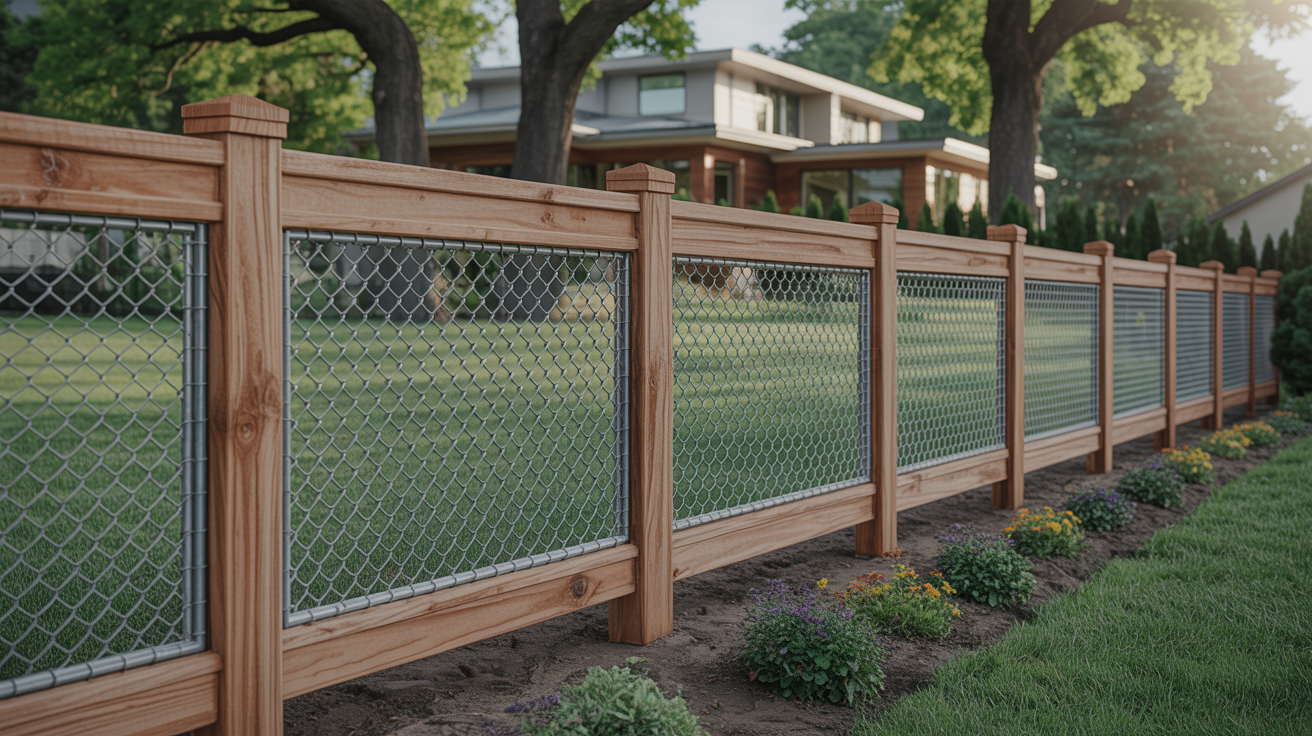
Chain link with wood posts is one of those fence ideas that sounds unusual until you see why homeowners choose it. Standard chain link is practical, open, and cost-aware, while wood posts soften the look and add warmth. This hybrid fence style can also be tailored to individual design preferences, allowing homeowners to match the fence to their specific aesthetic needs.
The point is not just appearance. Chain link fencing has been trusted for decades for its durability and reliability. However, a hybrid fence is only as strong as its weakest component. If any part of this system is treated as an afterthought, the fence will lose its clean lines much sooner than expected.
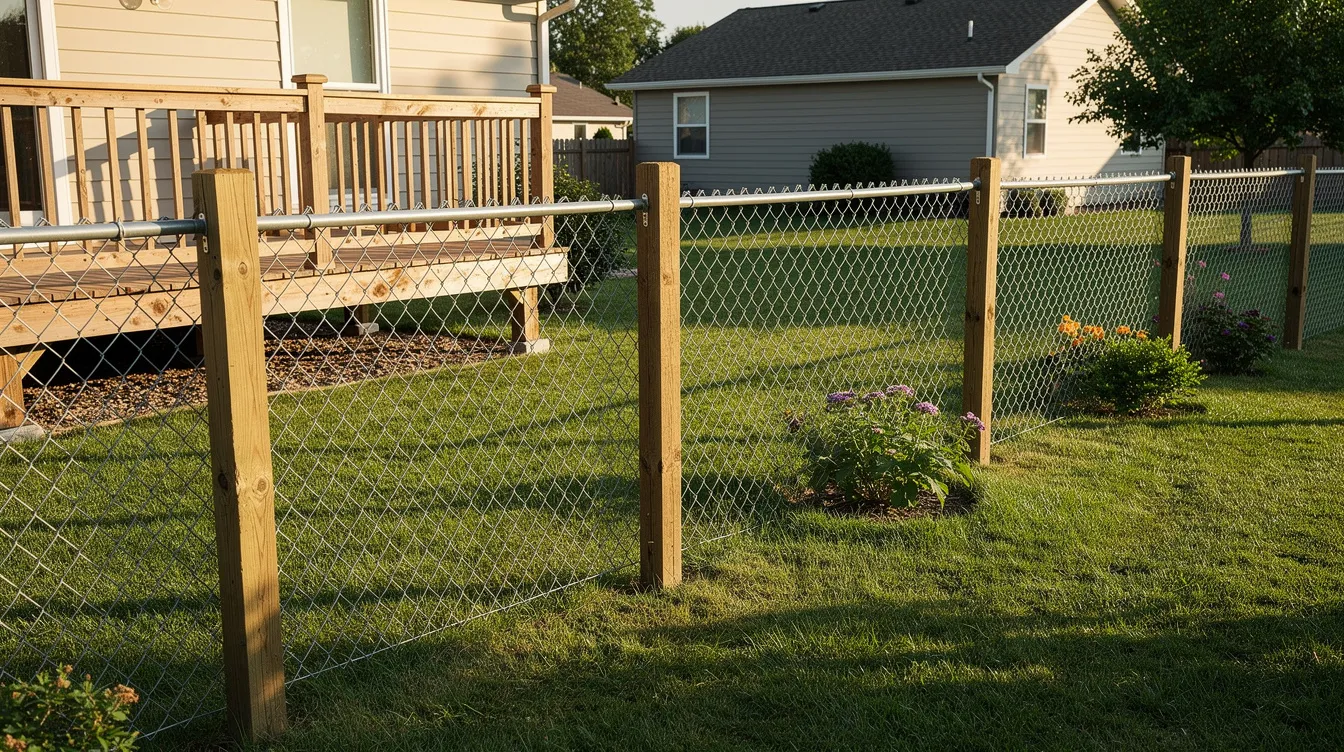
Why Chain Link Fence Installation With Wood Posts Works
A chain link fence is popular because it does a simple job well. The diamond mesh lets you see through the fence, which is useful when children or dogs are playing in the yard. At the same time, the open mesh allows wind to pass through and does not create the same pressure as many vinyl or full privacy-style panels.
Wood posts change the look. Cedar, redwood, or pressure-treated pine can make a chain link fence feel more residential. Instead of a full metal frame, the fence gets a warmer structure that can connect better with trees, planting beds, trim, decks, or older homes. That is the appeal. Strength from metal. Warmth from wood.
Chain Link With Wood Posts and the Real Cost Picture
The cost of this fence depends on more than just the chain link fabric. When estimating the total cost, it’s important to account for all components and considerations, such as material costs, labor, fence height, total linear footage, gates, corners, access, and site conditions.
In 2026, a professionally installed chain link fence often falls around $10 to $40 per linear foot. DIY materials may run closer to $3 to $15 per linear foot, depending on the gauge, coating, posts, hardware, and layout. A typical 150-foot residential chain link fence installation may land between $1,500 and $6,000 with professional installation, while DIY materials for the same length may range from $450 to $2,250.
However, ranges are not a quote. A flat, open yard is not the same job as a sloped property with roots, old concrete, tight access, double gates, and corners that need extra support. For example, if a 150-foot chain link with wood posts fence goes into a flat, open yard, the cost will usually stay closer to the lower end of the range. If the property is sloped, has roots or old concrete, requires double gates, or has tight access and corners needing extra support, the job can require additional time for layout, digging, and hardware adjustments.
| Cost factor | Why it changes the price |
| Total linear footage | More length equals more fabric, posts, and labor costs. |
| Fence height | Taller fences require extra material and deeper post footings. |
| Post material | Prices fluctuate between treated pine, cedar, redwood, or metal. |
| Gates | Each gate adds hardware costs and precise labor time. |
| Site conditions | Slopes, rocks, or poor access increase labor fees. |
| Hardware | Quality tension bars, bands, and caps impact the final total. |
When Wood Posts Are Better Than Metal Posts
Metal posts are common for chain link fencing, and they work well. They are strong, clean, and usually lower maintenance. But wood posts can be a better fit when appearance matters, and the homeowner does not want the fence to feel too industrial.
Wood posts are especially useful when the fence sits close to a patio, garden, deck, or front-facing side yard. They can be stained, capped, trimmed, or matched to other outdoor materials. That helps curb appeal without turning the whole project into a full wood fence, and it can be a practical visual upgrade for areas seen from the street or main outdoor living space.
There is a catch, though. Wood must be chosen and installed correctly. Treated wood posts are important in damp climates because untreated wood can rot faster at ground level. In wet areas, pressure-treated pine, cedar, or another suitable exterior wood should be paired with a good concrete setting, smart spacing, and careful layout before any post holes are dug.
The chain link portion is close to maintenance-free. The wood posts are not. They may need staining or sealing over the years, especially where moss, shade, rain, or soil moisture are constant.
How to Install Chain Link Fence So It Does Not Sag
A professional installation prioritizes structural integrity through properly spaced line posts and reinforced corner posts anchored by concrete footings. The chain link fabric remains taut through tension bars, tension bands, secure clamps, and properly tightened bolts fixed to the wood frame. To ensure a steady line, the design features a top rail or wood trim, while post caps protect the timber from water damage. The build concludes with durable gate hardware engineered to prevent sagging over time.
Some homeowners like a more finished look where the chain link is framed between wood beams at the top and bottom. That can hide some mounting hardware and make the fence feel more intentional. It takes more planning, but the result often looks less like a basic utility fence.
This is where professional fence installation matters. A hybrid fence can be simple in concept, but the details decide whether it stays straight for many years.
Chain Link Fence, Hog Wire, or Full Wood Fence?
Chain link fencing is not the only option. Hog wire fencing is another popular choice for property owners who want visibility with a more rustic or modern look. While full wood fencing gives more privacy, it usually costs more and needs more maintenance.
A chain link fence with wood posts sits somewhere in the middle. It is more attractive than standard chain link with all metal posts, usually less expensive than full wood, and practical for large areas where privacy is not the main goal.
Local Conditions Still Matter
A fence that works well in one region may need adjustments somewhere else. Wet soil, clay-heavy ground, tree roots, slopes, and drainage all change the installation.
That is why local fence installers are useful. They can usually spot the problems that do not show up in a basic online price guide, such as soft ground, poor access, old fence removal, gate swing issues, or post locations that need deeper setting.
The average cost of fence work is not only about materials. Labor availability, specialized equipment, site prep, and regional conditions all affect the final price.
