

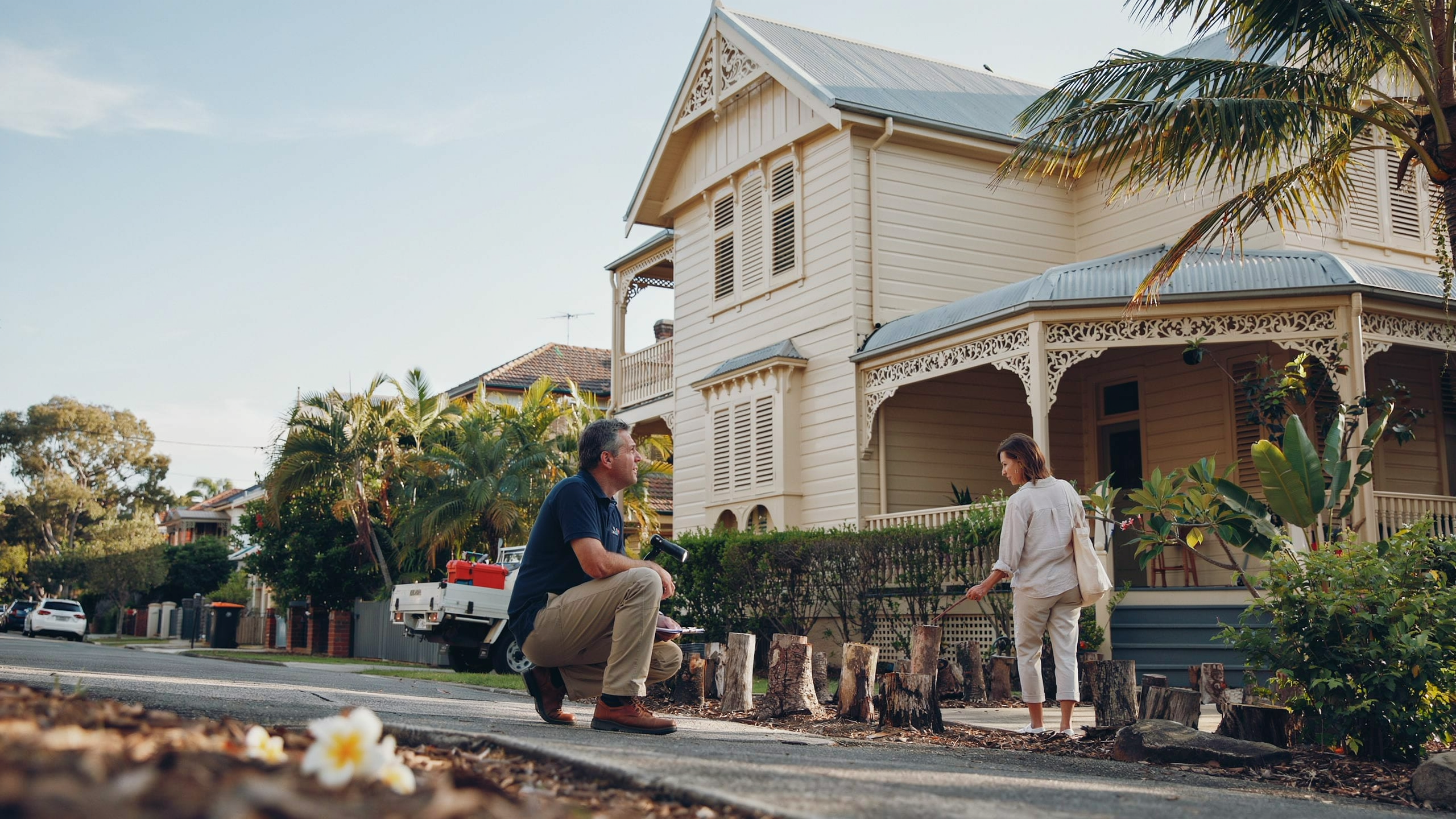
There’s something undeniable about a Queenslander. The high ceilings, the wide verandahs, the louvred windows catching a cross-breeze. They’re homes built for a way of life, and Brisbane buyers have loved them for generations. In a city where new builds dominate the outer suburbs, a well-presented Queenslander in an inner or middle ring suburb can stop you in your tracks.
But that charm comes with a caveat. Many of Brisbane’s Queenslanders are between 80 and 120 years old, and a beautiful coat of paint can hide a remarkable number of problems. Buying one without knowing what to look for, or without getting a professional inspection, is one of the most common and costly mistakes buyers make.
This guide walks you through what to watch for before you make an offer, so you can pursue a Queenslander-style home with confidence rather than crossed fingers.
A Brief History of the Queenslander (and Why It Matters for Buyers)
The classic Queenslander emerged in the late 1800s as a practical response to Queensland’s subtropical climate. Elevated on timber stumps to encourage airflow and reduce flood risk, clad in VJ (vertical joint) timber boards, and wrapped in deep verandahs to shade the walls from the sun, these homes were genuinely well-engineered for their environment.
What they weren’t engineered for was longevity without maintenance. Timber, by its nature, requires ongoing care, and over a century of ownership changes, many Queenslanders have been maintained inconsistently, modified without permits, and renovated in ways that range from excellent to genuinely alarming.
It’s also worth understanding that not every home marketed as a “Queenslander” is the same thing. You’ll encounter original, unmodified homes; homes that have been extended or partially renovated; homes that have been fully restored; and homes that have been lowered to enclose the subfloor as living space. Each variation comes with its own set of considerations, and knowing which one you’re dealing with matters before you get too attached.
The Most Common Problems Found in Queenslanders Subfloor and Stumps
The stumps holding a Queenslander off the ground are one of the first things a good inspector will examine, and one of the most telling indicators of a home’s overall condition.
Original timber stumps rot over time, particularly in Brisbane’s humid climate. They can also shift, sink unevenly, or be eaten by termites. The result is a home that moves and settles in ways that stress the frame, crack plaster, and cause floors to slope. Concrete stumps, which replaced timber in many mid-century homes, are more durable but can still be installed incorrectly or settle unevenly.
When you walk through a Queenslander, pay attention to doors and windows that stick, floors that feel uneven underfoot, and gaps between walls and ceilings or cornices. These aren’t just cosmetic quirks, they can be early signs of stump movement or frame stress that will cost tens of thousands of dollars to address properly.
Timber Frame and Walls
VJ timber walls are one of the defining aesthetic features of a Queenslander. They’re also one of the places problems hide most easily. Moisture damage, rot, and past termite activity can be concealed beneath layers of paint, and sections that look fine from across the room can tell a very different story when you look closely.
Run your eye along the walls for patches, filled sections, or areas where the paint texture changes unexpectedly. These aren’t always red flags on their own, but they’re worth noting and asking about. A professional inspector will probe and test in ways that a walk-through simply doesn’t allow.
Roofing
Corrugated iron roofs are standard on older Queenslanders, and they can be surprisingly long-lived when maintained. But age, rust, failed sealants around penetrations, and storm damage are all common. Look at the roof from the street – visible rust patches, lifted sheets, or sagging sections are worth noting.
Box gutters deserve particular attention. Common on Queenslanders with bullnose verandahs, box gutters sit inside the roofline rather than hanging at the edge. When they fail, through rust, blockage, or poor maintenance, water can pour directly into the wall cavity and subfloor before it’s ever visible inside the home. Failed box gutters are one of the most expensive and disruptive water damage scenarios in this property type.
Also check whether the home has roof sarking (the reflective foil layer under the roofing iron) and any insulation. Many original Queenslanders have neither, which affects both thermal comfort and moisture management in the roof cavity.
Subfloor Ventilation and Moisture
Brisbane’s humidity is a feature of life here, and in a raised Queenslander, the subfloor environment needs to be managed properly to prevent moisture buildup. Poor ventilation leads to damp timber, which leads to rot – and rot is an invitation for termites.
If you can access the subfloor during your inspection (or if your inspector does), look for signs of standing water, wet soil, or timber that looks dark, soft, or discoloured. Also check that there’s adequate clearance between the soil and the lowest timber elements. Homes where garden beds have been built up around the base, or where soil has drifted toward the stumps over time, are at heightened risk.
Termites
South East Queensland has some of the highest termite activity in Australia, and Queenslanders are particularly exposed. They’re timber-heavy, elevated (which gives termites access to the frame from the ground), and often surrounded by the kinds of garden environments, such as mulch, timber retaining walls and tree stumps, that attract termite colonies.
There’s an important distinction between active termites and past termite damage, and both matter when you’re buying. Active termites are an urgent problem; past termite damage may have been treated and repaired properly, or it may have been painted over and left to weaken the structure. A combined building and pest inspection will assess both, and this is non-negotiable for a property of this type.
Signs buyers sometimes notice themselves include mud leads (thin mud tunnels running up stumps or walls), hollow-sounding timber when tapped, and blistering or discolouration in painted timber surfaces. But termites are expert at staying hidden, which is exactly why a professional inspection matters.
Asbestos
Queenslanders that were renovated or extended between roughly the 1940s and 1987 may contain asbestos-containing materials. It was widely used in fibro sheeting, eave linings, infill panels beneath verandahs, and occasionally in internal wall linings during this period.
This is especially relevant in properties that have been partially renovated – original sections may contain asbestos while newer sections don’t, making it harder to identify at a glance. Buyers should be aware that asbestos removal is a licensed, regulated process in Queensland and can be a significant cost item depending on the extent and location of the material.
Your building inspector will flag suspected asbestos-containing materials, but confirmation requires laboratory testing of a sample. If asbestos is identified or suspected, get a proper assessment and a removal quote before settlement.
Electrical and Plumbing
The electrical systems in very old Queenslanders can pre-date modern Australian wiring standards. Older wiring types, including early rubber-insulated wiring, are a fire risk and will be flagged as a safety concern by any reputable inspector. Beyond safety, old wiring can make insurance difficult and expensive.
Plumbing in older homes tends to be piecemeal. Upgrades have often been added over the decades by different tradespeople using different materials, and non-compliant work is common. Look for signs of DIY plumbing under the house or in the laundry, and check whether the hot water system is near the end of its service life.
For both electrical and plumbing work, it’s worth asking the agent or vendor whether any significant work has been done, and whether the relevant permits and certificates of compliance are available.
What “Renovated” Really Means in a Queenslander Listing
“Renovated Queenslander” covers an enormous range of scenarios, and understanding where a specific property sits on that spectrum is important.
At one end, you have a full structural renovation, restumped, rewired, replumbed, new roof, repiled where necessary, with all work permitted and certified. At the other end, you have a cosmetic refresh: new kitchen, fresh paint, polished floors, and a garden tidy-up that makes a home photograph beautifully while leaving every underlying issue untouched.
Red flags to watch for include fresh paint on old timber (especially if it’s thick or uneven), new flooring that you can’t see beneath, a modern kitchen or bathroom in an otherwise unrenovated home, and walls that sound hollow or feel soft when pressed. None of these are automatically disqualifying, but they’re prompts to ask questions and get a thorough inspection.
Before making an offer on a renovated Queenslander, it’s worth checking the council’s records for building approvals. Permitted work will have an approval record; work done without permits will be absent from those records. Unpermitted renovations can create headaches at settlement and ongoing issues with insurance and future sale.
Buying Raised vs. Lowered Queenslanders
The past few decades have seen a significant trend of lowering Queenslanders – removing or shortening the stumps to enclose the subfloor as additional living space. When done properly by a licensed builder with appropriate engineering and council approval, a lowered Queenslander can be an excellent home. When done poorly, it’s one of the more expensive problems a buyer can inherit.
Issues with poorly lowered homes include inadequate moisture barriers at the slab level, structural compromises to the original frame, drainage problems, and unpermitted work. The enclosed space also loses the subfloor ventilation that the original design relied on, meaning moisture management becomes critically dependent on the quality of the lowering work.
If you’re considering a lowered Queenslander, ask specifically about the permits, the builder, and the age of the work, and make sure your inspector is aware that the home has been lowered so they can assess it accordingly.
Why a Professional Building and Pest Inspection Is Non-Negotiable
Everything covered in this article represents the kinds of issues that experienced buyers learn to watch for on a walk-through. But a visual inspection by a buyer, however careful, is not a substitute for a professional assessment.
A qualified building inspector accesses the roof cavity and the subfloor, uses moisture meters and thermal imaging where appropriate, assesses structural movement in ways that aren’t visible to the eye, and produces a report that documents findings with photographs and recommended actions. A pest inspector does the same for termite activity and past damage, using specialised detection equipment.
For a property type as complex and as aged as a Queenslander, this isn’t a box-ticking exercise. It’s the single most important step between falling in love with a home and actually understanding what you’re buying. The cost of Brisbane building and pest inspections is modest relative to the purchase price of the property – and minor relative to what a significant undiscovered defect can cost after settlement.
What to Do With the Inspection Report
A building and pest inspection report isn’t a pass/fail document, it’s a detailed record of the property’s condition at the time of inspection. Understanding how to read it is important.
Reports typically categorise findings by urgency. Safety hazards and major defects require immediate attention and real cost. Minor defects and maintenance items are lower priority but worth factoring into your planning. It’s normal for an older home to have a long list in the minor and maintenance categories; what matters is what sits in the major defects column.
Use the report as a negotiation tool if significant issues are found. A report finding that the home needs restumping, for example, gives you a basis to request a price reduction or ask the vendor to complete the work before settlement. Get trade quotes for major items before settlement so you’re negotiating with real numbers.
There are also situations where findings should prompt serious reconsideration. Extensive active termite activity, widespread structural damage, or major unpermitted work are the kinds of findings that change the calculus of a purchase, regardless of how much you love the home.
Conclusion
Queenslanders are genuinely wonderful homes. They’re well-suited to Brisbane’s climate, full of character that new builds rarely replicate, and often situated in the kinds of established suburbs that buyers compete fiercely to enter. None of the considerations in this article are reasons to avoid them.
They are, however, reasons to go in with your eyes open. An older home rewards careful buyers and punishes impulsive ones. The good news is that doing the right due diligence isn’t complicated; it mostly comes down to knowing what to look for, asking the right questions, and getting a professional inspection before you commit.
A home that comes through a thorough inspection with a clean report, or with only minor and manageable findings, is a home you can buy with real confidence. That’s what due diligence is for.
