

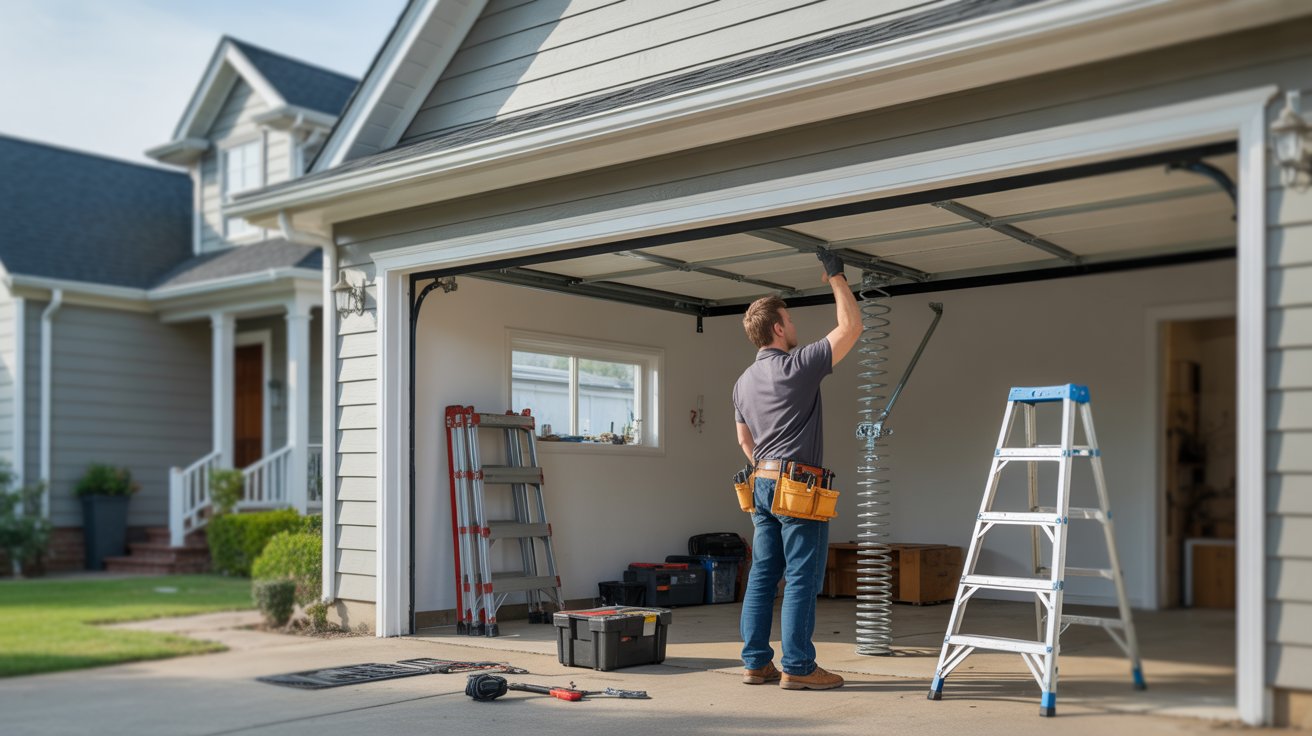
Your garage door is the largest moving part of your home. You use it every day. When it starts to fail, it rarely happens all at once. The warning signs show up first.
In Grand Junction and across Mesa County, seasonal swings make those warning signs show up faster. Hot summers, freezing winters, wind, and dust all wear down springs, rollers, tracks, and openers.
Here is what to watch for, and why it matters.
Why Garage Doors Wear Faster in Grand Junction CO
Grand Junction sits in a high desert climate. That means:
- Large temperature swings
- Low humidity
- Dust and wind exposure
- Intense UV sun
According to the National Weather Service, Western Colorado regularly sees wide daily and seasonal temperature changes that affect metal components.
Metal expands in heat and contracts in cold. Over time, that movement loosens bolts and stresses springs.
Dry air reduces natural lubrication. Wind pushes dust into tracks and rollers. Strong gusts also place pressure on wide garage door panels. Colorado State University notes that wind exposure in open terrain areas can place repeated stress on exterior structures.
These conditions speed up normal wear. Small problems grow faster if ignored.
Noisy Operation That Was Not There Before
Garage doors make some noise. Grinding, scraping, popping, or loud banging is different.
If you hear:
- Metal scraping along the track
- A sharp bang from the garage
- Squealing when the door moves
- Rattling that shakes the panels
You likely have worn rollers, loose hardware, or a spring under stress.
Temperature swings in Mesa County can move from below freezing in winter to over 90 degrees in summer. According to the National Weather Service, Western Colorado regularly sees wide daily and seasonal temperature changes that affect metal components.
Metal expands in heat and contracts in cold. Over time, that movement loosens bolts and stresses springs. Many spring failures in Grand Junction happen after sharp seasonal shifts when tension changes quickly.
If you hear a loud snap and your door will not lift, stop using it. A broken torsion spring is under extreme tension and can cause injury.
Uneven Movement or Crooked Door Sections
Your garage door should move straight and level. If one side rises faster than the other or the door looks tilted, something is wrong.
Common causes include:
- A failing torsion or extension spring
- Frayed or loose lift cables
- Bent tracks
- Worn rollers
An uneven door puts extra strain on the opener. That can shorten the life of the motor.
The U.S. Consumer Product Safety Commission reports thousands of garage door related injuries each year, many tied to failing springs and hardware.
If your door looks crooked, do not try to force it closed. You could bend panels or damage the opener rail.
Slow Response Time
When you press your remote or wall button, your door should respond within a second or two.
If you notice:
- A long delay before movement
- The opener humming but the door barely moving
- The door stopping halfway
You may have an aging motor, worn gears, or increasing spring tension issues.
Cold weather can also thicken lubricants and make movement slower. In high desert climates like Grand Junction, fine dust can build up inside tracks and rollers. That debris increases friction and slows the system down.
If your opener strains for weeks or months, it can burn out completely. Replacing a motor is often more expensive than repairing the root cause early.
Door Shakes or Vibrates While Moving
A garage door should move smoothly. Shaking or heavy vibration usually means hardware is loose or rollers are worn.
Check for:
- Loose hinge screws
- Worn nylon or steel rollers
- Track alignment issues
Wind also plays a role in Mesa County. Strong gusts push against large garage door panels. Over time, that pressure can shift tracks or weaken brackets.
If your garage faces open space or farmland, wind load can increase wear on mounting hardware.
Visible Wear on Springs or Cables
Springs do most of the heavy lifting. The average torsion spring lasts about 10,000 cycles. If you open and close your door four times a day, that equals roughly seven years of use.
Signs of spring wear include:
- Gaps in the coil
- Rust buildup
- A stretched or elongated appearance
- A door that feels heavy when lifted manually
Cables should look tight and clean. If you see fraying or unraveling, schedule cable replacement quickly.
Do not attempt to adjust or replace springs yourself. They are under high tension and require proper tools and training.
Higher Energy Bills
If your garage is attached to your home, a damaged door can affect indoor temperatures.
Look for:
- Cracked weather seals
- Warped bottom rubber
- Gaps along the sides
Mesa County winters drop below freezing. Summers bring intense sun. Poor sealing allows hot or cold air to move into your home.
The U.S. Department of Energy states that air leaks around openings can significantly impact home energy use.
Replacing worn seals or adjusting alignment can help protect your comfort and reduce strain on your HVAC system.
Why Seasonal Shifts in Mesa County Matter
Grand Junction sits in a high desert climate. That means:
- Large temperature swings
- Low humidity
- Dust and wind exposure
- Intense UV sun
Dry air can dry out lubrication. Heat can warp panels. Cold can stiffen components.
These conditions speed up normal wear. Small problems grow faster if ignored.
That is why routine inspections matter. Many homeowners schedule a yearly check before winter or summer peak temperatures.
When to Call a Professional
Call for service if:
- The door will not open or close fully
- You hear a loud snap from the spring area
- The door moves unevenly
- The opener strains or stalls
- Cables look loose or frayed
Keep in mind, this is not about selling you something you do not need. It is about preventing a larger failure later.
The brand standard behind Kooler Garage Doors focuses on trust, respect, and doing the job right the first time . In an industry where many homeowners feel uncertain, clear communication and proper diagnosis matter.
Your garage door protects your home, your vehicles, and often your main entry point. When it starts sending warning signs, pay attention.
Catching small issues early can save you money, time, and stress.
