

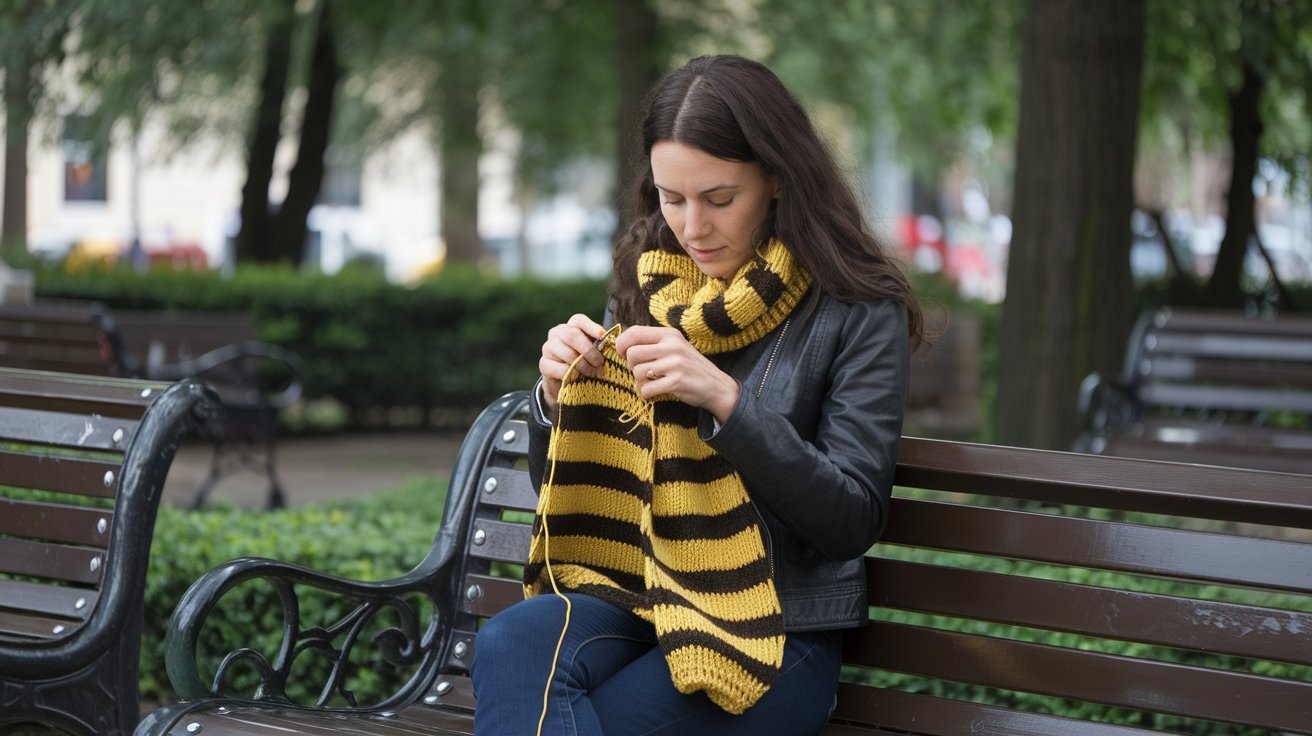
There’s something deeply satisfying about creating something with your own hands. In a world dominated by screens, notifications, and endless digital distractions, more people are discovering the quiet pleasure of working with fiber and needles. Knitting and crochet aren’t just hobbies for grandmothers anymore. They’ve evolved into a creative outlet that spans generations, offering everything from stress relief to a sense of accomplishment that’s hard to find elsewhere.
The resurgence of yarn crafts speaks to a deeper human need. We’re craving tangible results, meaningful activities that engage both our hands and minds. When you knit or crochet, you’re not just making a scarf or blanket. You’re engaging in a practice that’s been part of human culture for centuries, connecting with a tradition while creating something uniquely yours.
Whether you’re looking for a new way to unwind after work, searching for a creative hobby that produces practical results, or simply curious about why so many people are posting their finished projects on social media, yarn crafts offer something special. The barrier to entry is surprisingly low, the community is welcoming, and the possibilities are genuinely endless.
The Science Behind Why Yarn Crafts Feel So Good
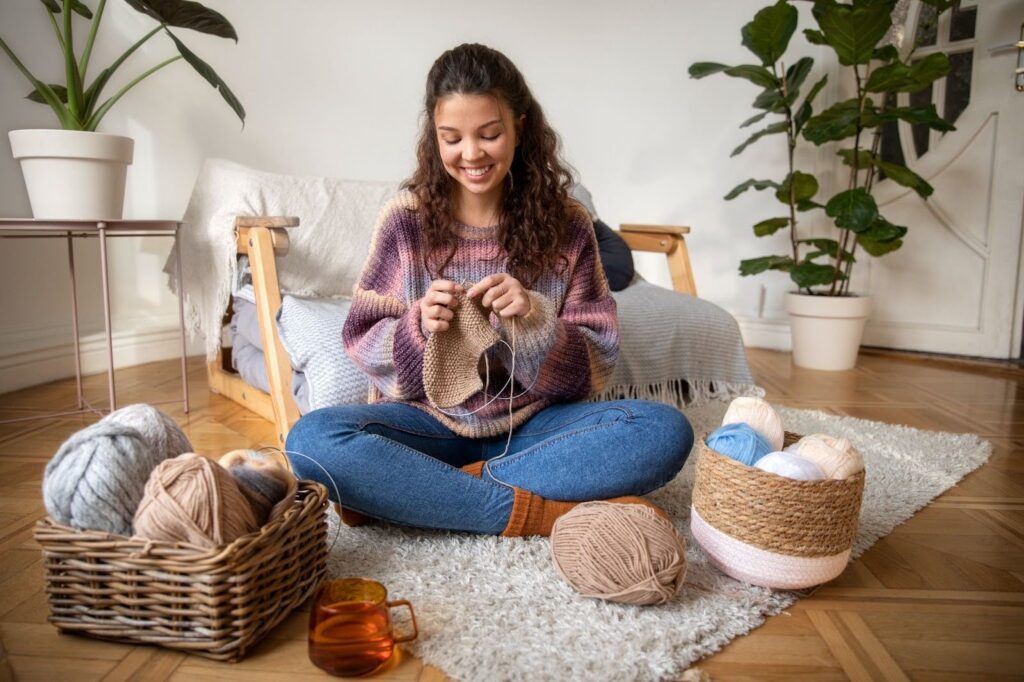
Let’s talk about why picking up needles and yarn might be one of the best things you can do for your mental health. Research has consistently shown that repetitive crafting activities like knitting and crochet have measurable positive effects on stress levels, anxiety, and overall wellbeing.
The rhythmic, repetitive motions involved in yarn crafts trigger what’s called the relaxation response. This is the same physiological state you’re trying to achieve through meditation or deep breathing exercises. Your heart rate slows, your blood pressure drops, and your body releases less cortisol, the stress hormone that wreaks havoc when it’s constantly elevated.
But it goes deeper than simple repetition. Working with yarn engages multiple areas of your brain simultaneously. You’re processing visual information, making tactile assessments, counting stitches, following patterns, and making creative decisions about color and design. This multi-sensory engagement creates what psychologists call “flow state,” that wonderful feeling of being completely absorbed in what you’re doing, where time seems to disappear.
For people dealing with anxiety, the benefits are particularly pronounced. Having something productive to do with your hands can interrupt anxious thought patterns. Many knitters report that they can feel a panic attack beginning and use their craft to redirect their focus and calm their nervous system. Unlike scrolling through social media or watching television, which are passive activities, yarn crafts give your mind something constructive to focus on.
The sense of progress and accomplishment matters too. In our modern work lives, many of us struggle with tasks that never feel truly finished. There’s always another email, another meeting, another project. But with knitting or crochet, you can see your progress row by row. You start with a ball of yarn and end with a finished object. That sense of completion and tangible achievement feeds something deep in our psychology.
Starting Your Yarn Craft Journey: Choosing Your First Project
One of the biggest mistakes new crafters make is starting with an overly ambitious project. You see a stunning cabled sweater online and think, “I want to make that!” But jumping straight into complex patterns is a recipe for frustration. The key to falling in love with yarn crafts is choosing projects that match your current skill level while still feeling rewarding.
For absolute beginners, simple is beautiful. A basic scarf in garter stitch (where you knit every row) or a single crochet dishcloth might not sound exciting, but these projects teach you fundamental skills while being almost impossible to mess up irreversibly. You’re learning tension control, how your needles or hook feels in your hands, and how different stitches interact with each other.
Scarves and cowls make excellent first projects because they’re essentially long rectangles. You don’t need to worry about shaping, complicated increases or decreases, or making sure pieces fit together. You cast on, you work in your chosen pattern until it’s the length you want, and you cast off. Done. You have a wearable item you made yourself, and you’ve built the foundational skills you need for more complex work.
Dishcloths and washcloths are another brilliant starting point, especially for crocheters. They work up quickly, so you get that satisfaction of finishing something in a few hours rather than weeks. You can experiment with different stitch patterns without committing to a massive project. And if you make a mistake, it doesn’t really matter because you’re making something functional that doesn’t need to be perfect.
Once you’ve completed a few simple projects and feel comfortable with the basic stitches, you can gradually level up. Try a simple hat in the round, which introduces you to circular knitting and basic shaping. Move on to a basic baby blanket with a simple pattern repeat. Each project should feel like a slight stretch, teaching you one or two new techniques without overwhelming you.
The project you choose also affects what kind of yarn you’ll need. A chunky blanket requires completely different materials than delicate lace work. Understanding this relationship between project and materials is crucial for success. It’s not just about picking colors you like, though that’s certainly part of the fun.
Understanding Yarn: The Foundation of Great Results
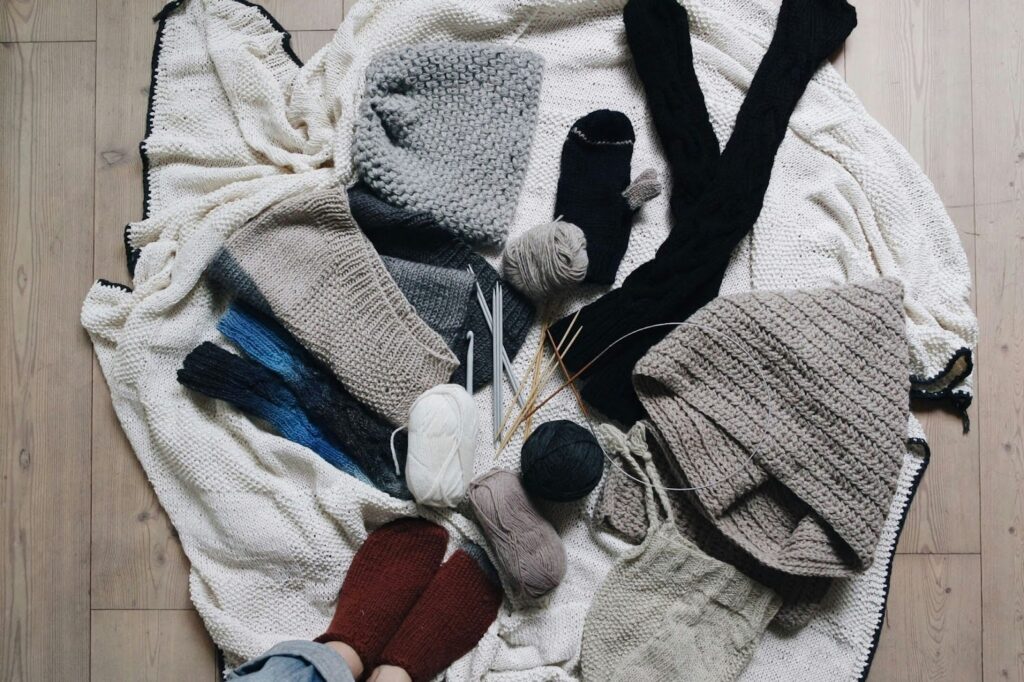
Here’s something that often surprises beginners: the yarn you choose matters as much as your skill level in determining how your project turns out. Two knitters with identical skill levels can make the same pattern and get completely different results based on their yarn choices. Understanding fiber content, weight, and quality transforms your crafting experience from frustrating to fulfilling.
Yarn weight refers to how thick or thin the strand is, and it’s standardized into categories that range from super fine to jumbo. The weight you need depends entirely on your project. A delicate shawl calls for fingering or lace weight yarn. A cozy winter scarf might use worsted or bulky weight. Your pattern will always specify the recommended yarn weight, and while you can sometimes substitute, doing so requires understanding how it will affect the finished size and drape of your project.
Fiber content is where things get really interesting. Wool is the classic choice for good reason. It’s elastic, warm, holds stitches beautifully, and forgives minor tension irregularities. Different types of wool have different characteristics. Merino is incredibly soft and perfect for items worn against the skin. Icelandic wool is more rustic and incredibly warm. Blue-faced Leicester has a gorgeous sheen and excellent drape.
But wool isn’t your only option. Cotton creates a crisp, cool fabric that’s perfect for summer garments and items that need to hold their shape. Bamboo and silk add drape and shine, though they can be slippery to work with. Acrylic, often dismissed by yarn snobs, has its place too. Modern acrylics are soft, affordable, and machine washable, making them ideal for items that will see heavy use, like baby blankets or children’s toys.
Blends combine different fibers to get the best properties of each. A merino-silk blend gives you wool’s bounce with silk’s sheen. Cotton-acrylic blends are easier to care for than pure cotton while still being breathable. Understanding these combinations helps you choose yarn that will behave the way you want for your specific project.
Quality matters more than many beginners realize. Cheap, scratchy yarn makes for a miserable knitting experience and a finished object you won’t want to use. You don’t need to buy the most expensive luxury fibers, but investing in decent quality yarn makes every aspect of crafting more enjoyable. Your stitches will look better, your hands will be happier, and you’ll actually want to wear or use what you make.
When you’re ready to stock up on supplies for your next project, it’s worth exploring the full range of options available. The convenience of being able to browse different brands, weights, and fiber contents from home makes planning projects much easier. You can compare colors, read detailed descriptions of how each yarn behaves, and find exactly what your pattern calls for without driving from store to store. For crafters looking to explore what’s available, you can Shop yarn online and discover everything from budget-friendly acrylics to luxury natural fibers, all with the detailed information you need to make informed choices for your specific project needs.
The beauty of having access to comprehensive yarn collections is that you can properly plan your projects. You’re not limited to what happens to be in stock at your local shop that particular day. You can find the specific fiber content, weight, and color palette that your pattern requires or that your creative vision demands. This means fewer compromises and better results.
Building a Sustainable and Enjoyable Yarn Craft Practice
Once you’ve caught the yarn craft bug, it’s easy to go overboard. Your stash grows. Your project queue becomes impossibly long. You have more patterns saved than you could complete in three lifetimes. Sound familiar? Learning to build a sustainable crafting practice means more enjoyment and less guilt.
Start by being realistic about your time and energy. If you only craft one evening a week, don’t plan projects that require 100+ hours. Choose quicker makes that give you that satisfaction of finishing regularly. There’s nothing wrong with being a slow crafter, but matching your project choices to your available time prevents the buildup of UFOs (unfinished objects) that can make you feel guilty.
Organize your stash in a way that makes sense for you. Some crafters organize by weight, others by fiber content or color. What matters is having a system that lets you see what you have and find what you need when inspiration strikes. Clear bins, labeled shelves, or even a simple spreadsheet can help you keep track of what you own and what you need for upcoming projects.
Quality over quantity applies to both yarn purchases and project selection. It’s better to have a curated collection of yarns you genuinely love and will use than a massive stash of impulse purchases that never become anything. When you see yarn you love, ask yourself: what would I make with this? Do I have a pattern in mind? Does it fit with my current project plans?
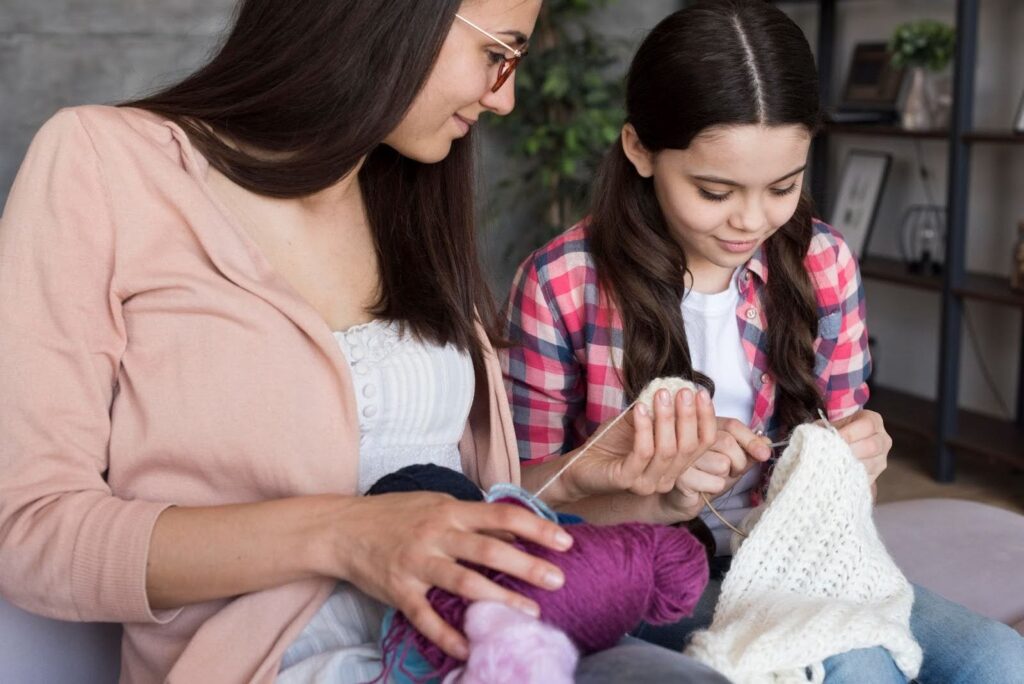
Join the community. Yarn crafters are some of the most welcoming, supportive people you’ll meet. Whether it’s a local knitting circle, an online forum, or a social media group, connecting with other crafters provides inspiration, troubleshooting help, and accountability. Seeing what others are making motivates you to work on your own projects. Sharing your progress creates connections and celebrates your achievements.
Don’t be afraid to take breaks. Sometimes life gets busy, or you lose interest in your current project, or you just need a mental break from crafting. That’s completely normal. The joy of yarn crafts comes from the process, not from forcing yourself to work on projects that feel like obligations. If something isn’t bringing you joy, it’s okay to frog it (rip out the stitches) and use that yarn for something else, or to set it aside and come back when the inspiration returns.
Experiment with different techniques and styles. If you’ve only ever knitted flat projects, try circular knitting. If you’ve never done colorwork, find a simple two-color pattern. If you’ve only crocheted amigurumi, try a garment. Each new technique you learn expands your skills and keeps things interesting. You might discover a new favorite way to craft.
The Gift-Giving Dimension
One aspect of yarn crafts that becomes increasingly important as you improve is making items for others. Handmade gifts carry a weight and meaning that store-bought items rarely match. When you give someone a hand-knitted scarf or crocheted baby blanket, you’re giving them hours of your time, your skill, and your care.
But here’s something important to understand: not everyone appreciates handmade items the way crafters hope they will. Before you invest weeks into making someone a sweater, make sure they’ll value it. Some people genuinely don’t understand the time and skill involved. They might toss your carefully made dishcloths in with their regular laundry and bleach them, or leave your lovingly crafted hat on a bus.
The best approach is to make things for people you know will cherish them. Pay attention to who genuinely appreciates handmade items and who treats them as special. Those are the people worth your crafting time. For everyone else, store-bought is perfectly fine.
When you do make gifts, choose projects that suit the recipient’s lifestyle. Machine-washable yarns for busy parents. Small accessories rather than garments for people you don’t know the sizing details for. Items they’ve specifically expressed interest in rather than things you want to make.
Your Creative Future With Yarn
The beautiful thing about yarn crafts is that there’s always something new to learn, always another technique to master, always another beautiful pattern calling your name. You could craft for a lifetime and never run out of interesting projects or skills to develop.
Some crafters focus on perfecting one type of item, making sweater after sweater until they can create custom-fitted garments with ease. Others bounce around, trying everything from socks to shawls to toys to home decor. Neither approach is wrong. Your crafting journey is yours to shape however brings you the most joy.
As you progress, you might find yourself drawn to design. Maybe you start modifying existing patterns, changing colors or making small adjustments. Perhaps you create something entirely new, working out the math and construction yourself. Pattern design is its own rewarding challenge, combining creativity with technical problem-solving.
Or maybe you simply enjoy the meditative repetition of making the same types of items over and over. There’s something deeply satisfying about mastering a pattern so thoroughly that your hands work almost automatically, leaving your mind free to wander or focus on an audiobook or podcast.
The yarn crafts community continues to evolve and grow, bringing new techniques, new yarns, and new inspirations. What was once seen as an old-fashioned hobby has become a vital creative outlet for people of all ages and backgrounds. Whether you’re looking for relaxation, creative expression, practical skills, or simply something to do with your hands while watching television, yarn crafts offer all of that and more.
