

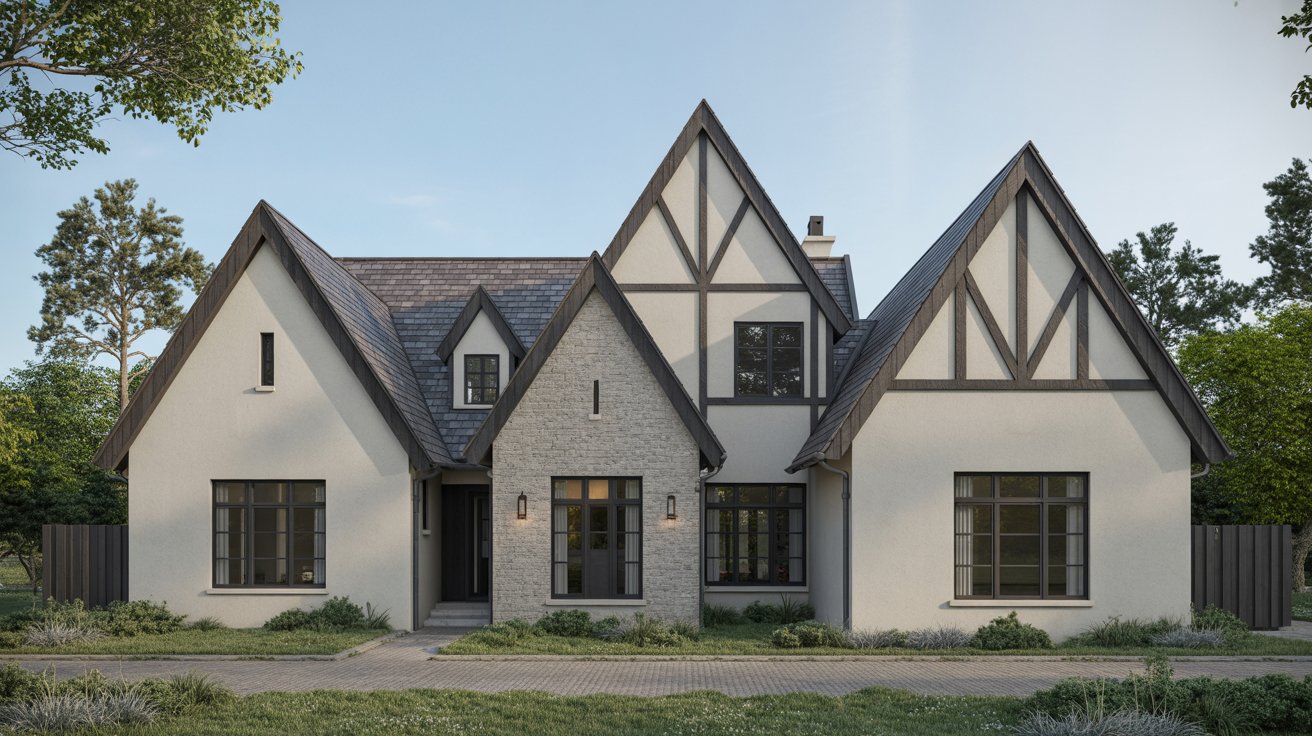
Tudor homes have a charm that never goes out of style. If you own one, you know what I mean. Those steeply pitched roofs and decorative half-timbering tell a story.
But maybe your exterior feels a bit dated, and you’re wondering how to freshen things up without losing what makes your home special.
Good news: you can absolutely modernize your Tudor while keeping its character. I’ll show you how to blend old-world appeal with contemporary touches.
Before you start, consider your budget, local regulations, and how updates will impact your home’s value.
Let’s make your Tudor shine.
What Defines a Traditional Tudor Exterior?
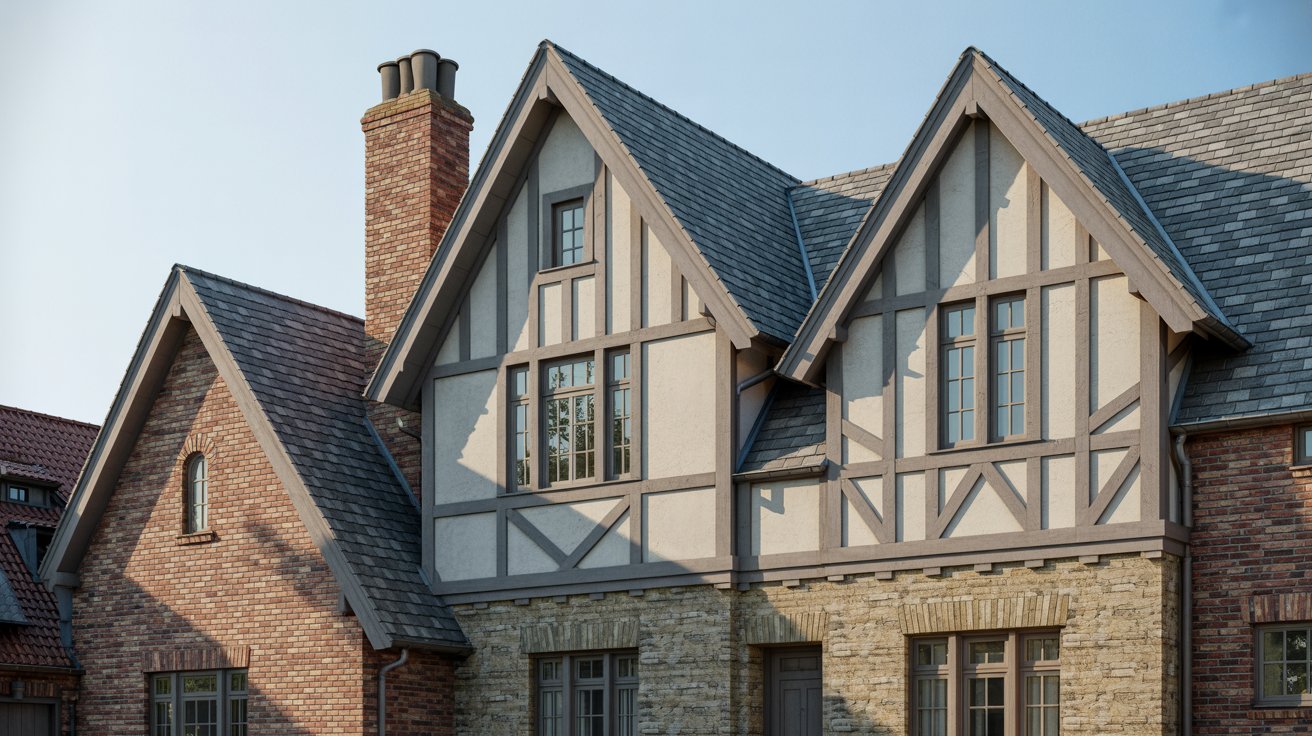
Traditional Tudor homes are easy to spot. They have steep gabled roofs, decorative half-timber detailing, and a mix of brick, stone, and stucco on the exterior.
Tall chimneys and narrow windows complete the classic look.
But updating a Tudor comes with challenges. You don’t want to over-modernize and lose the original character.
Finding the right balance between contemporary updates and authentic style takes planning. Working with historic materials can be tricky since some are harder to source or match.
The goal is making changes that feel intentional, not like they’re fighting against your home’s natural style.
List of 51 Creative Ways to Modernize Your Tudor Exterior
Ready to give your Tudor a refresh? Here are 51 practical ideas to update your home’s exterior while keeping its classic character intact.
Color, Paint & Finish Updates
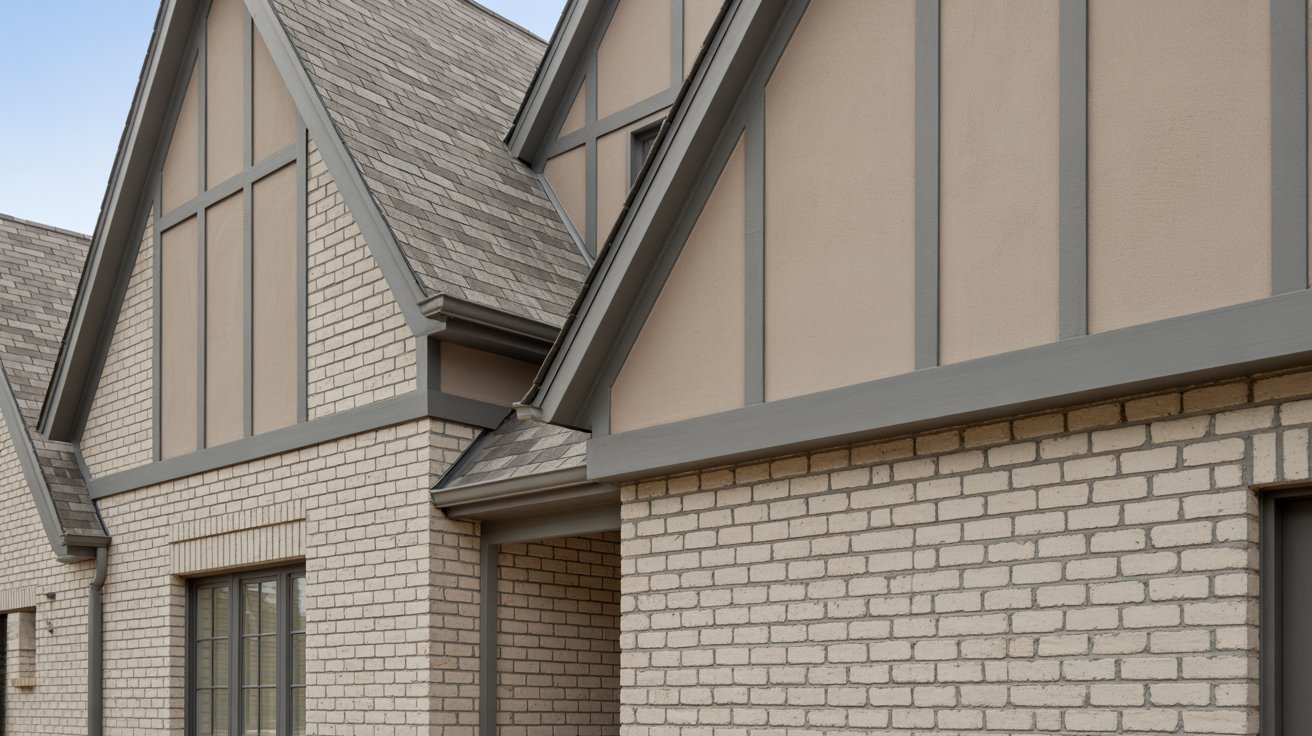
- Replace bright white stucco with warm greige tones: Swap harsh white for soft greige shades. This creates a warmer, more inviting look while keeping your Tudor feel intact. Greige works well with traditional timber and brick.
- Paint half-timbering charcoal gray instead of dark brown: Charcoal gray gives half-timbering a modern edge. It’s less heavy than dark brown but still provides strong contrast against lighter stucco or siding for visual impact.
- Use soft taupe exterior paint for a lighter façade: Taupe lightens your home’s appearance without going too neutral. It pairs nicely with existing stonework and creates a softer, more approachable exterior that feels current.
- Apply limewash to brick for a modern aged look: Limewash adds texture and depth to brick while softening its appearance. It creates a subtle, weathered finish that looks intentionally aged and blends old-world charm with contemporary style.
- Choose matte exterior finishes over glossy paint: Matte finishes look more refined and modern. They hide imperfections better than glossy options and give your Tudor a sophisticated, understated appearance that doesn’t scream for attention.
- Blend neutral color tones across all materials: Create cohesion by using neutral tones throughout. When brick, stucco, and timber share similar undertones, your exterior looks intentional and well-planned rather than busy or disjointed.
- Use monochromatic trim colors for cohesion: Keep trim colors within the same family as your main exterior. This creates a unified look that feels polished and modern while respecting your home’s architectural lines.
- Lighten dark brick with modern mortar tones: Update brick by repointing with lighter mortar. This brightens the overall appearance and gives traditional brickwork a fresh, contemporary feel without replacing the actual brick itself.
- Highlight architectural details with subtle contrast: Use slightly contrasting colors to draw attention to special features. Keep the contrast gentle so details stand out without creating harsh lines that feel out of place.
- Balance modern colors while preserving Tudor character: Choose colors that feel current but don’t fight your home’s style. The right palette updates your exterior while honoring the architectural integrity that makes Tudors special.
Windows, Doors & Entry Updates
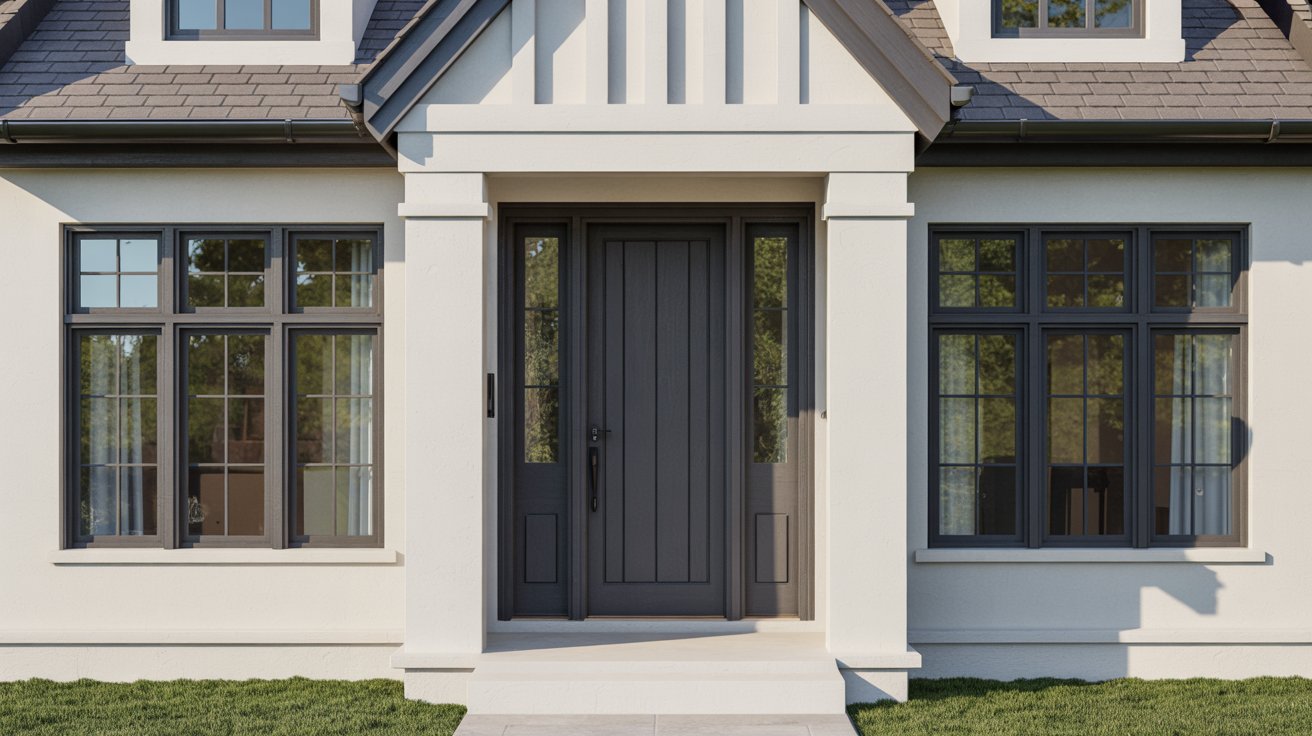
- Add black-framed casement windows: Black frames create crisp lines and strong contrast. They work beautifully with Tudor architecture, giving a nod to traditional steel windows while feeling thoroughly modern and clean.
- Replace small window panes with larger glass sections: Simplify your windows by using fewer, larger panes. This opens up views, brings in more light, and gives your home a less fussy, more contemporary appearance overall.
- Install steel-look windows for a refined update: Steel-look windows capture industrial style while honoring Tudor tradition. They’re sleek, durable, and create that perfect blend of historic character and modern sensibility you’re looking for.
- Upgrade to energy-efficient modern windows: Modern windows improve comfort and lower energy bills. Choose styles that match your Tudor’s proportions so you get performance benefits without sacrificing architectural authenticity or curb appeal.
- Simplify window mullion patterns: Reduce the number of mullions for cleaner lines. Simpler patterns feel more current and less busy while maintaining the vertical emphasis typical of Tudor-style windows.
- Install a modern solid wood front door: A solid wood door in a simple design makes a strong statement. Choose clean lines and minimal detailing to contrast beautifully with your home’s traditional exterior.
- Paint the front door deep black or charcoal: Dark door colors create instant drama and focus. Black or charcoal feels modern and sophisticated while complementing traditional Tudor materials and colors perfectly.
- Add slim vertical glass panels to the entry door: Flank your door with narrow glass panels for extra light. Keep them simple and vertical to maintain Tudor proportions while adding a contemporary touch to your entry.
- Use minimalist matte-black door hardware: Swap ornate hardware for sleek matte-black options. Simple handles, hinges, and knockers feel current and let your door’s design take center stage without unnecessary decoration.
- Introduce contemporary shutters with simple lines: If you want shutters, keep them simple. Choose flat panels without excessive detailing. They should frame windows cleanly rather than compete with your home’s existing character.
- Emphasize symmetry in exterior openings: Tudor homes love symmetry. When updating windows and doors, maintain balanced placement. Symmetrical arrangements feel organized and intentional, which reads as modern and well-planned.
Roofing, Trim & Architectural Details
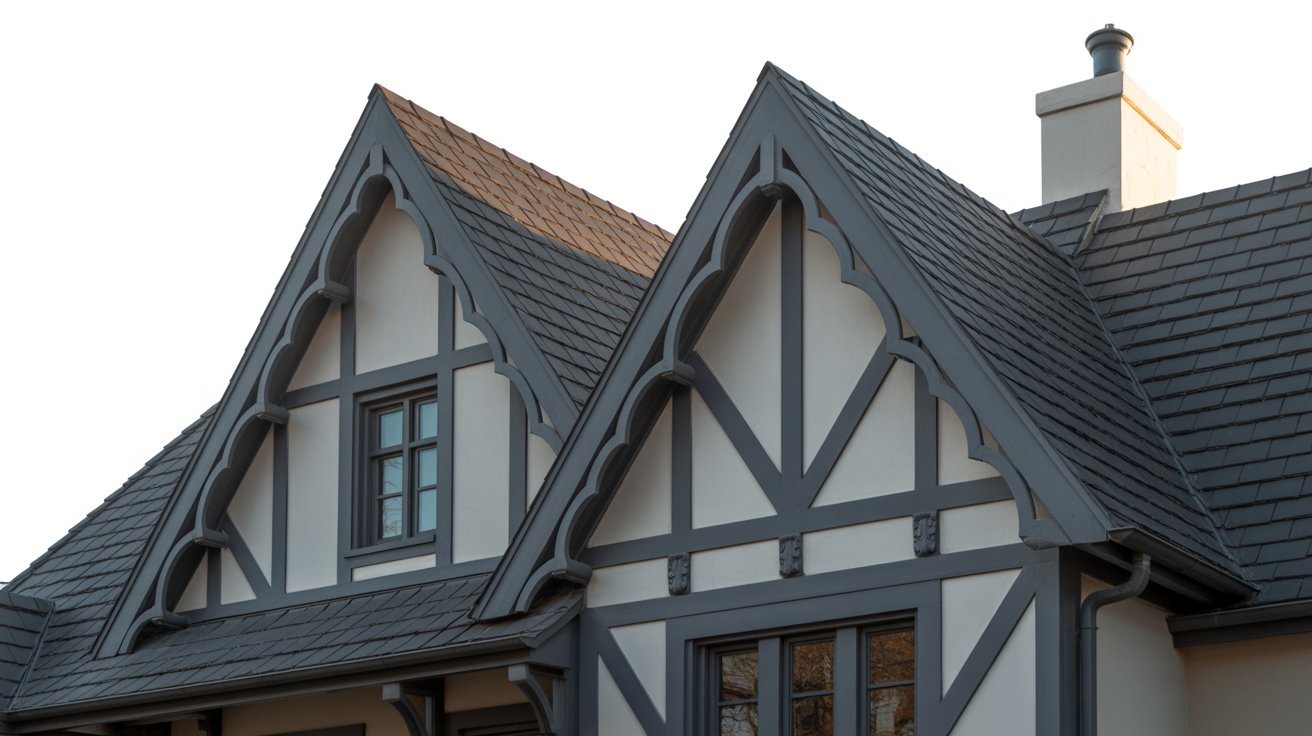
- Upgrade to architectural or slate-style roofing: Quality roofing materials make a big difference. Architectural shingles or slate-style options add dimension and texture while looking more refined than basic three-tab shingles.
- Choose darker roof colors for visual contrast: Dark roofs create strong contrast with lighter walls. This contrast defines your roofline and makes architectural features more noticeable, giving your Tudor a bolder, more intentional appearance.
- Simplify decorative trim and gable detailing: Remove overly ornate trim for cleaner lines. Keep some detailing to honor Tudor style, but edit out excessive decoration that makes your home look cluttered or dated.
- Clean up eave lines for a streamlined look: Simplify eave details by removing unnecessary brackets or decorative elements. Cleaner eaves create a more modern silhouette while maintaining your roof’s strong, dramatic presence.
- Remove excessive decorative brackets: Too many brackets can look busy. Remove some to create breathing room and let remaining architectural features stand out. Less really is more in this case.
- Simplify chimney detailing: Keep chimney proportions but reduce decorative elements. A simpler chimney still provides Tudor character without looking overly complicated or pulling too much attention from other features.
- Use modern metal accents on timber features: Add slim metal straps or accents to half-timbering. This industrial touch references historic construction methods while giving traditional wood elements a contemporary, intentional feel.
- Reduce façade clutter for a cleaner look: Edit down decorative elements across your exterior. Remove redundant details and let key architectural features breathe. A cleaner façade feels more modern and purposeful.
- Add a modern pergola or entry canopy: Install a simple pergola or canopy at your entry. Use clean lines and minimal detailing to create a contemporary shelter that complements rather than competes with Tudor features.
- Preserve defining Tudor elements while modernizing: Keep signature features like steep rooflines and half-timbering. Modern updates work best when they support, not replace, the architectural elements that make your home distinctly Tudor.
Materials, Lighting & Exterior Features
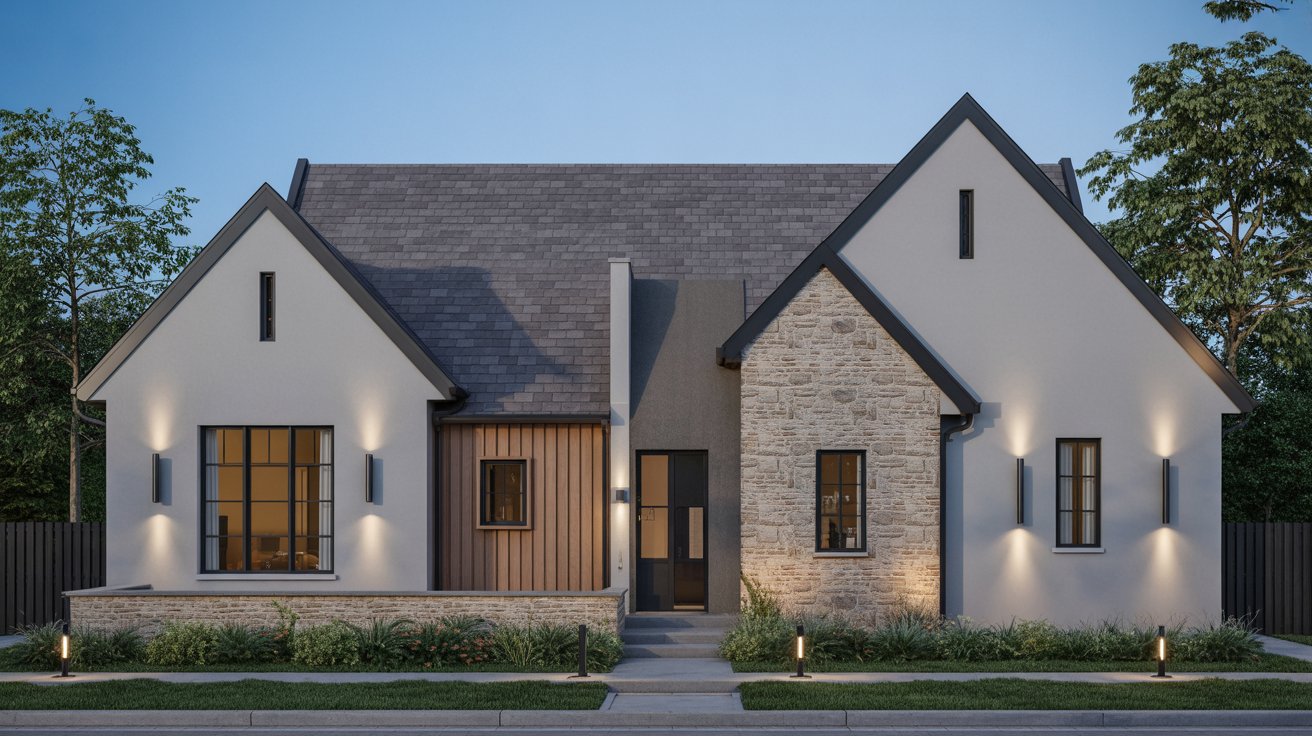
- Mix smooth fiber cement siding with stucco: Combine fiber cement and stucco for varied texture. The smooth cement provides clean surfaces while stucco maintains traditional character. This mix feels fresh but not overly modern.
- Introduce natural stone accents sparingly: Add stone in strategic spots like around entries or at foundation level. Used sparingly, stone grounds your home and adds texture without overwhelming the existing Tudor materials.
- Update brickwork with modern mortar joints: Repoint brick using contemporary mortar colors and techniques. Modern joints can brighten and refresh old brick while maintaining its texture and character throughout your exterior.
- Incorporate subtle wood paneling elements: Add wood panels in small doses for warmth. Keep them simple and stained in natural tones. Wood adds organic texture that complements traditional Tudor materials beautifully.
- Install minimalist exterior wall lighting: Choose simple sconces with clean lines. Mount them beside doors or along walls for functional light that doesn’t distract from your home’s architecture with fussy details.
- Add uplighting to highlight gables and textures: Install ground lights that wash up walls and gables. Uplighting creates drama at night and showcases your Tudor’s interesting textures, rooflines, and architectural details.
- Use warm LED pathway lighting: Light walkways with warm LED fixtures. They improve safety and create inviting ambiance. Choose simple bollards or low-profile lights that blend into landscaping during daylight hours.
- Upgrade house numbers to modern typography: Replace old house numbers with modern fonts. Large, simple numbers in matte black or brushed metal look current and improve visibility while complementing your updated exterior.
- Replace outdated exterior fixtures with sleek designs: Swap old light fixtures, mailboxes, and hardware for streamlined versions. Modern fixtures shouldn’t shout for attention but should quietly support your home’s updated look.
- Highlight textures with strategic lighting placement: Use lighting to emphasize interesting materials like brick, stone, or timber. Well-placed lights create depth and dimension, making your Tudor’s textures visible and appreciated after dark.
Landscaping, Walkways & Outdoor Structure
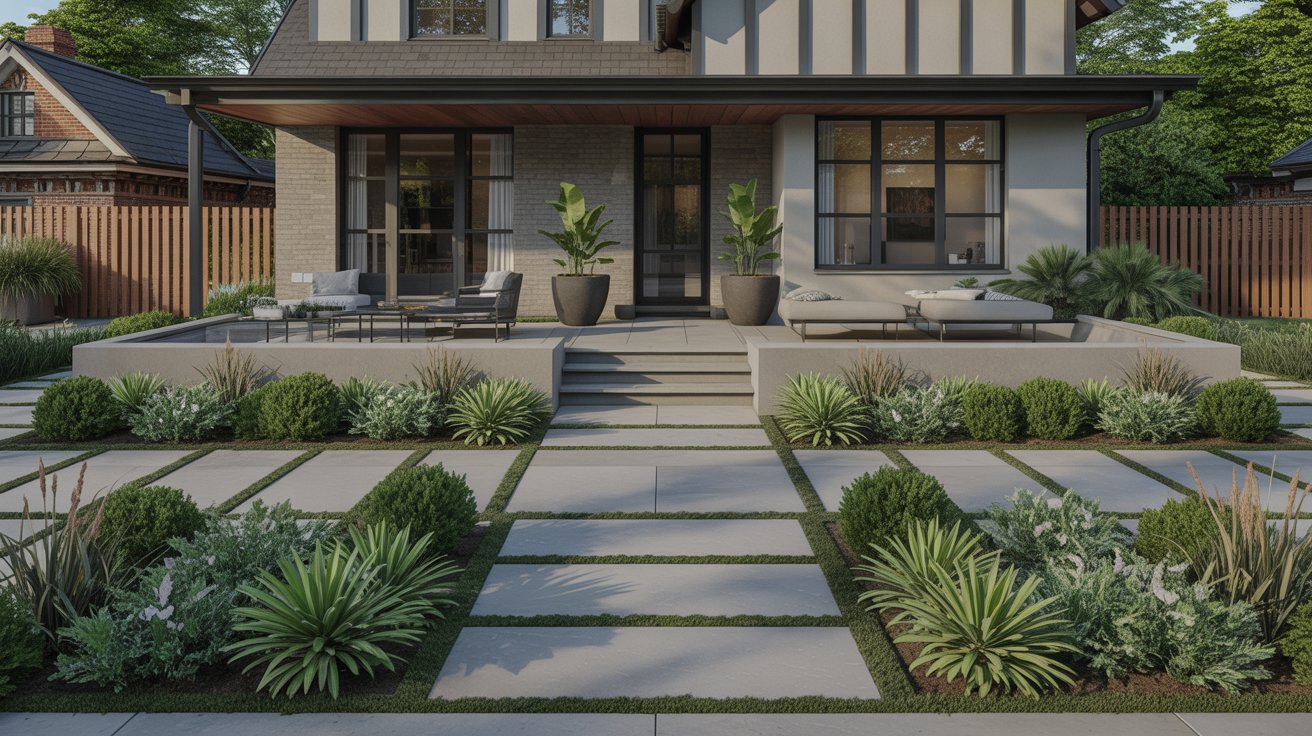
- Simplify overgrown landscaping around the façade: Cut back dense plants that hide your home. Simplified landscaping lets your Tudor’s architecture shine and creates a cleaner, more intentional look that feels current and well-maintained.
- Replace dense hedges with structured greenery: Swap overgrown hedges for structured plants with clean shapes. Boxwoods, ornamental grasses, or small trees provide greenery without creating a wall that hides your home’s features.
- Use symmetrical planting for a modern layout: Plant in balanced arrangements on either side of entries or walkways. Symmetry feels organized and intentional, creating a modern landscape that complements Tudor architecture perfectly.
- Add large contemporary planters at the entry: Place oversized planters near your front door. Choose simple shapes in concrete, metal, or dark ceramic. Large planters make a statement and frame your entry beautifully.
- Introduce ornamental grasses for softness: Plant grasses like fountain grass or feather reed grass. They add movement and softness while requiring less maintenance than traditional foundation plantings and feeling more contemporary.
- Replace traditional walkways with stone or concrete paths: Update old walkways with natural stone or poured concrete. These materials feel current and substantial. They create clean lines that guide visitors to your entry.
- Use large-format pavers for a clean approach: Install big pavers instead of small ones. Large formats mean fewer grout lines and a simpler, more modern look. They work beautifully leading to Tudor entries.
- Install modern metal or wood fencing: Replace dated fencing with horizontal wood slats or simple metal panels. Modern fencing defines property lines without looking heavy or competing with your home’s architecture.
- Update porch flooring with large-format tile: Replace worn porch floors with large tiles in neutral colors. Big tiles mean fewer seams and a cleaner appearance that complements your modernized Tudor exterior nicely.
- Use minimalist railings on porches or stairs: Install simple railings with clean lines. Cable rails, slim metal posts, or horizontal wood rails provide safety without the visual weight of traditional turned spindles.
Tips for Successfully Modernizing a Tudor Exterior
- Preserve defining Tudor elements. Keep the features that make your home recognizably Tudor, like steep rooflines and half-timbering. Modern updates should support these elements, not replace them.
- Stick to a cohesive color palette. Choose colors that work together across all materials. A unified palette makes your exterior look intentional and well-planned.
- Mix modern elements gradually. Start with small changes and add more over time. This approach lets you see what works before committing to bigger updates.
- Work with the home’s scale and proportions. Respect your Tudor’s existing lines and dimensions. New features should match the home’s original proportions for balance.
- Balance old and new thoughtfully. Don’t over-modernize to the point where your home loses its character. The best updates blend historic charm with contemporary style.
Conclusion
Modernizing your Tudor exterior is all about balance. The right updates boost curb appeal while respecting the heritage that makes these homes special.
You don’t need to choose between classic charm and contemporary style. They can work together beautifully.
Take your time with changes. Mix creativity with restraint, and your Tudor will feel both timeless and current. Start with one or two updates that speak to you, then build from there.
Ready to get started? Share your favorite ideas in the comments below.
And if you found this guide helpful, pass it along to fellow Tudor homeowners looking for inspiration.
Frequently Asked Questions
Can I modernize a Tudor home without losing its character?
Yes, you can update your Tudor while keeping its charm. Focus on subtle changes like paint colors, window styles, and simplified trim that respect the home’s original architecture.
What colors work best for a modern Tudor exterior?
Soft neutrals like greige, taupe, and charcoal gray work well. These tones feel current while complementing traditional Tudor materials like brick, stone, and timber.
Should I replace all my windows when modernizing a Tudor?
Not necessarily. You can update window style gradually or focus on high-impact areas first. Black-framed or steel-look windows offer the biggest modern impact.
How much does it cost to modernize a Tudor exterior?
Costs vary widely based on your project scope. Simple paint updates might cost a few thousand, while complete renovations with new windows and materials can reach $50,000 or more.
What’s the biggest mistake when updating a Tudor home?
Over-modernizing is the main pitfall. Removing too many traditional features or using styles that clash with Tudor architecture can hurt both appearance and resale value.
