


Buying or selling in Coconut Creek isn't a casual scroll anymore. Since Florida began requiring written buyer-agency agreements last year—and with the city's median home price around $240,000, down 26 percent year-over-year—choosing the right agent can swing tens of thousands of dollars. Yet most people still open a ratings site, skim a few stars, and hope. This guide hands you nine practical steps: from tapping hyper-local resources to decoding commissions. Fresh Broward County inventory figures and targeted interview questions will guard both wallet and paperwork. Ready to ditch Yelp roulette and stack the odds your way?
1. Tap local knowledge hubs before the big portals
Start close to home. Instead of drowning in star ratings on national sites, open the resources built by people who live and breathe South Florida real estate.
SquareFootHomes' Coconut Creek Learning Center is a solid starting point, and its Buyer Agency Agreement explainer on https://squarefoothomes.com clarifies why you now sign paperwork before touring a condo while the rest of the blog offers walk-through videos that decode Broward's condo bylaws. Because the writers sell property two ZIP codes away, their examples feel familiar, such as Wynmoor HOA fees rather than generic "sunshine state" tips.
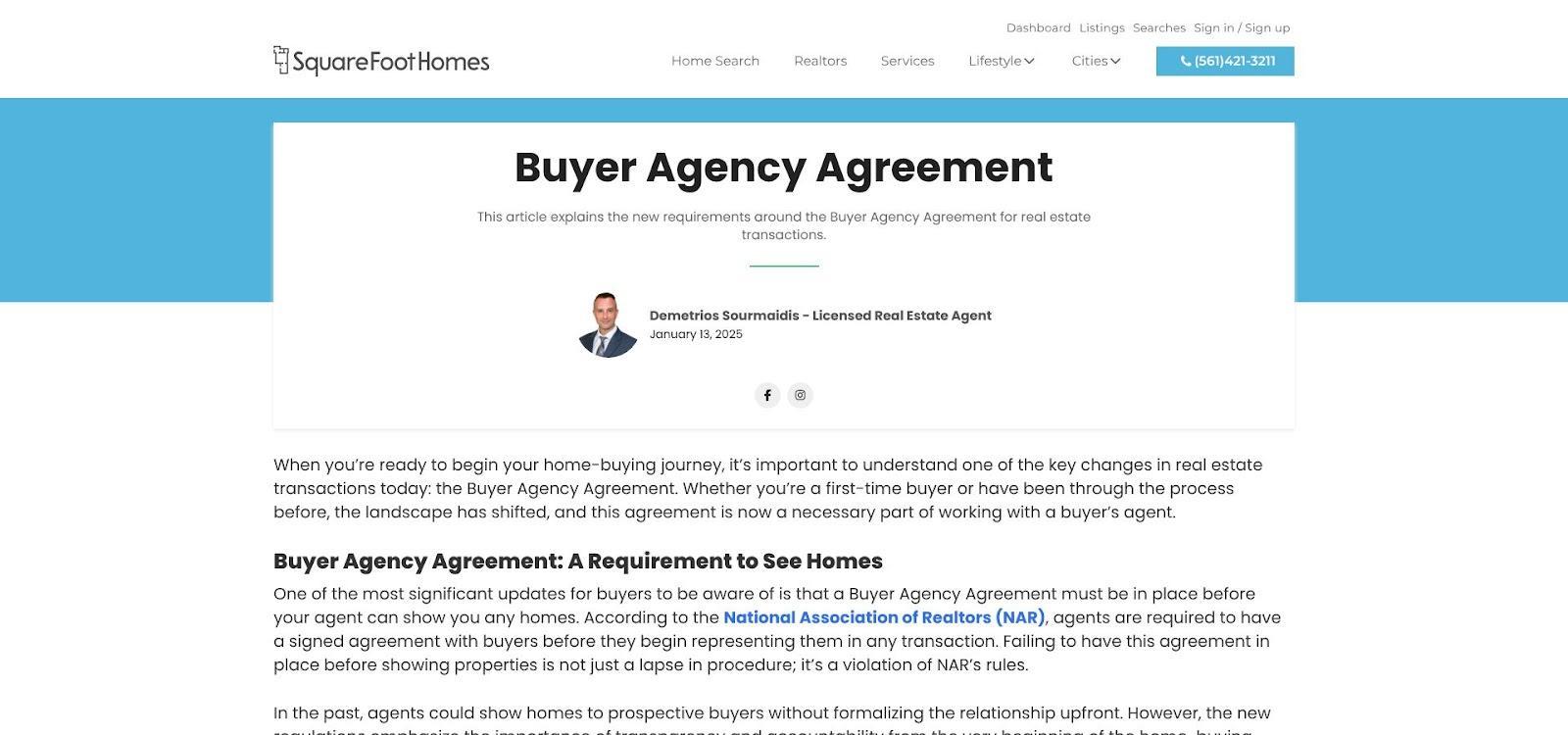
SquareFootHomes Coconut Creek Buyer Agency Agreement resource screenshot
Spend five minutes there and you will leave knowing three things:
- Why Florida now requires a signed buyer-representation agreement first.
- Typical commission ranges agents quote despite that rule.
- Follow-up questions that trip up part-time agents from Miami.
With that context, Yelp becomes a verification step instead of your starting line, and you already sound informed when you contact your first Realtor prospect.
Next, we will gather word-of-mouth insights that algorithms cannot surface.
2. Mine real-world referrals you can trust
Great agents leave a trail of satisfied clients. We just have to follow it.
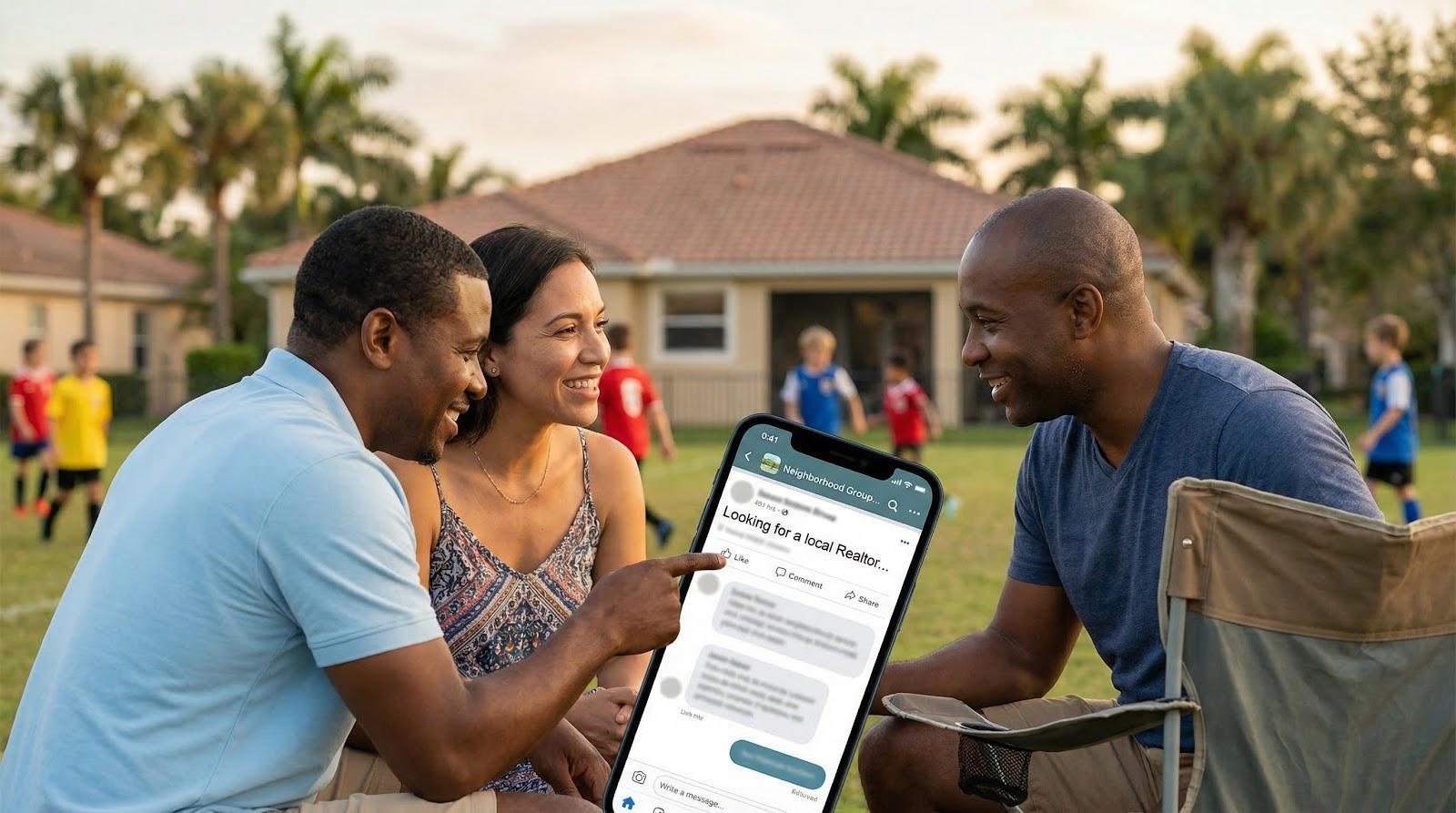
Start with people who recently bought or sold near Coconut Creek—friends from church, parents on the soccer sidelines, even the colleague who keeps praising her new screened-in patio. A quick "Would you hire your Realtor again?" tells more than any five-star graphic. Notice the pause before they answer; genuine enthusiasm shows up fast, while hesitation hints at a story you need to hear.
Expand the circle to professionals who watch dozens of deals close. Your mortgage broker, closing attorney, or favorite title rep sees which agents negotiate clean contracts and which ones scramble at inspection time. Their livelihoods depend on smooth transactions, so their recommendations carry weight.
Neighborhood groups round out the insights. Post a short request in the Coconut Creek channel on Nextdoor or the local HOA Facebook page. Within hours you will have a shortlist, and often a reality check on who to avoid. Because those comments appear under real names, the feedback tends to be candid.
Collect three or four names, then move on. We are not hiring anyone yet. We are simply building a bench of proven performers before the formal interview stage.
3. Run structured interviews, not casual chats
Your shortlist now faces a formal test.
Schedule a 30-minute block with each candidate and treat it like a job interview. You are about to trust this person with your largest asset, so step into employer mode.
Lead with experience. Ask how many Coconut Creek transactions they closed in the past 12 months and in which neighborhoods. A seasoned pro will rattle off addresses and sale prices without checking notes; a vague answer is a sign to move on.
Drill into performance. Request their average days on market versus the city median and their typical sale-to-list percentage. You already know Coconut Creek homes sit 90–120 days, so the math cannot hide. Listen for specifics and supporting data, not general confidence.
Probe strategy next. How do they set list price? Which marketing channels bring the most qualified buyers? What negotiation win are they most proud of this year? Each reply shows whether the agent thinks strategically or merely posts to the MLS and waits.
Finally, gauge fit. Outline how you like to communicate: daily texts, weekly calls, or another rhythm, and see if their style matches. The right agent will mirror your preference without fuss.
Record every answer. After three interviews the strongest candidate will stand out, and you will have evidence to back your choice.
4. Verify the paper trail: licenses, complaints, and more
A glossy postcard is no substitute for legal authority. Before you grow attached to an agent's pitch, visit Florida's Department of Business and Professional Regulation website and run their name through the license search. In seconds you will see "Active," "Inactive," or a red-flag status that tells you to walk away.
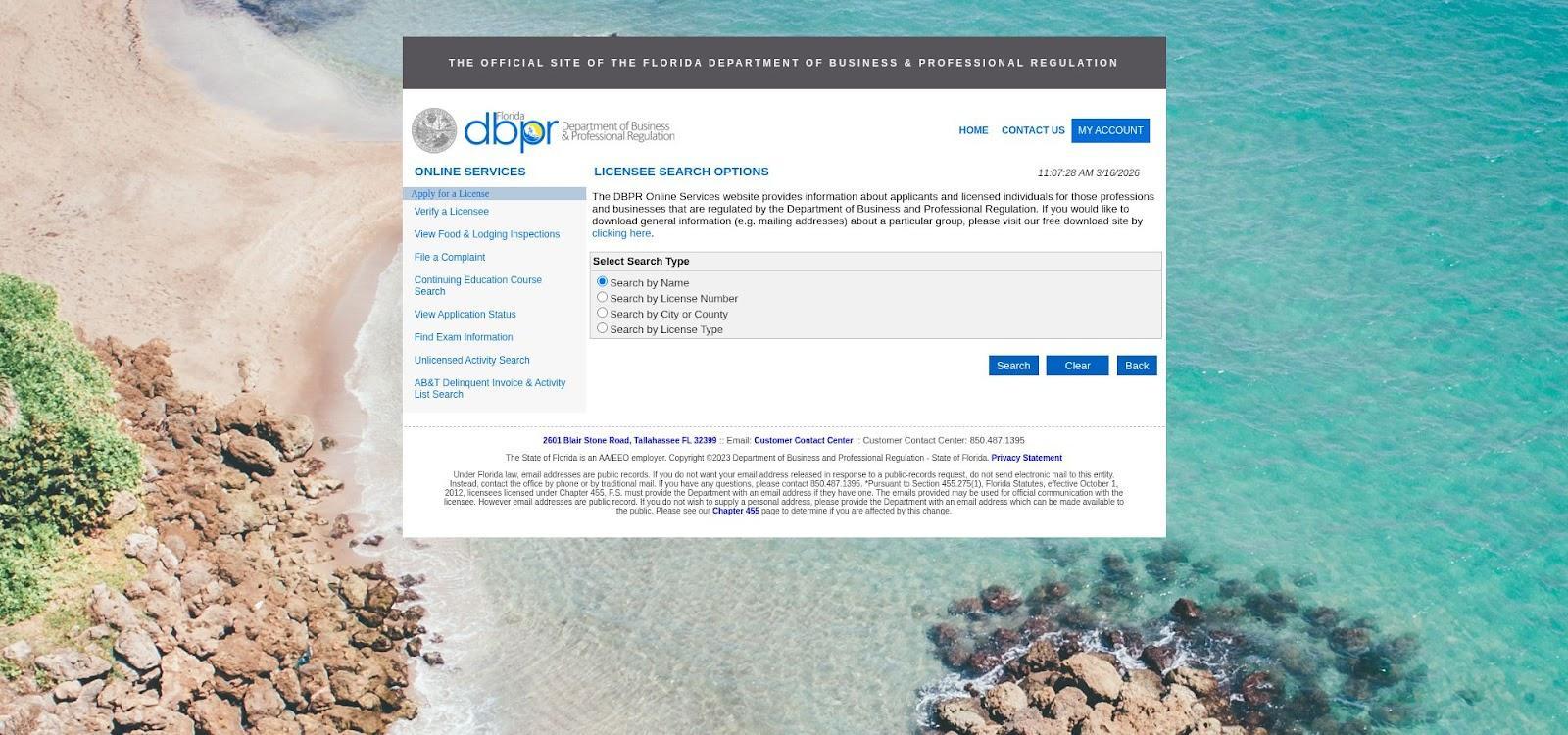
Florida DBPR real estate license search portal screenshot
Scroll a bit farther and open the discipline tab. One isolated complaint from ten years ago may be minor; a pattern of trust-fund violations is a deal breaker. This is the step most buyers skip, which is exactly why we do it.
While the database is open, confirm the brokerage license too. A spotless agent linked to a questionable broker still puts your deal at risk because escrow funds and MLS access flow through that office.
Next, cross-check consumer reviews, but read them the smart way. Filter for the newest posts, ignore single-sentence praise, and focus on stories that mention timelines and dollar amounts. Those narratives reveal whether issues were isolated misunderstandings or repeated habits.
Ten quiet minutes online now save weeks of stress later. With credentials confirmed, we can judge how each agent markets homes in your own backyard.
5. Evaluate their marketing muscle in your ZIP code
Good Realtors do not wait for buyers to stumble onto a listing; they create attention.
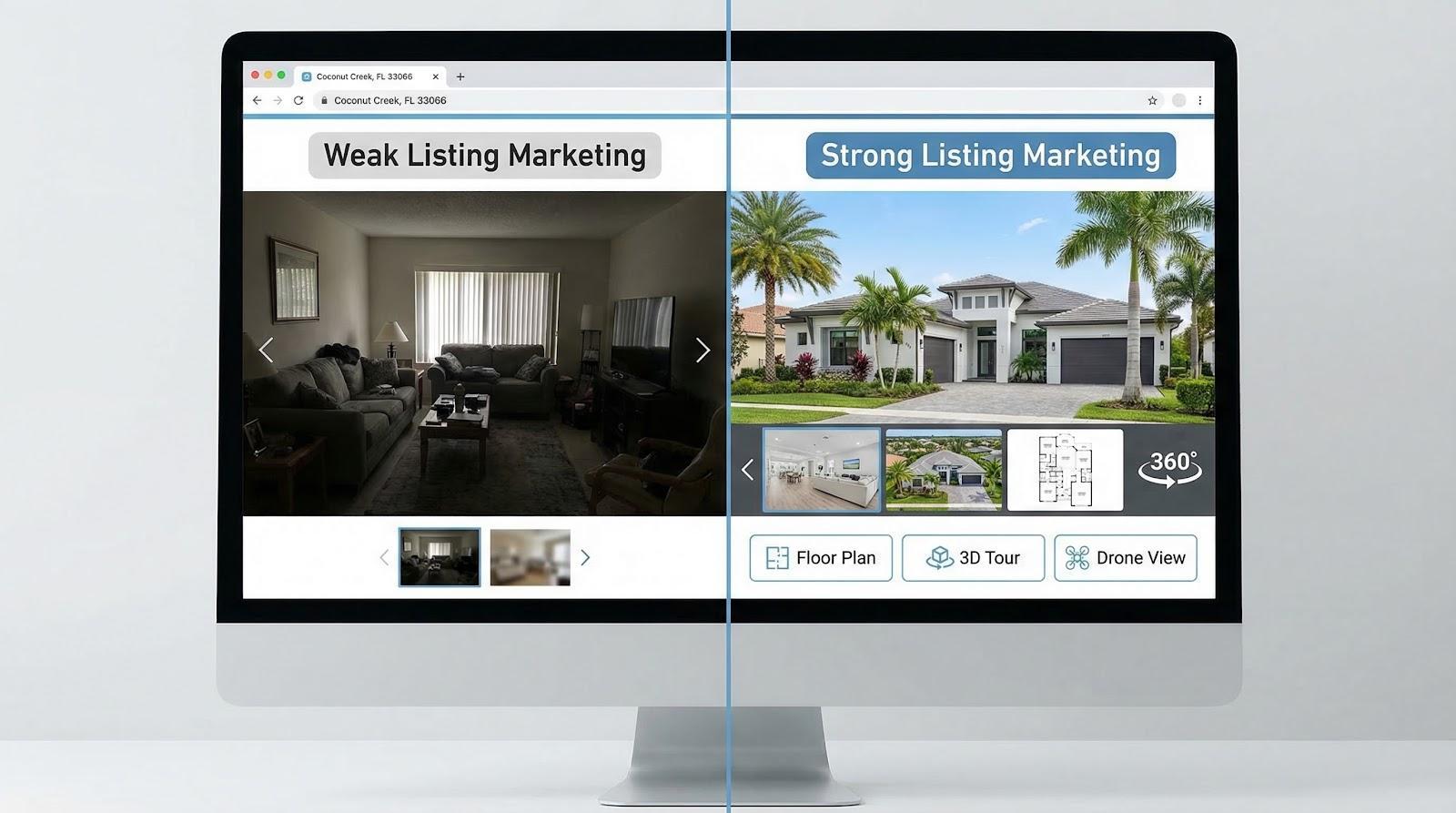
Pull up each candidate's most recent Coconut Creek property online. Do the photos grab you or look like Tuesday afternoon phone snaps? Click through to see whether there are floor plans, drone shots, and a 360-degree tour. Strong visuals tell buyers "this home is worth seeing," and they show you the agent invests real money in exposure.
Now leave the screen and hit the streets. Drive through Winston Park or Country Woods and note which names dominate the yard signs. Consistent signage suggests a steady client pipeline and someone available when offers arrive late on Sunday.
While you are out, scan social feeds. A modern agent should post new listings, open-house invites, and quick market nuggets that prove they understand local momentum. Silence on Instagram often translates to empty showings.
Finally, ask each Realtor for a sample marketing calendar. You want dates for the photo shoot, MLS launch, and first open house, not vague promises. The agent who hands you a mapped schedule backed by proven tools is the one who will push for every showing and every dollar.
6. Decode the dollars: commissions, fees, and real value
Talk of commission can make anyone tense, yet the math is clear once we cut the jargon.
Traditional full-service brokerages in Broward still quote about five to six percent of the sale price, split evenly between the listing side and the buyer's side. Discount firms promote headline rates as low as one and a half percent, but the fine print often adds photography packages or "transaction" charges that raise the real cost.
Focus on the net. Ask each agent to spell out, in writing, three facts:
- The exact percentage or flat fee you will pay at closing.
- Every service included in that fee (professional photos, MLS entry, contract negotiation, and post-inspection follow-through).
- Who pays the buyer's agent now that the MLS no longer displays that amount.
With those answers you can run simple math. On a $500 000 home, a five percent total commission equals $25 000. If a discount firm charges two percent but you must cover the buyer agent separately, the savings can disappear fast.
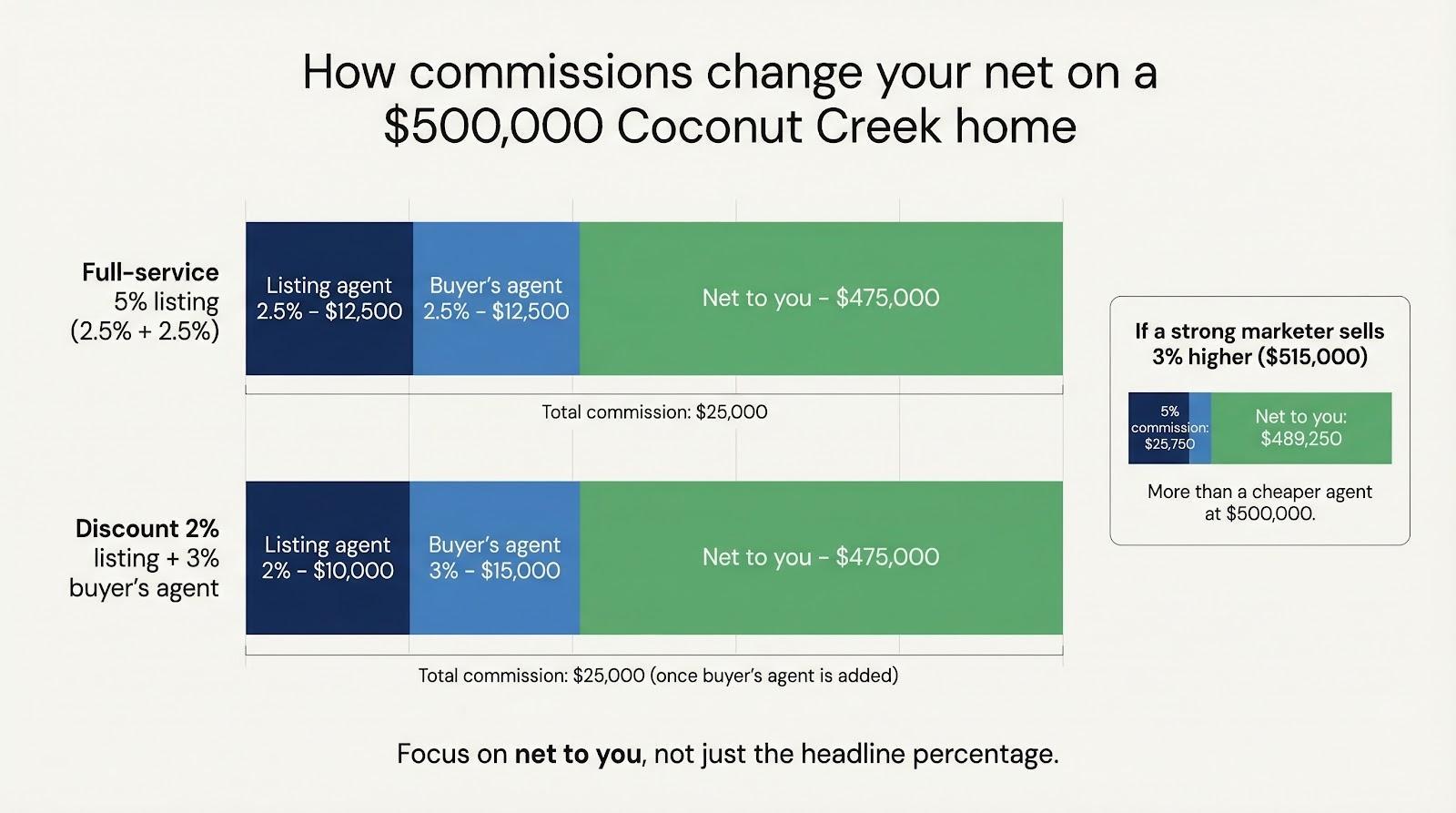
Also weigh speed and sale price. A strong marketer who sells your home eight days quicker and three percent higher than list often offsets a higher fee. That is value, not expense.
Before you leave the topic, confirm contract length. Most listing agreements last 90 days. Anything longer limits your flexibility if service falls short.
Clear terms now prevent headaches later. Next we zoom out to see how Coconut Creek's market numbers frame every negotiation.
7. Read the market temperature before you negotiate
Numbers shape bargaining power. Coconut Creek homes now sell for a median $240 000, down 26.6 percent from a year ago, and they sit about 120 days before going under contract (redfin.com). County-wide, Broward single-family sales jumped nearly 13 percent in September 2025 while active listings grew 14 percent, tipping the balance toward buyers (miamirealtors.com).
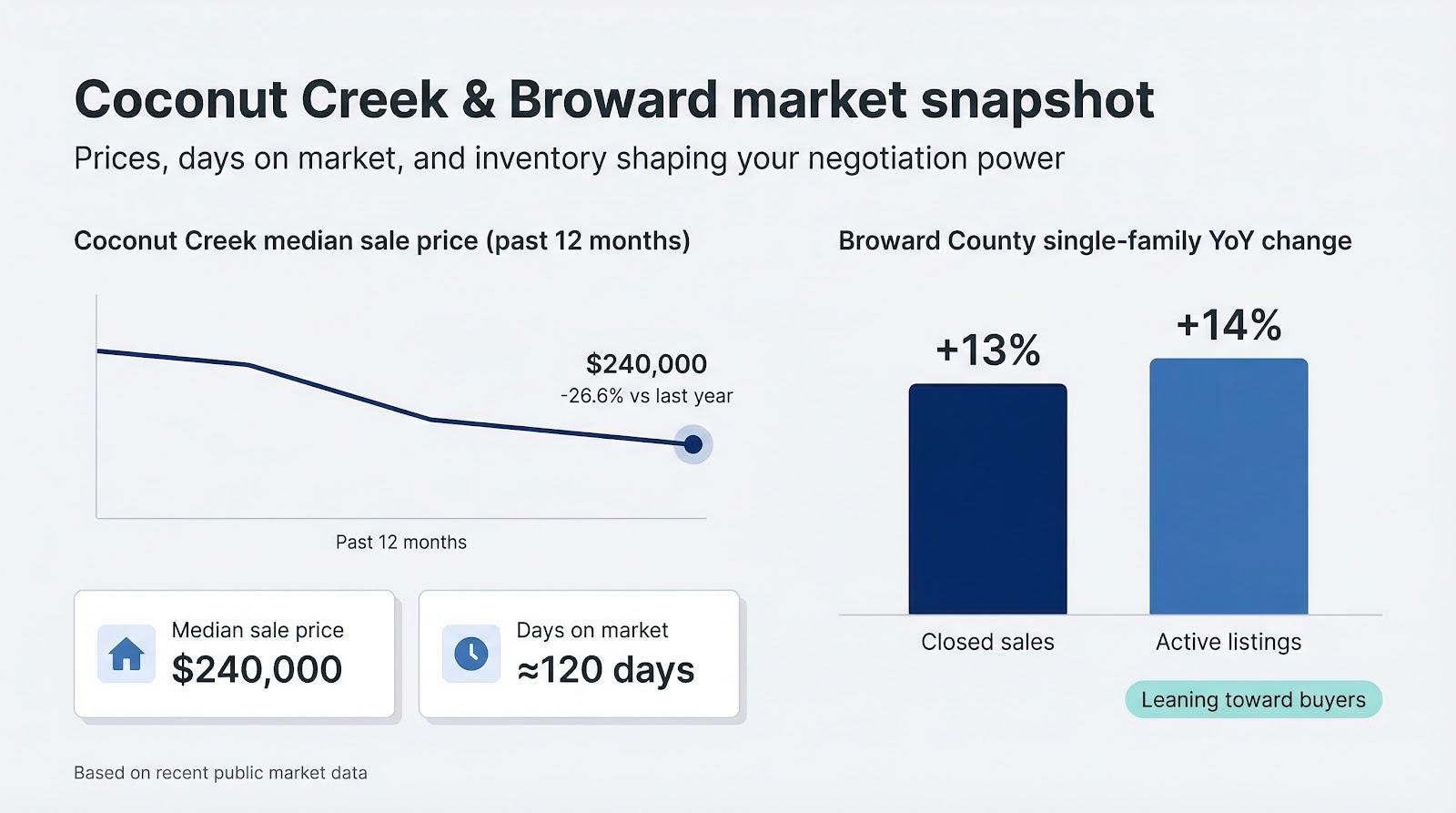
Those trends matter when an agent promises a quick sale or warns you away from a below-ask offer. Pull the stats up on your phone during the meeting and ask:
- "How did your last three Coconut Creek listings perform against the 120-day average?"
- "If inventory is up 14 percent, what strategy keeps buyers engaged after week four?"
A data-literate Realtor answers with hard numbers such as days on market, price cuts avoided, and bidding-war ratios, not anecdotes. You now have an objective yardstick to separate sharp analysts from smooth talkers.
Record these figures in your notes. They will steer every pricing conversation and keep emotions from overshadowing logic as we look for red flags next.
Conclusion
Finding a great Realtor in Coconut Creek comes down to preparation, not luck. Start with hyper-local resources and honest referrals, then stress-test each candidate with structured interviews, license checks, and hard market data. When you compare marketing plans, commission breakdowns, and neighborhood stats side by side, the standout agent reveals themselves before you ever sign a listing agreement. Follow these steps and you will close with confidence, knowing every dollar and every decision had the right professional behind it.
