


Little deck ideas work better when the design starts with the limits of the space. Not the shopping list. A large deck can get away with a few oversized pieces or a planter sitting in the wrong corner. A small deck cannot hide those choices. If homeowners buy furniture before understanding how the deck needs to function, the space can feel busy fast. Decking, furniture, shade, color, and movement all have to be coordinated.
That does not mean the deck is less valuable. It means the plan has to be more deliberate. A small deck can feel open and complete when the main decisions are made before furniture, lights, pergola, and roof details come in. Some ideas from warmer, drier markets like Austin look great online, but wetter climates ask for different thinking. Drainage, shade, and maintenance matter more there.
Cedar decking is a strong foundation for that kind of planning, especially on small decks and porches where every surface is visible. Western red cedar brings warmth, visible grain, and natural texture without making the design feel cluttered. Composite, ipe, and other options can work in the right setting, but western red cedar often feels softer and more natural in a compact outdoor space. It is also renewable, biodegradable, and commonly sourced from sustainably managed forests. Still, cedar decking needs regular care to stay at its best. It is a beautiful material, not a maintenance-free one, and it has to be planned properly if it is going to stand up to weather, moisture, and nearby roof runoff for years.
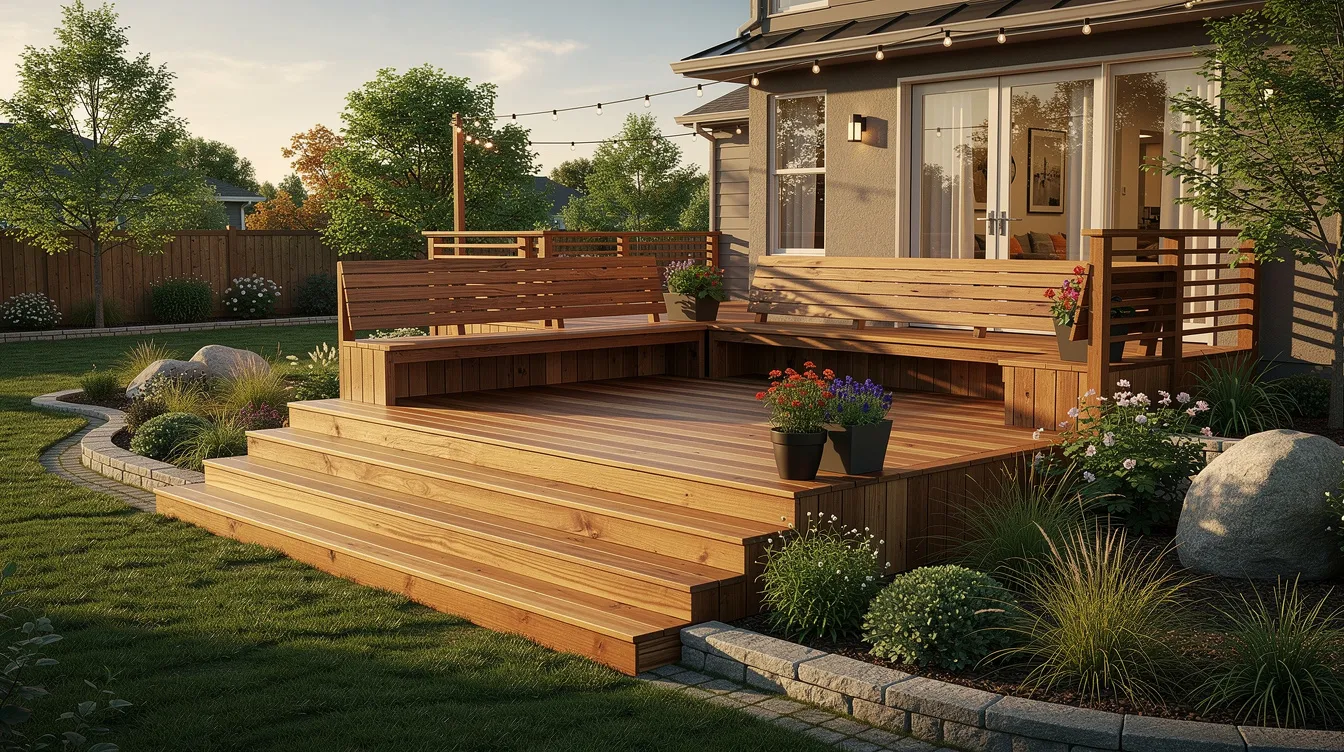
Start With Western Red Cedar Decking Before Decorating
When the cedar decking surface feels intentional, decorating gets much easier. Western red cedar has natural color variation, from soft reds and pinks to warm browns and silvery-gray tones as it weathers. On a little deck, that is important. The floor is too visible to treat as an afterthought, especially when the same material tone continues into benches, steps, or compact porches.
Western red cedar is naturally resistant to rot, decay, moisture, and insects, which is one reason it remains popular for outdoor decking. With proper finishing and routine care, cedar can last 20 to 50 years, depending on exposure, maintenance, and site conditions. It can also be used in more places than just the walking surface. Cedar is easy to work with and readily accepts finishes and coatings, so it works well for fascia boards, benches, privacy screens, and other details that help a small deck feel connected instead of patched together.
But it is still not a “set it and forget it” material. In a wet climate like Seattle, cedar deck maintenance is largely about managing moisture and keeping rain from penetrating the wood grain. Leaves can trap moisture. Shaded corners can grow moss. Fasteners can loosen over time. That is where professional deck planning starts to matter. Even a small project needs the right board layout, airflow, drainage, finish, and maintenance plan, and it is worth working with professionals who have the expertise to acknowledge those details before the deck is already under stress.
Useful 5/4 Cedar Decking Details for Small Decks
Small decks depend on details that are easy to overlook. Board size, wood type, drying method, finish, and cleaning routine all affect how the deck feels underfoot, how it weathers, and how much maintenance it will need later.
| Detail | Why it helps a small deck |
| 5/4 cedar decking board | Common 5/4 decking is often about 1 inch thick, 5 1/2 inches wide, and 10 feet in length, so board direction can change how wide or long the deck feels. |
| Western red cedar | Adds natural warmth and is naturally resistant to rot, moisture, decay, and insects. |
| Kiln-dried cedar | Helps reduce shrinkage, warping, and checking over time. |
| Penetrating oil stain | Soaks into the wood, helps replenish cedar’s natural oils, and can support a longer service life with proper care. |
| Annual cleaning | Clears mold, leaves, and organic debris that can hold moisture against the decking and contribute to rot. |
Give the Deck One Main Job
A small deck works better when it is not trying to be everything at once. Maybe it is a morning coffee spot. Maybe it is where the grill lives. Maybe it is a quiet place to sit at the end of the day. Those are different uses, and they need different layouts. Once homeowners agree on the main purpose, it becomes easier to find the right balance between seating, walking space, and shade.
A coffee deck may only need two chairs, a narrow table, and a planter. A grill deck needs safe movement between the house and the cooking area. A reading corner may need privacy, shade, and one comfortable seat instead of a full dining set.
This is where a lot of small decks go wrong. Homeowners keep adding things because each item looks useful on its own. As additions continue, the deck slowly loses its breathing room.
A few choices usually work better:
- Use built-in seating instead of bulky outdoor chairs
- Keep planters along the railing, not in the walking path
- Add a light pergola only if the space still feels open
- Run the board direction in a way that makes the deck feel longer
- Leave clear space near doors, stairs, and posts
- Choose a stain color that works with the house, roof, or trim
Use Shade Without Making the Space Feel Heavy
A pergola can be a great feature on a little deck, but scale matters. If the posts are too thick or the structure sits too low, the whole deck can start to feel boxed in. A lighter pergola often works better because it gives the space shape without closing it off.
A roof can also make sense, especially in rainy areas. It can make the deck more usable on gray days and protect some of the furniture. The problem is that a roof changes the feeling of the space quickly. If it does not connect with the house properly, it can look added on instead of planned.
Under-deck areas need the same kind of restraint. Ideas for covering under-deck space should not block airflow or hide problems that need to be checked later. Skirting, screens, or storage panels can make the area look cleaner, but moisture still needs a way out.
This matters even more in the Pacific Northwest. Wet months are not a small detail there. Experienced Seattle deck builders can help homeowners compare cedar decking, composite decking, drainage details, and finish options before the project is already built.
Keep Cedar Maintenance Honest
Cedar decking can last for many years, but only when it gets the kind of care wood actually needs. That does not mean treating maintenance like a second job. It means noticing small problems before they become costly repairs.
A yearly deep clean is necessary for cedar decking, especially in spring. It helps remove mold, leaves, pollen, and organic debris that can trap moisture against the boards and contribute to rot. It is also the right moment to check for loose fasteners, soft spots, worn finish, and early warping.
If the goal is to keep cedar’s natural color, resealing or staining every 1 to 3 years is usually part of ownership. Without that care, western red cedar can weather to a silvery-gray color. Some homeowners prefer that softer, aged look. Others want the warmer cedar color to stay. Neither choice is wrong, but it should be a choice.
Oil-based penetrating stains often make sense because they soak into the wood rather than forming only a surface layer. A UV-resistant finish can also help protect the color and support long-term durability.
A little deck does not need more stuff. It needs better decisions. Start with the deck boards. Keep the layout honest and easy to move through. Choose furniture that fits real use. Add shade where it solves a problem. Make sure water can drain properly. Make sure water can drain properly. With western red cedar, smart planning, and realistic care, even a compact deck can feel warm, useful, and connected to the home.
