

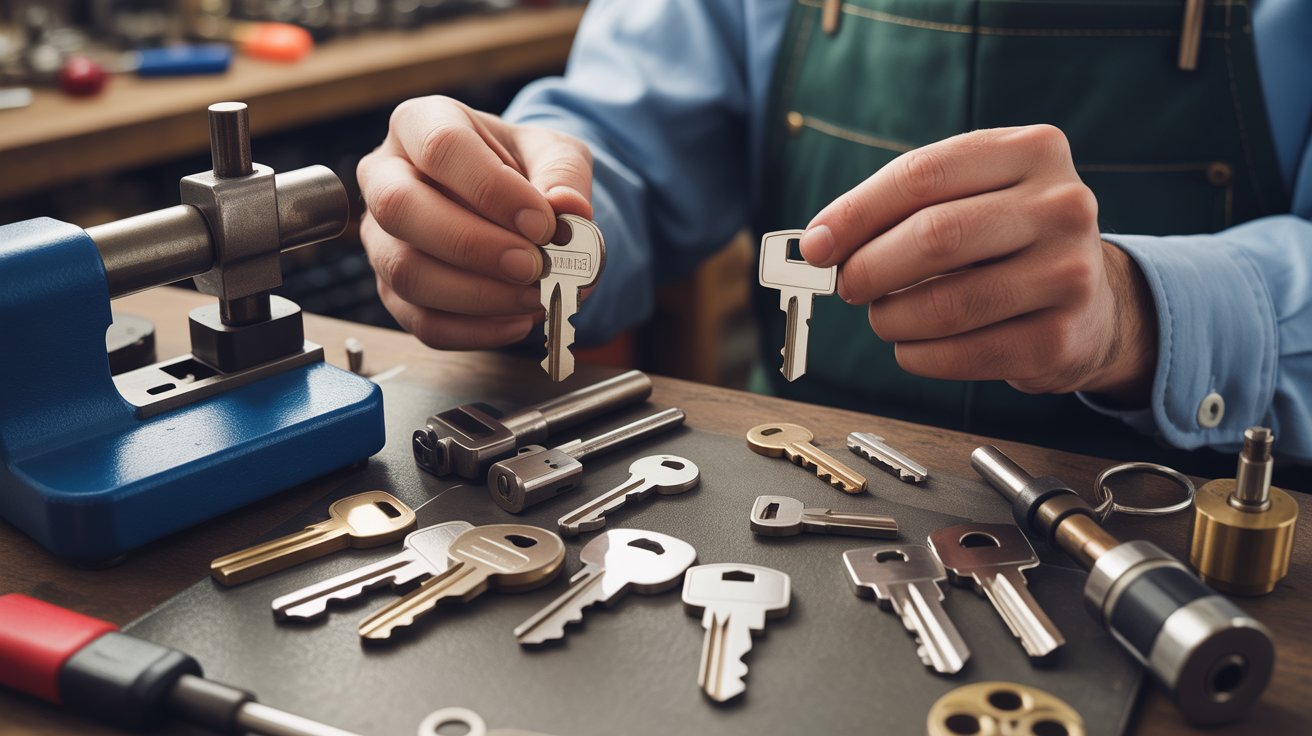
Getting stuck with a faulty key is a frustrating experience that most people will face at some point. Whether it’s a house key that refuses to turn or a car fob that has stopped responding, the immediate question is always whether you can fix what you have or if it’s time to start fresh. While it’s tempting to try a quick DIY fix, understanding the technical differences between a simple repair and a full replacement is essential for your security.
In the UK, we rely on a vast range of locking mechanisms, from traditional Yale locks to high-security multi-point systems on uPVC doors. Each type of key comes with its own set of common failure points. It’s important to assess the damage carefully before you make a decision that could potentially leave your property vulnerable.
Take a moment to explore the following guide to help you decide on the most practical and cost-effective solution for your situation.
When to Consider a Key Repair
Repairing a key is often the first thought for many homeowners, especially if the damage appears to be superficial. If you have a car key fob where the plastic casing has cracked or the buttons have worn down, you don’t necessarily need to replace the entire electronic unit. You can often find replacement shells or button pads that restore the key to its original condition without the need for expensive reprogramming.
Internal repairs are also possible for electronic keys. If the remote has stopped working, it might just be a dead battery or a loose connection on the circuit board. Professionals who provide key services in the UK can often diagnose these small electronic faults. Instead of buying a brand-new remote, a simple soldering job or a battery swap can save you a significant amount of money while keeping your original hardware in use.
For traditional metal keys, repair is a bit more limited. If a key is slightly bent, it’s possible to straighten it, but this often weakens the metal. You should only consider this a temporary measure. A repaired metal key is much more likely to snap inside the lock, which creates a far bigger problem than a simple broken key.
Indicators That Replacement is Necessary
There are certain scenarios where a repair simply isn’t a safe or viable option. The most obvious case is when a key has snapped in half. Even if you have both pieces, there’s no reliable way to bond them back together that will withstand the torque required to turn a lock. In this instance, you’ll need a replacement cut from the original code or a high-quality duplicate.
Wear and tear is another major factor. Over the years, the “teeth” or bitting on a key gradually wears down due to friction against the lock pins. When this happens, the key will feel “jiggly” or require a lot of wiggling to work. If you continue to use a worn key, you’ll eventually damage the internal components of the lock itself. Replacing the key early prevents you from having to replace the entire cylinder later.
If you’ve lost your keys or suspect they’ve been stolen, replacement is the only logical step for security. However, this often involves more than just getting a new key. For modern vehicles and high-security homes, you may need to have the old keys deleted from the system or the locks re-keyed to ensure that the old keys no longer work.
Costs and Benefits
Choosing between repair and replacement often comes down to a balance of immediate cost and long-term reliability. Repairs are generally cheaper in the short term, but they don’t always offer a permanent fix. If you’re dealing with a complex transponder key, a repair might cost a fraction of a replacement, but it won’t help if the chip itself is failing.
- Standard House Keys: These are inexpensive to replace, so repair is rarely worth the effort.
- Vehicle Remotes: Repairing the shell or buttons is highly cost-effective.
- Transponder Keys: If the chip is damaged, replacement is mandatory for the vehicle to start.
- Office and Master Keys: These often require replacement through authorised dealers to maintain security protocols.
It’s also worth considering the time factor. A local locksmith can cut a new standard key in minutes, whereas sourcing specific repair parts for an obscure car fob might take several days. You should weigh up how urgently you need the key before you decide which route to take.
Final Verdict
Your choice should always prioritise the security of your property. A faulty key is a sign that the primary point of access to your home or vehicle is compromised. If you aren’t sure about the structural integrity of a repaired key, it’s always better to opt for a replacement to avoid the risk of being locked out at an inconvenient time.
Modern technology has made it easier than ever to get high-quality replacements delivered quickly. Whether you need a spare for a new tenant or a replacement for a broken car remote, using professional services ensures that the new key meets the required safety standards. It’s an investment in peace of mind that ensures your locks remain functional and your property stays protected.
