

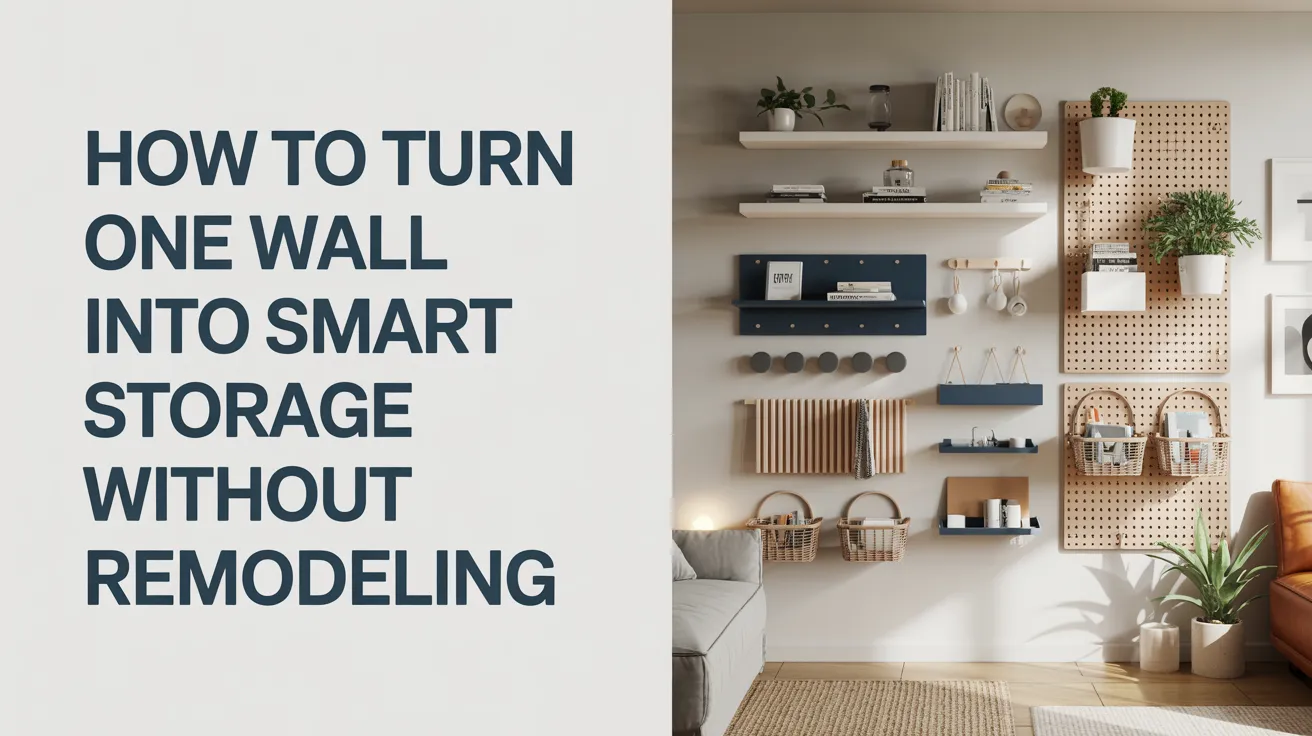
Most walls in your home are doing nothing. Maybe there is a framed print or a mirror, but the wall itself is not pulling its weight. That is a lot of unused vertical space, especially if you are short on storage.
Here is the thing. One single wall, done right, can handle about 80% of a room’s storage needs. You do not need a renovation or a trip to a custom cabinetry shop. You just need a plan and the right starting pieces.
If you are working with a dining room, entryway, or hallway, a modular sideboard gives you a solid base to build from. It sits low, holds plenty, and leaves room above for shelves or wall-mounted extras.
For a living room, especially around the TV area, a modular entertainment center can stretch across the full wall and combine media storage, display space, and hidden storage in one setup.
Either way, the idea is the same. Pick one wall. Use it fully. And skip the remodel.
Why Wall Storage Works Better Than Adding More Furniture
When a room feels cluttered, the first instinct is to buy another shelf or another cabinet. But adding separate pieces of furniture around the room usually makes things worse. You end up with more surfaces collecting stuff and less floor space to move around.
The real issue in most small rooms is not that you lack furniture. It is that your storage is broken up into small, disconnected spots. A basket here, a bookshelf there, a console table by the door. None of it works together.
What actually works is a continuous storage surface along one wall. Think of it like a kitchen counter. The reason kitchens feel organized is that everything lines up along the walls in a row. You can do the same thing in a living room, hallway, or dining area.
A low cabinet running across one wall gives you a long, flat surface on top and hidden storage below. Stack something above it, like floating shelves or an upper cabinet, and now you have floor-to-eye-level storage that barely takes up any floor space.
It also just looks better. One organized wall reads as intentional. Five random pieces scattered around a room read as cluttered, even if you own the same amount of stuff.
Start Low: Building a Base With Cabinets
The easiest way to start a storage wall is from the bottom. A low cabinet gives you the foundation, and everything else builds on top of it.
Dining rooms, entryways, and hallways are the best places to try this first. These are high-traffic areas where things tend to pile up. Mail, keys, shoes, bags, chargers. A sideboard along one wall catches all of it and keeps the surface clear enough to still look good.
A modular sideboard is especially useful here because it lets you pick the right width for your wall. You are not stuck with a single fixed size. If your hallway is narrow, go shorter. If your dining room wall is wide open, stretch it out.
The key is to push the cabinet all the way to the wall and treat it like a built-in, not a standalone piece. That changes how the room feels. It stops looking like a piece of furniture you dropped in and starts looking like part of the room itself.
Once the base is in place, the wall above it becomes usable space. You can add floating shelves for display items, mount hooks for bags or coats, or just leave it clean. But the foundation is set, and you can build upward whenever you are ready.
Extending Upward for Living Room Organization
The living room TV wall is probably the most underused storage opportunity in most homes. People mount the TV, maybe put a stand below it, and call it done. But that wall has potential for so much more.
Think about what that wall actually needs to hold. The TV and its cables. A streaming device or game console. Books, remotes, decorative objects. Maybe a speaker. If you have kids, probably have some bins for toys that need to disappear at the end of the day.
A modular entertainment center handles all of that by combining open shelving, closed cabinets, and a media zone into one unified setup. Instead of a standalone TV stand surrounded by empty wall, you get a full wall system that looks intentional and holds everything the room needs.
The open sections work for things you want to see. Photo frames, plants, and a few favorite books. The closed sections hide things you do not. Router, cords, board games, and extra throw blankets. Mixing open and closed is what keeps it from looking like a storage unit.
And because the whole setup runs along a single wall, it frees up the rest of the room. No separate bookshelf in the corner. No basket tower by the couch. The wall does the work, so the floor plan stays open.
Why Modular Pieces Make This Easier Than Custom Built-Ins
Custom built-in shelving looks great in magazine photos. But in real life, it comes with a long list of trade-offs that most people do not think about until it is too late.
First, there is the cost. Custom cabinetry for one wall can run several thousand dollars, plus labor and time. You are also locked into whatever layout the carpenter builds. If your needs change, or if you move, that investment stays behind.
Modular furniture solves most of these problems. You can set it up in an afternoon. You can rearrange or expand it later. And if you move to a new place, it goes with you.
This matters especially if you are renting. Landlords generally do not allow wall-mounted built-ins or permanent shelving. But a modular wall unit that sits on the floor and leans against the wall works just fine. You get the look of a built-in without making a single hole in the drywall.
Even for homeowners, modular setups make sense for rooms where your needs are still changing. Maybe you just moved in and are not sure how you will use the space. Maybe your kids are growing, and what you need to store will shift over the next few years. Modular pieces let you start small and add on as you figure things out.
The flexibility is the whole point. You are not committing to a permanent structure. You are building a system that adapts as your life does.
Plan Your Wall, Not Your Furniture
The next time you feel like your room needs more storage, resist the urge to buy another random piece of furniture. Instead, look at your walls. Pick one. Measure it. Then plan around it.
Start with a low cabinet to create the base. Build upward if the room calls for it. Choose modular pieces so you can adjust later without starting over.
One well-planned wall can replace a whole collection of mismatched shelves, bins, and tables. It is simpler, cleaner, and you do not have to call a contractor to make it happen.
