

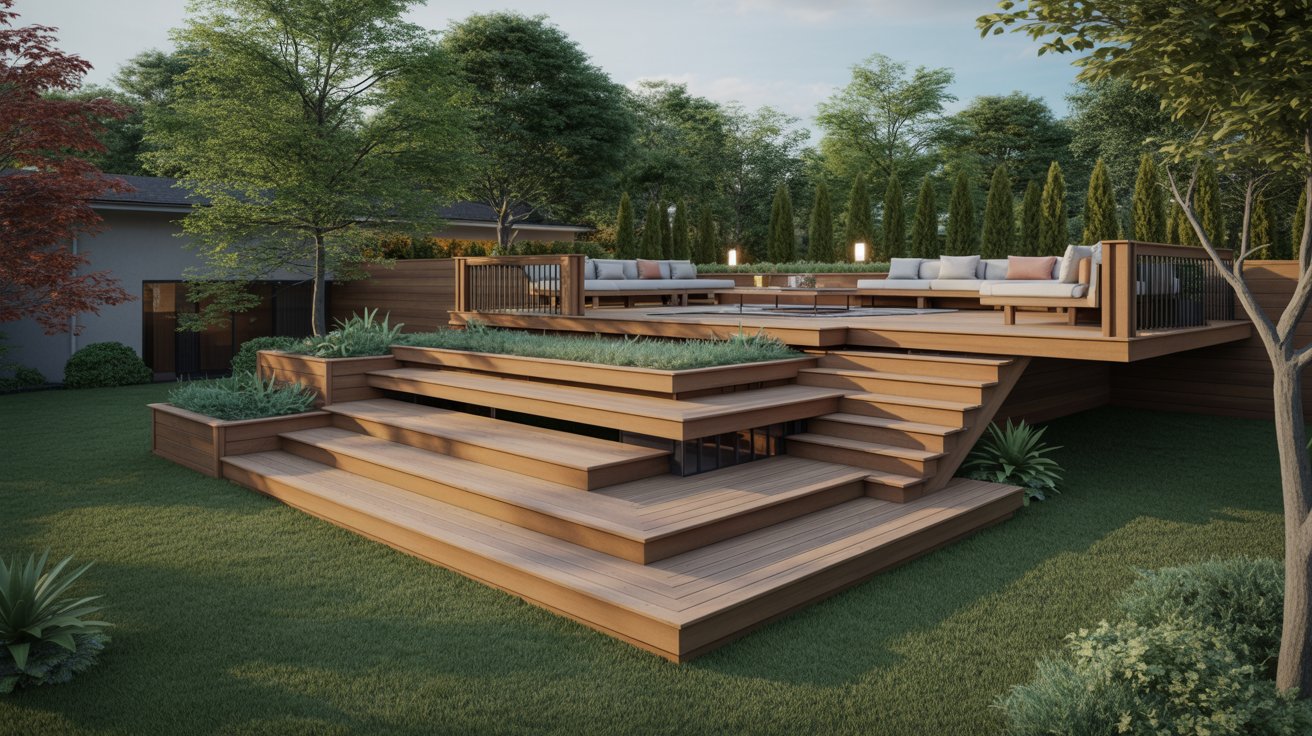
Thinking about adding a deck to your backyard? Multi-level designs are worth a serious look. These tiered spaces solve problems you might be dealing with right now.
Sloped yard? Work with it instead of fighting it. Need separate spots for cooking, eating, and relaxing? Different levels create natural zones without feeling cramped.
I’ve seen how these decks change the way families use their outdoor space.
In this guide, you’ll find 13 practical ideas that show you what’s possible.
We’ll cover layouts, materials, and planning tips to help you create a deck that fits your life.
Let’s get started.
What Is a Multi-Level Deck?
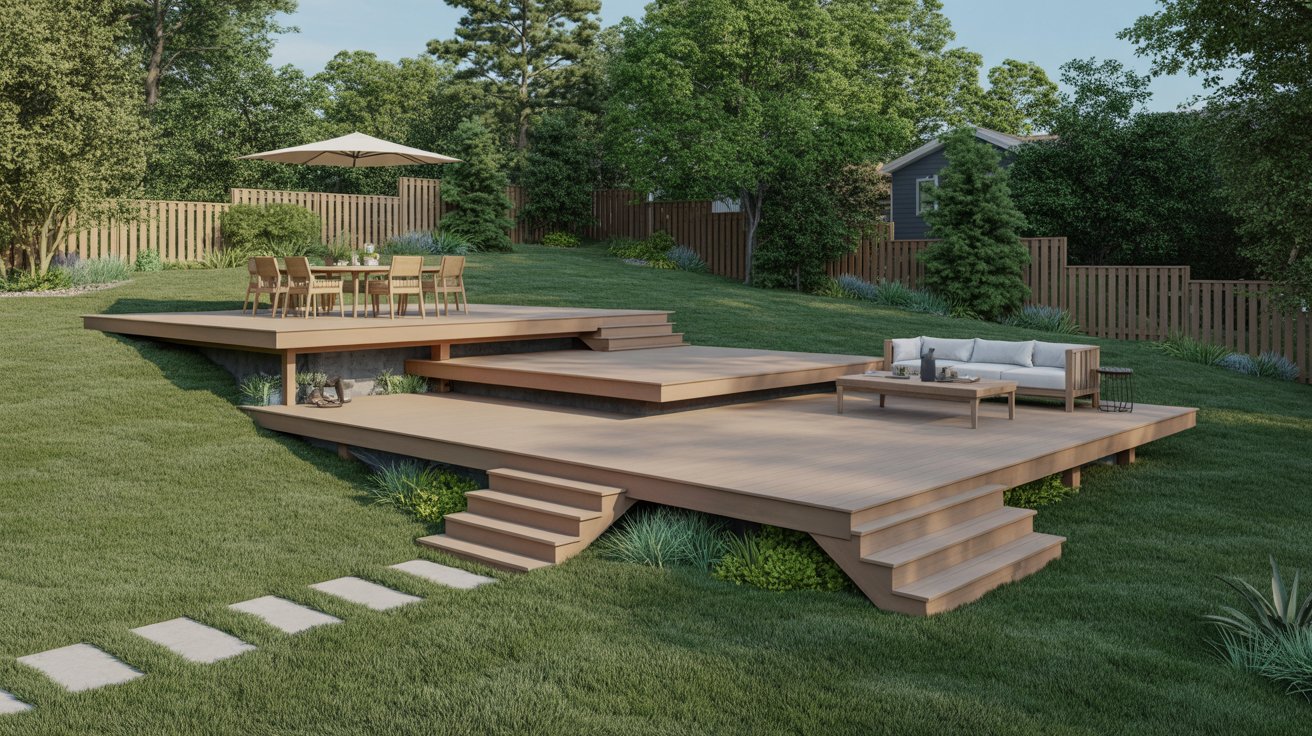
A multi-level deck features two or more platforms at different heights connected by stairs or pathways. Instead of one flat surface, you get separate tiers that step up or down.
Single-level decks sit at one height. Multi-tier decks create layers that follow your yard’s slope or add dimension to flat spaces.
These designs work best in sloped yards where levels match the terrain. Small yards gain functional zones without feeling crowded. Large yards get structure and visual interest.
Benefits of Multi-Level Decks
- Defined outdoor zones: Each level naturally separates activities. One tier for dining, another for lounging, and a third for grilling. No need for furniture arrangements to mark boundaries.
- Better use of uneven terrain: Work with hills and slopes instead of expensive grading. The deck follows your land’s contours, which saves money on site prep.
- Increased property value: Outdoor living space adds to your home’s worth. Multi-level decks show well because they look custom and intentional.
- More entertaining space: Different levels create intimate spots and gathering areas. Guests naturally spread out across tiers instead of clustering in one zone.
List of 13 Creative Multi-Level Deck Ideas for Your Backyard
These 13 designs show you how different levels can work in real backyards. Each idea solves specific needs while adding style and function.
1. Dining and Lounge Tier Combination
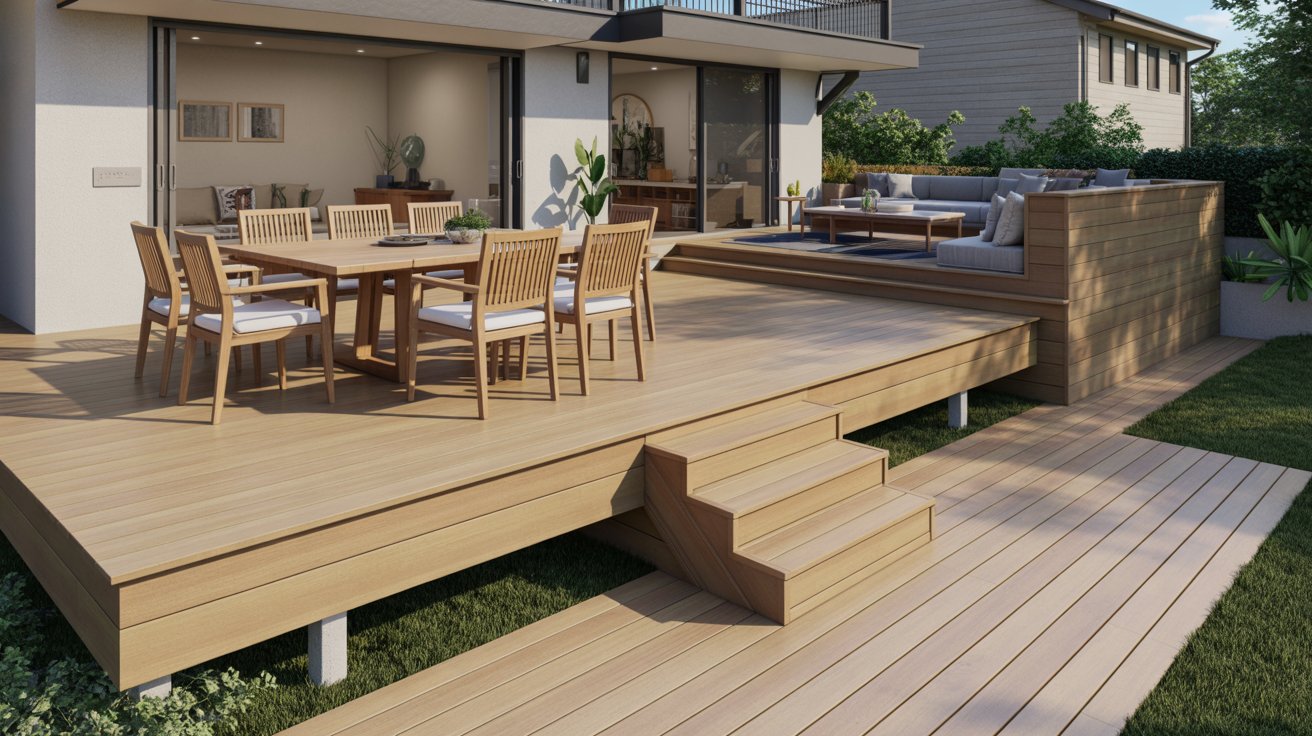
Create two zones with a raised dining area and lower lounge space. The upper level holds your table and chairs. The lower tier features comfortable seating for relaxing.
This setup works well for entertaining since guests can move between eating and socializing. Steps between them define each space naturally without barriers.
2. Built-In Seating Multi-Level Deck
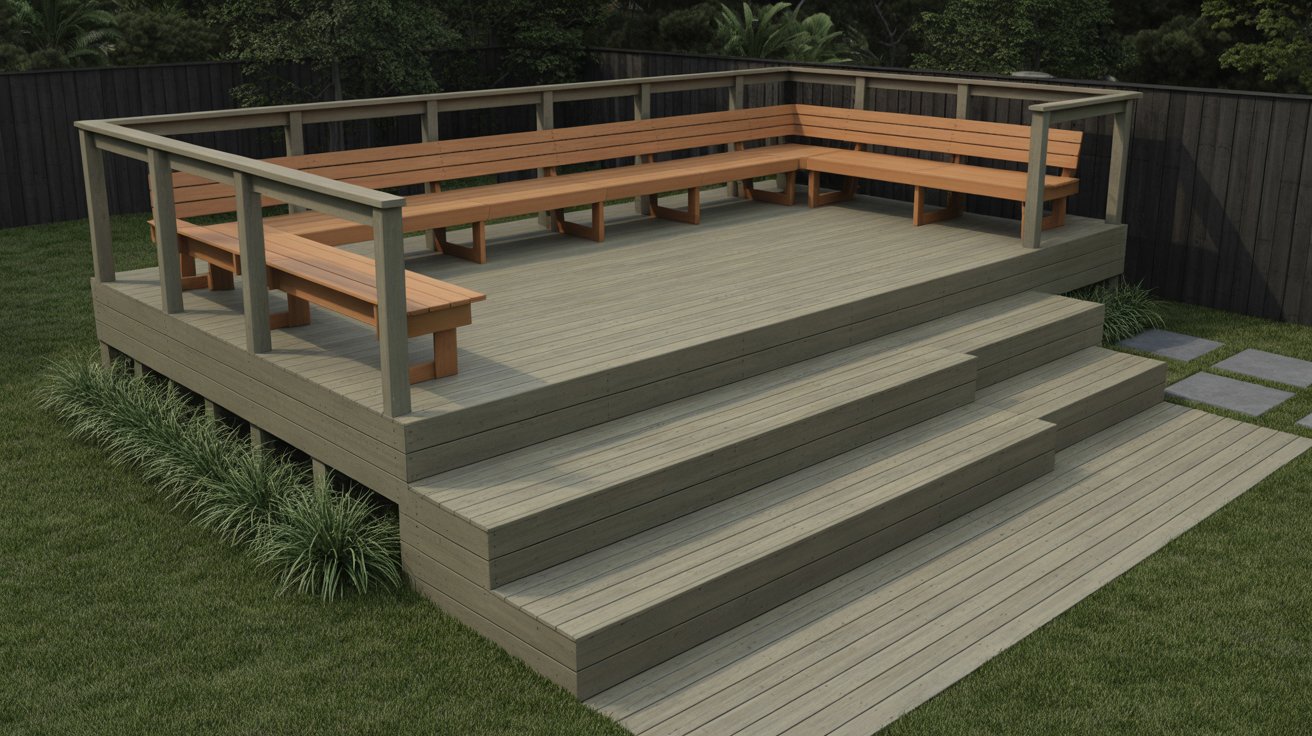
Add benches directly into your deck’s structure on different levels. Built-in seating saves space and creates a cohesive look.
Place benches along railings or use them as dividers between tiers. You get permanent seating that won’t blow away in storms.
3. Poolside Multi-Level Deck Design
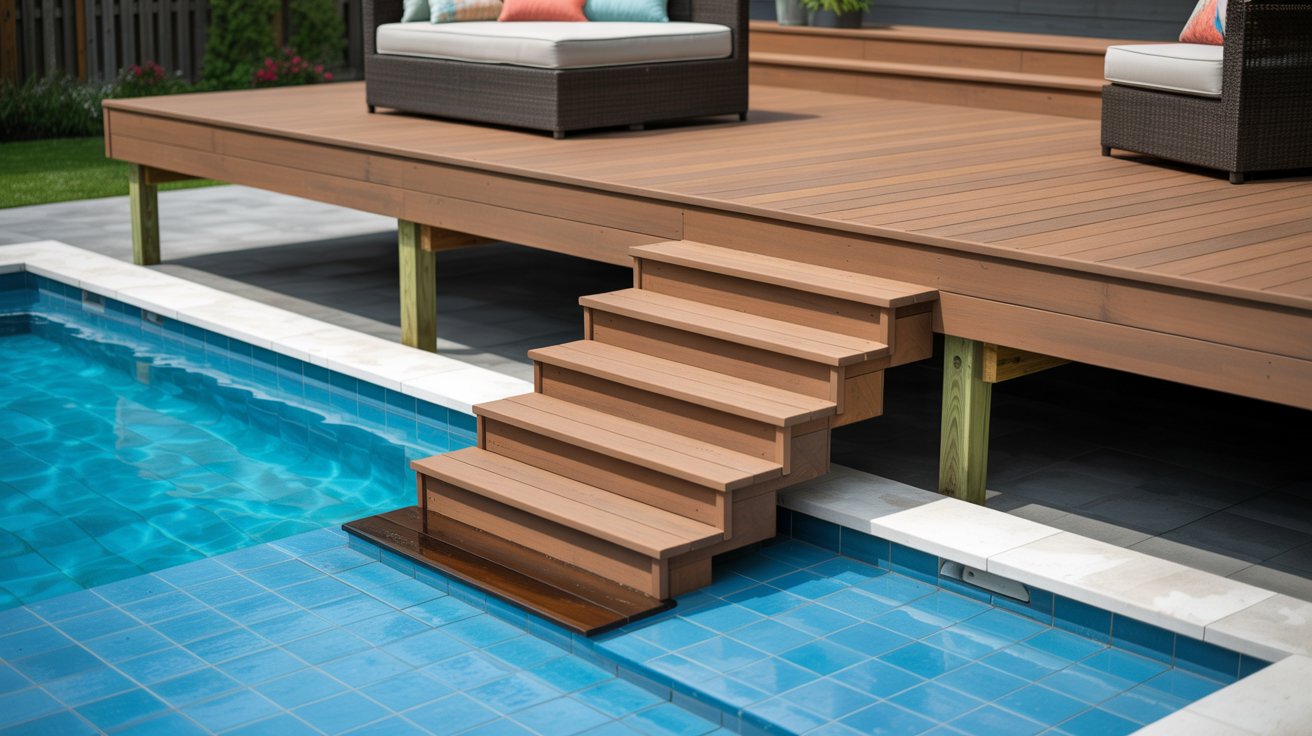
Position one level at pool height for water access and another raised tier for dry lounging. The lower deck works as a pool surround where wet feet aren’t an issue.
The upper level keeps towels and snacks away from splashes. Steps connect both areas for safe movement between swimming and relaxing.
4. Deck with Sunken Fire Pit Level
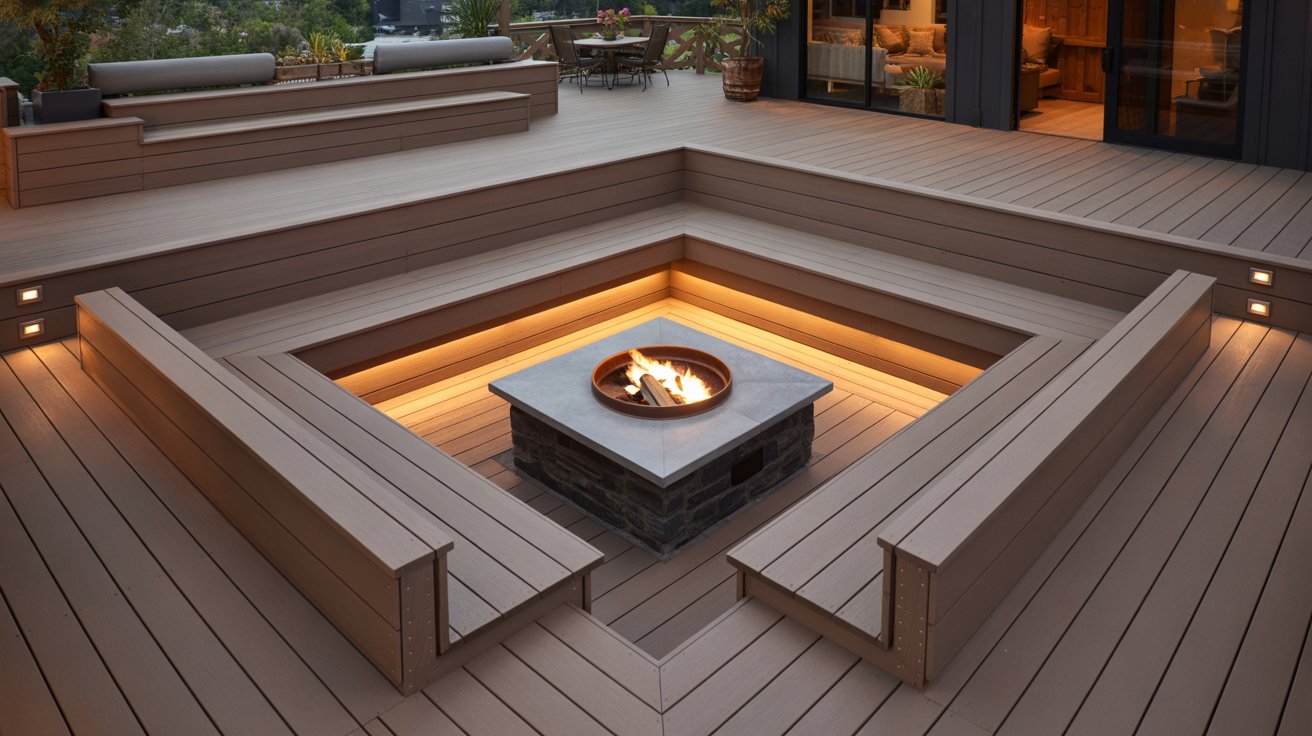
Drop one section below the main deck to create a cozy fire pit area. The sunken design provides wind protection and makes the space feel enclosed.
Arrange seating around the perimeter facing inward. This keeps the fire pit as a focal point without dominating your entire deck while encouraging conversation.
5. Wraparound Multi-Tier Deck
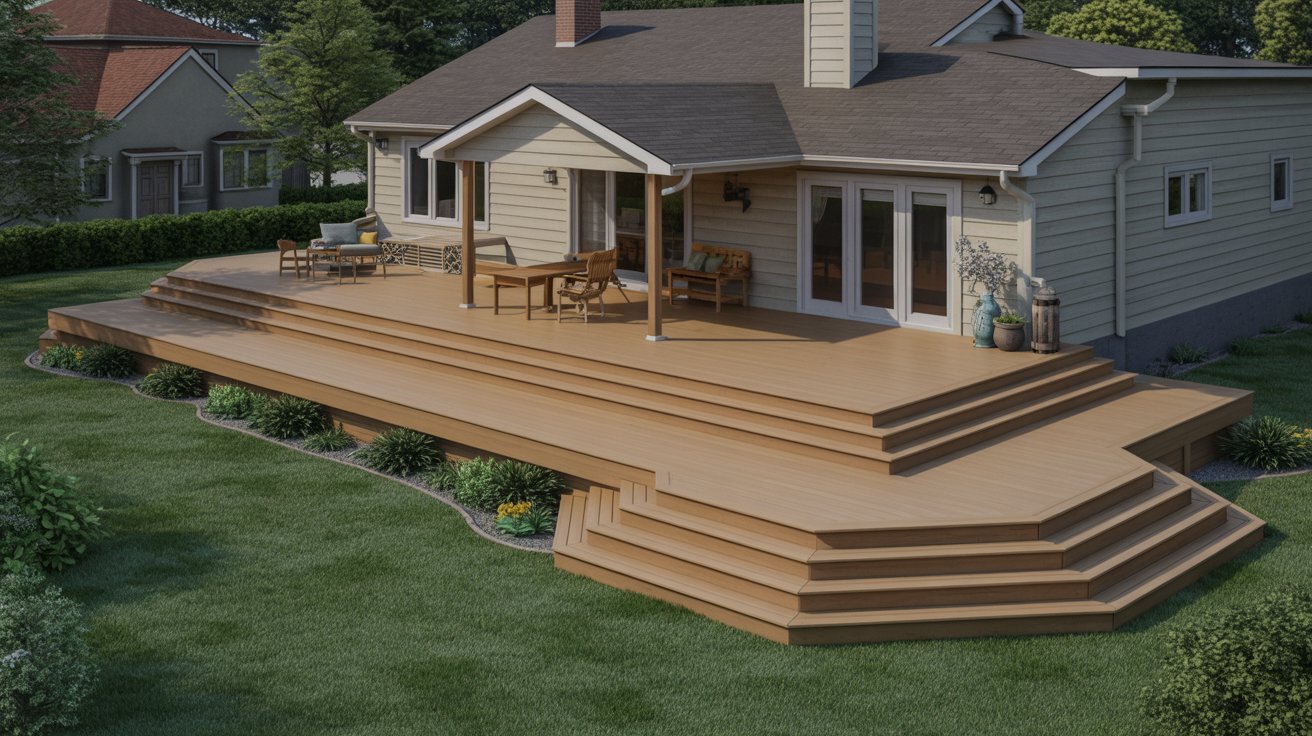
Extend your deck around two or more sides of your house with varying heights. Each side serves a different purpose based on sun exposure.
The front might be higher for privacy while the back stays lower for yard access. This maximizes usable space on corner lots or homes with multiple exits.
6. Multi-Level Deck with Pergola
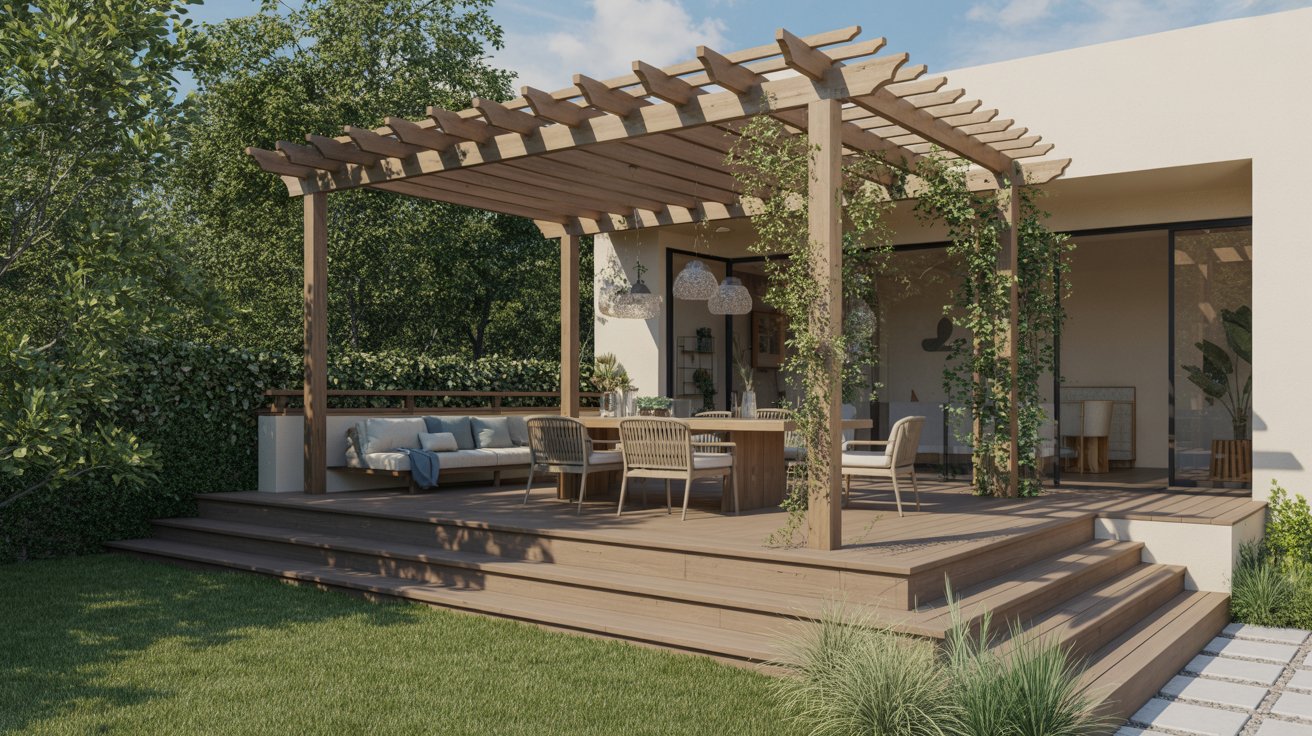
Cover one tier with a pergola for shade and structure. The covered level works well for dining or as an outdoor living room. Leave other tiers open to sun.
The pergola adds vertical dimension and creates a room-like feel. You can hang lights or train vines for extra character.
7. Garden-Integrated Tiered Deck
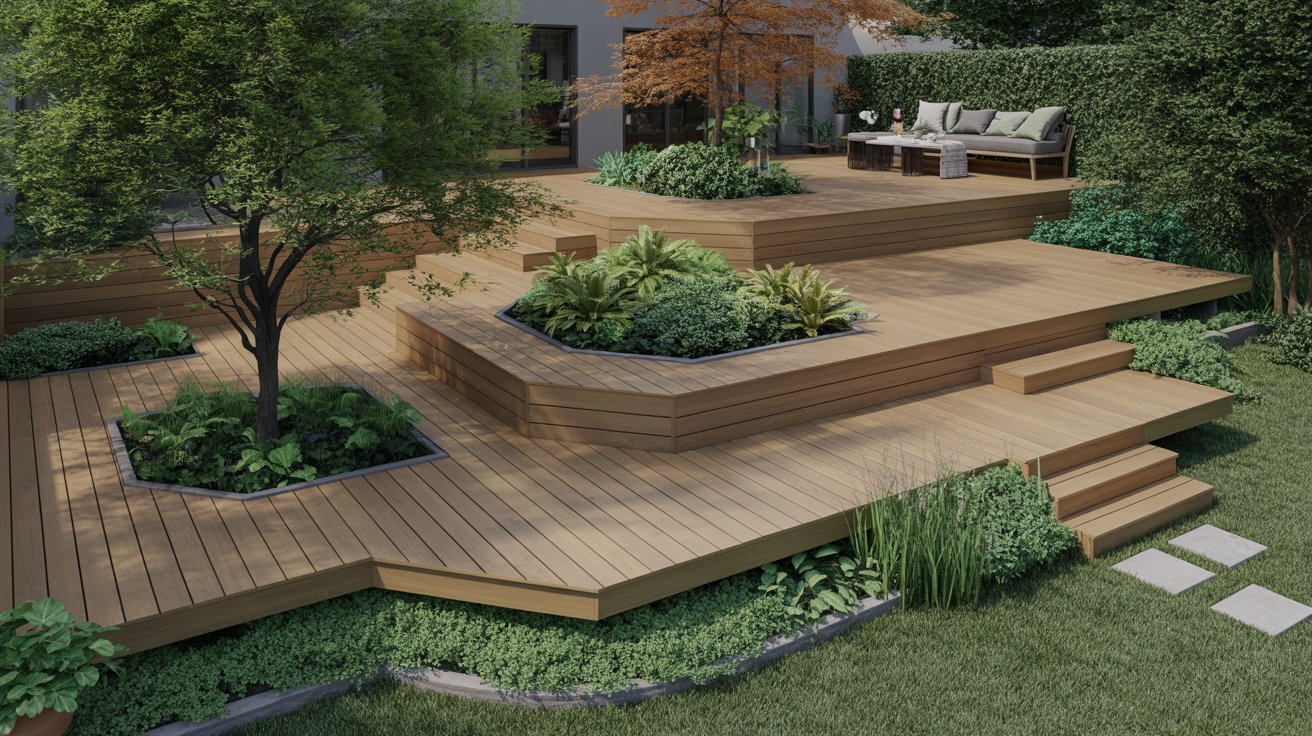
Build levels around existing trees, gardens, or landscaping features. Cut out sections for planters or let greenery grow between tiers.
This blends hardscape with softscape instead of removing vegetation. Your deck feels connected to nature. Plants soften the wood and add color throughout the year.
8. Small Backyard Multi-Level Deck Idea
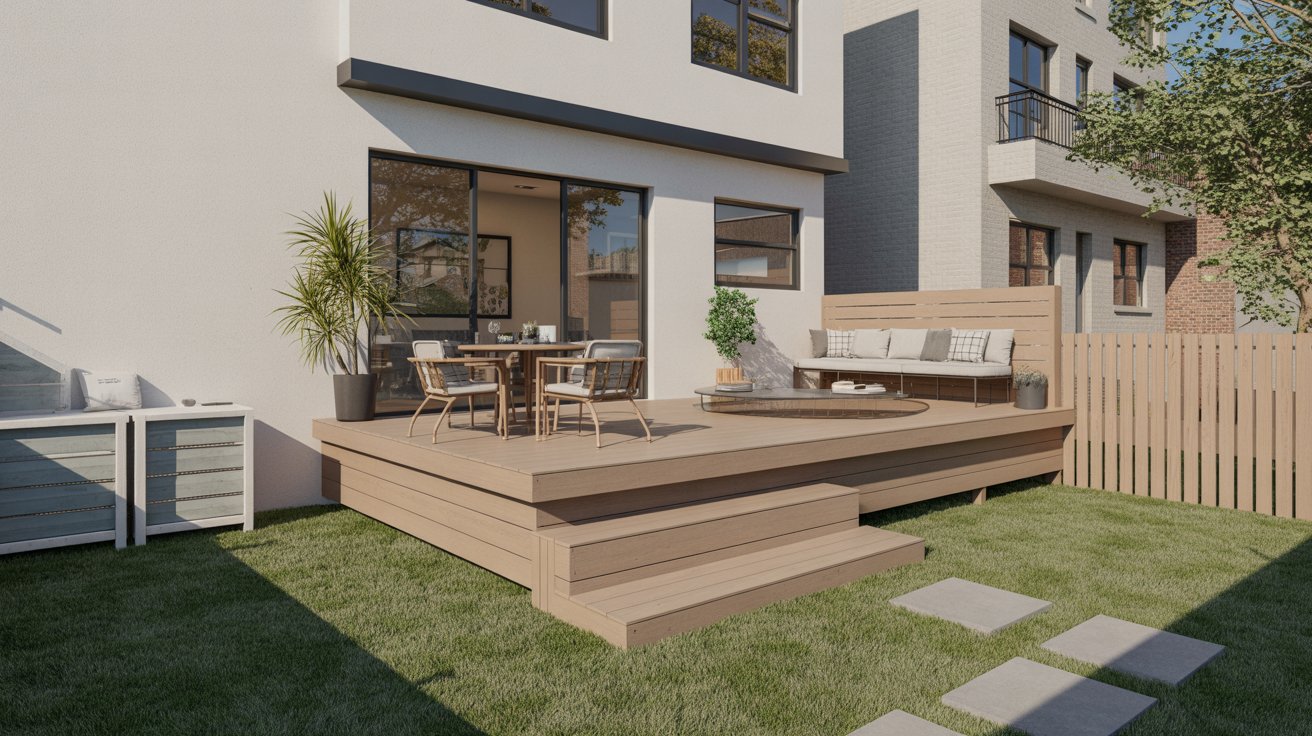
Use just two modest tiers to maximize a compact yard. Even a small elevation change creates separate zones in tight spaces.
The vertical variation makes the area feel larger than a single flat deck. Perfect for city homes or townhouses with limited outdoor room.
9. Deck with Outdoor Kitchen Level
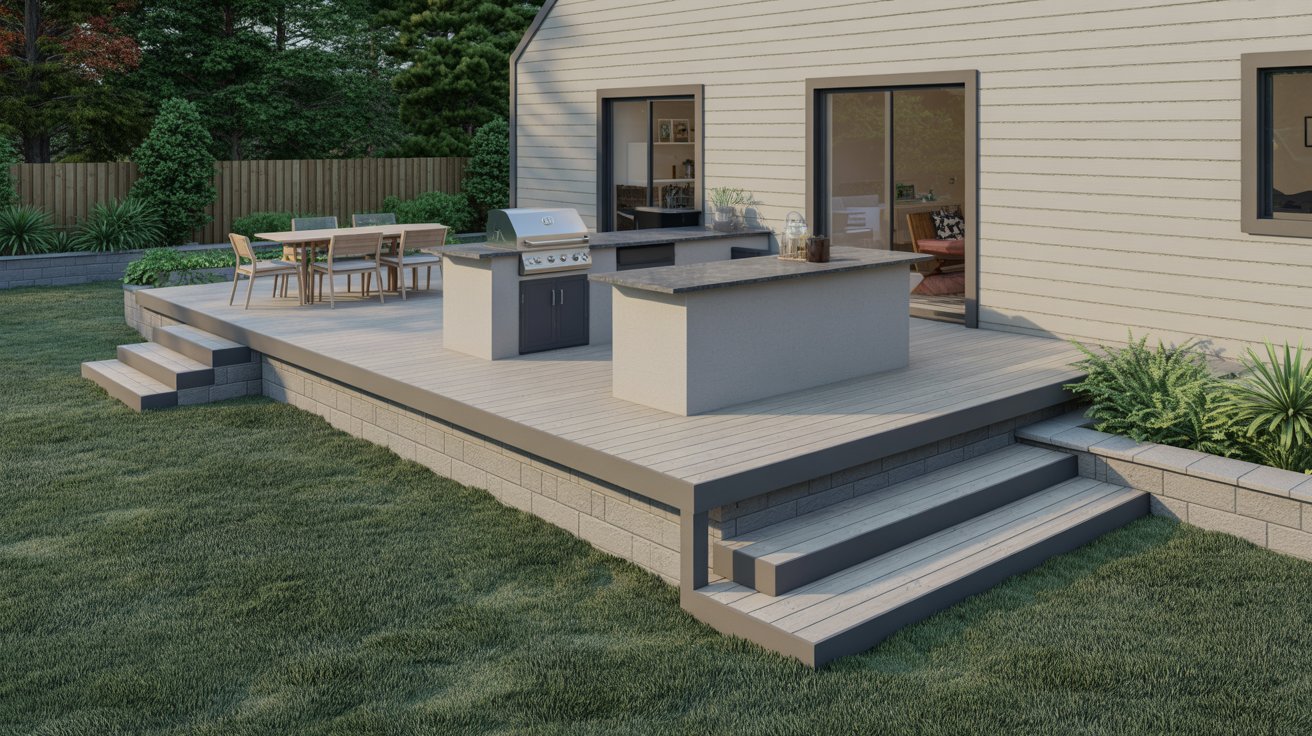
Dedicate one tier to cooking with a grill, counter space, and storage. Keep the kitchen level close to your house for indoor access.
Place dining and lounging on separate tiers away from smoke. This contains mess while keeping everything within conversation distance during meal prep.
10. Modern Floating Multi-Level Deck
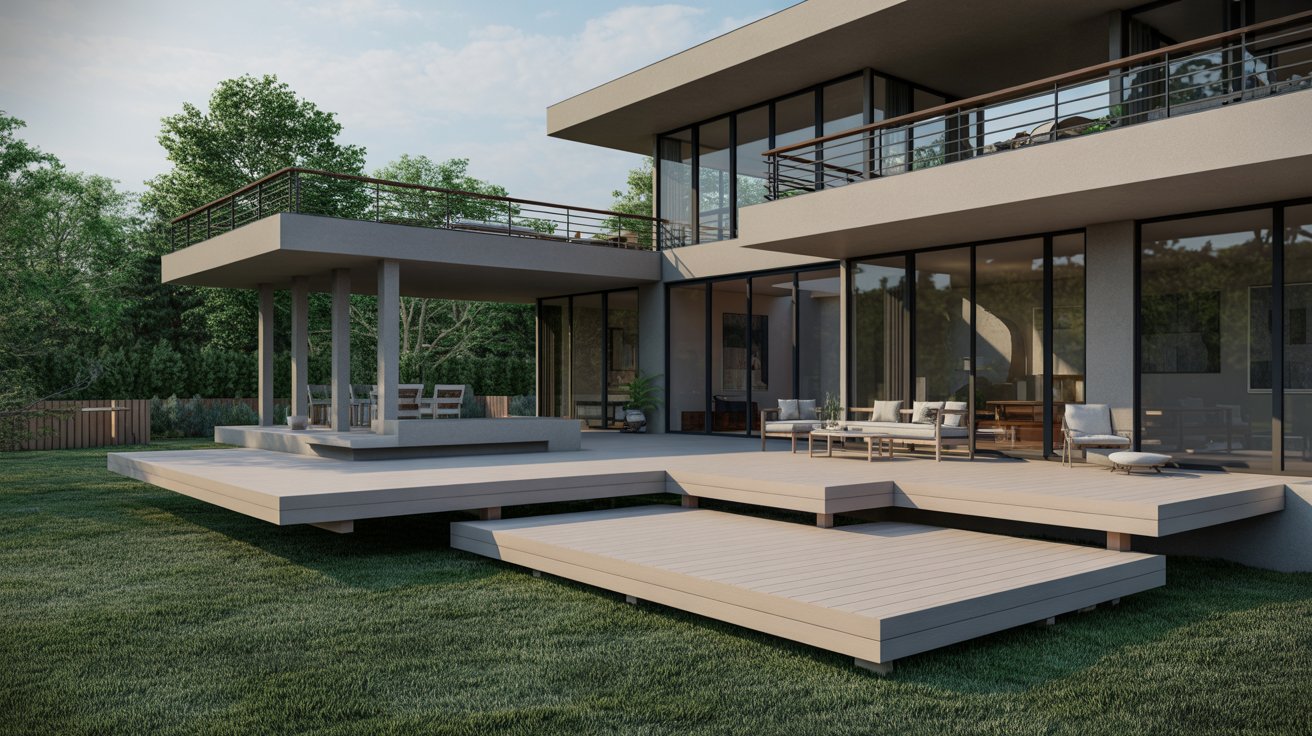
Create platforms that appear to hover with hidden structural support and minimal railings. Use composite materials in neutral colors for a sleek look.
Space the levels with wider gaps and dramatic height changes. This contemporary style works with modern homes and makes small yards feel more open.
11. Deck with Hot Tub on Upper Tier
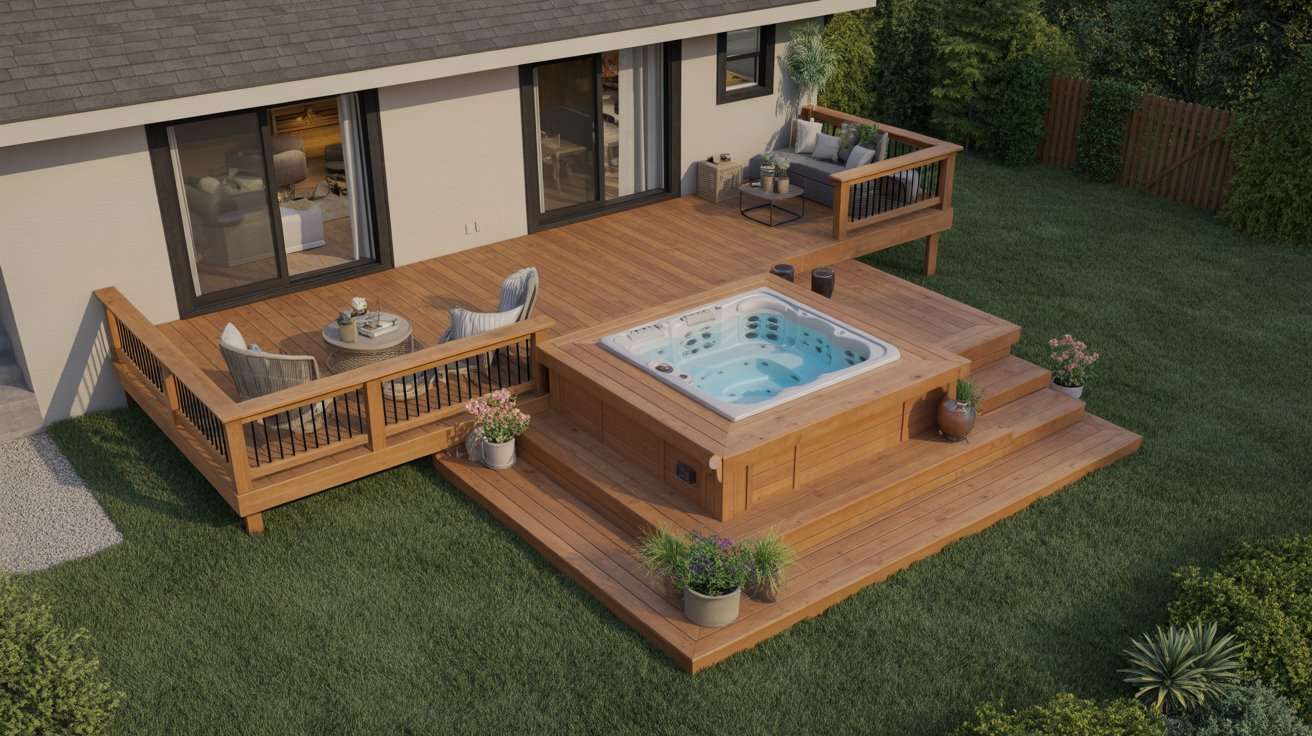
Place your hot tub on a raised platform for better views and privacy. The elevation keeps soakers above ground-level activity.
Build the lower deck around it for easy access. This design also solves drainage issues since water flows away from the tub toward ground level.
12. Tiered Deck with Privacy Screens
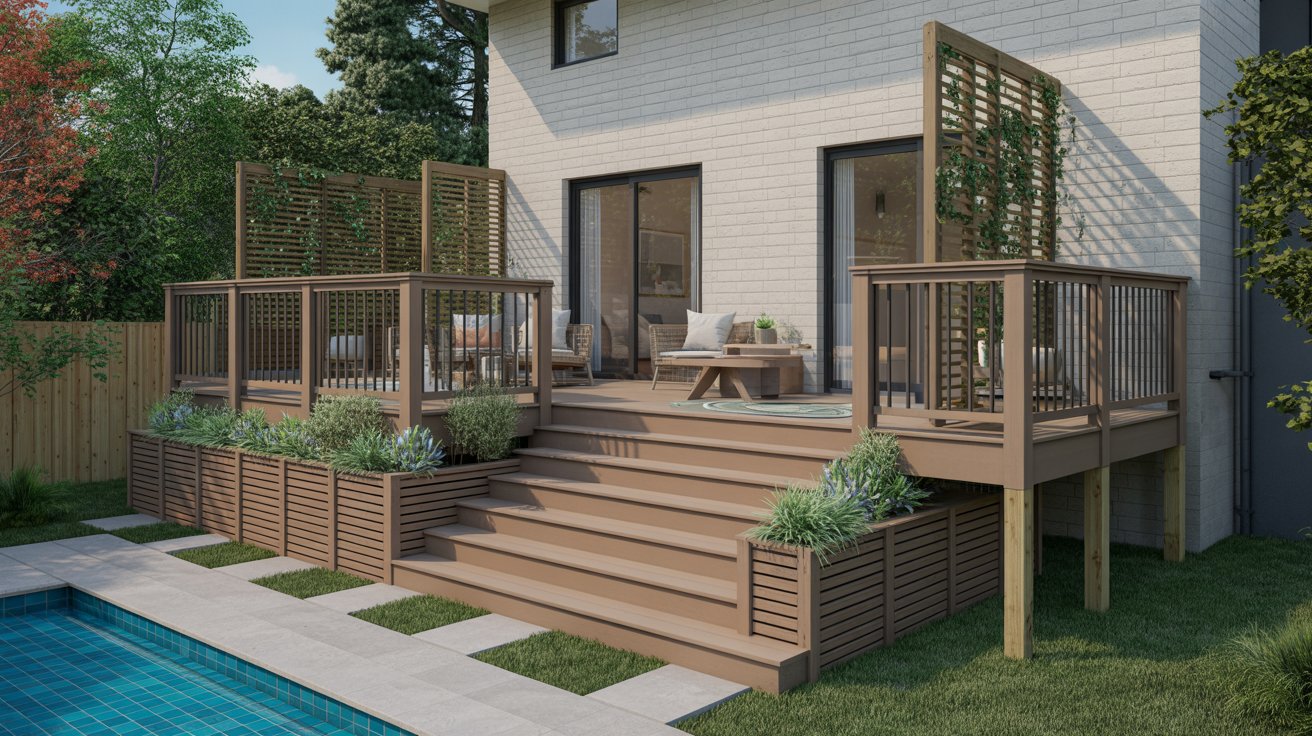
Add screens or lattice panels between levels or along railings for seclusion. Strategic placement blocks sightlines from neighbors without closing in the space.
Screens also define boundaries between activity zones. Use solid panels, slatted wood, or planted trellises. Great for developments with close house spacing.
13. Rustic Wood Multi-Level Deck
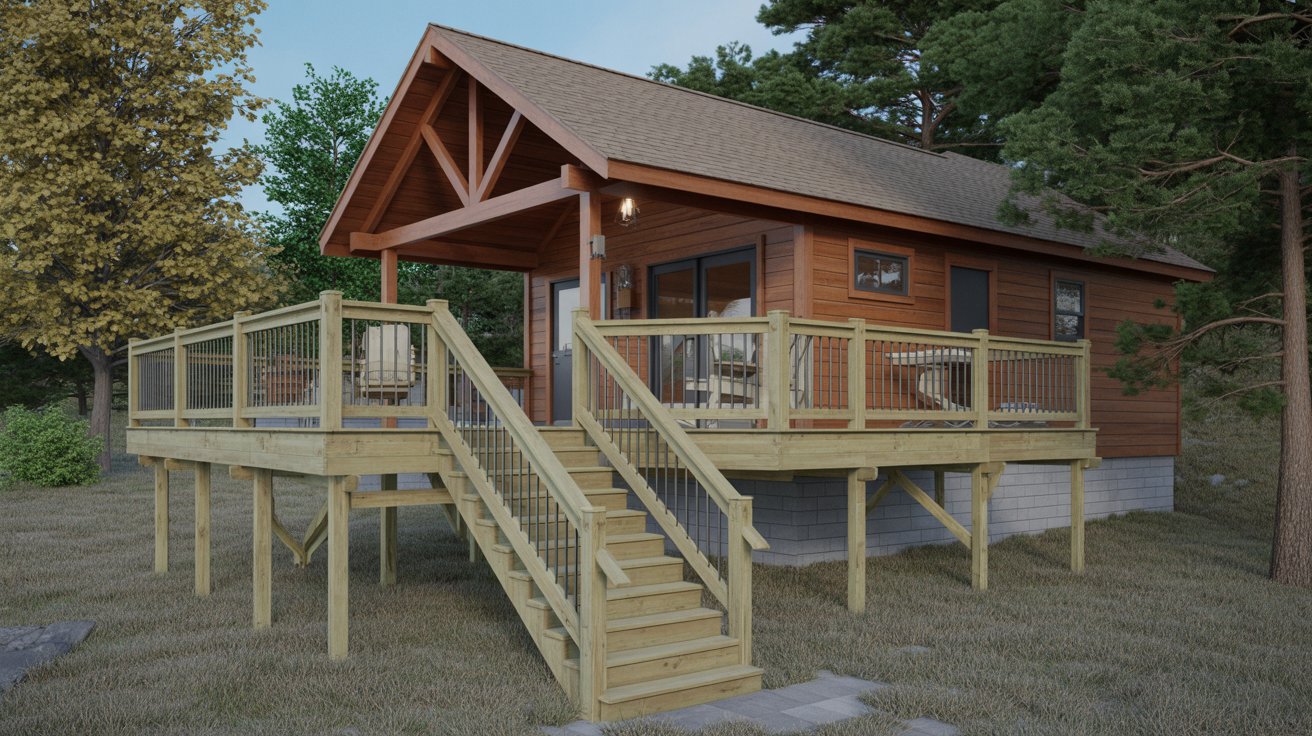
Stick with natural wood tones and simple construction for a cabin-style feel. Use pressure-treated lumber or cedar without staining.
Keep lines straightforward with basic stairs and railings. This costs less than complex designs while suiting wooded lots. The wood weathers naturally and blends with outdoor surroundings.
Tips to Make a Multi-Level Deck Look Cohesive
- Use consistent materials and colors. Stick to the same decking boards and railings across all levels. Matching finishes tie everything together visually.
- Connect levels with wide stairs. Build stairs at least 4 feet wide for smooth transitions. Generous steps help the deck flow as one space.
- Add lighting for visual continuity. Install matching light fixtures on each tier at similar heights. Consistent lighting makes the whole deck feel intentional after dark.
- Balance open and enclosed spaces. Mix levels with full railings and ones with partial barriers. This variety keeps the design interesting while maintaining openness.
- Repeat design elements throughout. Use the same railing style or planter boxes on multiple levels. Repeated features make different tiers feel like one cohesive plan.
Conclusion
Multi-level decks give you more than extra square footage. They solve real problems like sloped yards, cramped spaces, and the need for separate activity zones.
Choose a layout that matches how you actually live. Love hosting dinners? Go for dining and lounge tiers.
Need a quiet spot? Add a sunken seating area. Don’t be afraid to get creative with materials and features. The best deck is one you’ll use regularly.
Ready to start planning? Grab some graph paper and sketch your ideas, or talk to a deck builder about what’s possible in your yard.
Frequently Asked Questions
What is the main advantage of a multi-level deck over a single-level deck?
Multi-level decks create separate zones for different activities without needing walls or dividers. They also work better with sloped yards since the levels follow your land’s natural contours.
How much does it cost to build a multi-level deck?
Costs vary based on size, materials, and complexity, but expect to pay 20-30% more than a single-level deck. The extra stairs, railings, and structural support add to the budget.
Do multi-level decks require more maintenance?
Maintenance needs are similar to those of single-level decks. You’ll just have more square footage and additional stairs to clean and seal annually.
Can I add a multi-level deck to a small backyard?
Yes, even two modest tiers work well in compact spaces. The vertical design actually makes small yards feel larger by creating distinct areas.
Do I need a permit to build a multi-level deck?
Most areas require permits for decks over a certain height or size. Check with your local building department before starting construction to avoid fines or removal orders.
