

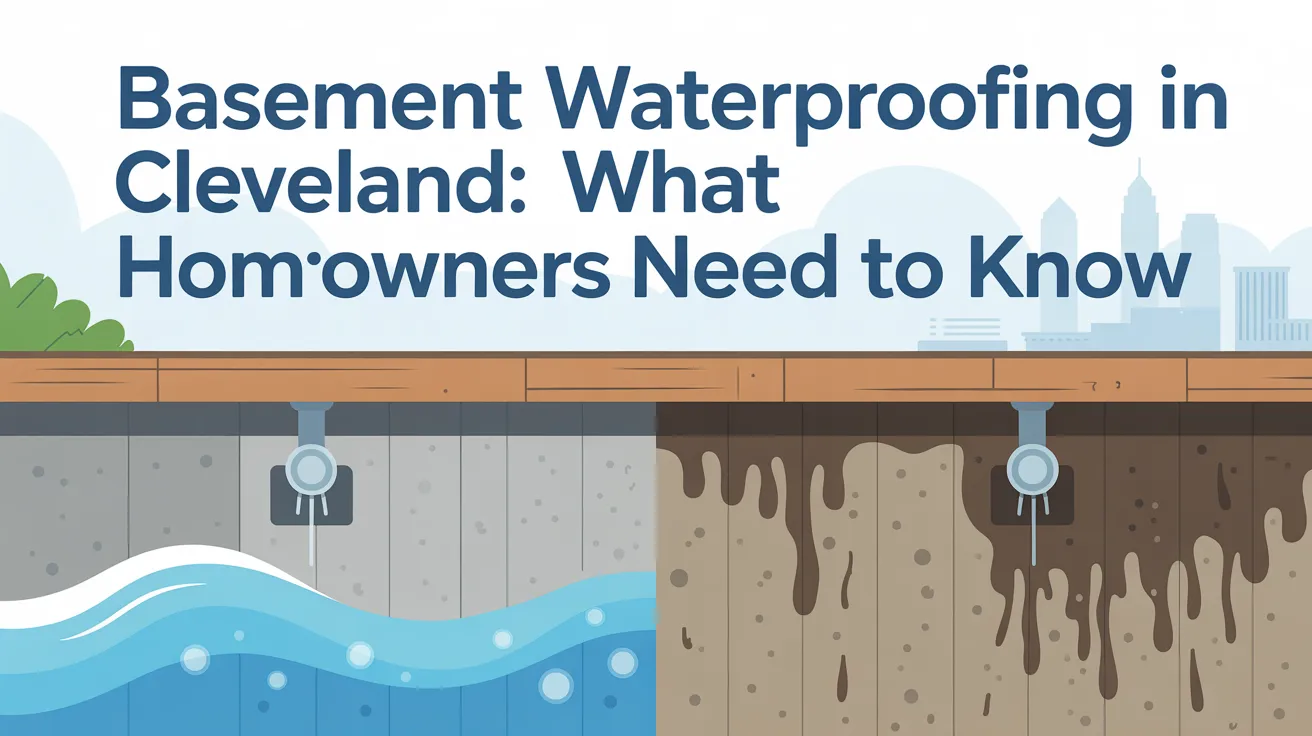
Cleveland basements get wet. That’s just how it is here. Heavy rain, snow melting, and clay soil that holds water like a bucket. It pushes against foundations, finds cracks, and seeps through. Even new homes deal with it. Old homes definitely do.
Most people wait until water shows up. Damp corner? Ignore it. Musty smell? Dehumidifier. Then mold starts growing, or the floor gets wet, and suddenly it’s an emergency. Expensive one too. Here’s what causes it, how to spot it early, and what fixes actually work.
Why Basements in Cleveland Are So Vulnerable to Water
Rain and snowmelt go somewhere. Should flow away from the house, into drains, off the lot. Cleveland gets 40 inches of rain a year, plus snow that melts slowly. Ground saturates. Water piles up against foundations. That pressure pushes on the basement walls until something cracks.
Old houses make it worse. Most Cleveland homes went up before modern drainage existed. Old drain tiles clog. Gutters dump water right next to the foundation. Grading settled years ago. Water ends up pooling where it shouldn’t. It’s never one thing. Old construction, plus heavy rain, plus clay soil that just holds water.
Soil and Drainage
The ground around Cleveland is mostly clay. Gets wet, expands. Dries out, shrinks. Drains like crap. Water just sits there against your foundation. If your gutters dump next to the house and downspouts run short, you basically built a moat. Slope matters too. Yard tilts toward the house? Every rain sends water right at the walls.
Early Warning Signs You Shouldn’t Ignore
Basements leak slowly. They warn you first. Air feels heavy downstairs. Damp. That’s a warning. White powder on the walls, efflorescence, means water came through and dried. Another warning. Crack that keeps growing. You get it.
According to our data, most major basement repairs start with signs that homeowners dismissed. Some of the most common signs include:
- Musty smell that doesn’t go away, no matter how much you air things out;
- Damp spots or discoloration on walls that grow after rain;
- Hairline cracks in the foundation that slowly widen;
- Condensation on pipes or surfaces when nothing else explains it.
None of these means your house is falling down. But they mean water is present where it shouldn’t be. Water that sits eventually causes rot, mold, and structural issues.
Why Small Signs Turn Into Expensive Repairs
Water finds weak spots. A hairline crack lets in moisture. Freeze and thaw, freeze and thaw, crack gets bigger. More water follows. Mold shows up. Wood starts rotting. By the time you see water on the floor, it’s been happening for months. Fixing that means digging, structural work, and real money. Catch it early, and it’s sealing, drainage, maybe a grand or two.
What Actually Causes Basement Leaks
Three things mostly. Hydrostatic pressure pushes water through concrete. Poor drainage keeps water against the wall too long. Foundation moves, cracks open. Sometimes one does it. Usually all three.
Think about heavy rain. Ground soaks full. Water in soil builds pressure. That pressure forces water into any gap. Gutters clogged? More water. Downspouts dumping next to the house? More water. Ground slopes toward you? Even more. It’s all connected. One thing fails, rest follow.
Hydrostatic Pressure and Foundation Stress
Take a sponge, put it in water. Sponge soaks. Foundations like that, except concrete isn’t supposed to soak. But it does anyway, slowly. Water pushes against walls. Thousands of pounds of pressure. Walls bow, crack, and move inward. Once they move, the seal breaks. Water pours in. That’s why exterior drainage matters more than painting the inside.
How Water Damage Affects Your Home Over Time
Water problems in a basement rarely stay isolated. What starts as a small leak can slowly affect other parts of the house. Moisture spreads through materials, weakens structures, and creates conditions where mold can grow unnoticed. Over time, even minor exposure to water can impact wooden elements, insulation, and indoor air quality.
The longer the issue is left untreated, the more expensive it becomes to fix. What could have been a simple drainage adjustment can turn into structural repairs or full waterproofing work. That’s why understanding the cause early
Practical Waterproofing Solutions That Work
Quick fixes exist. Hydraulic cement in cracks, waterproof paint, and sealants you roll on with a brush. They work for a while sometimes. But they treat symptoms, not causes. Water still sits against your foundation. Pressure still builds. Eventually, the patch fails.
If the issue keeps coming back, professional basement waterproofing in Cleveland is often the only way to fix the root cause rather than patch the symptoms. Professionals look at the whole system. Grading, gutters, downspouts, exterior drainage, interior collection. According to our analysts, the most common approaches include:
- Interior sealing for minor moisture issues where the source isn’t severe;
- Exterior waterproofing to block water at the source before it reaches foundation;
- Drainage systems like French drains that redirect water away;
- Sump pumps to remove collected water before it accumulates.
Each has its place. The right solution depends on your specific situation.
When Quick Fixes Stop Working
Paint peels. Patches crack. Caulk shrinks. Quick fixes have lifespans measured in months, sometimes years if you’re lucky. But the water keeps coming. The pressure doesn’t stop because you sealed one spot. Eventually, you’re sealing more cracks, reapplying paint, and running dehumidifiers constantly. That’s the signal that quick fixes have stopped working and you need something permanent.
Final Thoughts
Basement water problems are common in Cleveland. Common doesn’t mean normal or acceptable. It means you’re not alone, but you still need to fix it. Ignoring moisture costs more than addressing it. Mold remediation, structural repairs, ruined belongings, and higher bills. The math is simple. Figure out what’s causing the water, fix that, not the symptom. Sometimes that means professional help. Sometimes that means better gutters. But it always means treating the cause, not the damp spot on the wall.
