


What is milk paint? It’s a natural paint made from milk protein, lime, and earth pigments. I’ve used it on old furniture, and it gives this soft, matte look you just can’t get with regular paint.
In this guide, I’ll walk you through everything: what milk paint is, how it works, where to use it, and when to skip it.
You’ll learn its history, the pros and cons, and practical tips for your next project. I’ve tested it myself on dressers and cabinets, so you’re getting real answers, not just theory.
Let’s figure out if milk paint is right for your space.
What Is Milk Paint?

Milk paint is a natural coating made from simple, organic ingredients. It’s been around for thousands of years and works differently than modern paints.
This paint uses milk protein as its base. People have relied on it since ancient times because it’s safe, effective, and made from things you can find in nature. No harsh chemicals or synthetic additives.
Casein is the milk protein that binds everything together. Lime acts as a preservative and helps it stick to surfaces. Clay adds body and texture. Pigments come from minerals and give you color. That’s it. Four main ingredients, all natural.
Modern paints come ready to use in a can. Milk paint arrives as a powder you mix with water. It soaks into porous wood instead of sitting on top like latex. It also ages differently, chipping and wearing in a way that looks intentional, not damaged.
A Brief History of Milk Paint

People have used milk-based paint for thousands of years. It’s not some new trend. It’s old, proven, and reliable.
Earliest Uses in Cave Paintings and Ancient Civilizations
Some of the oldest cave paintings used milk protein mixed with pigments. Ancient Egyptians painted tombs with it.
Early builders in Asia and Europe coated structures with milk paint because it lasted and protected surfaces naturally.
Colonial and Early American Furniture Finishes
Colonial Americans used milk paint on furniture, barns, and walls. They made it at home with ingredients from the farm.
The muted colors and matte finish became part of early American style. You still see that look in antique shops today.
Modern Revival in Green and Artisan Design
In recent years, people started caring more about toxins and sustainability. Milk paint came back because it’s safe for kids, pets, and the planet. Artisans and DIY fans love the authentic, handmade finish it gives.
How Milk Paint Works
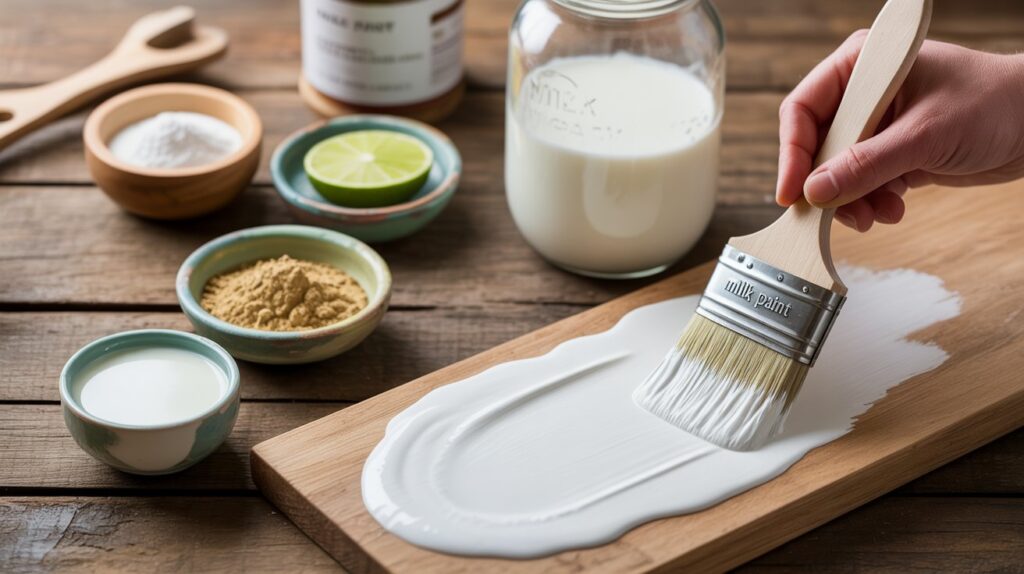
Understanding how milk paint functions helps you use it correctly. It’s not like regular paint.
Why It Comes in Powder Form:
Milk paint is sold as powder because the ingredients would spoil if pre-mixed with water. You mix only what you need, when you need it. This keeps it fresh and reduces waste.
How It Bonds to Porous Surfaces:
The casein protein soaks into porous materials like raw wood, plaster, and unsealed drywall. It creates a bond from within, not just on the surface. That’s why it holds up so well on old, bare wood.
Why It Chips on Some Surfaces (and How to Control It):
On slick or sealed surfaces, milk paint can’t penetrate. It sits on top and chips off. If you want that chippy, aged look, great. If not, use a bonding agent or primer first. You control the finish based on prep work.
Pros and Cons of Milk Paint
Here’s what you gain and what you give up when choosing milk paint over standard options.
| Pros | Cons |
|
100% Natural & Non-Toxic: Every ingredient is safe. No VOCs, no fumes, no warnings on the label. You can use it in a nursery or kitchen without worry. Kids and pets can be in the room while you paint. |
Requires Mixing Before Use: You mix powder with water each time you paint. Some people find this annoying. It adds a step, and you need to get the consistency right. Too thick or too thin affects coverage. |
|
Beautiful, Handcrafted Artistic Finish: The matte, velvety texture looks handmade. Colors are soft and earthy. It doesn’t scream “new paint job.” It looks lived-in, authentic, and warm. |
Needs a Topcoat for Durability: Without a topcoat, milk paint can scratch or stain easily. You’ll want to seal it with wax, oil, or polyurethane if it’s a high-use surface. That’s extra time and cost. |
|
Minimal Surface Prep Required: You don’t need to sand perfectly or prime aggressively. Milk paint forgives rough spots. On raw wood, you can apply it straight away. Less prep means less time wasted. |
Can Chip Excessively on Non-Porous Surfaces: If you apply it to varnished wood or laminate without prep, it’ll chip. That’s fine if you want distressed furniture. Not fine if you want a smooth, modern finish. |
|
Durable, Breathable, and Mold-Resistant: Once cured, milk paint is tough. It lets wood breathe, preventing moisture buildup. The lime in it naturally resists mold and bacteria. It’s ideal for humid areas or outdoor furniture. |
Slightly Higher Cost Compared to Standard Paint: Milk paint costs more per square foot than latex. You also pay for topcoats and bonding agents. If you’re on a tight budget, that adds up. |
Where Milk Paint Works Best

Certain projects are perfect for milk paint. Here’s where it shines.
Furniture & DIY Makeovers: Old dressers, tables, and chairs look incredible with milk paint. The finish feels authentic and vintage. It’s ideal for farmhouse or cottage style.
Cabinets, Dressers & Kitchen Items: Kitchen cabinets benefit from milk paint’s non-toxic formula. You get color without chemicals near food. Just seal them well for durability.
Walls: Drywall, Plaster, and Natural Materials: Milk paint works beautifully on walls, especially plaster or natural lime walls. The matte finish adds warmth and depth. It doesn’t reflect light harshly like latex.
Wooden Toys & Nursery Projects: Parents love it for cribs, toys, and kids’ furniture. It’s completely safe even if a baby chews on it. No worries about toxins.
When Not to Use Milk Paint

Sometimes milk paint isn’t the right choice. Here’s when to skip it.
Challenges with Veneer or Glossy Surfaces:
Veneer and glossy finishes are too smooth for milk paint to grip. You’d need heavy prep and bonding agents. At that point, chalk paint or latex makes more sense.
Situations Where Chalk Paint or Latex Is Better:
If you want a smooth, modern finish with no chipping, go with chalk paint or latex. If you need one-coat coverage or can’t be bothered mixing powder, those options are easier. Milk paint is for people who want a specific rustic, handmade look.
Conclusion
So, what is milk paint? It’s a natural, safe option that gives furniture and walls a soft, handmade feel.
I’ve used it on nightstands and loved how forgiving it was, even with my less-than-perfect brush strokes. If you’re restoring old pieces or painting a nursery, it’s worth trying.
That said, it’s not for everyone. If you want a sleek, modern look, stick with latex. But if you love that rustic, lived-in vibe, give it a shot. Drop a comment and tell me about your project!
Frequently Asked Questions
Can you use milk paint over existing paint?
Yes, but it works best on raw wood. Sand the surface lightly and use a bonding agent to help it stick and prevent chipping.
How long does milk paint last once mixed?
About 24 hours in the fridge. After that, it spoils. Mix only what you need for each painting session.
Does milk paint smell bad?
Some people notice a slight sour milk smell during application. It fades completely once dry and isn’t toxic.
Can you spray milk paint?
Yes, if you mix it to the right consistency. Strain it first to remove lumps for smooth coverage.
Is milk paint good for outdoor furniture?
Yes, with proper sealing. Use tung oil or outdoor polyurethane to protect it from rain and sun.
