

Ever walked into a home and felt drawn to that warm, inviting space right off the kitchen? That’s likely a keeping room.
This cozy area has been around for centuries, but it’s making a big comeback in modern homes.
Think of it as your family’s favorite hangout spot where you can chat while cooking, kids can do homework nearby, or guests can relax with a drink during dinner parties.
It’s all about bringing people together in a comfortable, lived-in space. Let’s talk about why this room might be the missing piece in your home.
The History of Keeping Rooms
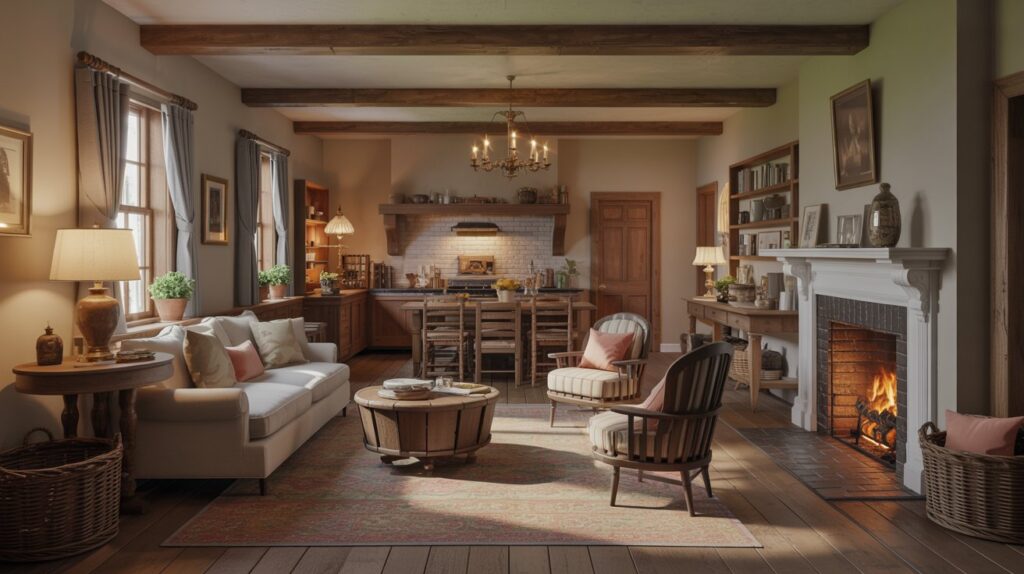
Keeping rooms started as a practical solution in colonial homes and evolved into a popular design feature in modern houses.
Colonial Origins
The keeping room first showed up in American homes during the late 18th century. Kitchens were the warmest spots thanks to large fireplaces and wood-burning ovens that ran all day. Families needed somewhere to stay comfortable during the cold months without crowding the cook.
The keeping room sat right next to the kitchen, close enough to soak up heat from the fire. Family members could warm themselves, do handwork, or entertain guests without getting in the way. It solved a real problem.
Evolution Over Time
Once central heating arrived, keeping rooms weren’t needed for warmth anymore. But people liked them too much to give them up. The design shifted from necessity to lifestyle choice.
Today’s builders sometimes call them “flex rooms” or “hearth rooms,” but the idea stays the same. Modern keeping rooms still borrow from those colonial designs, focusing on creating that cozy, comfortable feeling.
Keeping Room vs Other Living Spaces
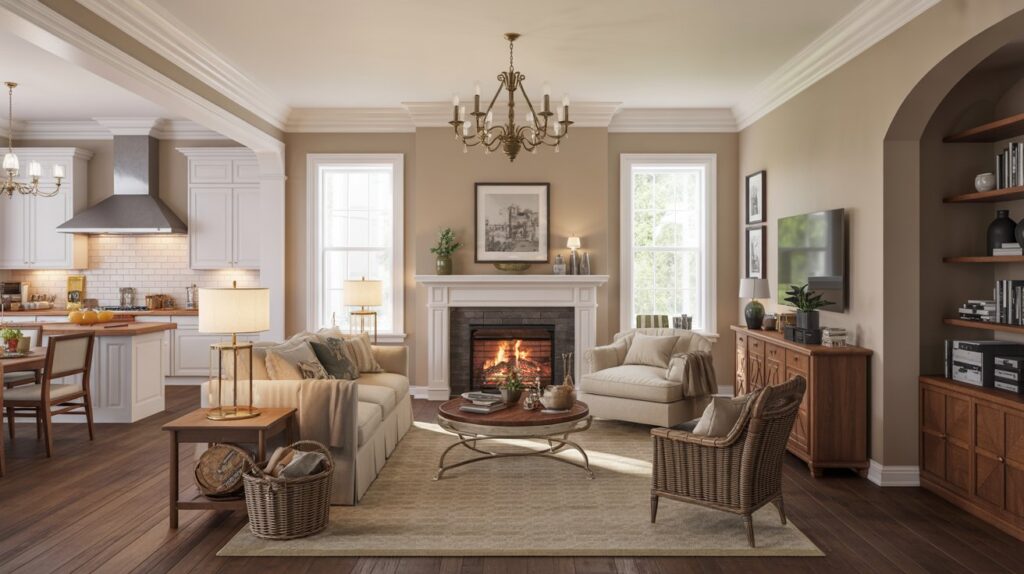
Understanding how a keeping room differs from family rooms, living rooms, and other common spaces helps you decide what fits your home best.
Keeping Room vs Family Room
Family rooms are usually bigger spaces designed for the whole household to gather. You’ll typically find a TV, comfortable couches, and maybe some games or books. They can be anywhere in the house.
Keeping rooms are different. They sit right next to the kitchen and focus on bringing people together through conversation. You might have a TV, but it’s not the main attraction. The goal is connection while someone cooks or during casual hangout time.
Keeping Room vs Living Room
Living rooms are your formal spaces. They’re where you entertain guests, host parties, or sit down for important conversations. The furniture is usually nicer, and everything feels a bit more put together.
Keeping rooms are the opposite. They’re casual, lived-in, and comfortable. You don’t worry about shoes on the ottoman or crumbs on the couch. And they’re always located near the kitchen, not at the front of your home.
Hearth Rooms and Other Names
Keeping rooms go by several names today. “Hearth room” is the most common alternative, referring back to those original fireplace-heated spaces.
You might also hear them called family rooms, flex rooms, sitting rooms, or part of an eat-in kitchen. They all mean basically the same thing.
Modern Uses of a Keeping Room

Today’s keeping rooms serve multiple purposes, making them one of the most practical and well-loved spaces in a home.
Flexible Family Space
A keeping room can be whatever you need it to be. Set up a reading nook with good lighting and a comfy chair. Add a small table for board games or puzzles.
Use it as a casual dining spot for quick meals. Some families even turn it into a mini-office for paying bills or checking emails.
Parents especially love having this space. Kids can do homework, play, or watch a show while you’re cooking dinner. Everyone stays connected without being on top of each other.
Entertaining and Socializing
When you have guests over, the keeping room gives them somewhere comfortable to sit and chat. No more awkward standing around the kitchen island or perching on bar stools that hurt after ten minutes.
Your friends can relax on actual furniture, grab a drink, and keep you company while you finish preparing food. It makes hosting feel natural and easy.
Enhancing Home Value
Buyers love keeping rooms because they’re practical and flexible. This space often becomes the heart of the home where families spend most of their time together.
How to Integrate a Keeping Room Into Your Home

Adding a keeping room doesn’t require a full renovation. With smart planning and the right furniture, you can create this cozy space in your existing layout.
1. Layout and Space Planning
Look at your current floor plan for underused areas. Can you borrow square footage from an oversized living room? Is there wasted space in a large kitchen or hallway?
Some homeowners convert mudrooms, breakfast nooks, or awkward corners into keeping rooms. Find a spot next to your kitchen that feels connected but not cramped.
2. Choosing Furniture
Pick comfortable, practical pieces like cozy armchairs, cushioned benches, or low-profile sofas. Choose easy-to-clean, durable fabrics that can handle spills, pet hair, and daily wear. Skip anything too formal or delicate.
3. Decorating for Comfort and Style
Use warm colors like rust, reds, gold, browns, or greens. Add texture with throw pillows, chunky blankets, and area rugs. Wicker or wooden furniture brings natural warmth.
If possible, include a fireplace as a focal point. Add houseplants and use ambient lighting like table lamps instead of harsh overhead lights. Personal touches like family photos or favorite books make the space feel like yours.
4. Functional Enhancements
Built-in shelves provide storage for books, games, and toys. A small desk creates a homework or work station. Keep sightlines open to the kitchen so you can see and talk to people while cooking.
Key Takeaways
- Keeping rooms creates connection. They keep family and guests close to the kitchen, making everyday life and entertaining feel natural and comfortable.
- This space works for multiple purposes. Use it for reading, games, casual meals, homework, or just relaxing while someone cooks dinner.
- You don’t need major construction. Convert underused areas like breakfast nooks, mudrooms, or large hallways into a functional keeping room.
- Comfort matters more than formality. Choose durable, easy-to-clean furniture and warm colors that make people want to spend time there.
- It adds real value to your home. Buyers love flexible spaces that serve as the heart of the home where families naturally gather together.
Conclusion
A keeping room brings people together in the best way possible. It’s that comfortable spot right off your kitchen where real life happens.
Homework gets done, conversations flow naturally, and guests feel at home. You don’t need a huge budget or major renovation to create one.
Look around your house for unused space that could become your family’s new favorite spot. The beauty of a keeping room is its simplicity.
It’s not fancy or complicated. It’s just a warm, practical space that makes daily life a little bit better. And honestly, isn’t that what good design should do?
Frequently Asked Questions
What exactly is a keeping room?
A keeping room is a cozy living space located right next to the kitchen. It started in colonial times as a warm gathering spot and now serves as a casual area for family and guests.
How is a keeping room different from a family room?
Family rooms can be anywhere in the house and usually center around a TV. Keeping rooms are always next to the kitchen and focus on conversation and connection during cooking and meal prep.
Do I need a fireplace in my keeping room?
No, a fireplace isn’t required. While original keeping rooms relied on fireplaces for heat, modern versions focus on comfort and function. A fireplace is just a nice bonus feature.
What’s the best furniture for a keeping room?
Choose comfortable, durable pieces like armchairs, cushioned benches, or sofas with easy-to-clean fabrics. Avoid formal or delicate furniture since this space gets daily use from family and guests.
Can a keeping room increase my home’s value?
Yes, buyers appreciate flexible spaces that serve multiple purposes. Keeping rooms often become the heart of the home, making them an attractive feature that adds practical value.
