

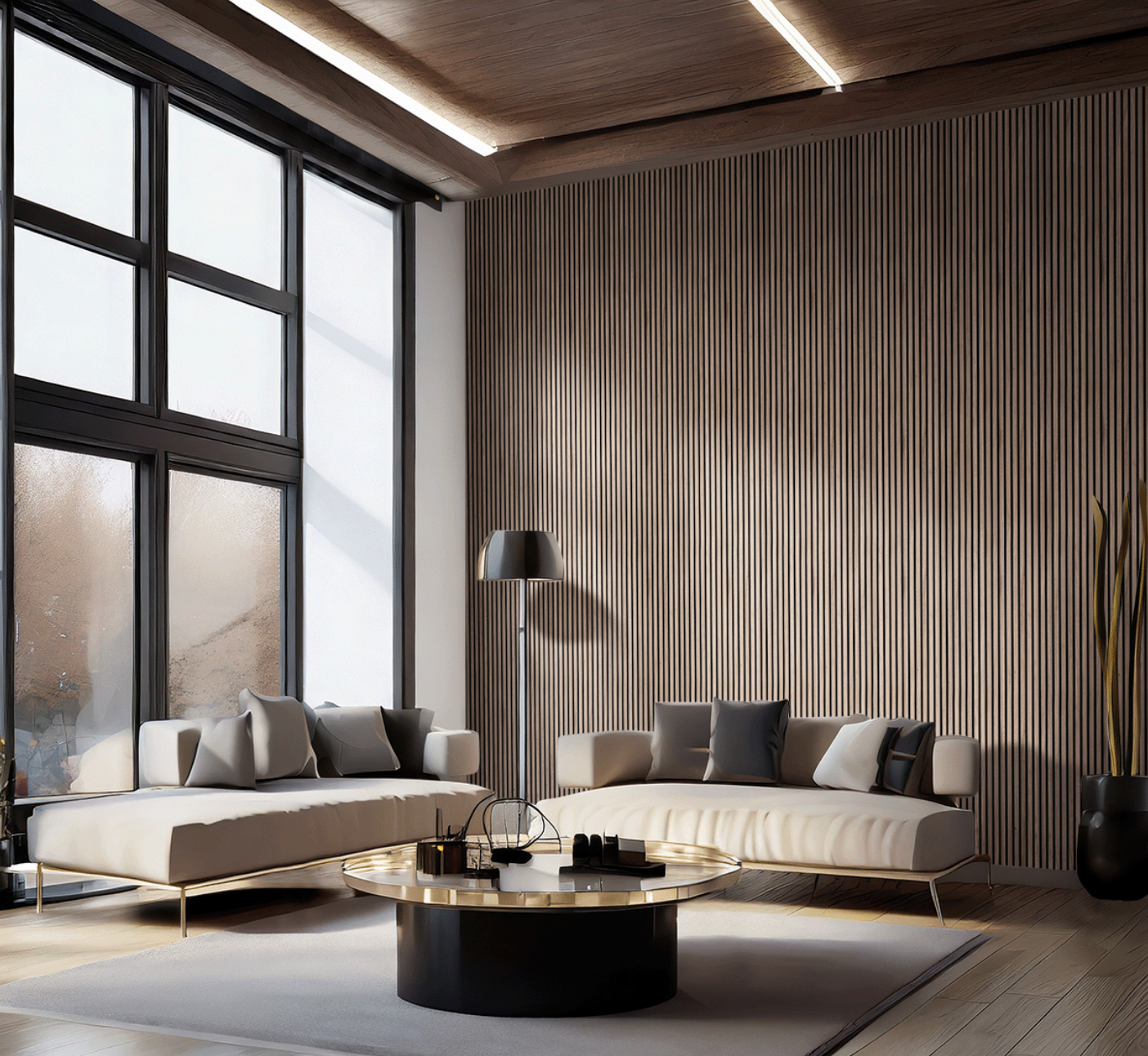
Walk into a thoughtfully designed home today and you will often notice something subtle before anything else: the way sound feels softer, light seems warmer and rooms feel more grounded. Behind denser fabrics, layered textures and sculptural furniture, a quieter revolution is underway on the walls and ceilings themselves. Designers increasingly turn to wooden panels as a key tool for shaping both atmosphere and function in contemporary homes.
The renewed interest in wood is not about rustic nostalgia. It is about using a timeless material in sharper, more architectural ways. From slim slatted cladding to bold geometric grids, wooden panels now play a central role in how homeowners define zones, control acoustics and add character without overwhelming a room. They bridge the gap between minimalist lines and the need for warmth, turning hard, echoing spaces into places where people actually want to linger.
From flat walls to tactile architecture
For decades, painted plasterboard defined the default wall. It was cheap, predictable and visually quiet. Yet as open-plan layouts became standard, that simplicity created new problems: harsh echoes, undefined spaces and a lack of visual depth. Wooden panels offer a direct response.
Instead of treating walls as a blank background, more homeowners treat them as vertical landscapes. Slatted oak behind a sofa adds rhythm and depth without stealing attention from the rest of the room. A darker walnut grid behind a TV visually anchors the screen and hides cables and wall brackets. In hallways, vertical boards draw the eye upward and make narrow spaces feel taller rather than tighter.
The effect is architectural rather than decorative. Panels add shadow, relief and a sense of craftsmanship that simple paint or wallpaper rarely achieve. Even in small apartments, a single panelled wall can shift the entire perception of the space, making it feel curated rather than improvised.
The acoustic advantage you actually feel
Open kitchens, concrete floors and large windows look beautiful on photos, but they often sound terrible in daily life. Hard surfaces bounce sound around, turning family dinners and online meetings into a constant background of clatter and echo. This is where wooden panels become more than a style choice.
Many modern systems combine wood with acoustic felt or perforations that absorb sound. Installed on a ceiling above a dining table or along one wall in a living room, they break up reverberation and soften sharp noises. Conversations become clearer, music sounds richer and the general fatigue from constant noise drops noticeably.
Homeowners who work remotely feel the difference immediately. A panelled backdrop behind a desk reduces echo on video calls and creates a pleasing, professional background. In children’s rooms or gaming corners, panels help contain noise without resorting to thick carpets or heavy curtains that might not fit the desired look.
Zoning without building new walls
One of the biggest challenges in modern homes is how to divide open spaces without closing them off. Traditional partitions block light and sightlines, making rooms feel smaller. Wooden panels provide an elegant alternative: they suggest boundaries without fully enclosing.
A half-height slatted divider between kitchen and living room, for example, lets light pass through while hinting at two distinct zones. A full-height panel behind a dining area marks it as its own “room” within a larger space. In studio apartments, a panelled headboard wall can visually separate sleeping and living areas without adding a single new wall.
Even in larger houses, zoning matters. An entrance clad in vertical panels immediately signals arrival and transition, creating a buffer between the outside and the more private parts of the home. In long, open corridors, alternating panelled sections break monotony and guide movement naturally.
Sustainability, maintenance and everyday practicality
The appeal of wooden panels is not just emotional. Many homeowners look for materials that feel honest, durable and repairable rather than disposable. Properly sourced wood supports this mindset.
A well-installed panelled wall stands up to daily life. It hides minor scuffs better than plain white paint and ages with a patina rather than simply getting dirty. Small damages often blend into the grain or can be sanded and retouched locally. In busy households, this resilience matters more than perfect, fragile surfaces.
From a sustainability perspective, wood stores carbon and, when certified and responsibly harvested, aligns with a more conscious approach to building materials. Paired with long life spans, this gives wooden panels an edge over many synthetic wall finishes that are hard to repair or recycle.
Cleaning is usually simple: dusting and occasional wiping with a slightly damp cloth. In high-splash areas like kitchens, homeowners often combine panels with a more robust backsplash material around the cooking zone, using wood on adjacent walls where it is less exposed to grease and water.
Style choices: from Nordic calm to bold statements
The versatility of wooden panels is one reason designers return to them again and again. A few key decisions shape the final expression:
- Direction of slats or boards: Vertical lines emphasise height and feel calm and contemporary. Horizontal lines can widen a room and suit more relaxed spaces.
- Colour and finish: Natural light oak gives a bright, Nordic feel, while smoked or dark-stained wood creates drama and intimacy. Matte finishes highlight texture; semi-matte adds a subtle sheen.
- Pattern density: Tight, narrow slats feel refined and modern; wider boards read more rustic or traditional. Mixing widths introduces a playful, graphic rhythm.
- Placement: A full room clad in wood feels like a cabin; a single accent wall or ceiling panel introduces warmth without overpowering.
Homeowners who hesitate often start small: a panelled headboard wall in the bedroom, a ceiling treatment above the dining table, or a compact reading nook wrapped in wood. These targeted interventions show how much impact a relatively small surface can have before committing to larger areas.
Bringing it all together in everyday homes
The growing use of wooden panels reflects a broader shift in how people think about their homes. Instead of treating walls as neutral backdrops, more homeowners see them as active tools for comfort, identity and zoning. The right panel in the right place improves acoustics, defines function and adds a tactile quality that flat paint simply does not deliver.
Whether in a compact city apartment, a renovated townhouse or a newly built family home, wooden panels offer a way to make spaces feel finished without feeling overdesigned. They bridge aesthetics and practicality, turning echoing rooms into calm, characterful environments that support the routines of daily life.
As more people spend extended time at home, the demand for spaces that feel both beautiful and usable continues to rise. In that quiet evolution, wood on the walls and ceilings is no passing trend. It is a considered response to how we actually live, work and unwind – a material choice that reshapes not just how our homes look, but how they sound and feel.
