

Your kitchen cabinets do a lot of work for you every day by being opened and closed, holding everything from plates to that collection of takeout menus that you don’t want to throw away yet.
But how long do kitchen cabinets last before needing replacement? Most kitchen cabinets last between 15 to 20 years, and some potentially longer.
In this guide, I will provide information on what affects the lifespan of a cabinet, some indicators that replacement is around the corner, and your best options when it is time to replace the cabinets.
I have spent years working with homeowners on these decisions and believe that I can help you answer your questions accurately and honestly.
Understanding Kitchen Cabinet Basics
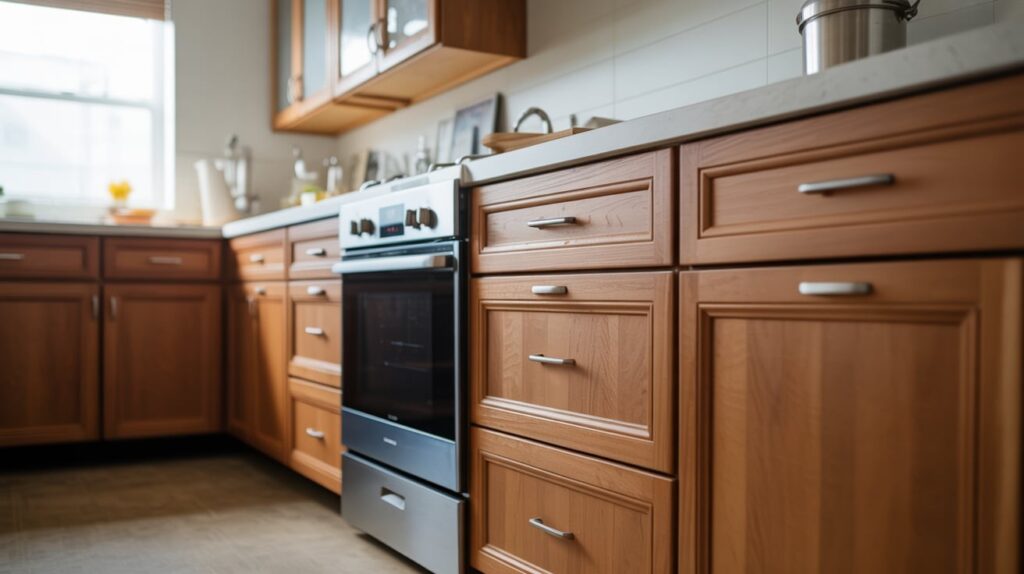
Before we talk about lifespan, let’s cover what makes a good cabinet. Quality materials matter. So does construction.
The finish you choose affects durability too. Knowing these basics helps you make smarter choices when buying new cabinets or caring for existing ones.
Your cabinets face daily stress from moisture, heat, grease, and constant use. Understanding what they’re up against helps you protect your investment.
How Long Do Kitchen Cabinets Last?
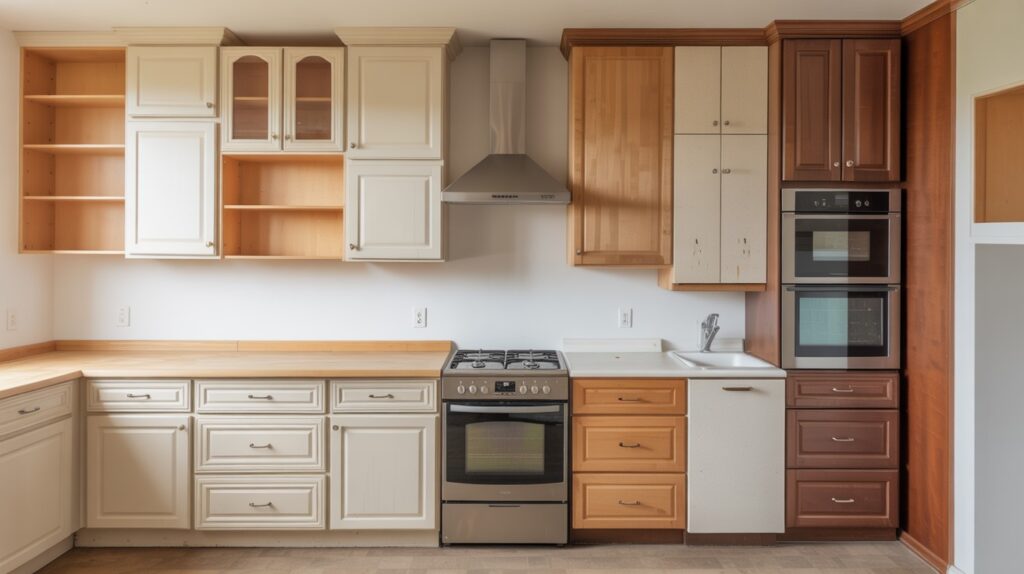
Time to answer the big question: what’s the actual lifespan you can expect from your cabinets?
Average Lifespan
Most kitchen cabinets last between 15 and 20 years. That’s the typical range for average-quality cabinets with regular use. But this number isn’t set in stone.
How you use and care for your cabinets makes a huge difference. A busy family kitchen with young kids will wear cabinets faster than a rarely-used vacation home kitchen.
Moisture is your cabinet’s worst enemy. Steam from cooking, spills, and humidity all take their toll. Regular maintenance helps cabinets reach their full potential lifespan.
Lifespan by Cabinet Type
Not all cabinets are created equal. Here’s what you can expect:
Stock Cabinets: 10 to 15 years on average. They’re mass-produced and budget-friendly with adequate but not exceptional materials and construction.
Semi-Custom Cabinets: 15 to 25 years. They offer better quality than stock options with some customization without the full custom price tag.
Custom Cabinets: 30 years or more with proper care. High-quality materials and expert craftsmanship make the difference.
Pre-Finished Cabinets: 20 years or longer. The baked-on finish resists damage better than site-applied finishes.
Key Factors That Influence Lifespan
Material quality matters tremendously. Solid wood outlasts MDF in most cases. Plywood construction offers good strength and moisture resistance. Cheap particleboard cabinets often fail first.
Construction quality shows up over time. Dovetail drawer joints outlast stapled ones. Solid wood face frames add strength. Quality construction costs more but pays off in longevity.
Environmental exposure determines survival rates. Heat from stoves damages nearby cabinets. Moisture from sinks causes swelling and mold. Direct sunlight fades stains and dries out wood.
Signs Your Kitchen Cabinets Need Replacement
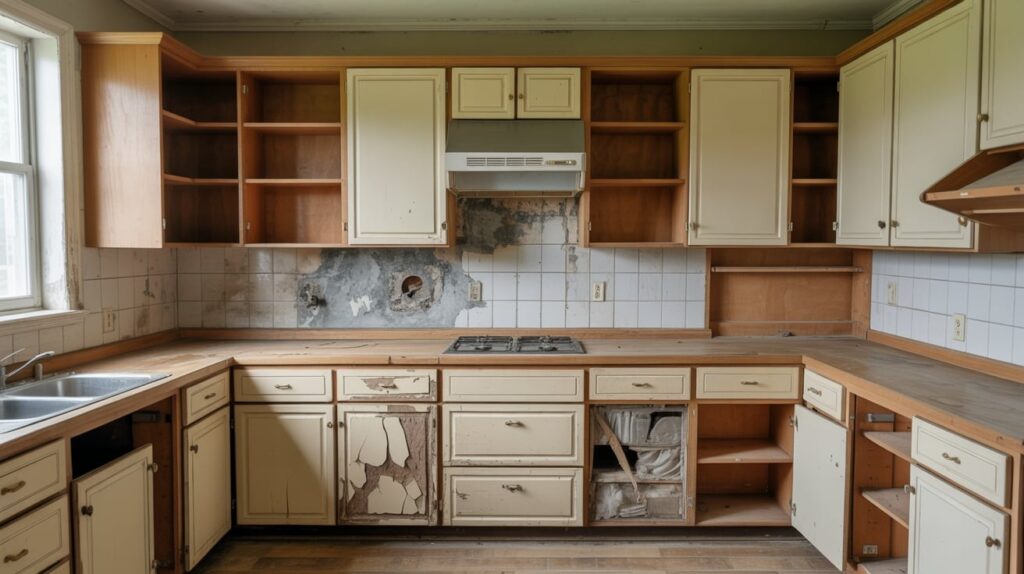
Watch for these red flags that tell you replacement time is approaching.
Structural Damage
Sagging shelves that droop even without heavy items signal weakened boxes. Warping occurs when moisture penetrates the cabinet body. Cracks in the cabinet sides or face frames compromise strength.
Soft spots in cabinet walls mean water damage has rotted the material. Persistent water damage that keeps returning tells you the cabinet material has absorbed too much moisture. Mold growth inside cabinets poses health risks and is nearly impossible to fully remove from porous materials.
Functional Problems
Drawers that stick or jam every time you open them need more than adjustment. Doors that won’t stay aligned no matter how often you adjust them indicate deeper issues.
Hardware that fails repeatedly means you’re throwing good money after bad, especially when stripped screw holes in cheap particleboard can’t be fixed properly.
Appearance Issues
Peeling finish exposes raw wood to moisture and damage. Delamination occurs when the veneer separates from the substrate.
Outdated design makes your whole kitchen look old and affects your home’s value. Finish damage that returns even after repairs indicates the substrate itself is damaged.
Health and Safety Concerns
Mold issues in cabinets affect indoor air quality and cause respiratory problems. Old finishes can emit VOCs for years, causing headaches and respiratory irritation.
Sharp edges from splintering wood or broken laminate create injury risks, especially in homes with children.
Should You Replace, Reface, or Refinish?
Three main options exist when your cabinets need attention. Here’s how to choose the right one.
When Replacement Is Best
Full replacement makes sense when cabinet boxes are damaged, rotted, warped, or moldy. Severe water damage requires replacement since moisture that penetrates deep into cabinet materials causes permanent damage.
When your layout no longer works for your lifestyle, replacement lets you redesign completely and add modern features like pull-out shelves and soft-close mechanisms.
When Refacing Works
Refacing works when the boxes are sound but you want a fresh look. If your cabinet boxes are solid and stable, you can keep the existing structure and replace just the visible parts-doors, drawer fronts, and veneer over the face frames.
This gives you a completely new look at 30 to 50 percent less than replacement cost.
When Refinishing Works
If your cabinets are structurally sound with minimal cosmetic wear, painting or refinishing can add years of life. Solid wood cabinets especially respond well to refinishing.
This is the most affordable option and can be done DIY if you have time and patience.
How to Extend Cabinet Lifespan
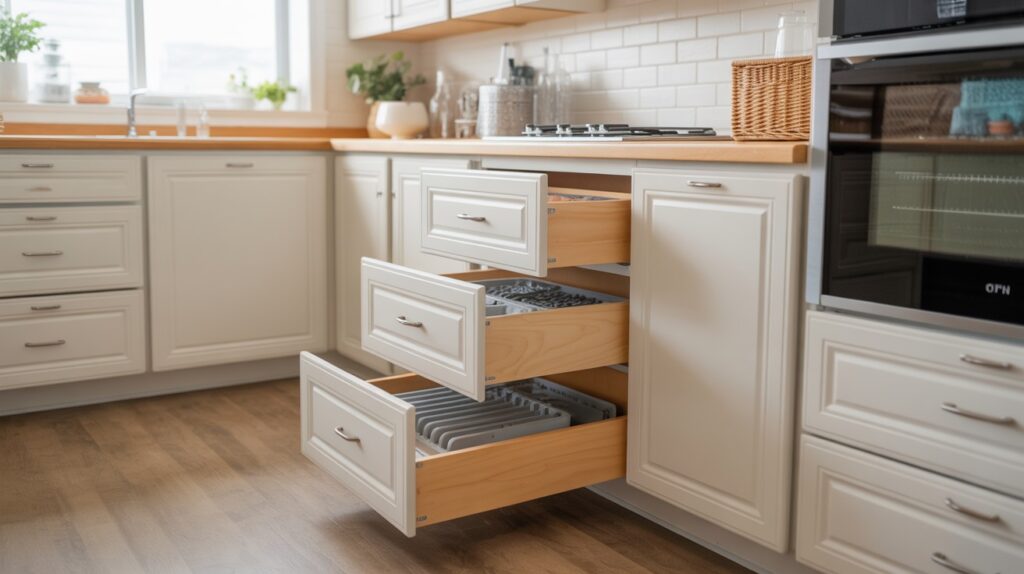
Smart maintenance practices add years to your cabinet life. Here’s what works.
Proper Cleaning and Maintenance
Use mild cleaners specifically made for cabinets. Dish soap diluted in warm water works for most situations. Avoid harsh chemicals like bleach and ammonia. Use soft cloths or sponges that won’t scratch finishes. Regular deep cleaning prevents buildup that damages finishes over time.
Moisture Control
Fix leaks quickly before water damage starts. A small leak under the sink can destroy a cabinet in months. Use ventilation when cooking to remove steam and humidity. Wipe up spills immediately, especially near the sink, as standing water seeps into seams and edges.
Protecting Surfaces
Use liners in drawers and on shelves to prevent scratches. Avoid slamming doors and drawers, the impact loosens joints and hardware over time. Add soft-close hardware to cabinets that don’t have it. This affordable upgrade prevents slamming automatically and adds tremendous protection.
Choosing Quality Materials
When you do replace cabinets, water-based, baked-on finishes offer superior durability. Solid wood and high-quality hardware cost more upfront but last decades longer. Plywood construction resists moisture better than particleboard. Dovetail drawer joints outlast stapled ones. Calculate cost per year of use, not just initial price.
When Replacement Increases Home Value
Updated cabinets improve resale appeal tremendously. Real estate agents consistently report that kitchens sell homes. Buyers notice outdated styles immediately, and many will factor replacement cost into their offers.
Kitchen updates typically recoup 60 to 80 percent of their cost at resale. Cabinet replacement often delivers the highest return of any single kitchen upgrade. Modern cabinet features like pull-out trash bins, spice racks, and soft-close doors signal quality and help buyers imagine living in the space.
Conclusion
I have replaced cabinets in my home, and this is fair to say: choosing the right first step is a contextual decision. How long do kitchen cabinets last before you should consider replacing them?
Generally, 15 to 20 years, however, there are options when problems start to surface. Honestly assess the condition of your cabinets – if you are experiencing structural problems or some health concern regarding damage, replacement is worth considering.
If the boxes themselves are solid and durable, then considering refacing the cabinets may be appropriate. If the cabinets are sound and just a bit tired, refinishing may also be an option.
Trust your assessment and do what is best for your kitchen and home. Dimension your cabinets carefully in the coming week and determine what steps make sense.
Frequently Asked Questions
How can I tell if my cabinets need replacing or just refinishing?
Check the cabinet boxes for damage, warping, or soft spots. If the structure is solid and only the finish looks bad, refinishing works great. Structural damage means you need replacement.
Do cheap cabinets last as long as expensive ones?
No, quality affects lifespan significantly. Budget cabinets typically last 10 to 15 years, while high-quality custom cabinets can last 30 years or more with proper care.
What type of cabinet material lasts longest?
Solid wood cabinets with quality construction last longest, often 30 years or more. Plywood construction with solid wood frames also performs well. Avoid cheap particleboards for longevity.
How much does cabinet replacement typically cost?
Stock cabinets start around $3,000 to $8,000 for an average kitchen. Semi-custom runs $8,000 to $20,000. Custom cabinets cost $20,000 and up depending on size and features.
Can I replace just some cabinets or do I need to replace them all?
You can replace individual cabinets, but matching existing cabinets is difficult. Styles change and colors vary. Most people replace all uppers or all lowers at minimum for consistency.
