

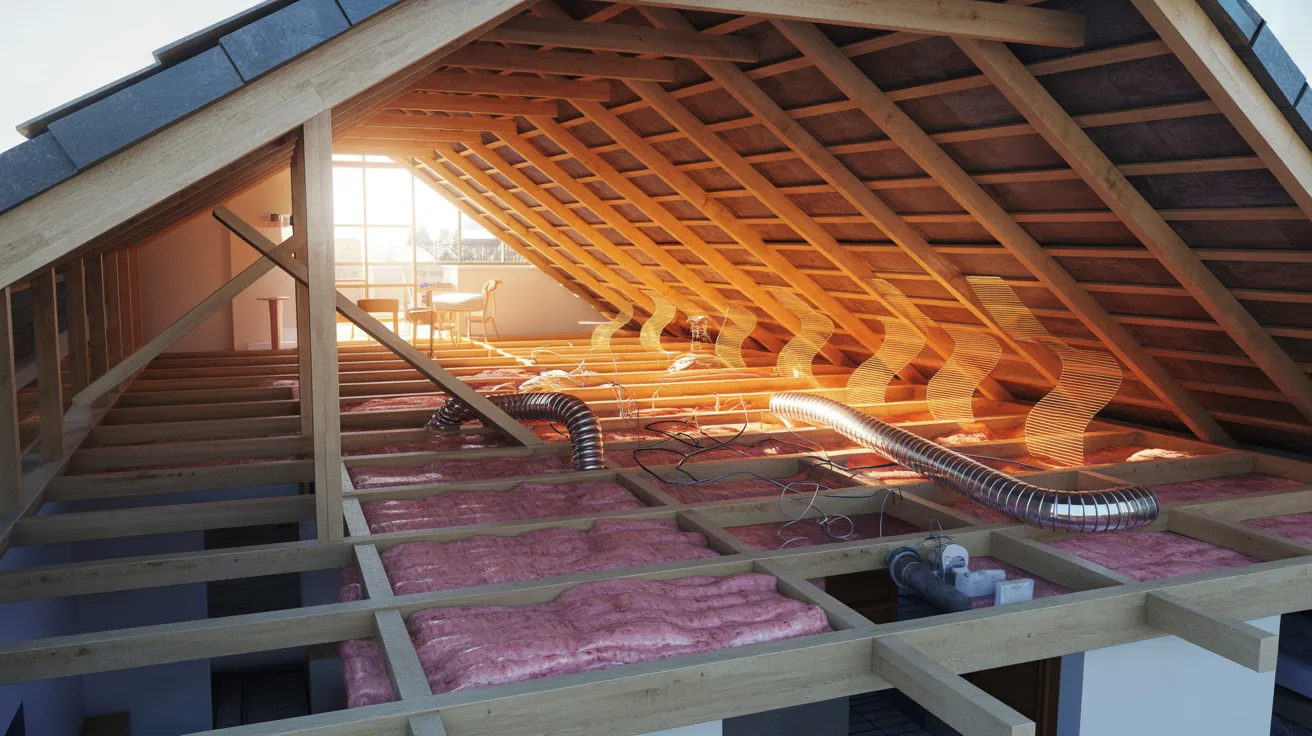
Most cooling complaints sound mechanical. The system is running, the temperature is lowered, but the building is still hot and uneven by late afternoon. The simple fix is to turn up the system or schedule a new one. This action may overlook the true culprit above the ceiling line. Attic heat and insulation deficiencies can negate the effectiveness of a good air conditioner. The aim of the building owner or facility manager is not to outsmart physics with more cooling capacity. It is to prevent the building from re-radiating heat into the cooled space.
When Cooling Fails, The Attic Wins
1.Why Hot Spots Follow The Sunline
Air conditioners do not cool rooms in a vacuum. They cool a building that is constantly gaining and losing heat. In vented attics, the attic temperature in summer can be much higher than the ambient temperature, creating a large heat reservoir above the occupied space. The hottest rooms are usually those that receive the most solar irradiance, particularly the west-facing roof and ceiling surfaces on upper floors. This is why hot spots shift within a building throughout the day. If the problem shifts with the sun path, it is as much a problem of the building envelope as it is of the equipment. People who do not consider the attic conditions are likely to treat symptoms such as a lack of airflow or inadequate cooling, while the building continues to release stored heat for hours.
2.How Poor Attic Work Sabotages Repairs
A repair visit can inadvertently worsen attic-driven problems if the root cause is not recognized. Technicians may increase blower speed to meet the set temperature, which can increase duct leakage and amplify comfort swings. They may drop refrigerant setpoints and drive the coils colder, which can increase humidity issues if short cycling begins. They may recommend a larger unit, which often reduces run time and moisture removal, leaving the space cooler but clammy. None of those moves fixes the attic heat load. Teams that regularly provide AC repair in Haltom City, TXoften see this pattern because high attic temperatures and inconsistent insulation coverage can make even well-maintained systems appear underperforming.
3.Insulation Gaps Create A Patchwork Ceiling
Insulation is rarely consistent in older buildings or in attics where multiple contractors have worked. Gaps exist around recessed lights, plumbing, attic hatches, chimneys, and top plates. Even small gaps are significant because they create hot spots. A room may be warm all the time, not because the supply register is weak, but because a part of the ceiling acts like a hot plate. Facility managers always notice this as a comfort issue that is hard to explain, such as one side of a room that always feels off. Contractors always verify this by checking the attic for areas of missing or compressed insulation, especially in the eaves, which are hard to reach.
4.Ductwork In Attics Becomes A Heat Sponge
When ducts are routed through a hot attic, they are subjected to conditions that oppose cooling. The supply ducts can pick up heat before the air reaches the room, and the return ducts can return warmer air to the air handler, increasing the load. Leaky connections between ducts allow cooled air to escape into the attic, wasting the cooling effect and also depressurizing the building, drawing hot air from the outside through leaks. Insulated ducts will not perform well if the insulation is damaged, compressed, or missing at the joints. A contractor may focus on the air handler without realizing that the largest temperature difference occurs along the ducts above the ceiling.
5.Air Leaks Turn Attics Into Pressure Partners
Insulation reduces heat transfer, but air sealing addresses the more serious issue of hot attic air migrating into the conditioned space. In many structures, attic bypasses create an open door between the attic and the inside space. During heating and cooling cycles, air pressure can draw attic air down through ceiling penetrations. This air is not only hot but also contains dust, fiberglass fragments, and moisture, which impact the indoor climate. Property managers may mistakenly attribute this problem to poor filtration or a dirty system when, in fact, it is uncontrolled airflow. Any serious envelope-conscious contractor will consider air sealing a comfort upgrade, not just an energy upgrade.
6.Ventilation Issues Can Amplify Heat Loads
Attic ventilation is often misunderstood. A vented attic needs balanced intake and exhaust to remove heat and moisture effectively. If soffit vents are blocked by insulation, or if exhaust vents are inadequate, the attic retains more heat and transfers it into the building. At the same time, adding ventilation alone without addressing air sealing can backfire by increasing the movement of hot air into the living space through gaps. Contractors look for signs such as darkened insulation from air movement, dust streaks near penetrations, and unusually high attic temperatures compared to the outdoor conditions. The fix is usually a combination of restoring ventilation paths and sealing the ceiling plane so the attic remains separate from the conditioned space.
7.Why Equipment Adjustments Rarely Solve It
The attic heating and insulation deficiencies create a load problem that simulates mechanical failure. The increased runtime, energy consumption, and rooms that are behind on setpoint temperature all indicate undersizing. But adding capacity doesn’t solve the heat transfer problem. It merely accelerates your contribution. This is why buildings can have new equipment and still feel uncomfortable. The contractor strategy that will work in the long run is to identify the symptoms of the load problem and then inspect the attic as part of the diagnostic routine. Once the envelope is fixed, many systems that were failing will suddenly operate within normal parameters.
8.Practical Checks Contractors Use On Site
Contractors do not have to guess. They make simple observations on site that become informed decisions. They compare the supply air temperature in the plenum to the temperature at remote registers to identify heat gain in the ducts. They look for large temperature differences between rooms on the same system, which can indicate duct problems or insulation deficiencies rather than refrigerant issues. They examine attic access points for obvious bypasses and assess the consistency of insulation thickness, particularly over problematic areas. They check return air paths to confirm that hot attic air is not being drawn into the building through leaks.
Stop The Attic From Stealing Your Cooling
Attic heating and insulation leaks sabotage cooling in a way that simulates failure, which is why they are so easily missed. The best contractor strategy is to consider the attic as part of the system, since the ceiling interface and ducting determine whether treated air reaches people as planned. For property managers, the best course of action is to demand that comfort system analysis include an examination of the attic, duct integrity, and insulation uniformity. Once those vulnerabilities are remedied, many buildings will maintain a stable comfort level without oversized equipment or constant adjustments. Cooling systems work when the building stops resisting them, and the attic is often where the battle is won or lost.
