

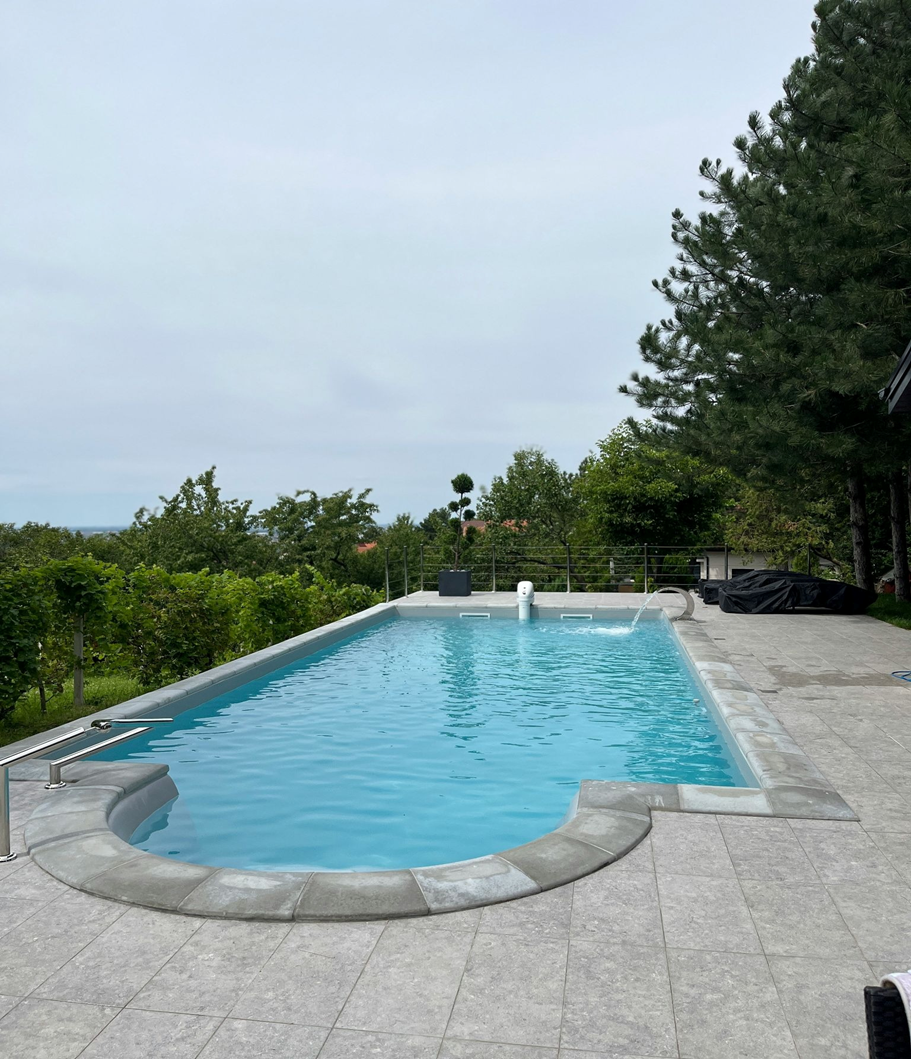
I’ve been in concrete and pool construction long enough to know that many homeowners come to us after falling in love with a picture on Instagram.
And that is fine.
To be honest, a gorgeous pool is a gorgeous pool. But there is a version of this story that ends with the pool of your dreams. And another that ends with a half-finished project or a missing contractor. Building an inground pool for a small backyard is a serious construction project. It takes months.
But the quality of execution all comes down to who you hired.
The glamour is real. So is the chaos, if you pick wrong.
Let’s be real, great swimming pool contractors are not particularly easy to find. There are plenty of contractors who can build a pool that looks good in photos on day one.
But the question is, will they still be taking your calls two years later when a fitting cracks or a pump starts acting up?
So, what qualities should you keep your eyes out for? Find out below.
What To Look Out For In A Swimming Pool Contractor
Look for a contractor who can explain what they are doing in simple terms. A builder must be able to explain why they are recommending a particular material over another for your specific yard conditions.
Knowledge that can’t be communicated is knowledge you can’t verify.
I should also add that you must be on the lookout for how they handle your site assessment. A skilled builder will ask questions. They’ll probe about details like drainage, soil, sun exposure, and maybe how your family plans to use the space.
Craftsmanship also shows up in their past work. Ask them if you could visit a completed project. Then, examine the coping and the tile lines or the deck finish. Sloppiness in the visible areas signals deeper problems.
Licensing, Insurance & Certifications
This is a no-brainer. Your pool builder must carry a valid contractor’s license in your state.
They must carry general liability insurance and workers’ compensation coverage. If either lapse during your project and someone gets hurt on your property, you could be liable.
Ask for certificates of insurance. But don’t stop there. Call the insurer to verify if they are current. It takes five minutes and could save you an enormous headache.
Relevant Experience
Twenty years of experience building pools in Florida doesn’t automatically translate to building pools in Wisconsin.
Why?
Because soil composition, frost depth, drainage patterns, and local permit requirements vary significantly by region.
To be specific, ask how many pools they have built in your area. Also, look at how many projects are similar in scope and style to yours.
If you want a freeform lagoon-style pool with a grotto and a tanning ledge, a builder whose portfolio is all rectangular lap pools may not be your best bet. Regardless of how long they have been in business.
Relevant experience also means familiarity with your local municipality. I’ll tell you for free: local knowledge alone can save you weeks on your timeline.
Reading Reviews Like a Professional
Reviews matter. They also lie sometimes by omission, sometimes by design.
I will break this down.
A four-star average across twelve reviews tells you less than a four-star average across two hundred. In essence, look at volume as much as rating.
Read the negative reviews carefully. Every contractor gets a bad review, eventually. That is inevitable. The question is how they respond.
A builder who replies thoughtfully and acknowledges the issue before fixing it is showing you their character. While a contractor who dismisses every complaint may be offering a peek into what your future experience might look like.
Also, check reviews on multiple platforms, such as Google, Houzz, and the Better Business Bureau. A high Google rating, paired with a pattern of complaints on the BBB, is worth noting.
Recognizing a Good Contract
A transparent contract is the most underrated part of the pool builder selection process.
Your contract should specify the materials being used. It should include a detailed payment schedule tied to project milestones. And it should spell out what happens if timelines slip or if unexpected site conditions are discovered.
Also, confirm who is responsible for pulling permits. In most jurisdictions, the licensed contractor is responsible for this. But I wouldadvise you to confirm this explicitly in writing.
Proper Communication
I can’t overemphasize the importance of communication in this whole process.
Pay attention to how your builder communicates before you sign anything.
Do they return calls promptly? Do they show up when they say they will? Are their emails clear, or do they leave you with more questions than answers?
The communication patterns you see during the sales process are almost always the same ones you will experience during construction. A builder who takes three days to return a quote inquiry will likely take three days to respond when you have a concern mid-project.
For clarity, designate a single point of contact on their team. Establish upfront how often you will receive project updates and through what channel.
Some builders use project management apps. Others prefer weekly calls. Either is fine, as long as it is agreed upon and followed.
Questions You Must Ask A Pool Builder Before Writing Any Check
Here’s a short list of questions you may want to consider asking a potential contractor:
- Who are your subcontractors, and how long have you worked with them?
- Can I see proof of your current license and insurance?
- What warranties do you offer on workmanship and on equipment?
- What happens if unexpected issues are found during excavation?
- Who is my primary point of contact once construction begins?
- Have you built this type of pool before, and can I visit a completed example?
Again, that last question is essential. If they can’t point you to a finished project you can inspect, take note.
FAQs
How long does it typically take to build an inground pool?
For most residential projects, plan on eight to sixteen weeks from permit approval to water in the pool.
I would say fiberglass pools can come in faster.
But gunite or concrete pools, especially with custom features, tend to take longer. Note that weather and material availability may also affect the schedule.
What’s the difference between a pool contractor and a pool builder?
These terms are usually used interchangeably. Technically, a pool builder may refer to the company overseeing the full project, while a pool contractor might be one of several subcontractors involved.
The key question in vetting, though, is who holds the license and assumes legal responsibility for the project.
Do I need a permit to build an inground pool?
Yes, you do. Your licensed contractor should handle the permit application process. If a builder suggests skipping permits to save time or money, walk away immediately.
Unpermitted pools may present problems when you want to sell your home, and can result in mandatory removal.
What red flags should I watch out for during the bidding process?
To list a few:
- A contractor who asks for a large upfront payment.
- Vague contracts.
- Pressure to sign quickly.
- No verifiable physical address or business history.
- An inability to provide references or site visits to completed projects.
Trust your instincts. If something feels off, it usually is.
Final Thoughts
Here is the pattern I keep seeing on the rescue jobs I get called into: homeowners often pick the builder who seemed nicest in the meeting.
That’s a huge mistake. Charm should never be mistaken for competence.
My candid advice?
Get three bids. Scrutinize the cheapest one most carefully since it is most likely missing something.
Choose the builder whose answers to hard questions had real depth. The right builder will tell you uncomfortable truths about your soil, budget, or timeline.
That honesty is the signal that they care about the work more than the sale.
