

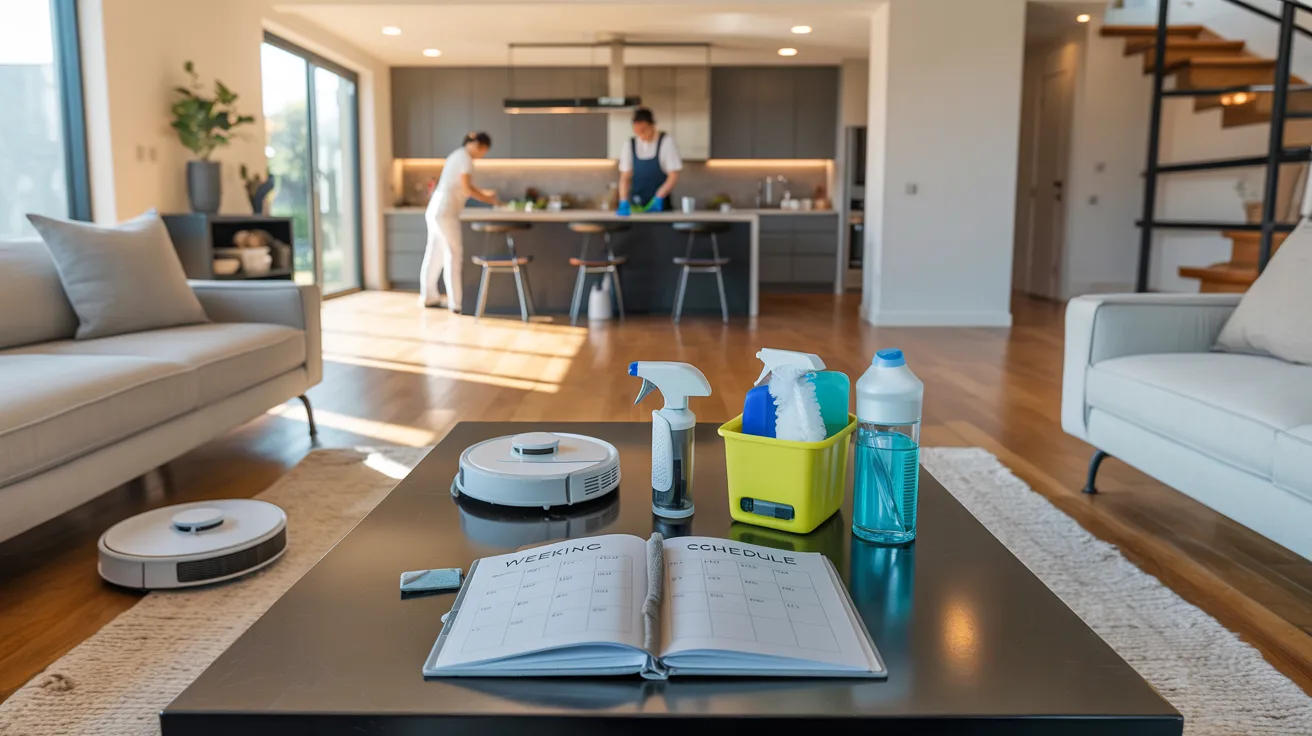
A Clean Home Does Not Have to Mean Doing It All
A lot of homeowners want the same thing.
They want a house that feels clean, calm, and manageable without spending every spare hour wiping counters, catching up on laundry, and trying to stay ahead of the next mess. The problem is that daily life does not make that easy. Work fills the week. Errands pile up. Kids bring constant motion. Even quiet households seem to produce dishes, dust, clutter, and bathroom mess faster than anyone expects.
That is why so many people feel frustrated by home cleaning.
It is not always the work itself. It is the feeling that the work never really ends. You finish one room and another one already needs attention. You catch up on the weekend, then start Monday feeling behind again. Over time, that cycle can make a clean house feel less like a comfort and more like a moving target.
The good news is that keeping a clean home does not mean doing every task yourself.
In many cases, the smartest approach is not to clean harder. It is to clean more intentionally, simplify what matters, and stop assuming that every part of home care has to sit on your shoulders alone.
Start by Redefining What “Clean Enough” Means
One of the biggest reasons homeowners feel overwhelmed is that they are chasing a version of clean that is hard to maintain in real life.
A house does not need to look perfect every day to feel good. It does not need spotless baseboards, folded throws, and empty counters at every hour. For most busy households, the goal should be simple: the home feels healthy, functional, and pleasant to live in.
That shift matters.
When you define clean in a more realistic way, it gets easier to focus on the tasks that actually move the needle. A clear kitchen sink. A swept floor. A bathroom that feels fresh. A living room that is picked up enough to relax in. Those things usually matter more than trying to deep clean the whole house in one push.
A realistic standard helps homeowners stop burning energy on appearances and spend more effort on the parts of cleaning that make daily life easier.
Focus on Maintenance Instead of Marathon Cleaning
Many people clean in bursts.
They let things pile up during the week, then try to fix everything at once. That sounds efficient, but it often backfires. Marathon cleaning sessions are tiring, easy to postpone, and hard to repeat. They also make cleaning feel heavier than it needs to be.
A better system is maintenance.
That means breaking home care into smaller actions that keep the house from tipping into chaos. Wiping the bathroom sink while getting ready. Running the dishwasher at night. Doing one load of laundry before it becomes four. Resetting the living room before bed. These are not impressive tasks, but they work because they prevent the bigger cleanup spiral.
The point is not to stay busy all day.
The point is to make the house easier to manage by doing small things before they become bigger problems. That creates a home that stays more stable without requiring constant effort.
Decide What You Actually Need to Own Yourself
This is the part a lot of people skip.
They assume that if a task belongs to the home, it automatically belongs to them. But that mindset creates pressure that is not always necessary. Just because something needs to get done does not mean you personally have to be the one doing it every time.
That is especially true for busy homeowners balancing work, family life, or caregiving.
Maybe you do not mind tidying, but hate deep cleaning bathrooms. Maybe you are fine handling dishes and laundry, but floors always fall behind. Maybe you can manage the day to day upkeep, but every few weeks the whole house still needs a reset. Those patterns matter, because they show where help could make the biggest difference.
A clean house gets easier when you separate what you can realistically maintain from what keeps dragging you down.
That does not mean giving up control. It means using your time better.
Build a House Routine Around Trouble Spots
Every home has trouble spots.
The kitchen collects dishes, crumbs, and random paper. Entryways gather shoes, bags, and jackets. Bathrooms show buildup fast. Bedrooms turn into holding zones for clean laundry, mail, and things that need to be put away later. If you treat the whole house as one giant task, it becomes overwhelming. If you focus on the places that create the most visible stress, the house starts to feel better much faster.
That is why simple routines work.
Choose the areas that affect your mood the most and keep those steady. You might decide that the kitchen gets reset every evening, the bathroom counters get wiped every other day, and the main living area gets a quick pickup before bed. That alone can make the home feel cleaner, even if the rest is not perfect.
This approach works because it is practical.
It keeps the parts of the house that shape daily life from falling apart, which helps the entire space feel more under control.
Let Outside Help Support the System
There is nothing unrealistic about wanting help.
For some homeowners, outside help is what makes the whole system work. Not because they are lazy. Not because they cannot clean. Just because time, energy, and attention are limited, and it makes sense to use support where it counts.
That support can take different forms.
Sometimes it means hiring someone for a deeper reset once in a while. Sometimes it means bringing in recurring help for the tasks that always fall behind. Sometimes it simply means trying one service and seeing whether it makes the home feel easier to maintain afterward.
This is where a real example can fit naturally. A piece like this Homeaglow review gives homeowners a clearer picture of what using a cleaning service can actually look like, especially if they are curious about booking support without overcomplicating things. It helps move the idea from abstract to practical, which can be useful for people who know they need help but are not sure what kind.
The key is not to expect outside help to solve every home habit.
It works best when it supports a realistic routine, not when it is asked to carry the entire weight of the household alone.
Share the House Without Needing to Manage Every Detail
Busy homeowners often carry more than the physical work.
They also carry the mental load.
They remember what needs to be cleaned, notice what is running low, keep track of what has not been done, and decide when to catch up. That invisible work is a big reason home care feels so draining. Even when other people help, one person often still ends up managing the whole thing.
That is why keeping a clean house cannot only be about dividing chores.
It also has to be about sharing awareness. If more than one person lives in the home, everyone should know what “reset” means for the kitchen. Everyone should know where things go. Everyone should be able to notice when the trash is full or the bathroom needs attention.
A house feels lighter when one person is not carrying the full burden of noticing, planning, and prompting.
That kind of shared responsibility makes a bigger difference than many people expect.
Make Cleaning Easier to Start
A lot of home care problems are really starting problems.
The task itself may only take ten minutes, but it feels annoying enough to delay. Then the delay turns a small job into a bigger one. One way to reduce that friction is to make cleaning easier to begin.
That can be as simple as storing supplies where they are used. Keep bathroom wipes in the bathroom. Keep everyday surface spray where kitchen messes happen. Keep a laundry basket where clutter tends to collect. Keep a vacuum where it is easy to grab instead of buried in a hard to reach closet.
Convenience matters.
The fewer steps between noticing a mess and dealing with it, the more likely it gets done. This is not about being ultra organized. It is about removing little barriers that make home care harder than it needs to be.
Stop Treating Rest Like a Reward You Have to Earn
This part matters more than it seems.
A lot of busy homeowners rest only after the house reaches some imaginary standard. But if that standard keeps moving, rest keeps getting delayed. That is how people end up spending every weekend catching up and still feeling like it was not enough.
A clean house should support your life.
It should not become a reason you never get to enjoy it. Sometimes the smartest home care choice is deciding that the room is clean enough, the dishes can wait until morning, and your energy matters too. People take better care of their homes when they are not constantly exhausted by them.
That is another reason doing everything yourself is not always the answer.
A home runs better when the people living in it are not stretched too thin.
Final Thoughts
Keeping a clean house as a busy homeowner is not about mastering every task or staying on top of everything all the time.
It is about creating a system that works in real life. That usually means lowering the pressure, focusing on maintenance, paying attention to the areas that matter most, and letting support step in where it makes sense. A home can be clean, welcoming, and manageable without asking one person to carry the entire load.
That is the shift worth making.
When you stop trying to do everything yourself, keeping up with the house starts to feel less like a constant battle and more like something your routine can actually hold.
