

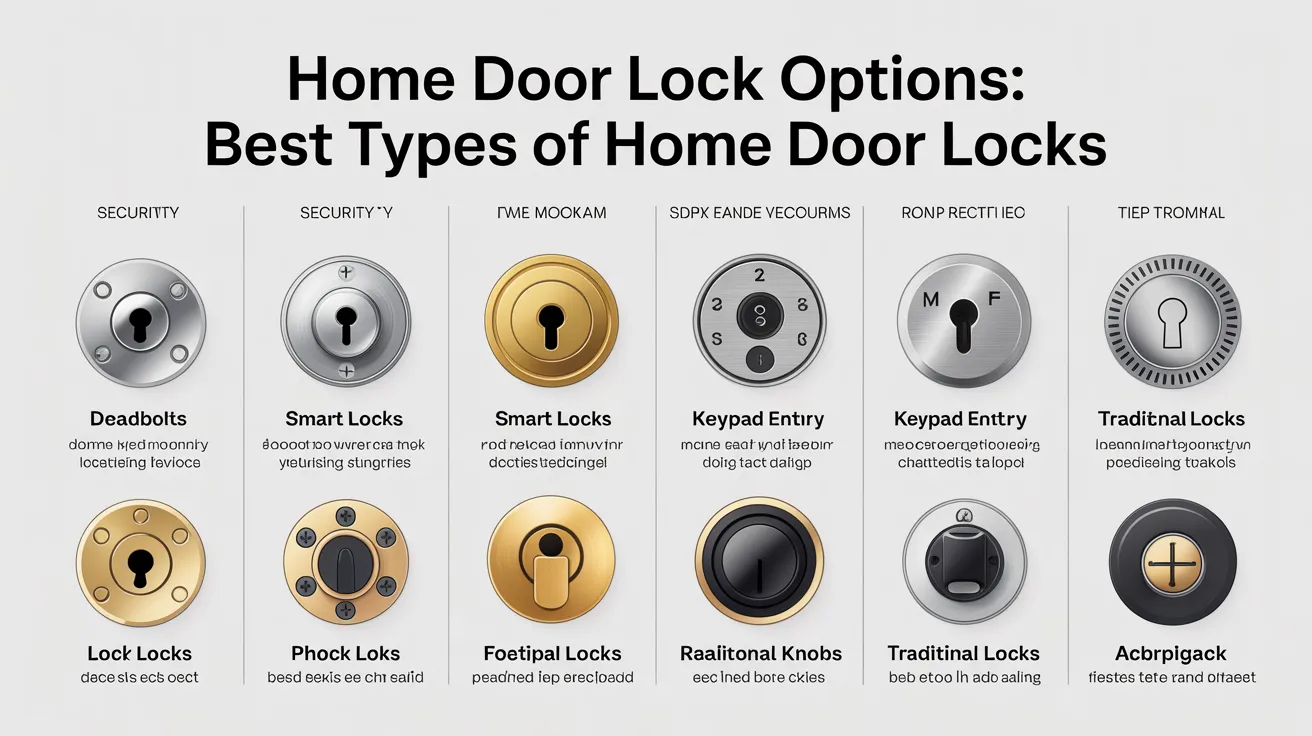
Choosing the right home door lock is not exciting. It is not trendy. But it is one of the most important decisions you make about your property. The lock on your door controls who gets in and who stays out.
Home door lock options range from basic knob locks to advanced smart systems with restricted key control. Each option serves a different purpose. The key is understanding how they function and where they fit.
Professional locksmiths, including established companies like Diamondback Lock and Key, regularly help homeowners compare these options and select hardware that matches their security goals and daily routines.
This guide breaks down the most common residential door lock choices and explains when each one makes sense.
1. Knob Locks: Basic but Limited
Knob locks are common on residential doors. The locking mechanism is built into the handle itself. Many homes use them on interior doors and sometimes on exterior entry doors.
Pros:
- Affordable
- Easy to install
- Widely available
Limitations:
- The lock cylinder sits inside the knob
- The handle can be forced or broken more easily than a deadbolt
For exterior doors, knob locks should not be the only line of defense. They work best when paired with a separate deadbolt.
2. Deadbolt Locks: The Standard for Exterior Security
Deadbolts are the backbone of residential security. They extend a solid metal bolt into the door frame when locked.
There are three common types:
Single-cylinder deadbolt
Operated with a key on the outside and a thumb turn on the inside. This is the most common residential option.
Double-cylinder deadbolt
Requires a key on both sides. Often used on doors with nearby glass panels to prevent someone from breaking glass and unlocking the door from inside.
Keyless deadbolt
Uses a keypad instead of a traditional key. Some models allow temporary access codes.
Deadbolts provide stronger resistance than knob locks. They are often the first upgrade homeowners make after moving into a new property.
3. Smart Locks: Convenience Meets Control
Smart locks add electronic features to traditional locking systems. They may use keypads, smartphone apps, fingerprint recognition, or Bluetooth connectivity.
Benefits include:
- Remote locking and unlocking
- Temporary digital access codes
- Activity tracking
Smart locks are popular for families, rental properties, and short-term stays. Instead of handing out spare keys, you can assign access codes.
However, smart locks still rely on mechanical components. Proper installation remains important. A misaligned bolt can cause electronic systems to malfunction.
For homeowners who want flexibility without sacrificing strength, many choose a smart lock paired with a traditional deadbolt core.
4. Lever Handle Locks: Accessibility and Function
Lever handles are often used for accessibility. They are easier to operate than round knobs, especially for individuals with limited hand strength.
In residential settings, lever locks are commonly installed on interior doors or secondary entrances. For exterior doors, they are usually combined with a deadbolt for added protection.
Functionally, they operate similarly to knob locks. The main difference is ease of use.
5. High Security Residential Locks
High security home door lock options go beyond standard hardware. These systems often include:
- Pick-resistant cylinders
- Restricted keyways
- Reinforced strike plates
- Drill-resistant components
They are designed to reduce the risk of forced entry and unauthorized key duplication.
Homeowners typically choose high security locks after:
- Purchasing a new home
- Experiencing a previous break-in
- Storing valuable tools or equipment
- Managing rental properties
These locks look similar to standard deadbolts from the outside. The difference is internal construction and key control.
6. Mortise Locks: Strength and Longevity
Mortise locks are built into a pocket cut inside the door. They are commonly found in older homes and some high-end properties.
Advantages:
- Durable internal components
- Strong locking mechanisms
- Often combined latch and deadbolt functions
Mortise systems require more involved installation. They are typically handled by experienced locksmiths due to the precision required.
For homeowners with existing mortise doors, upgrading internal components can improve performance without replacing the entire door.
7. Electronic and Keypad Entry Systems
Keypad locks allow entry through numeric codes. Some operate independently, while others integrate with home security systems.
They are popular because:
- No physical key is required
- Codes can be changed quickly
- Multiple users can have separate codes
For families with children or frequent visitors, keypad systems eliminate the need to hide spare keys under doormats. That alone solves a common security risk.
Choosing the Right Home Door Lock Option
The best lock depends on how the door is used.
Ask yourself:
- Is this the main entry door?
- Do multiple people need access?
- Do I want to control key duplication?
- Is convenience more important than traditional keys?
- Does the door frame need reinforcement?
For most homes, a solid single-cylinder deadbolt combined with reinforced strike plates offers strong everyday protection. For households seeking more control, smart or restricted-key systems may be a better fit.
A professional locksmith can evaluate the door, frame, and hardware before making recommendations. That assessment prevents common mistakes such as installing high-end hardware on a weak frame.
Short Real-World Scenario
A homeowner once upgraded from a basic knob lock to a reinforced deadbolt after realizing her spare key had been passed around to several neighbors over the years. She laughed and said, “I guess it was time to reset the system.” A simple change brought peace of mind.
Common Questions About Home Door Lock Options
Should I replace locks after buying a home?
Yes. Rekeying or replacing locks removes uncertainty about who may have copies of the old keys.
Are smart locks safe?
When properly installed, they provide strong security. Mechanical strength and correct alignment remain essential.
Is a double-cylinder deadbolt better?
It can provide added protection for doors near glass. However, safety codes may restrict their use in some locations.
Do all exterior doors need deadbolts?
Primary entry doors should have them. Secondary doors should be evaluated based on usage and exposure.
Installation Still Matters
No matter which home door lock option you choose, installation affects performance.
A misaligned bolt can cause sticking. Short screws in strike plates weaken resistance. Loose hardware shortens the life of the lock.
Professional locksmith services, including those offered by companies like Diamondback Lock and Key, often focus on correct alignment, reinforcement, and testing during installation. That attention to structure helps the hardware perform as intended.
Final Thoughts on Home Door Lock Options
Home door lock options range from simple knob locks to advanced electronic systems with restricted key control. Each serves a different purpose. The right choice depends on your property, your access needs, and your security priorities.
At its core, door hardware does one job: control entry. Selecting the proper system and installing it correctly turns that simple function into reliable daily protection.
Upgrading your locks may not be glamorous. But it is practical. And practical security decisions tend to age well.
