

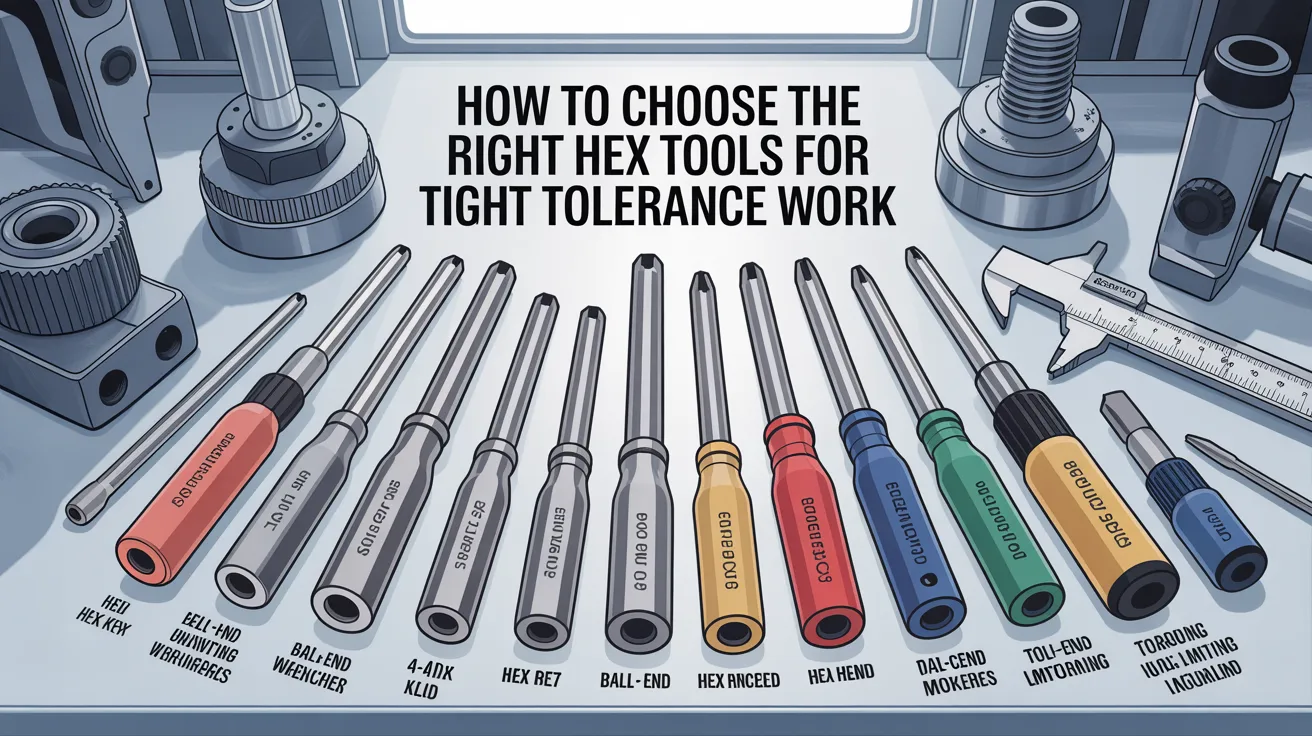
Tight tolerance work, such as electronic assembly, electrical installation, and fine mechanical tasks, requires hex tools that deliver accuracy, consistency, and durability. Standard sets often lack the dimensional precision needed to avoid fastener damage or compromised fittings. Selecting the right hex tools comes down to understanding material quality, manufacturing tolerances, grip design, and tool set configuration.
Prioritise Tool Sets Designed for Precision Fastening
Not all hex keys are built to the same specification. In tight-tolerance environments, using poorly machined or worn hex keys can lead to cam-out, rounding, or overtightening, especially on small or delicate fasteners. That’s why it’s essential to opt for professionally engineered sets that offer superior fit and torque transfer.
For example,Wera hex wrench sets for precision fastening are designed with tight dimensional tolerances, reinforced materials, and surface treatments that reduce wear and slipping. These features make them well-suited for technicians and tradespeople working on sensitive assemblies where exact fastening pressure matters.
Check for Tight Dimensional Accuracy and Compliance
When dealing with tolerance-critical work, even a slight deviation in hex size can cause fastener head damage. Reputable hex tool manufacturers adhere to DIN or ISO standards to ensure exact sizing across metric and imperial formats. Ball-end variants can be useful for angled access but should be avoided where maximum contact and torque accuracy are required.
Choose Ergonomic Designs for Control and Repetition
For technicians handling multiple fastenings per task, ergonomics reduces fatigue and increases control. T-handle, L-key with sleeve, or flag handle designs offer superior grip and leverage, especially in confined spaces. Non-slip coatings and contoured grips also improve accuracy by minimising tool rotation during torque application.
Consider Set Coverage and Organisational Efficiency
A well-configured hex tool set should include commonly used sizes in both metric and imperial measurements. Organisational features, such as colour-coded sleeves, laser-etched size markings, or compact storage cases, prevent delays on site and ensure correct selection every time. Some advanced sets also include interchangeable tips or ratcheting systems that reduce bulk without sacrificing range.
Match Tool Design to Application Environment
Different work environments place different demands on hex tools. For example, technicians working in confined enclosures or control cabinets may benefit from ball-end hex keys that allow angled entry, while those in high-voltage or ESD-sensitive areas should opt for tools with insulated handles or anti-static properties.
In industrial settings where oils, moisture, or contaminants are present, corrosion-resistant finishes like nickel plating or black oxide help maintain performance. Understanding where and how the tool will be used ensures that the selected hex set won’t compromise safety, precision, or efficiency.
Know When to Replace or Upgrade Your Tools
Repeated use, exposure to solvents, or improper storage can degrade even the best tools. Indicators such as stripped fasteners, visible rounding, or inconsistent fit are signs it’s time to replace your set. Tradespeople working in electronics, precision mechanical builds, or electrical fit-outs should review tool performance regularly and upgrade to maintain compliance and output quality.
Precision Starts with the Right Hex Key
For work where tight tolerances are non-negotiable, tool quality directly affects job outcomes. Substandard tools can introduce risk, slow workflows, and cause component damage. Selecting hex tools with certified accuracy, premium materials, and ergonomic features ensures every turn counts—literally.
