

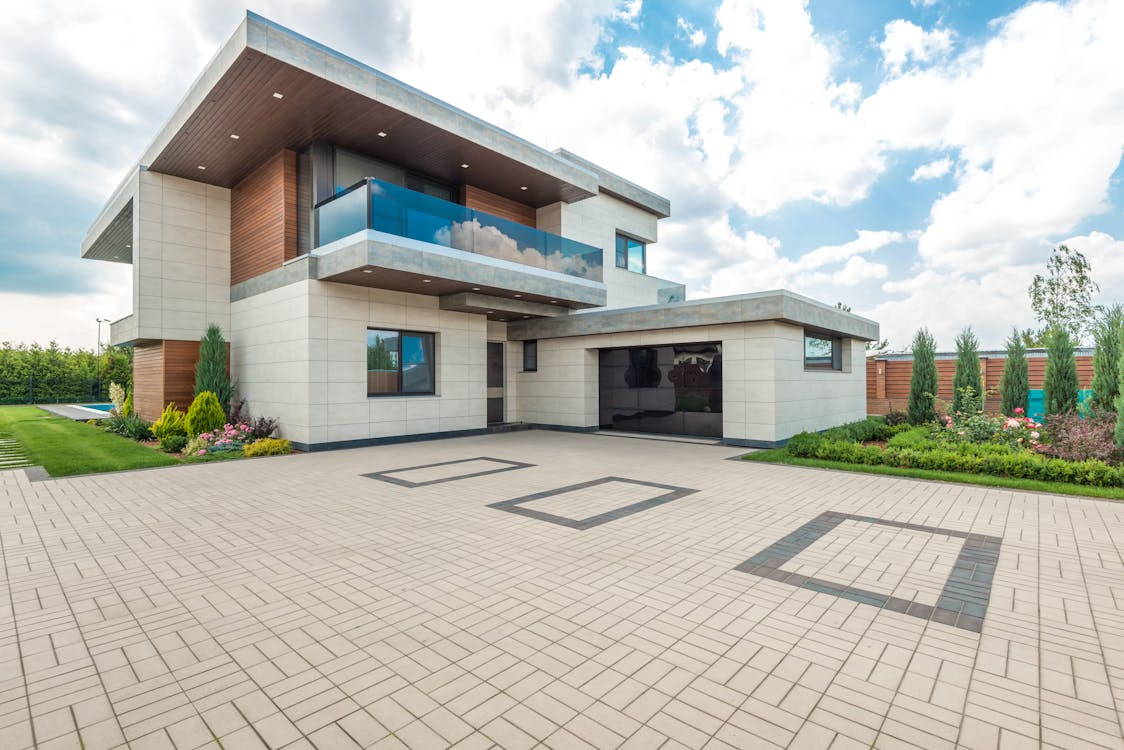
Most homeowners don’t think about commercial paving when planning driveway or pathway upgrades. Professional-grade paving methods once reserved for shopping centers and industrial parks now show up in residential settings where durability matters more than initial cost savings.
How Paving Has Changed Beyond Parking Lots
Commercial paving techniques are now being used in high-end residential work for practical reasons. Contractors who handle both commercial and residential projects apply the same engineering principles regardless of property type. The equipment, materials and quality standards that ensure a retail parking lot lasts twenty years work equally well for a suburban driveway that sees daily use from multiple vehicles.
Upscale residential developments use professional-grade materials as standard practice. Property developers understand that cutting corners on paving creates maintenance headaches and may damage property values. The same asphalt mixtures and installation methods used for municipal roads now appear in gated communities and luxury homes where longevity justifies higher upfront investment.
This overlap between commercial durability and residential aesthetics benefits homeowners who prioritize function alongside appearance. Professional paving contractors bring expertise in load calculations, drainage engineering, and material selection that traditional residential installers may lack. The result is a surface that can handle real-world stress without premature cracking, settling, or water damage.
Residential Areas That Benefit From Commercial Paving
Private lanes and HOA-managed streets operate under similar conditions as public roads but lack municipal maintenance budgets. Professional paving extends service life and reduces per-household costs over time.
Gated communities benefit from commercial installation standards, since residents expect premium quality matching their property values. Properties with extended driveways see the greatest advantage with commercial paving standards:
- Long driveways exceeding 100 feet where repairs become expensive and disruptive
- Shared access roads serving multiple homes that experience constant vehicle traffic
- Steep grades requiring superior traction and water management
- Circular driveways accommodating delivery trucks and service vehicles
Home-based businesses create traffic patterns closer to light commercial use than typical residential wear. Frequent deliveries, client visits, and service vehicles accelerate surface deterioration. Standard residential paving fails faster under these conditions, while commercial-grade installation handles the load without constant patching.
Durability Versus Costs in Residential Settings
Commercial paving uses thicker asphalt layers, denser aggregate bases, and more denser compaction than for typical residential work. This creates a surface that resists rutting, cracking and edge failure under sustained weight and traffic.
Load-bearing capacity directly affects lifespan. Professional paving handles delivery trucks, moving vans, and heavy equipment without surface damage. Standard residential installations may show stress marks or depression after a single heavy vehicle parks repeatedly in the same spot. This matters for homeowners who own RV’s, work trucks, or boats on trailers. Costs comparisons shift when viewed over decades rather than months:
- Professional installation costs more initially but while last much better over time
- Maintenance intervals, such as seal coating, stretch with commercial paving
- A complete replacement may be delayed by decades compared to basic residential work
Repair considerations factor into total ownership costs. Professional paving tolerates minor repairs without compromising surrounding areas. Patching a small section maintains structural integrity when done correctly. Poor initial installation creates cascading failure where one crack leads to widespread damage requiring complete replacement.
Materials Commonly Used in Commercial Paving Projects
Asphalt blends for heavy-duty applications contain higher percentages of larger aggregate stones and premium binders. These mixtures resist deformation under weight and temperature extremes. Commercial-grade hot mix asphalt maintains flexibility in cold weather while staying firm under summer heat, preventing the rutting and cracking that plagues inferior materials.
Permeable paving solutions address drainage requirements while supporting vehicle weight. Porous asphalt and previous concrete allow water to drain through the surface rather than running off into storm systems. This matters for properties in areas with strict stormwater management regulations or homes experiencing drainage problems with traditional paving.
Slip resistance becomes critical in residential settings with foot traffic. Commercial paving specifications include texture requirements that prevent accidents during rain or ice. Weather performance standards ensure surfaces remain functional year-round without excessive freeze-thaw damage in cold climates or softening in extreme heat.
Design Considerations Homeowners Often Overlook
Proper grading prevents water from pooling on paved surfaces or flowing toward foundations. Professional paving contractors calculate slope requirements before installation, ensuring water moves away from structures and toward appropriate drainage points. A slope keeps water moving without creating noticeable slopes that affect vehicle stability. Critical design elements frequently missed in residential projects are:
- Edge restraints that prevent asphalt from spreading and crumbling at borders
- Expansion joints in concrete that accommodate temperature movement
- Transition zones where paving meets landscaping or existing structures
Blending professional paving with landscape requires coordination. Paving height relative to lawn areas affects drainage and mowing. Integrating hardscape features like retaining walls or planting beds needs planning before paving begins, not afterward as an awkward addition.
Safety considerations extend beyond surface texture. Sight lines at driveway exits, lighting for nighttime visibility, and clear pathways for pedestrians matter in residential settings. Professional design accounts for children playing, guests navigating unfamiliar spaces, and emergency vehicle access.
How Professional Paving Impacts Property Value
First impressions form within seconds of arrival. Well-executed paving shows quality maintenance and homeowner attention to detail. Real estate agents consistently cite driveways and entries as primary curb appeal factors influencing buyer interest and offer prices.
Buyers assess property conditions based on visible elements. Cracked, patched, or deteriorating paving suggests deferred maintenance throughout the property. Professional installation with clean edges, smooth surfaces, and proper drainage communicated the opposite; competent ownership and quality construction standards.
Reduced future repair costs become selling points during negotiations. Buyers increasingly request maintenance records and ask about major system ages. Recent professional paving is a significant expense that the new owner won’t face for years, potentially justifying higher asking prices or faster sales.
Investing in Long-Lasting Outdoor Surfaces
Paving is part of structural infrastructure and not just a cosmetic enhancement. The decision parallels choosing HVAC systems or roofing materials – quality affects daily function and long-term costs.
Balancing durability, appearance, and budget requires honest assessment of needs and priorities. Professional paving costs more initially but delivers value through extended service life and reduced maintenance. Homeowners should calculate total ownership costs rather than comparing only installation prices.
Informed decisions support both immediate usability and future property value. Understand material options, and design considerations before committing. Professional paving done correctly becomes an asset homeowners appreciate daily and buyers recognize when properties change hands.
