

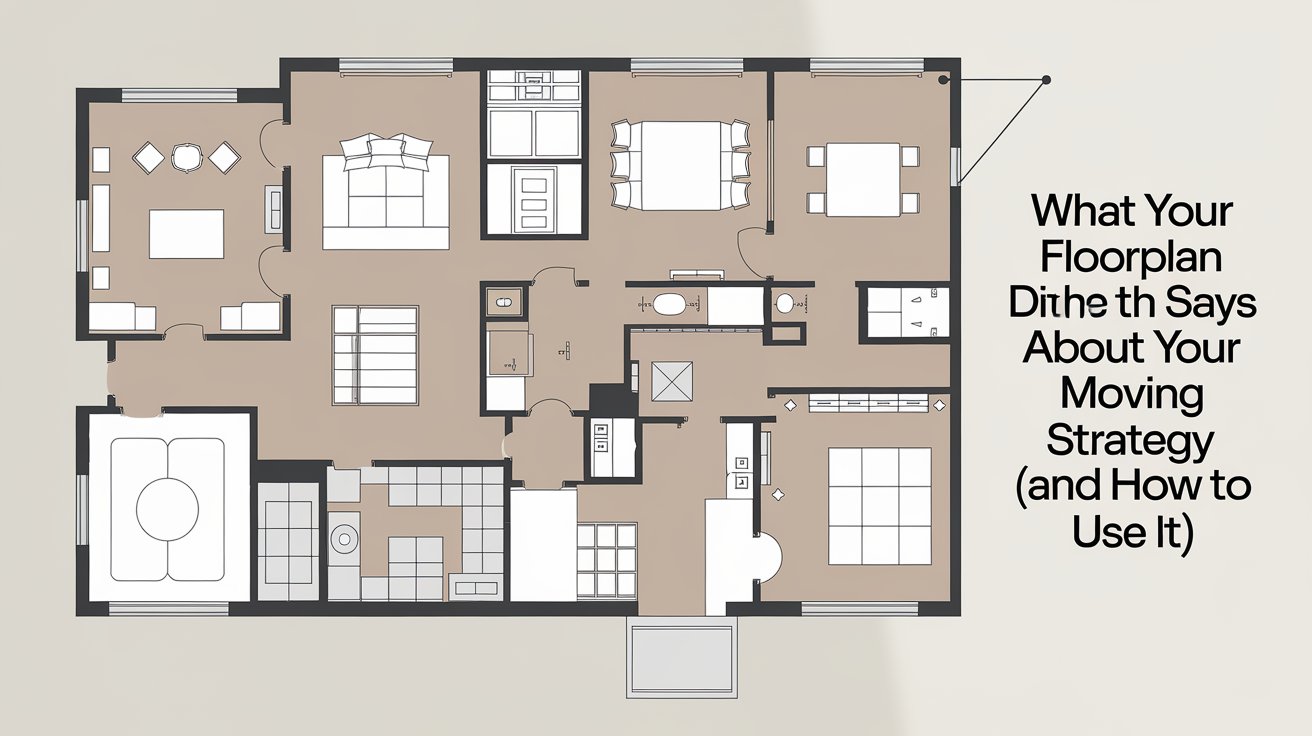
If you think moving house is just about tossing things in boxes and hiring a van, think again. Your floorplan, the shape and quirks of your home, can make or break your moving day. We’re talking about those wonky Victorian stairs, the sneaky under-stairs cupboard, or the joy of a single-storey bungalow. Underestimate them, and chaos can reign. Embrace them, and suddenly your move’s a well-oiled machine.
Let’s dive into how really looking at your floorplan can help you plan ahead, save money, and dodge stress you didn’t even see coming.
Decoding Your Home: Layouts and Their Moving Personalities
Different types of homes bring their own moving headaches (and perks!). Here’s what to expect and what to do about it, whether you’re packing up a cosy flat or a sprawling townhouse.
Studio Flat
It’s not about size, it’s what you do with it! Having just one room for everything means you need to be tactical from the start.
- Tip: Prioritise vertical packing. Stackable, same-size boxes are your friends. Pack stuff you won’t need soonest and keep your bed and a chair unboxed till the last day. And if you can, keep walkways clear. You might only need a small van, so think easy access for loading.
Victorian Terrace
Ah, the classic: character for days, but those stairs and corridors? Not forgiving. Getting large furniture in and out can be genuinely tricky.
- Tip: Measure up, seriously, measure everything big before move day. Sofas and huge wardrobes often don’t fit round those sharp corners. Have a plan B for items (like taking out window sashes if needed) and lean towards smaller, lighter boxes for carrying up and down the stairs.
Semi-Detached House
You might think this one’s easy, but don’t be fooled by all that extra space. Shared drives or funny side access can still throw a spanner in the works.
- Tip: Turn the room nearest the front door (the lounge, probably) into your “packing station”, layer up all packed boxes here so the removal crew don’t trample through the rest of the house. One big lorry usually does the job, just check there aren’t parking or narrow entrance issues.
Modern Open-Plan Home
Lovely flow, but where does one room end and the next begin? Trickier than it sounds when it comes to sorting boxes and furniture.
- Tip: Divide the space into colour-coded “zones” on your floorplan, blue for lounge, yellow for kitchen, and so on. Label every box to match. Movers and helpers then know exactly where to unload everything at the new place.
Maisonette or Duplex
Your own door, yes but with rooms stacked over two (or more) levels, the main enemy is that single staircase.
- Tip: Before the van turns up, get all boxes and small furniture to the ground floor. If you don’t, carrying everything down one at a time will leave you exhausted and behind schedule.
Bungalow
One level? Bliss! No stairs = less dragging, less puffing, quicker job all round.
- Tip: Don’t get too relaxed, bungalows can store a lot more stuff than you think because every cupboard is at ground level. Do a good clear-out and use bigger boxes, since you won’t need to haul them upstairs.
Town House (3+ Storeys)
The ultimate test of stamina. Moving over three floors is hard graft.
- Tip: Don’t skimp on crew numbers, at least one person per floor can save hours. Pack and label boxes by both floor and room, and load top-down: attic boxes first, ground floor last.
Turn Your Floorplan Into a Game Plan
Now you’ve got a feel for your home’s quirks, here’s how to use them to your advantage:
- Narrow Bits & Split Levels: Smaller boxes and flat-pack furniture (or take it apart yourself). Big trolleys might get stuck, so expect to carry things by hand.
- Bay Windows: See one? It might just be the escape route for a big sofa that wouldn’t fit through the door.
- Loft Ladders: Movers can’t use them for insurance reasons. Bring everything down from the loft ahead of time (and try not to procrastinate).
- Under-Stairs Cupboards: They seem harmless until you open them and remember just how much you’ve crammed in. Empty them early!
- Balconies & Gardens: Back-garden loading can stop your removals company van causing a street jam. Flats with balconies? You’ll need management’s okay if you’re thinking of using a balcony hoist or similar.
- Lifts: Book your lift slot if you’re in a block. Measure it up to make sure your big furniture fits, otherwise you’re stuck with the stairs.
- Parking Issues: Check if you need special council permission or a parking suspension for the van. If you leave it till the last minute, your van could end up half a street away.
Cutting Down the Foot Miles (and the Bottlenecks)
Every extra trip from your door to the van is time and energy wasted. Here’s how to keep every step efficient:
- Staging Area: As much as possible, get all your boxes into one room near the exit. Your movers can then shuttle back and forth quickly, while other helpers keep replenishing the room.
- Van Choices: If you’re on a tiny street or lane, you may need a smaller van to “shuttle” your stuff to where the big van’s parked.
- Pavement Planning: Keep kerbs clear. Move bins, sweep up leaves, and keep pathways safe for movers and for any passers-by.
Labelling: Make It Foolproof and (Almost) Fun
You could write “kitchen” on a hundred boxes or you could hack the system and make it crystal clear where everything belongs in your new place.
- Double the Floorplans: Print two. Stick one by your old front door, one in the new house’s hallway.
- Add Colour Codes/Codes: Each room gets a coloured sticker (e.g., red for bedroom, green for kitchen), and a short code like “BED1” or “KIT”.
- Box It Up: Write the code on the top and a side of each box.
- Direct Traffic: Movers don’t need to ask you every two minutes, they just match box codes to room labels on the floorplan you’ve stuck up.
Bulky or Fragile: What’s the Game Plan?
Don’t just hope the piano or fridge will fit. Your floorplan can tell you where things might get sticky.
- Sofas: Check if it’ll fit through the door at an angle, or if you’ll need to remove the legs. Sometimes the only way is through the window!
- American-Style Fridges: Your kitchen might have let it in, but can it get out again? Measure up doors, corridors, and make sure you’ve got a backup plan.
- Wardrobes: Large ones rarely make it whole, plan to dismantle them the day before.
- Fragiles: Choose a quiet, safe zone in the new place for boxes marked “fragile” and tell everyone (with labels!) not to stack on top of them.
Safety, Insurance and Getting the Green Light
A good removals crew will use your floorplan to spot the challenges. Here’s what to keep in mind:
- Carrying Heavy Stuff: Stairs mean more strain, so spread the workload among the team.
- Disconnecting Appliances: Organise a pro to disconnect gas/electric appliances, you can’t expect a removals person to do it safely.
- Building Management: If you’re leaving or moving into a flat, talk to the management company early. Show them your floorplan and how you’re keeping things safe for your neighbours.
What a Real Move Looks Like: Three Example Run-Throughs
Studio Flat
- 7:00 AM: Final bits (bedding, toothpaste, kettle) into one “essentials” box.
- 8:00 AM: Movers arrive, do a quick recce, start loading the nicely stacked boxes.
- 9:00 AM: Bed and sofa broken down, loaded straight away.
- 9:30 AM: Final check, lock up, and on the road!
Victorian Terrace
- 7:30 AM: Take apart beds, clear stairways.
- 8:30 AM: Movers (three-person team for speed!) start. One on each floor brings boxes down, the other packs the van from the staging area.
- 9:30 AM: Furniture tackled, any awkward sofas could go out of the window.
- 1:00 PM: All done and dusted.
Three-Storey Townhouse
- 8:00 AM: Four-strong crew. Two work upstairs, two on the first floor.
- 8:30 AM: Goal: get everything to ground floor staging zone ASAP.
- 10:30 AM: Rooms are clear, van starts loading, heavy stuff comes down in bursts.
- 3:00 PM: Lorry packed, keys handed over, done.
Moving Checklist: Don’t Leave These Out
- Print or sketch floorplans for both old and new homes.
- Measure doors, corridors, stairs. Spot the squeeze points.
- Measure your big furniture.
- Decide what can be dismantled ahead of time.
- Plan the best way out, front, back, or through a window?
- Pick your staging zone (ideally, room by the main door).
- Check if you need parking permits or street suspensions.
- If moving to/from a flat, book lifts and let the management know your plan.
- Set up your colour/code system for rooms.
- Stock up on matching labels or pens.
- Mark a “fragile safe zone” in your new home.
- Give your labelled floorplan to your head mover.
Quick FAQs
My estate agent hasn’t given me a floorplan. What now?
No worries, if you can’t find one online, sketch your own (rough is fine). Just get the shapes of the rooms and entrances right.
When should I start looking at all this?
As soon as you know you’re moving. Four to six weeks gives you time to plan, book permits, and breathe.
Will a tricky floorplan cost me more?
Possibly, but honesty is the best policy. A removals company would only get grumpy (and charge extra) if huge stairs or a long walk come as a surprise on move day.
Can I just hand my floorplan to the movers and let them crack on?
Definitely! The best crews will love you for it. It means fewer questions, less hanging about, and everything gets put in the right place the first time round.
Moving is always a job and a half, but with a bit of extra prep and a closer look at your floorplan, you can make it far smoother, safer, and maybe even a bit more satisfying. Good luck with the big day!
