


Choosing the right types of bathroom vanities feels overwhelming with so many options. I’ve spent hours comparing different styles to help you find the best fit for your space.
In this guide, I’ll share 13 popular vanity types with details on function, storage, and style. You’ll learn which vanities work for small bathrooms, family spaces, or luxury designs.
I’ll cover single-sink and double-sink options, wall-mounted and freestanding styles, plus console, pedestal, and vessel sink vanities.
By the end, you’ll know exactly which type fits your needs and budget.
Understanding Bathroom Vanity Basics
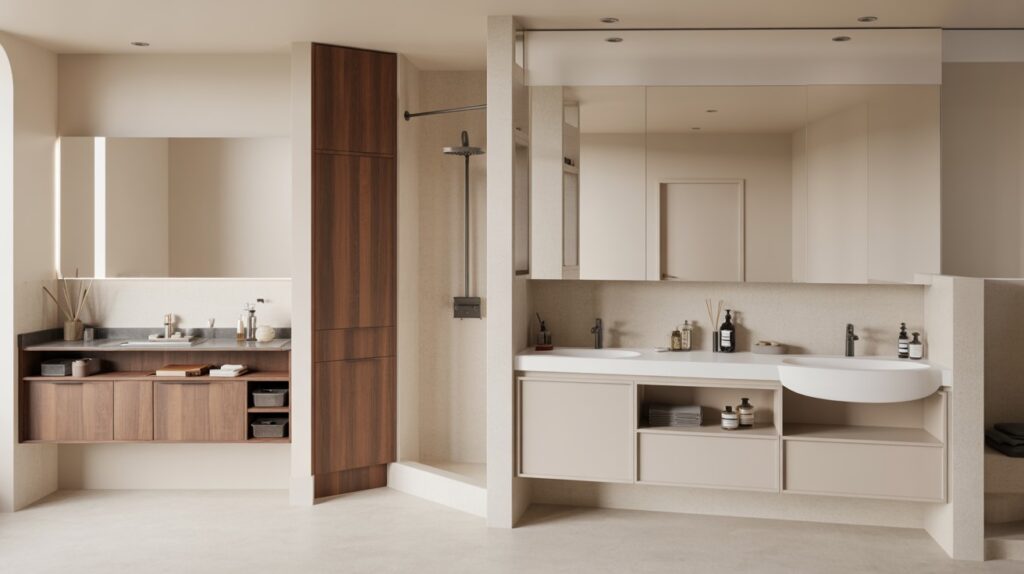
A bathroom vanity combines a sink, countertop, and storage into one unit. It serves as the functional center of your bathroom where you wash up, store toiletries, and get ready each day.
Vanities come in many configurations. Some sit on the floor while others mount to the wall. You’ll find options with one sink or two, lots of storage or minimal cabinets.
Size matters more than most people realize. A vanity that’s too large crowds the room, while one that’s too small leaves you without enough counter space or storage.
13 Types of Bathroom Vanities to Consider for Your Space
Each vanity style offers different benefits for storage, space, and design. I’ll break down the most popular options so you can find what works best for your bathroom and daily routine.
1. Single-Sink Vanity
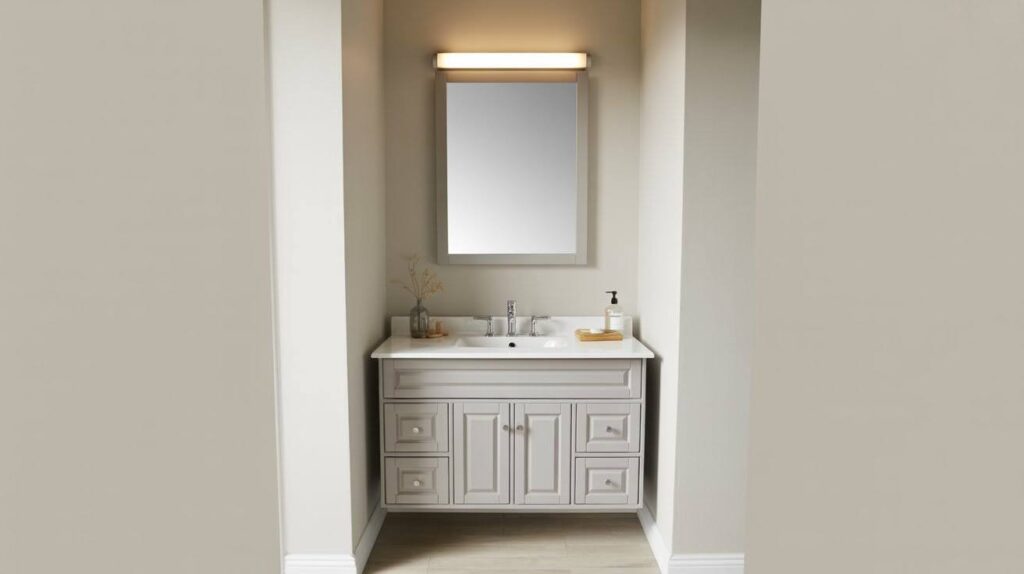
Single-sink vanities work perfectly in tight spaces, typically measuring 24 to 48 inches wide. I installed one in my guest bathroom, and it opened up the entire room.
Most include drawers or cabinet space below the sink for toiletries, towels, and cleaning supplies. Look for models with soft-close hinges that last longer and stay quieter.
Choose a wall-mounted version to create floor space underneath. Add a medicine cabinet above for extra storage, and use light colors like white or gray to help small bathrooms feel more open.
2. Double-Sink Vanity
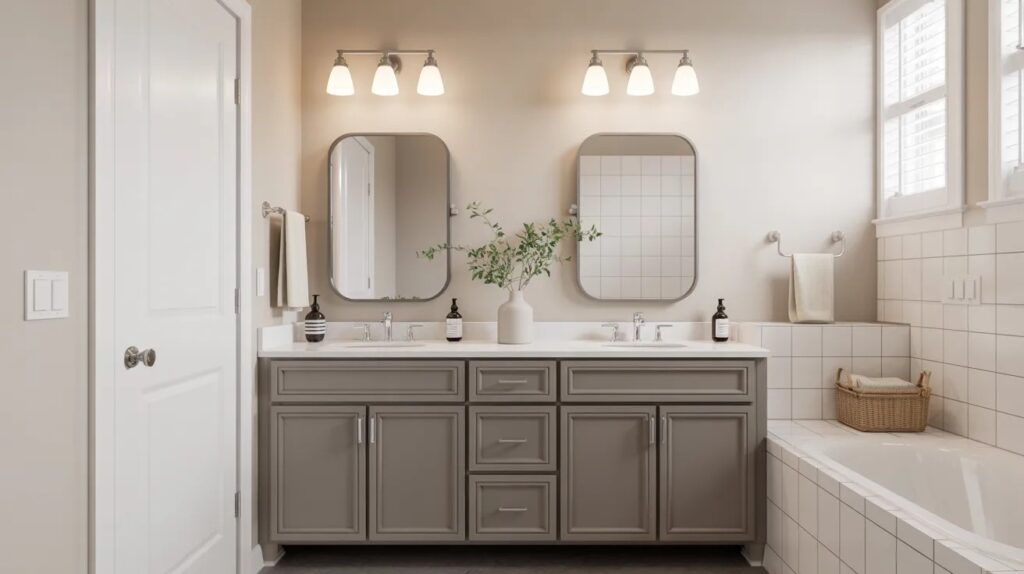
Double-sink vanities solve morning rush problems when two people need to brush teeth and wash up simultaneously. These typically need 60 to 72 inches of wall space.
Each person gets their own storage area and counter space for cosmetics and grooming tools. Double vanities also add value to your home since buyers prefer bathrooms with two sinks.
Place the sinks at least 30 inches apart for elbow room. Install separate mirrors above each sink with individual lighting for better visibility.
3. Wall-Mounted (Floating) Vanity
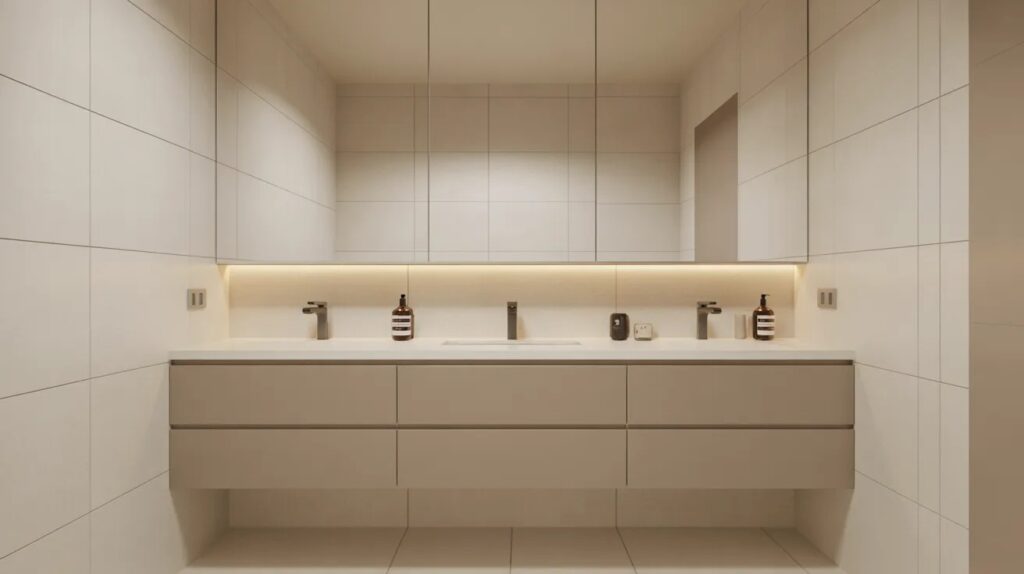
Wall-mounted vanities make bathrooms feel bigger through visible floor space. I love how easy they are to clean underneath, you can mop right under them without obstacles.
You need solid wall studs for proper mounting. Most floating vanities support 200 to 300 pounds when installed correctly.
Choose simple hardware and neutral colors like white, gray, or wood tones. Add under-cabinet lighting to highlight the floating effect.
4. Freestanding Vanity
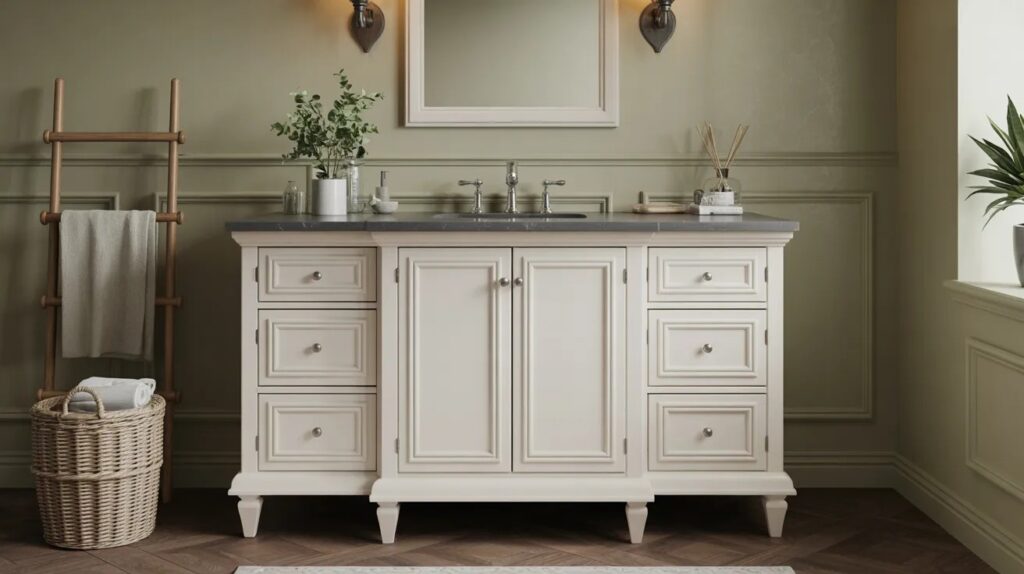
Freestanding vanities offer timeless appeal in both traditional and modern bathrooms. These units sit firmly on the floor, making them very stable for heavy countertops like marble or granite.
You can find many drawer and cabinet combinations, with some offering all drawers while others mix drawers and doors. Many manufacturers offer custom sizing.
Traditional bathrooms pair well with ornate models featuring detailed molding. For farmhouse style, choose painted finishes with simple hardware. Contemporary spaces work with clean-lined designs.
5. Corner Vanity
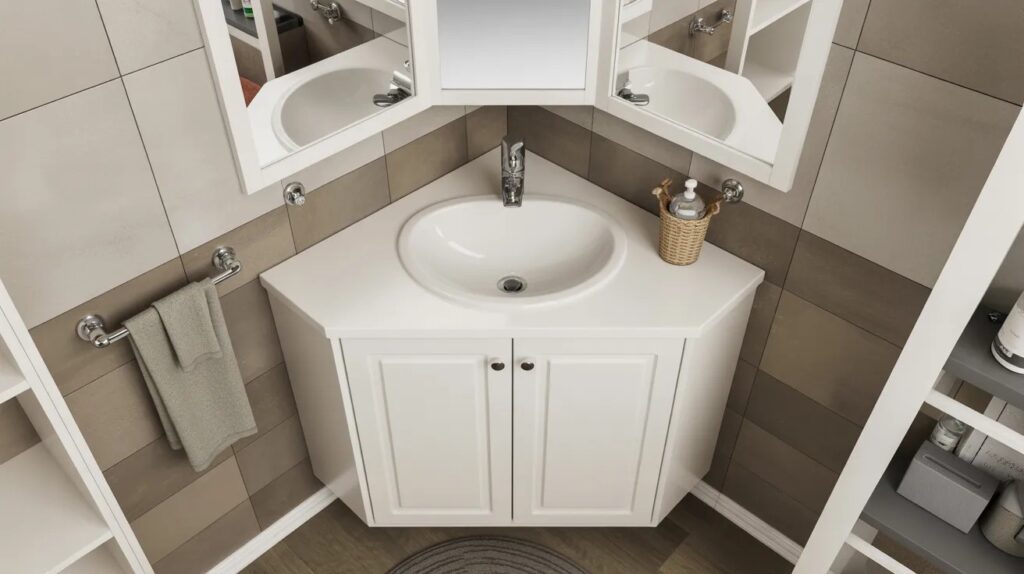
Corner vanities turn wasted space into functional storage, working perfectly in small or oddly shaped bathrooms. I used one in a half-bath where a regular vanity wouldn’t fit.
Triangular corner vanities have angled fronts that maximize the corner while minimizing room extension. Square corner units sit flush against both walls and offer more counter space.
Use a corner vanity with a round sink to save even more space. Add a corner medicine cabinet above for matching storage.
6. Console Vanity
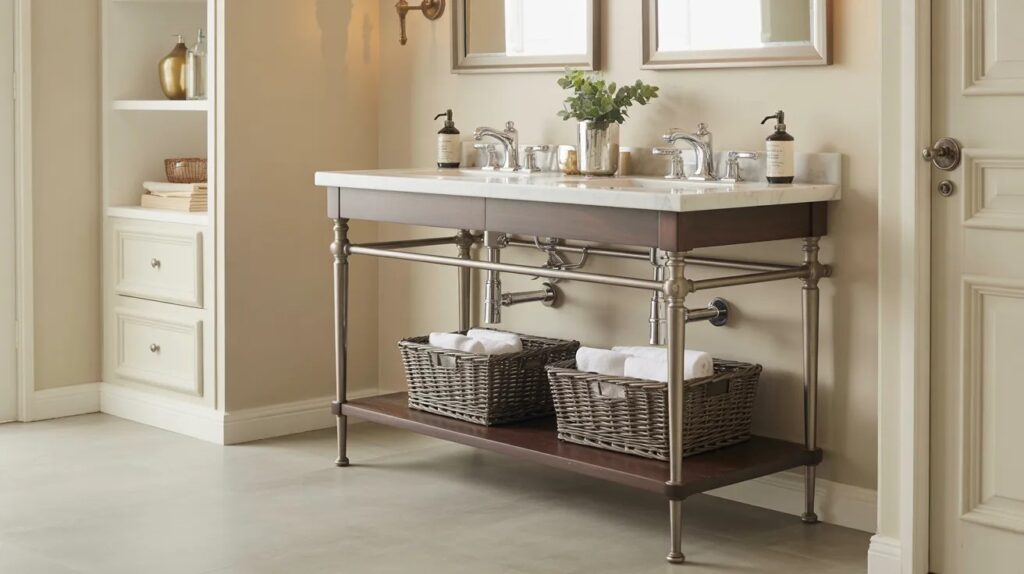
Console vanities feature legs or a metal frame with minimal storage, creating a light, open feeling. The exposed design makes rooms feel larger since you can see through to the floor and walls.
Most use metal or wood legs in chrome, brass, or matte black finishes. Some include a bottom shelf for towels or decorative baskets.
These work perfectly in guest bathrooms and powder rooms where heavy storage isn’t necessary. Use decorative baskets under the shelf for towels.
7. Pedestal Vanity
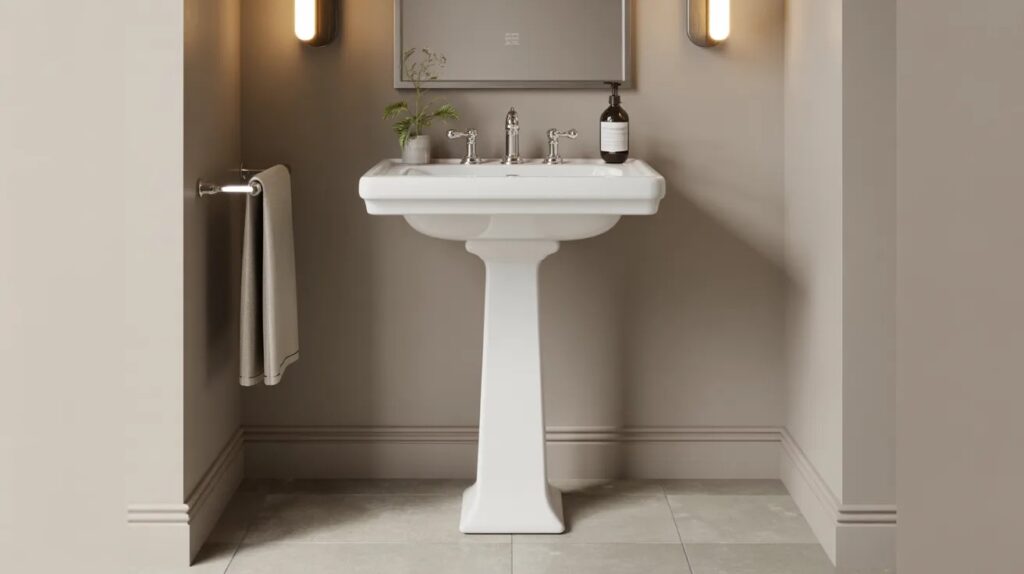
Pedestal vanities feature a sink mounted on a single column, one of the simplest vanity types available. Installation takes less time since you only need to connect plumbing and secure the pedestal.
The upside: very affordable, easy to clean around, and perfect for tiny bathrooms. The downside: no storage for bathroom items, and exposed plumbing shows unless you buy a model that hides pipes.
They work best in half-baths and powder rooms that don’t need much storage.
8. Vessel Sink Vanity
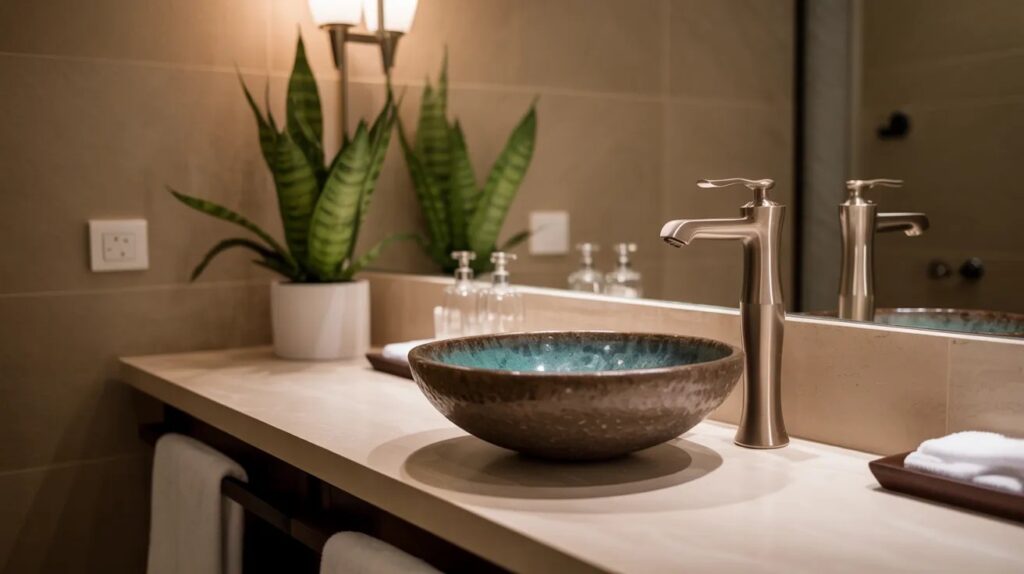
Vessel sinks sit on top of the vanity counter like a bowl, creating a high-end, spa-like appearance. I’ve seen these make ordinary bathrooms look like luxury hotel suites.
You need a taller faucet to reach over the vessel sink rim. Look for bowls at least 5 inches deep to prevent splash issues.
Choose water-resistant countertop materials like stone, solid surface, or treated wood. Consider your cleaning habits first, vessel sinks show water spots more than undermount styles.
9. Undermount Sink Vanity
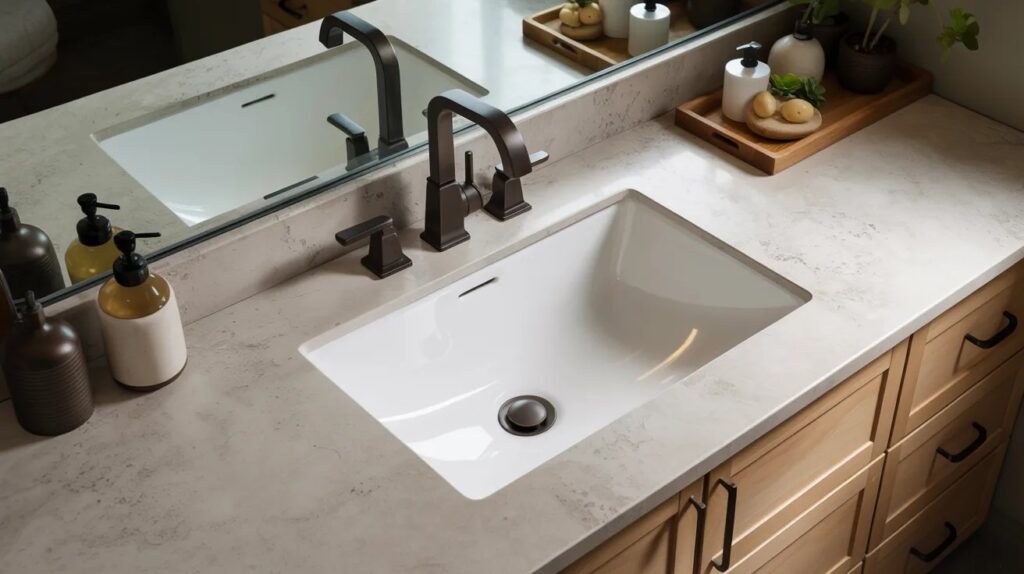
Undermount sinks attach below the counter surface, creating a smooth, continuous look. Cleaning is incredibly easy since you can wipe crumbs and water directly into the sink without a raised edge.
Stone countertops like granite and quartz work perfectly, supporting the sink weight. Solid surface materials create a truly seamless look since the sink and counter can match.
Pair white undermount sinks with dark countertops for contrast. Use rectangular basins in contemporary bathrooms.
10. Floating Shelf Vanity
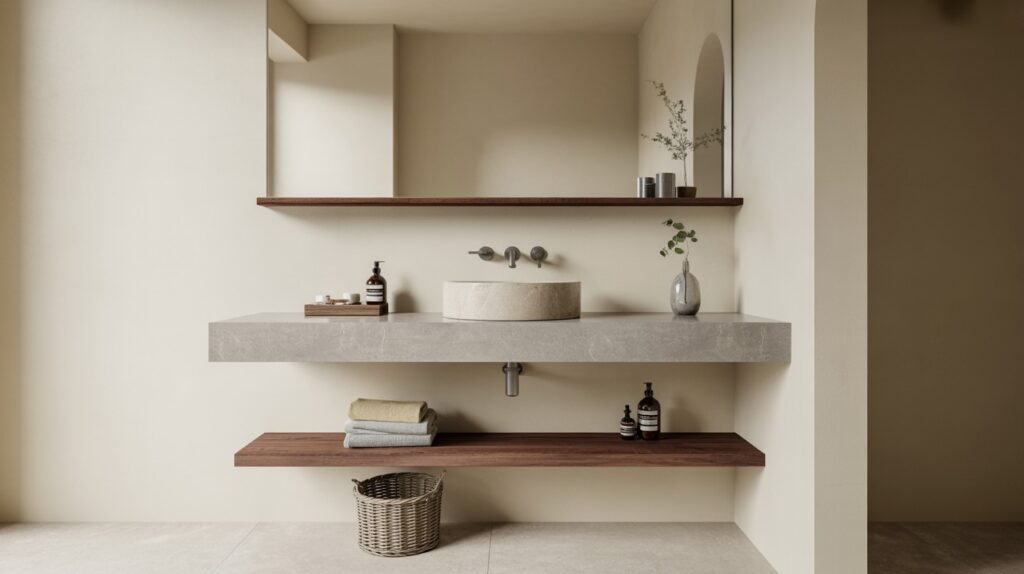
Floating shelf vanities strip away all cabinets and drawers, offering one shelf and a sink mounted to the wall. This creates the most open, airy look possible.
Small bathrooms benefit from the visual space, but consider your storage needs carefully. You’ll need wall shelves or a medicine cabinet for additional storage.
Place a decorative basket under the shelf for towels. Keep only essential items on the shelf surface,a small plant, soap dispenser, and hand towel look balanced.
11. Victorian Style Vanity
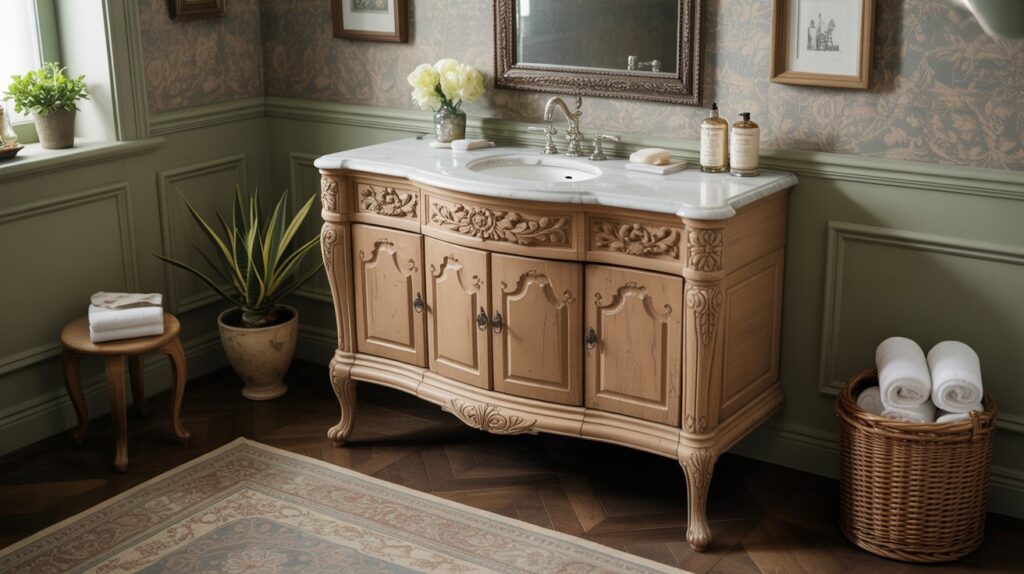
Victorian vanities bring old-world charm with detailed woodwork and decorative elements. They often include turned legs, carved details, ornate hardware, and marble or granite tops.
Claw-foot legs are a signature feature, often resembling lion paws. Hand-carved details appear on drawer fronts with floral patterns and scrollwork.
Pair your Victorian vanity with a freestanding tub and traditional wallpaper patterns. Choose vintage-style hardware in brass or oil-rubbed bronze.
12. Shaker Style Vanity
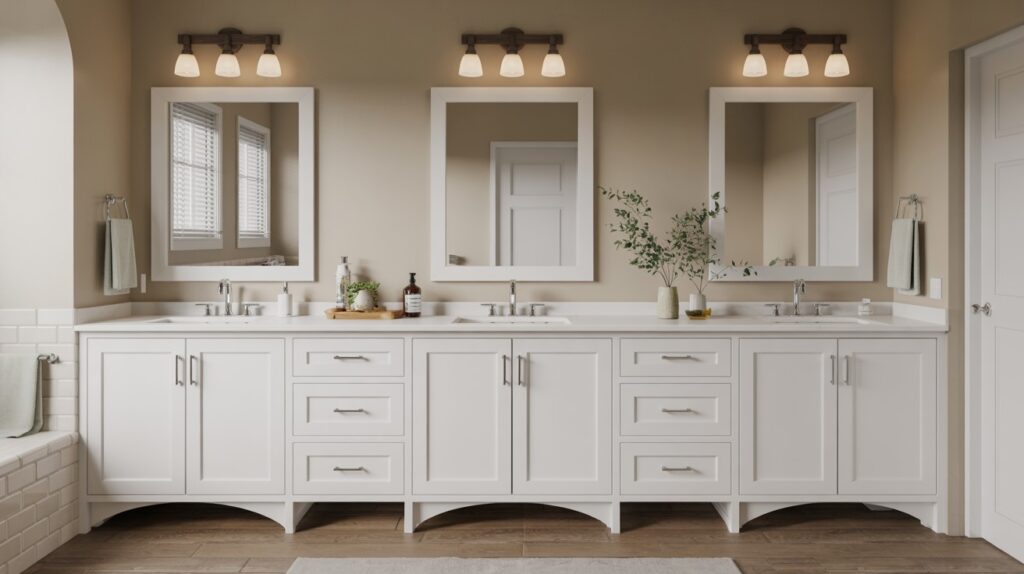
Shaker vanities feature recessed panel doors with simple frames, focusing on function over decoration. These typically offer excellent storage with multiple drawers and cabinets.
Maple is popular for painted finishes, oak offers visible grain patterns for stained finishes, and pine costs less but dents more easily. White and gray remain the most popular colors.
In rustic bathrooms, choose stained wood versions. Modern spaces benefit from painted models in white or gray. Shaker vanities bridge both styles perfectly.
13. Modern & Art Deco Vanities
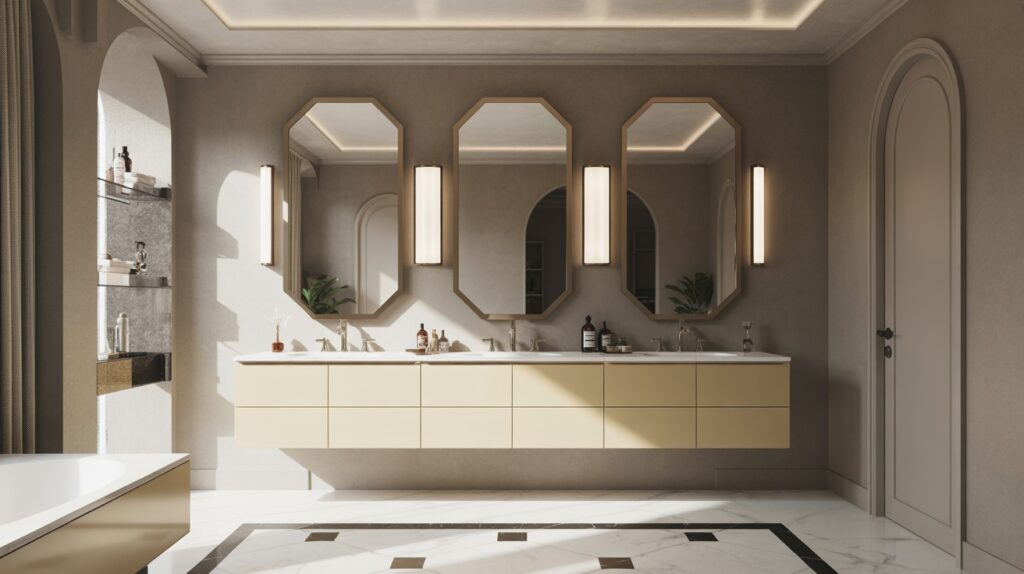
Modern vanities emphasize clean lines and geometric shapes, often featuring asymmetrical designs. Art Deco vanities add glamour with bold colors, metallic accents, and mirrored surfaces.
Many modern vanities float on the wall, emphasizing sleek forms. Pair with geometric or oversized mirrors for impact.
Choose Art Deco when you want drama and luxury in spacious bathrooms. Pick modern minimalist for smaller spaces or understated design.
How to Choose the Right Vanity for Your Bathroom
Measure your bathroom before shopping. You need at least 30 inches of walking space in front of the vanity.
Small bathrooms (under 50 square feet) work best with single-sink or corner vanities. Medium bathrooms (50-100 square feet) can fit larger single-sink or smaller double-sink vanities. Large bathrooms (over 100 square feet) have room for double-sink vanities and extra storage.
Count how many people share the bathroom. More users need more storage and possibly two sinks. Think about your cleaning habits,floating vanities are easier to clean around than freestanding models.
Match your vanity style to your home: traditional homes need freestanding or Victorian vanities, modern spaces need floating or minimalist designs, and farmhouse bathrooms work with painted Shaker vanities.
Bathroom Vanity Ideas & Style Inspirations
Floating vanities continue to grow in popularity. Two-tone vanities mixing wood and painted finishes add visual interest. Textured cabinet fronts with fluted panels are replacing flat doors.
Warm white with natural wood creates a soothing feel. Navy blue vanities paired with brass hardware look rich and classic. Matte black vanities make bold statements with white or light countertops.
Install sconces on either side of the mirror for the best lighting. Choose hardware that matches your faucet finish, sticking to two finishes maximum.
Conclusion
In the last year, I’ve assisted three friends in selecting vanities, and of all the friends, those that paid attention to their everyday lives and habits (not just pretty pictures) ended up the happiest with their new vanity.
Think about your morning routine and what you will be storing in the new vanity and these should give you an idea for types of bathroom vanities that will provide easier and enhanced enjoyment in your life versus something less convenient or enjoyable.
Are you ready to select? Go ahead and measure your available space today and then make a list of what is important to you. Please enter a comment below with the style of vanity you are attracted to!
Frequently Asked Questions
What size vanity do I need for a small bathroom?
For bathrooms under 50 square feet, choose a single-sink vanity between 24 and 36 inches wide. Corner vanities also work well in tight spaces. Make sure you have at least 30 inches of clearance in front for comfortable movement.
Are floating vanities harder to install than freestanding ones?
Yes, floating vanities require mounting to wall studs and proper structural support. You’ll need more skill or professional help compared to freestanding vanities that simply sit on the floor.
How much should I spend on a bathroom vanity?
Budget vanities cost $200-$500, mid-range options run $500-$1,500, and high-end vanities start at $1,500. Your budget should match your bathroom size, usage, and home value.
Can I install a double-sink vanity in a medium-sized bathroom?
If your bathroom is at least 8 feet wide with 60-72 inches of available wall space, a double-sink vanity will fit. Sometimes a larger single-sink vanity offers better storage in medium bathrooms.
What’s the most durable vanity material for families with kids?
Solid wood or plywood construction with quality finishes holds up best. Choose water-resistant countertops like quartz or solid surface. Soft-close drawers prevent slamming damage.
