

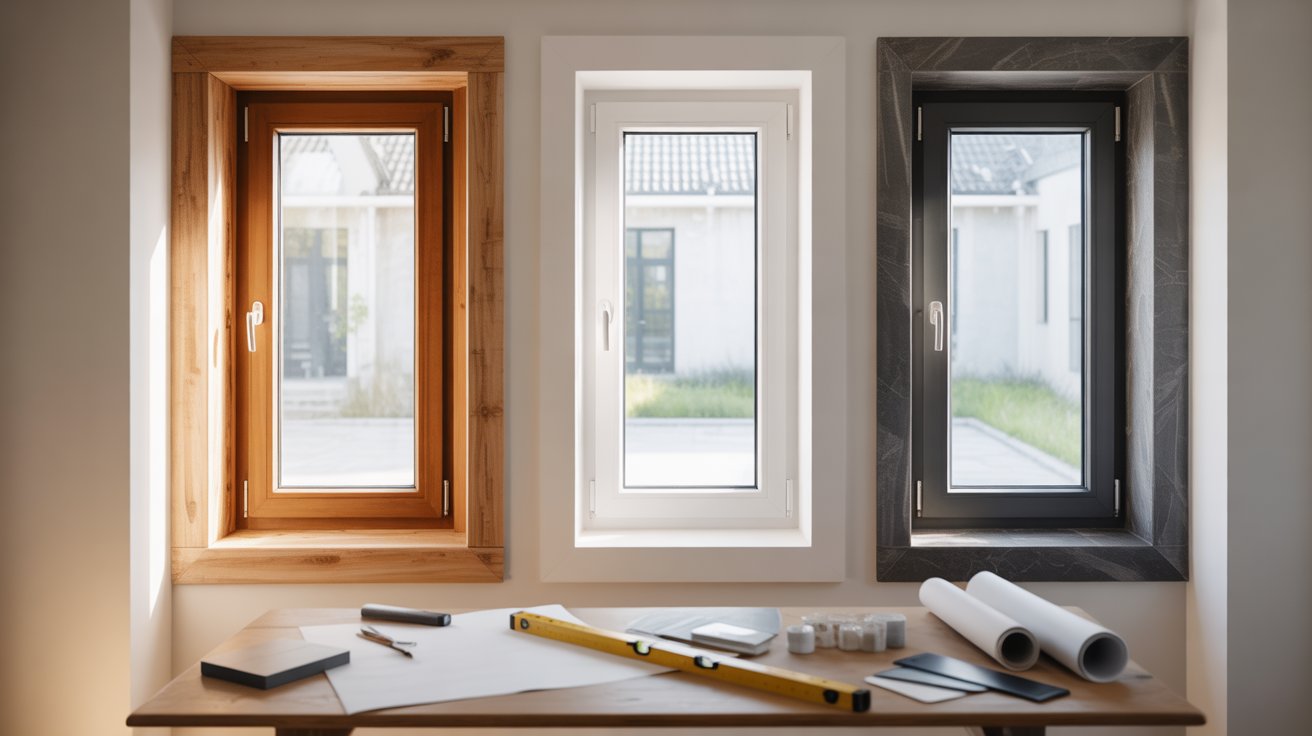
Replacing your windows is one of those decisions that sounds straightforward until you start researching. You walk into the process thinking you’ll just pick a style and a colour, and within an hour you’re drowning in U-values, gas fills, frame materials, and conflicting opinions from every forum on the internet.
I’ve been there. So let’s cut through the noise. This guide breaks down the three main window frame materials — timber, uPVC, and aluminium — honestly and practically, so you can make the right call for your home, your budget, and your priorities.
uPVC: The Default Choice
Let’s start with uPVC because it’s what most homeowners end up with, often by default. It’s widely available, competitively priced, and virtually every local window installer carries uPVC as their primary product.
The advantages are real. uPVC frames require almost no maintenance beyond occasional cleaning. They don’t rot, they don’t need painting, and modern profiles have improved significantly in both thermal performance and appearance compared to the chunky white frames of the 1990s.
There are trade-offs, though. uPVC frames are thicker than timber or aluminium alternatives, which means slightly less glass area in each opening. They can discolour over time, particularly in south-facing positions. And recycling infrastructure, while improving, still lags behind the industry’s marketing claims. Most uPVC windows end up in landfill at the end of their 20–25 year lifespan.
For a straightforward, budget-conscious replacement on a modern property, uPVC is a perfectly solid choice. Where it struggles is on period homes, in conservation areas, or for homeowners who prioritise aesthetics and longevity over upfront cost.
Aluminium: Slim, Strong, Premium
Aluminium frames have carved out a niche in the premium and contemporary end of the market. The appeal is obvious: incredibly slim sightlines that maximise glass area, exceptional structural strength (ideal for large openings and bifold doors), and a lifespan that can exceed 40 years.
The material is inherently strong, so frames can be thinner without compromising performance. A typical aluminium frame profile might be 45–55mm wide, compared to 70mm or more for uPVC. That difference is visually significant — aluminium windows simply look sleeker.
The downsides? Cost, for one. Aluminium windows typically run 30–50 per cent more expensive than equivalent uPVC units. Thermal performance requires a “thermal break” — an insulating barrier within the frame — because aluminium is a highly conductive metal. Without it, you’d lose heat through the frame itself. Modern thermally broken aluminium performs well, but it’s an engineered solution to a problem that timber and uPVC don’t inherently have.
Aluminium is an excellent choice for modern and contemporary builds, large glazed openings, and bifold or sliding door systems. It’s less suited to period properties where slimmer frames can actually look out of place against traditional brickwork and detailing.
Timber: The Original (and Evolving) Option
Timber windows have been fitted in British homes for centuries, which is both their greatest asset and the source of their biggest misconception. Many homeowners associate timber with the draughty, high-maintenance windows of their grandparents’ houses. Modern timber windows are a different product entirely.
Engineered timber frames — using laminated pine, meranti hardwood, or oak — are dimensionally stable, resistant to warping, and factory-finished with microporous coatings that allow the wood to breathe while repelling moisture. Maintenance cycles have extended from every two to three years to every eight to twelve, depending on exposure and species.
Thermal performance is where timber quietly excels. Wood is a natural insulator, so timber frames achieve excellent U-values without requiring the engineered thermal breaks that aluminium needs. A double-glazed timber casement window typically achieves 1.4 W/m²K, meeting UK Building Regulations Part L requirements. Triple-glazed options push below 1.0 W/m²K.
Timber is also the only frame material universally accepted in UK conservation areas and for listed building applications. If your home falls within a designated area, timber may not just be the best choice — it may be the only compliant one.
The environmental case is strong too. Sustainably sourced timber is a renewable material that stores carbon throughout its lifespan. At end of life, timber frames are biodegradable — a stark contrast to the landfill destination of most uPVC.
How to Decide
Your decision should start with three questions: What type of property do you have? What’s your budget horizon? And what matters most to you — upfront cost, long-term value, or aesthetics?
If you’re working on a modern property with a tight budget and want minimal fuss, uPVC is the pragmatic choice. For contemporary builds with large openings, aluminium delivers unmatched sightlines and structural capability. For period homes, heritage properties, conservation areas, or anyone who values natural materials and long-term performance, timber is hard to beat.
One thing I’d encourage: don’t compare upfront prices alone. A timber window that lasts 30–40 years with periodic recoating may cost less per year of service than a uPVC window replaced at 20–25 years. Factor in energy savings from better thermal performance, and the gap narrows further.
Getting Quotes and Specifications
Whatever material you lean towards, get at least three quotes and ask for the full specification in writing — including U-values, glazing type, gas fill, and any relevant certifications (FENSA, BSI, FSC). If you’re considering timber, it’s worth looking at specialist manufacturers who offer bespoke sizing rather than off-the-shelf ranges. Sites like woodenwindows-online.co.uk can give you a sense of what’s available in engineered pine, meranti, and oak, including supply-only options if you have your own installer.
Ask about factory glazing versus site glazing. Factory-sealed units are assembled in controlled conditions, producing more reliable seals and generally better long-term performance. It’s a small detail that makes a measurable difference.
And finally, don’t rush. Windows are a 20–40 year commitment depending on the material. Spending an extra week comparing specifications and visiting showrooms is time well invested.
