

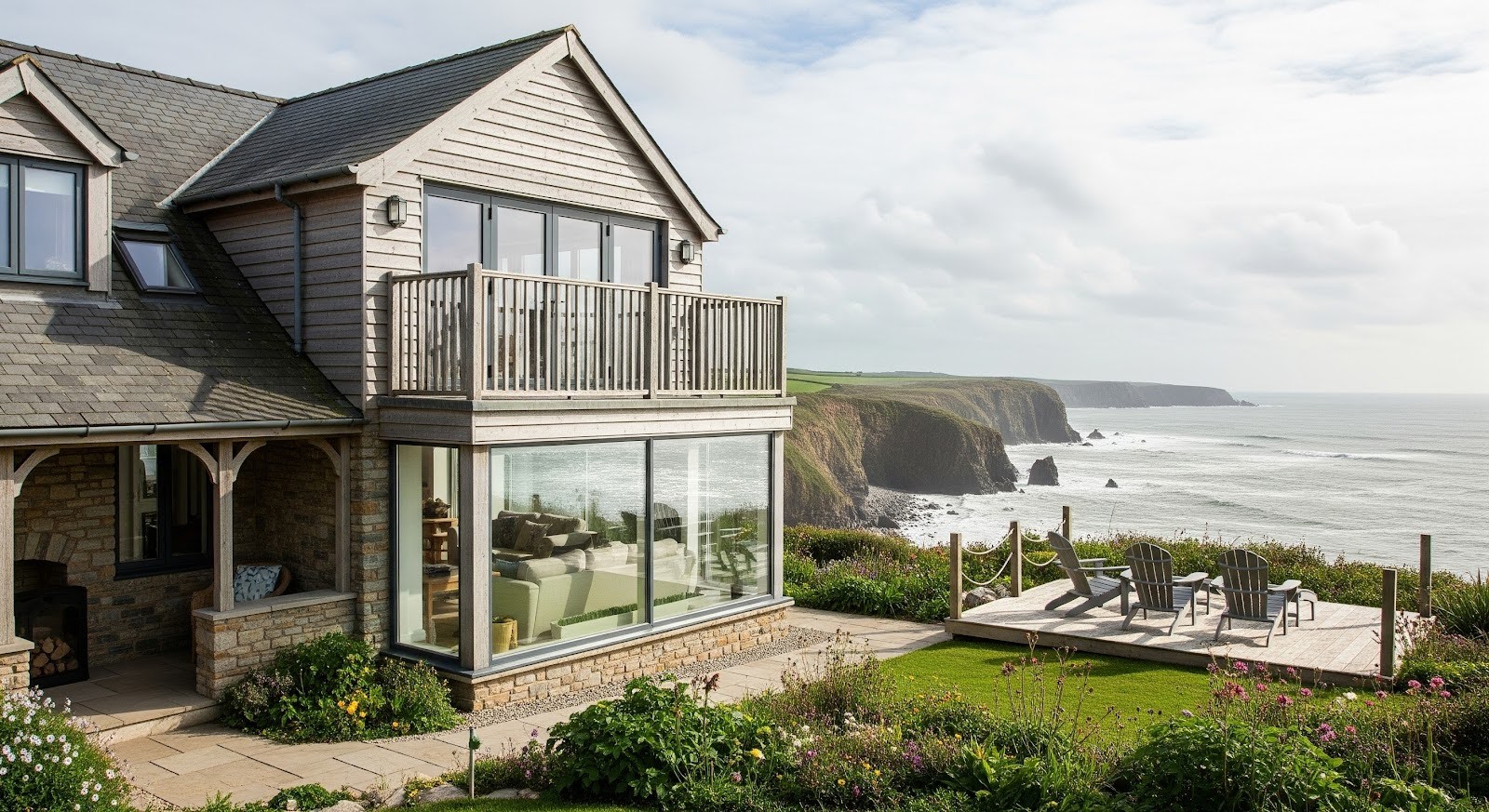
Creating a home is similar to creating a life for yourself. It’s important to create a setting that genuinely supports you rather than focusing only on trends or decor. Consider a home as a living, breathing space that provides refuge, solace, and entertainment. These seven focal points are where good design becomes a reality. Instead of staging rooms, we’re constructing a sanctuary.
Your Hand on the World: Thresholds
The entry serves as your home’s opening statement and first impression. It should have a friendly, deliberate, and definitive feel. Think of the entire route from the sidewalk to your couch: a welcoming walkway, softly guiding lights, and a door that feels sturdy to the touch. Comfort and performance are also important in this area. Select a top-notch entry design that is suitable for your climate, as it serves as both a thermal and acoustic barrier. In coastal towns like Ayr, wind and salt air are constant companions. Selecting reliable windows and doors in Ayr isn’t an additional detail, it’s a core design decision.
The Kitchen’s Working Logic
The kitchen serves as the home’s core. The invisible rhythm of movement is what makes it so successful. Modern routines add new touchpoints, such as a place for compost, a drawer for charging gadgets, and a spot to drop off groceries, but the classic ‘work triangle’-sink, stove, and refrigerator-remains useful. Choose countertop materials based on their intended use, such as heat-resistant stone next to the oven or something sturdy and non-porous near the sink. Real-world issues like where utensils are located, whether spices are accessible, and where trays fit upright should all be resolved with storage. Layers of lighting are necessary to keep the area human: ambient pendants, task lighting beneath cabinets and, ideally, a window over the sink.
Bathroom as a Retreat
In addition to doing necessary tasks, this space can provide profound tranquillity. Steer clear of the sterilised atmosphere. Incorporate silent safety with pre-planned inconspicuous grab bars, slip-resistant flooring, and adjustable faucets. It’s important to take ventilation seriously an extractor fan that is both powerful and silent can make a big difference. Use vanities that conceal clutter and recessed shower niches to keep storage simple and functional. Select materials that will age well. Allow the light to be diffused and gentle. A well-designed bathroom should become like a reset button.
The Private Chamber
A bedroom can be used for reading, recuperation, rest, and solitude. To begin with, good blackout curtains or blinds are crucial for wellbeing. Next, deal with the noise. Acoustic insulation in bedroom walls is an underappreciated luxury that is worth adding because sounds from bathrooms or corridors can disrupt sleep. Make sure the bed has enough space to breathe so that it doesn’t feel crowded. Use natural fabrics and soft surfaces. And even if it’s just a simple view, give yourself something to look forward to when you get up.
Connective Tissue: Halls and Stairs
Although they are often overlooked, hallways and stairwells influence how you navigate a home. A lighter, wider hallway becomes an area to pause a dark, tight one feels like a tunnel. Both safety and sound are impacted by stair design well-made stairs minimise echoes and creaks. Think carefully about these transitional areas: a window seat when space permits, a gallery wall, or a bench at a landing. These spaces should provide brief moments of value in addition to connecting rooms.
The Overlooked Overhead Plane
The fifth wall, the ceiling, has a significant visual influence yet is easy to overlook. Its height, colour, and finish affect how spacious or serene a space appears. Cove lighting produces softness, while vaulted ceilings inspire openness. In noisy environments, soundproof tiles might be beneficial. A space might feel brighter even with a lighter paint colour. Lighting fixtures are also important consider them the jewellery of this frequently ignored surface.
The Outer Layer: Shelter’s Skin
And lastly the home’s exterior. Your home’s response to weather, energy, and time is determined by its outer layer. Both your comfort and your expenses are impacted by its performance. Prioritise moisture management, airtight components, and continuous insulation. Long-term resilience is determined by the durability of cladding, roofing, and particularly doors and windows. This exterior only needs to be effective, well-made, and functional-it doesn’t need to be flashy. It silently shields everything within.
