


Your family room is calling for a centerpiece that will suit your everyday living. The Ottoman versus coffee table is important for how you lay back and lounge, entertain company, and your interaction sometimes takes place in that central space.
I have had the pleasure of helping hundreds of families pick the best pieces of furniture over the years.
In this guide, you will learn the truth about these two shapes of furniture. Comfort, storage, safety, and style are the major points I will cover. You will also learn to consider the room’s size, family lifestyle, and budget.
When you are done reading, you will know with confidence the piece that will fit into your home without confusion. Just a straightforward answer based on how you actually live.
Understanding the Basics: Ottoman vs Coffee Table
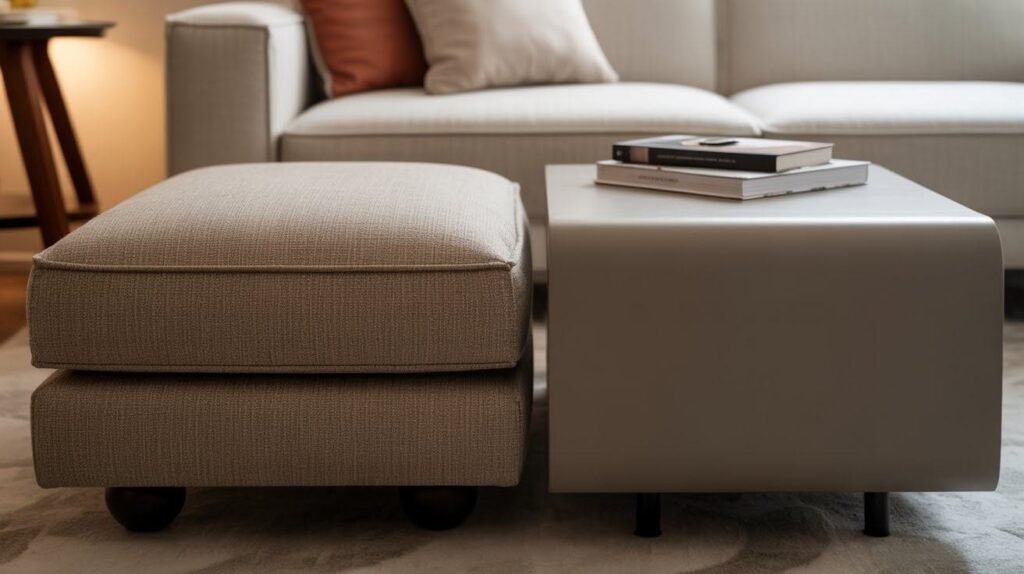
The main difference comes down to surface and purpose. Ottomans have soft, padded tops that work great for resting your feet or adding extra seating.
You can move them around easily and some hide storage inside.
Coffee tables offer hard, stable surfaces perfect for drinks, books, and meals. They anchor your seating area and handle daily use without needing trays or adjustments.
Your choice depends on how you actually use your living room every day.
What Is an Ottoman?
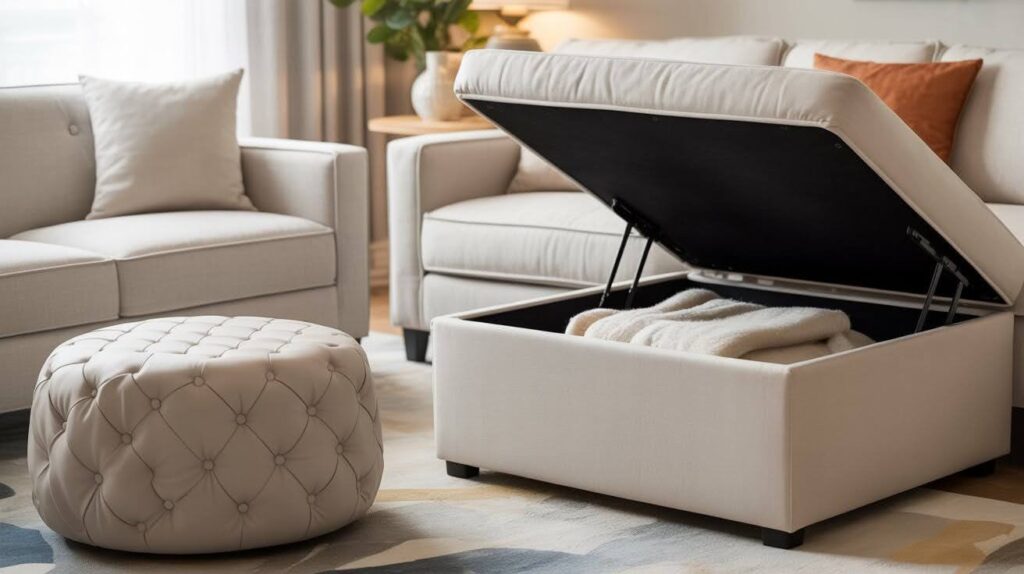
An ottoman is a padded, upholstered furniture piece that serves multiple purposes in your living room. They typically have a soft top surface and stand on four legs or a solid base. Most measure 15 to 18 inches high.
Popular Ottoman Styles
Tufted ottomans have button details on top, adding texture and visual interest. Round ottomans work well in tight spaces with no sharp corners.
Storage ottomans have lift-up tops for hiding blankets, toys, or magazines. Square ottomans match the shape of most sofas and create clean lines.
Pros and Cons of Ottomans
Pros: Soft and comfortable for resting feet. Easy to move around. Work as extra seating. Storage versions keep spaces organized. Safer for small children with no hard edges.
Cons: Soft surface makes balancing drinks difficult, you need a tray. Fabric versions stain easily. May not hold heavy items well. Can look too casual for formal rooms.
What Is a Coffee Table?
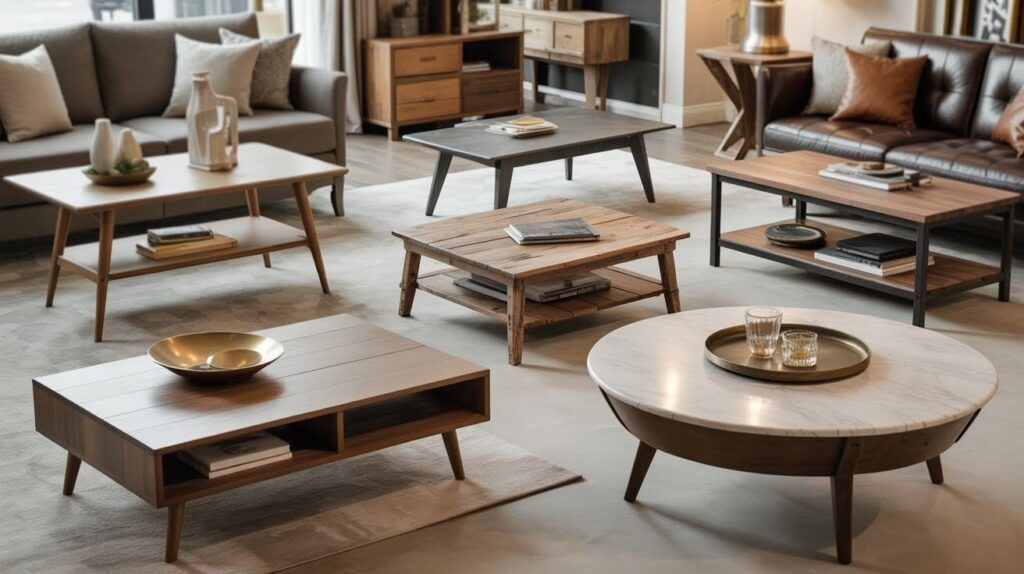
A coffee table is a low, flat-surfaced furniture piece positioned in front of your sofa. They have solid, hard tops and usually stand 16 to 18 inches tall. Most include a flat surface for drinks, books, and decor, with many featuring lower shelves or drawers for storage.
Popular Coffee Table Styles
Mid-century tables feature clean lines and tapered legs with a retro vibe. Farmhouse tables use reclaimed or distressed wood for a cozy feel.
Industrial tables combine metal and wood for modern homes. Marble tables make a luxury statement.
Pros and Cons of Coffee Tables
Pros: Provide stable surfaces for drinks and food. Display books, plants, and decor. Many include built-in storage. Work well for hosting. Easy to clean and maintain.
Cons: Sharp corners can be dangerous for young children. Heavier and harder to move. Glass tops show fingerprints easily. Take up fixed space. Some styles feel formal or cold.
Ottoman vs Coffee Table: Key Differences
Still confused? Let’s have a quick look for better understanding:
| Feature | Ottoman | Coffee Table |
| Surface Type | Soft, cushioned | Hard, flat |
| Comfort | High (rest feet, sit) | Low (not for sitting) |
| Drink Stability | Needs tray | Stable surface |
| Mobility | Easy to move | Heavier, stays put |
| Storage | Hidden (lift-top) | Shelves or drawers |
| Safety (Kids) | Safer (no edges) | Sharp corners |
| Extra Seating | Yes | No |
| Price Range | $100 – $800 | $150 – $2,000 |
Ottomans prioritize comfort with soft surfaces perfect for resting feet. Coffee tables focus on function with hard surfaces that hold drinks securely. Storage ottomans hide items inside, while coffee tables use visible shelves and drawers.
Ottomans are lighter and easier to move, adapting to different arrangements. Coffee tables stay in one spot, creating a permanent focal point. Ottomans are safer for toddlers with no sharp corners, while coffee tables pose risks with hard edges.
Practical Factors to Consider
Room Size & Layout
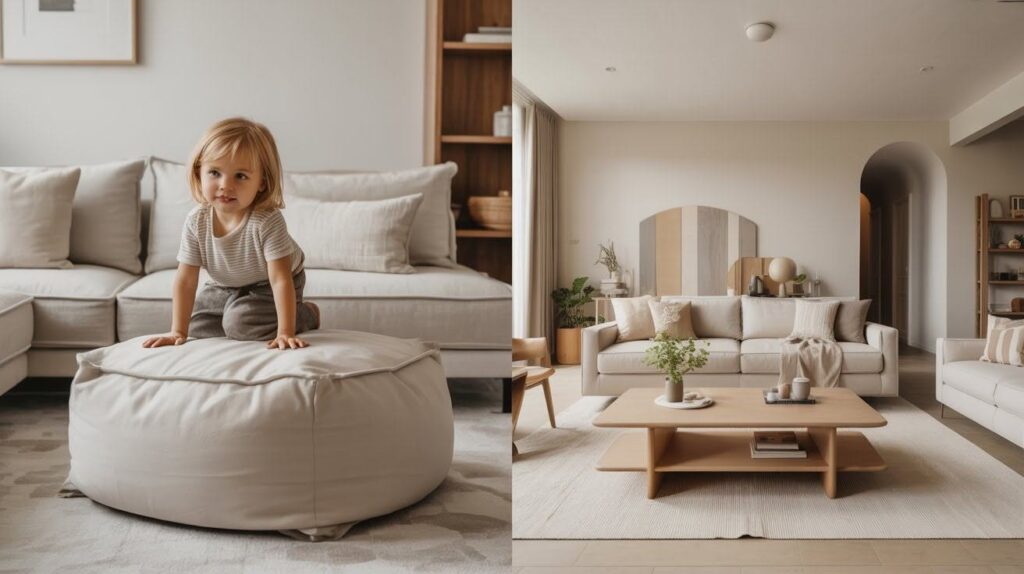
Small rooms benefit from ottomans, they feel less heavy visually. Large rooms can handle substantial coffee tables that fill the space appropriately.
Measure carefully and leave 14 to 18 inches between your sofa and centerpiece for comfortable walking space.
Daily Habits: Relaxing vs Hosting
If you spend evenings with your feet up, an ottoman makes sense. It supports your legs while you watch TV.
If you host friends regularly, a coffee table serves better with space for drinks and snacks.
Family Lifestyle
Families with young children often prefer ottomans for the forgiving soft surface during playtime.
Homes with pets need durable materials either way, leather or performance fabrics resist scratches. High traffic areas need easy-to-clean surfaces.
Maintenance & Budget
Ottomans need regular vacuuming and careful stain treatment. Coffee tables just need wiping down.
Ottomans range from $100 to $800, while coffee tables span $150 to $2,000. Quality matters, good foam holds its shape longer, and solid wood lasts decades.
Best Uses for Each Option
Here’s when each piece works best for your specific living situation.
When an Ottoman Works Best
Choose an ottoman if you want extra seating flexibility. They’re perfect for small apartments or studios. Use one in a bedroom as a bench alternative. Ottomans work great in cozy, casual spaces and suit families with toddlers or active pets.
When a Coffee Table Works Best
Choose a coffee table for formal living rooms. They’re ideal if you host dinner parties or game nights. Coffee tables suit adult households or older children and work well in spacious rooms with defined seating areas.
Can You Use Both Together?
Yes! Place a coffee table in front of the sofa and add a small ottoman to one side for extra seating. Or use an ottoman as the main piece with two side tables. Some people use a large ottoman with a tray on top, creating a coffee table feel with ottoman comfort.
Tips to Help You Choose
These practical tips will guide your final decision and help you avoid buyer’s remorse.
- Grab a tape measure before shopping. Your centerpiece should be 1 to 2 inches lower than the sofa seat. The ideal width is two-thirds of your sofa length for visual balance.
- Look at your existing furniture. Wood tones should coordinate, not match exactly. Consider your room’s overall feel-modern spaces pair well with clean-lined tables, while traditional rooms suit tufted ottomans.
- List how you actually use your living room. Be honest about your habits. Function should drive 70% of your decision. A beautiful piece you can’t use properly will frustrate you daily.
Conclusion
Three years ago, I made the switch from coffee table to ottoman, and honestly, I’ve never looked back. I can rest assured that my kids can play safely and I love putting my feet up after work.
In the end, the ottoman vs coffee table dilemma comes down to lifestyle. If you plan on having people over and need a stable surface to entertain, coffee table it is! But, if comfort is your priority, the ottoman is the go-to.
Think about how you actually use your room each day. That’s your answer. Drop your comment down below and let me know what you are thinking. I can’t wait to see what works in your space, too!
Frequently Asked Questions
Can I use an ottoman instead of a coffee table?
Yes, you can. Add a sturdy tray on top to create a stable surface. This gives you the comfort of an ottoman with the function of a table.
Are ottomans good for small spaces?
Ottomans work great in small rooms. They’re lighter and easier to move when you need extra floor space. Storage ottomans add bonus organization without taking up additional room.
What’s the standard height for a coffee table?
Most coffee tables stand 16 to 18 inches tall. They should sit 1 to 2 inches lower than your sofa seat. This height makes reaching items comfortable without straining.
Can kids get hurt on coffee tables?
Sharp corners on coffee tables can cause injuries. Add corner guards for safety. Round or oval tables reduce risks for families with young children.
How do I clean a fabric ottoman?
Vacuum your ottoman weekly to remove dust. Blot spills immediately with a clean cloth. Use fabric cleaner for stains, or hire professionals for deep cleaning once yearly.
