


Getting the right mudroom bench dimensions makes your entryway work smoothly instead of feeling cramped. I’ve seen too many benches that sit too high, stick out too far, or just feel off.
This guide gives you exact measurements that work in real homes. You’ll learn the best height, depth, and width for your space and family size.
I’ve gathered proven dimensions from professional builders and homeowners who got it right.
We’ll cover standard sizes, adjustments for kids and small spaces, built-in versus DIY options, and practical layouts.
By the end, you’ll know exactly how to size your mudroom bench for daily comfort and storage.
Understanding Mudroom Bench Sizing Basics
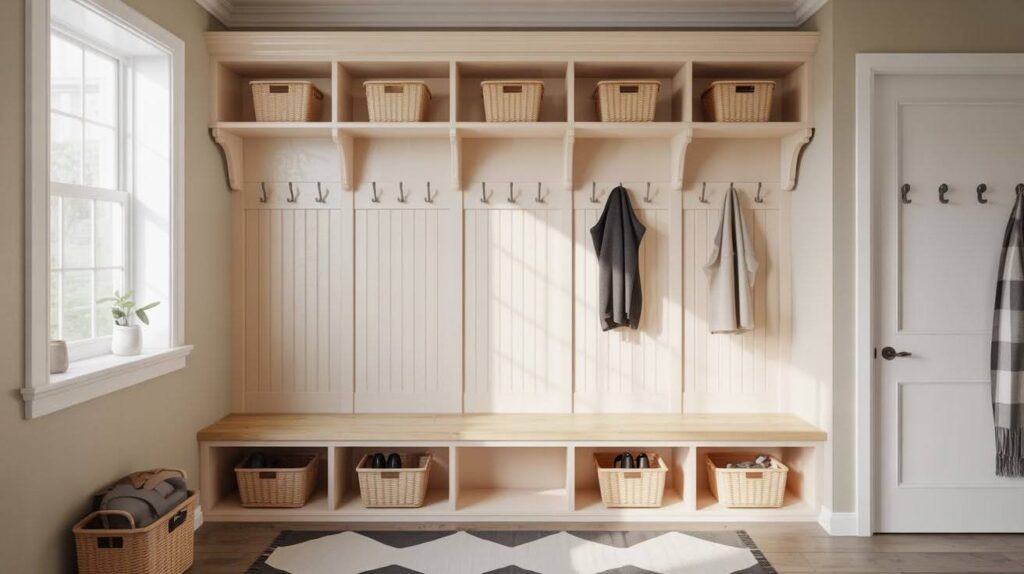
Before you start measuring and building, it’s helpful to understand what makes a mudroom bench work well.
Three main measurements control everything: height, depth, and width. Height affects how comfortably you sit and stand.
Depth determines both seating comfort and how much floor space the bench uses. Width depends on your family size and available wall space.
Getting these three numbers right creates a bench that feels natural to use every single day.
Why Mudroom Bench Dimensions Matter

Getting your bench size right affects everything from daily comfort to how well your space functions.
Comfort and Ergonomics:
The right height lets you sit comfortably while putting on shoes. Too high and your feet dangle. Too low and you strain to stand up. Most adults need 18 to 20 inches for easy sitting and standing.
Space Optimization:
Smart dimensions help your mudroom feel open instead of cramped. A bench that’s too deep eats up floor space. One that’s too shallow won’t hold storage underneath.
Storage Efficiency:
Proper sizing creates room for baskets, bins, and shoes below the seat. The right depth means storage containers fit without sticking out into walkways.
Aesthetic Balance:
Well-proportioned benches look intentional, not awkward. When dimensions match your room size, everything feels cohesive and planned
Standard Mudroom Bench Dimensions
Most mudroom benches follow proven measurements that work for average adults and typical spaces.
Standard Bench Height
The typical range sits between 18 and 20 inches from floor to seat top. This height works for most adults and allows comfortable sitting.
Adjust lower for households with young children. Go with 14 to 16 inches so kids can sit independently. Taller users might prefer 20 to 22 inches for easier standing. Consider storage needs too. Higher benches create more space underneath for large bins.
Standard Bench Depth
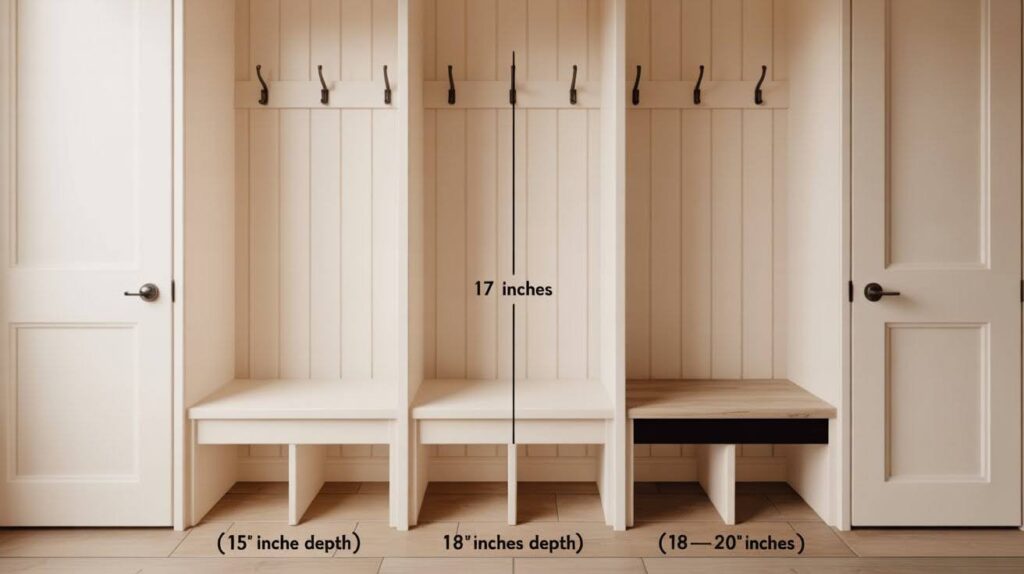
Most benches measure 15 to 20 inches deep from front to back.
Fifteen inches provides adequate seating while keeping walkways clear. Twenty inches offers more comfort and storage room but requires more floor space. In tight mudrooms, stick closer to 15 inches. In spacious entryways, 18 to 20 inches works better.
Standard Bench Width
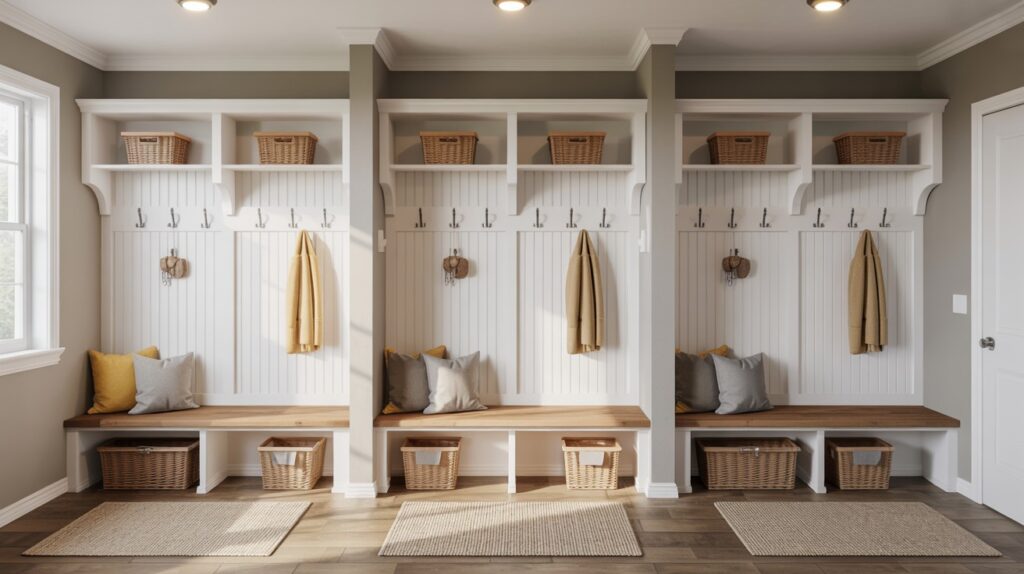
Width depends on how many people use your mudroom daily.
Single-person benches work at 24 to 36 inches wide. Double-user benches need 48 to 60 inches. Family-size benches run 72 inches or longer.
Think about your household size. Two people might share comfortably at 48 inches. Four or more need at least 72 inches to avoid crowding during busy mornings.
Custom Mudroom Bench Dimensions for Different Spaces
Different households need different sizing strategies.
For Small Mudrooms

Compact spaces require careful planning to avoid feeling cramped.
Keep height at 18 inches and depth at 15 inches maximum. Width should match your available wall space, often 36 to 48 inches.
Consider a floating bench mounted to the wall. This saves floor space and makes cleaning easier. Add vertical storage with wall hooks and narrow shelves above the bench.
For Families
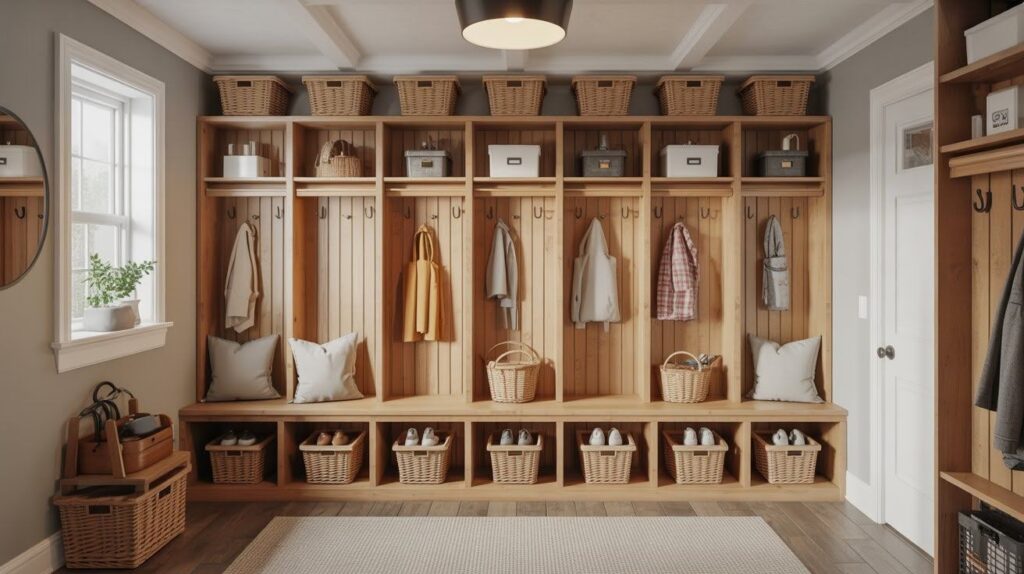
Large families need wider benches and more storage options.
Go 60 to 84 inches wide to accommodate multiple users. Stick with standard 18-inch height and 18-inch depth.
Add cubbies or individual sections for each family member. Label each space with names or colors. This keeps belongings organized and reduces morning chaos.
For Kids
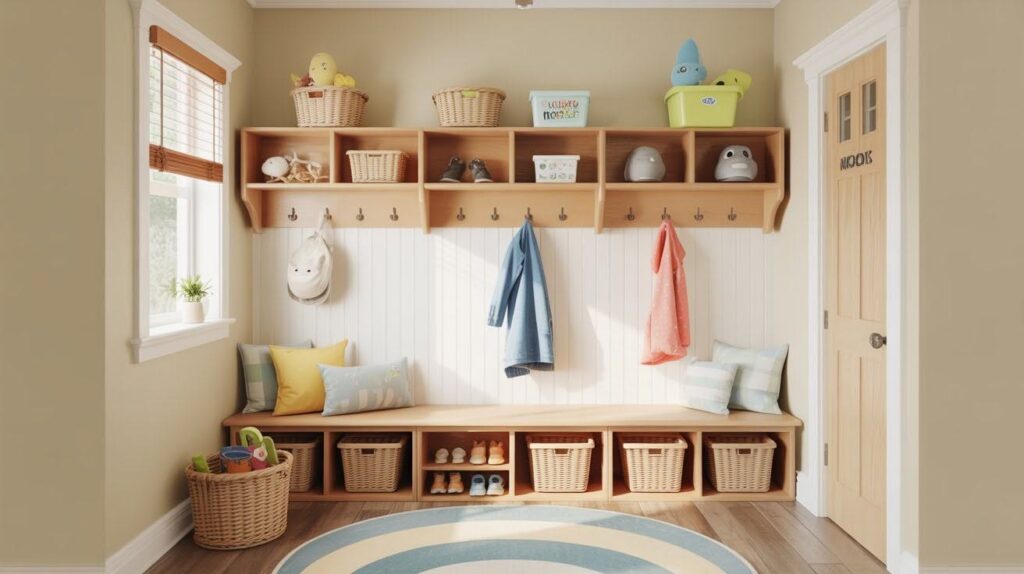
Child-focused mudrooms need lower heights for independence.
Set bench height at 14 to 16 inches so little ones can sit without help. Keep depth at 14 to 15 inches for their smaller frames.
Use accessible bins at floor level. Install hooks at 40 to 48 inches high. This lets kids hang their own coats and backpacks.
Built-In vs. DIY Mudroom Bench Dimensions
Your installation method affects sizing choices.
| Feature | Built-In Bench | DIY Bench |
| Height | 18 to 20 inches | 18 inches |
| Depth | 16 to 18 inches | 15.5 inches |
| Width | Full wall width (custom) | Customizable |
| Bay Sections | 12 to 15 inches per person | Under 36 inches to prevent sagging |
| Clearance Space | 36 to 48 inches in front | 36 to 48 inches in front |
| Shelf Placement | 12 to 14 inches above seat | Varies by design |
| Hook Spacing | 5 to 6 inches apart at 60 inches high | 5 to 6 inches apart |
| Construction | Professional or custom carpentry | 2×4 lumber frame |
| Bench Top Overhang | Flush or minimal overhang | 1 inch on all sides |
| Best For | Permanent installations, exact fit | Budget-friendly, standard templates |
| Flexibility | Fixed to space | Can be modified or moved |
Open-Bottom Bench Dimensions (Shelf Help Style)
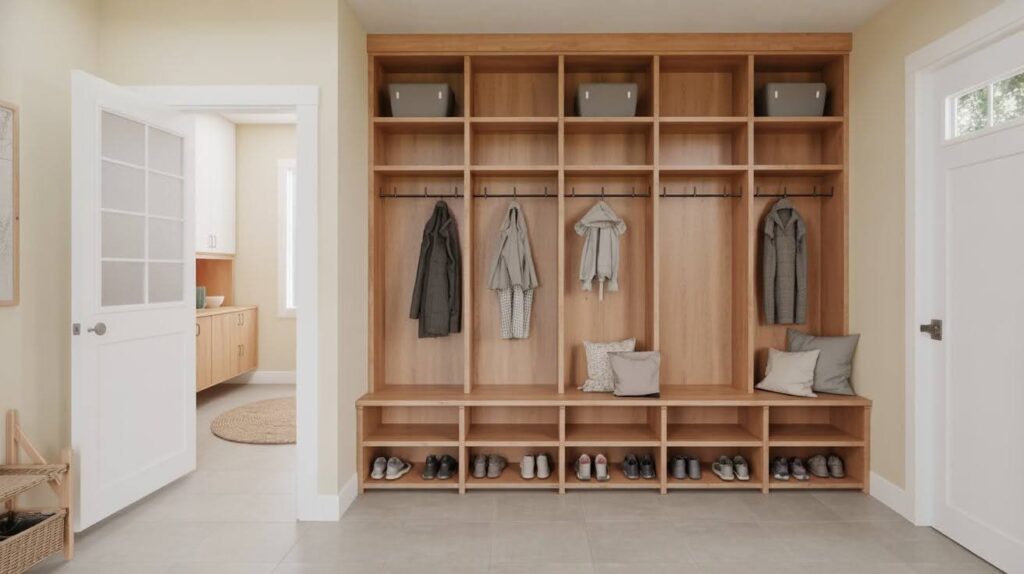
Open designs offer practical benefits for busy households.
Recommended Measurements:
The popular open-bottom style uses specific proportions that work well.
Height sits at 17.25 inches for comfortable seating. Depth ranges from 15.25 to 23.25 inches based on your space. Each bay section should support 200 to 300 pounds when properly constructed.
Benefits of Open-Bottom Designs:
This style solves several common mudroom problems.
Easier cleaning means you can sweep or mop underneath without moving furniture. Better air circulation helps wet shoes and boots dry faster. Maximum shoe storage fits more footwear in the open space below.
Ideal Use Cases:
Certain households benefit most from open-bottom benches.
High-traffic homes with lots of daily users appreciate the accessible storage. Mudrooms with pets need easy cleaning access for tracked-in dirt and fur. Families with kids benefit from visible storage that encourages tidying up.
Design Considerations for Your Mudroom Bench

Beyond basic dimensions, other factors affect your bench’s success.
Ergonomics and Daily Use:
Think about who uses your mudroom and how they use it. Older adults need higher benches for easier standing. Active families need durable surfaces that handle abuse. Households with mobility issues might add grab bars or armrests.
Materials and Style Options:
Wood offers classic warmth and can be painted or stained to match your home. Pine and poplar work well for painted finishes. Oak and maple provide durability for natural finishes.
Metal frames create industrial or modern looks. They’re extremely durable and handle heavy use.
Upholstered seats add comfort for longer sitting periods. Use indoor-outdoor fabric for durability and easy cleaning.
Storage Integration:
Drawers keep small items organized and hidden from view. Size them 4 to 6 inches deep for gloves, keys, and mail.
Cubby shelves work well for shoes, bags, and sports equipment. Make them 12 inches wide and 12 inches tall for versatile storage.
Hooks and overhead cabinets maximize vertical space. Mount hooks at varied heights for different family members. Add cabinets 18 inches above the bench for hats and seasonal items.
Pro Tips for Choosing the Right Mudroom Bench Dimensions
These strategies help you avoid common sizing mistakes.
- Measure Twice, Cut Once: Write down your wall dimensions and floor space. Account for baseboards, outlets, and heating vents. Sketch your layout on graph paper before buying materials.
- Test Bench Height Before Building: Stack books or boxes to your planned height. Sit on them while putting on shoes. This reveals if the height feels comfortable for your body.
- Consider Traffic Flow and Door Swing: Measure how far your door opens. Ensure the bench doesn’t block the door or hallway. Leave at least 36 inches of clear walking space.
- Future-Proof for Growing Families and Storage Needs: Kids grow quickly, so standard adult heights work better long-term. Add adjustable shelves that move as needs change. Build sturdy construction that handles years of use.
Example Layouts and Inspiration

Real-world examples show how dimensions work in different settings.
Narrow Mudrooms:
Compact spaces need slim profiles. Use 15-inch depth benches along one wall. Add vertical storage with tall cabinets or hooks. Keep width under 48 inches to maintain walkway space.
Family-Friendly Mudrooms:
Large families benefit from L-shaped or long wall installations. Create individual sections 15 inches wide per person. Add labeled cubbies and color-coded hooks. Use 72 to 96-inch widths for four or more users.
Modern Minimalist Designs:
Clean lines and simple materials define this style. Choose floating benches with hidden brackets. Use solid wood or metal in neutral colors. Keep storage concealed in drawers or closed cabinets.
Rustic and Reclaimed Wood Styles:
Warm, textured looks add character to mudrooms. Use barn wood or distressed pine for bench tops. Add industrial pipe hooks and metal baskets. Vary wood tones for visual interest.
Conclusion
I made my own mudroom bench, and getting that size right made all the difference! Our bench is 18 inches high and 72 inches wide – and it really does the trick to handle our daily chaos.
I suggest starting with standard dimensions and then adjust based on what your family needs! Take careful measurements of the space, and a moment to think about what family members will use it most. Precise sizing helps you have a mudroom that works with your life, not against it.
Ready to build? Grab a tape measure and start planning to build your perfect mudroom bench today!
Frequently Asked Questions
What is the ideal height for a mudroom bench?
The ideal height is 18 to 20 inches for most adults. This allows comfortable sitting and easy standing. Adjust to 14 to 16 inches for children or 20 to 22 inches for taller users.
How deep should a mudroom bench be?
A mudroom bench should be 15 to 20 inches deep. Fifteen inches works for tight spaces while maintaining comfort. Twenty inches provides more seating space and storage underneath.
What width do I need for a family mudroom bench?
Family benches need 60 to 84 inches wide depending on household size. Plan about 15 to 18 inches of width per person. Four family members require at least 60 inches of total bench width.
Can I make a mudroom bench lower for kids?
Yes, lower benches at 14 to 16 inches work better for young children. This height lets them sit and stand independently. Add step stools nearby for extra help with higher hooks.
How much clearance do I need in front of a mudroom bench?
Leave 36 to 48 inches of clear floor space in front of your bench. This allows comfortable movement and door swing. Tight spaces need at least 30 inches for basic functionality.
