

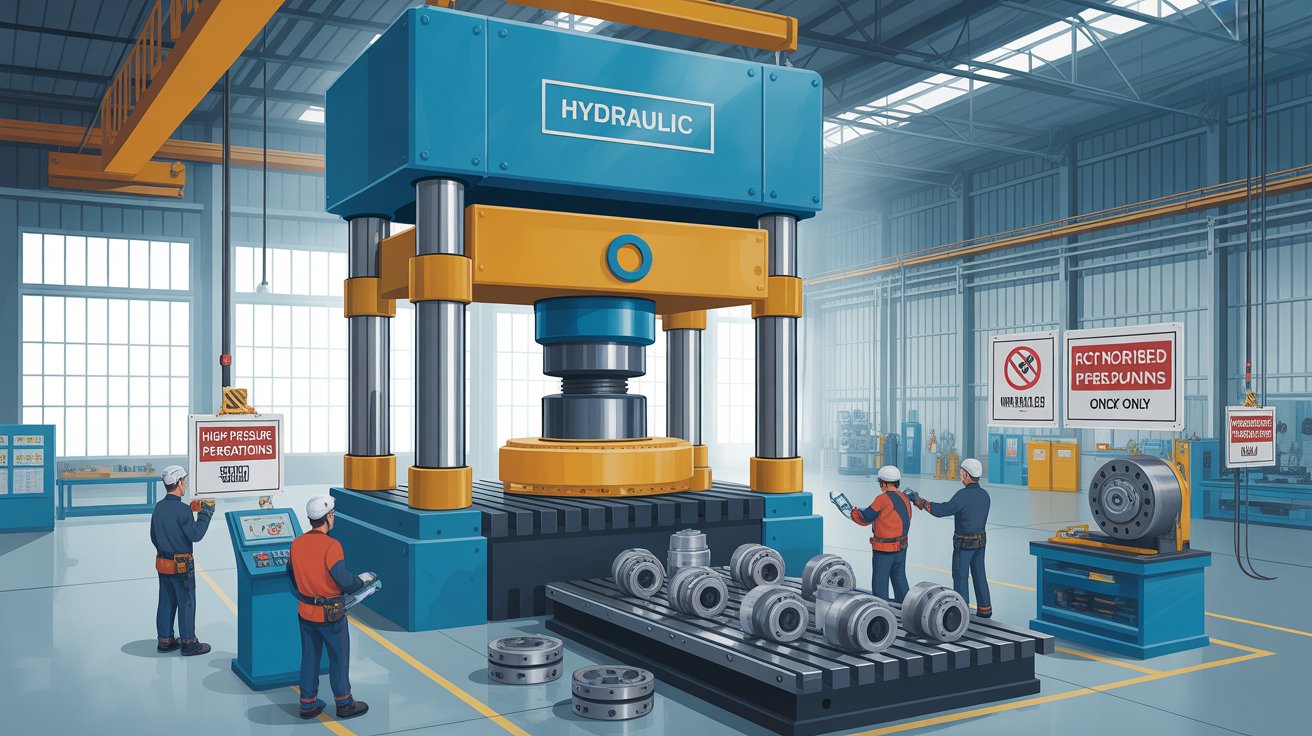
For maintenance managers, workshop supervisors, and equipment operators in industrial and logistics environments, the ability to apply precise, controlled force is fundamental to a wide range of tasks. From pressing bearings and bushings into heavy machinery components to straightening bent parts, stamping, and forming metal, a hydraulic shop press is an indispensable tool. Selecting and operating a press with sufficient capacity and appropriate features directly impacts workflow efficiency, the quality of repairs, and, most critically, the safety of personnel.
The Strategic Role of a High-Tonnage Press in Maintenance and Fabrication
In sectors such as transport logistics, mining support, heavy equipment repair, and metal fabrication, components are large and forces required are substantial. Undersized or underpowered pressing equipment leads to struggling with tasks, increased risk of tool or component failure, and extended downtime. A press with ample capacity, like a 75-ton unit, allows a workshop to confidently handle the majority of pressing jobs in-house, from pressing out seized pins in excavator linkages to forming thick steel plate for custom brackets. This self-sufficiency reduces reliance on external machine shops, cuts repair lead times, and keeps critical assets operational.
Technical Overview and Core FunctionalityDesign and Operation of an H-Frame Hydraulic Press
A hydraulic shop press uses a hydraulic cylinder to generate a compressive force. The workpiece is placed on an adjustable bed between the cylinder ram and the press table. When hydraulic fluid is pumped into the cylinder, it extends the ram, applying force to the workpiece. The 75 Ton Hydraulic Shop Press is built around a heavy-duty, fully welded H-frame structure. This design provides the rigidity and strength needed to safely contain and direct the immense forces involved—up to 75 tons (approximately 150,000 pounds). The frame’s internal width and height determine the maximum size of workpiece that can be accommodated.
This particular model features a dual-operation system. It can be powered pneumatically by connecting to a standard shop air compressor supply (110-125 pounds per square inch) for rapid, effortless ram movement. For precise control or when air is unavailable, it also includes a manual pump operation. A steel cable crank winch allows the operator to easily raise and lower the adjustable bed to one of seven height positions, adapting the press to different workpiece sizes without manual lifting.
Key Components and Specifications
- Hydraulic Cylinder and Pump: The heart of the press. The 75-ton cylinder features a 125 millimeter bore and a 250 millimeter stroke. The air-over-hydraulic system provides speed, while the manual backup ensures functionality in any situation.
- Frame and Structure: The fully welded H-frame, with overall dimensions of approximately 144 by 100 by 193 centimeters, provides a stable and rigid platform. The internal upright opening of 108 centimeters dictates the maximum height of objects that can be placed in the press.
- Adjustable Bed and Carriage: The carriage bed is 760 millimeters wide and 298 millimeters deep, providing ample support for various components. The winch-driven adjustment system is a significant safety and ergonomic feature, eliminating the need to manually handle heavy bed pins.
- Pressure Gauge: A 4-inch oil-filled pressure gauge provides a clear, damped reading of the hydraulic pressure. This allows the operator to apply a known, repeatable force, which is critical for tasks like pressing bearings to a specific depth without damage.
- Retracting Springs: Twin springs automatically retract the ram after the pressure is released, speeding up workflow and ensuring the ram is clear for the next operation.
The Critical Importance of Efficiency, Safety, and Productivity
The efficiency gain from a properly sized press is direct: tasks are completed faster and with less physical strain on operators compared to using hammers, pullers, or inadequate tools. This translates directly to reduced maintenance and fabrication labor hours. Productivity is enhanced because equipment is returned to service more quickly. Safety is paramount. A press operating within its design limits contains the force safely. Attempting to use an undersized press or makeshift methods to achieve the same result is extremely dangerous, risking catastrophic component failure and violent release of energy. Features like the winch-adjustable bed minimize manual handling risks, and a dual-operation system offers control flexibility.
Technical Foundations and Capability ConsiderationsHydraulic System and Force Generation
The 75-ton rating is the maximum calculated force the cylinder can generate at its rated hydraulic pressure. The air-over-hydraulic pump uses compressed air to act on a large piston, which in turn pressurizes hydraulic fluid. This system is efficient and fast for production work. The manual pump provides a backup, giving the operator fine control for delicate operations or when setting up a job. The oil-filled pressure gauge is not just for display; it is a critical tool for applying accurate force, preventing over-pressing that can damage components or the press itself. The recommended hydraulic fluid is ISO AW32, a common anti-wear hydraulic oil.
Structural Integrity and Frame Design
The H-frame design is chosen for its excellent strength-to-weight ratio and ability to resist deflection under load. The fully welded construction at all critical joints ensures the frame acts as a single, rigid unit. Any flex in the frame under load would not only be unsafe but would also reduce pressing accuracy, potentially causing misalignment and damage to the workpiece. The frame’s geometry, with wide feet and a low center of gravity, contributes to the overall stability of the press on the
Factors Influencing Performance, Safety, and Effectiveness
Several factors determine how effectively a press performs in a workshop. Operator knowledge is crucial; understanding where to position the workpiece, how to use the adjustable bed, and how to interpret the pressure gauge ensures successful outcomes. The condition of the workpiece, such as rust, corrosion, or previous damage, can significantly increase the force required and the risk of sudden component failure. Proper setup, ensuring the workpiece is squarely aligned and securely supported on the bed, is essential for safety and accuracy. Regular maintenance, including checking hydraulic oil levels, inspecting hoses for leaks or chafing, and lubricating moving parts, is vital for reliable, safe operation.
Safety Considerations and Industry Best Practices
Operating a high-force hydraulic press involves significant stored energy. A strict, methodical approach to safety is non-negotiable to prevent serious injury.
Essential Safety Protocols for Hydraulic Press Operation
- Pre-Use Inspection: Before each use, inspect the hydraulic cylinder, pump, and hoses for any signs of leaks, damage, or wear. Check the frame for cracks or deformation, particularly around welds and the bed pin locations. Ensure the pressure gauge is functioning and reads zero when no load is applied. Verify that the winch and cable are in good condition.
- Workpiece and Tooling Setup: Always use appropriate tooling, such as pressing plates, v-blocks, and arbor plates, to safely support the workpiece and transmit force. Never use makeshift spacers or unstable setups. Ensure the workpiece is centered and squarely aligned on the press bed. Use the winch to adjust the bed to the correct height, ensuring the pins are fully and securely engaged.
- Operational Safety: Keep hands and all body parts clear of the pressing area during operation. Use the pressure gauge to monitor the force; do not exceed the press’s 75-ton rating. If an object being pressed feels “stuck” or requires excessive force, stop and re-evaluate the setup. Beware of stored energy; components under compression can suddenly release, and pressed-in parts can fly out. Wear safety glasses with side shields at all times.
- Personal Protective Equipment: Operators must wear safety glasses, steel-toed boots, and work gloves. Hearing protection is advisable when the air-over-hydraulic pump is in frequent use.
- Maintenance Safety: Before performing any maintenance, such as adding hydraulic fluid or inspecting the cylinder, ensure the press is fully unloaded and the hydraulic pressure is relieved by operating the release valve. Disconnect the air supply.
Equipment, Tools, and Supporting Attachments
The press itself is the core asset, but effective use requires supporting tooling:
- Pressing Plates and Spacers: A set of sturdy steel plates of various sizes to distribute force evenly over the workpiece.
- Arbor Plates and V-Blocks: Specialized tooling for holding round stock or specific component shapes.
- Bearing Separator Set: A critical accessory for safely removing bearings and gears without damaging them.
- Hydraulic Oil: A supply of ISO AW32 hydraulic oil for top-ups.
- Maintenance Tools: Basic hand tools for minor adjustments and inspections.
Advantages, Limitations, and Practical ApplicationStrategic Benefits and Operational Upsides
The primary advantage of a 75 Ton Hydraulic Shop Press is its immense capacity, bringing large-scale pressing capability in-house. This eliminates outsourcing delays and costs for heavy repair and fabrication jobs. The dual air/manual operation offers flexibility and speed for production work while retaining precise control. The winch-adjustable bed and seven height positions significantly improve workflow ergonomics and safety compared to presses requiring manual pin lifting. Its robust, all-welded construction promises longevity in a demanding workshop environment.
Inherent Limitations to Consider
A press of this size and weight (approximately 480 kilograms shipping weight) requires a dedicated floor space and a concrete floor capable of supporting it and the heavy workpieces it will handle. It is not portable. While highly versatile, it is a general-purpose press; for very specialized, high-volume tasks, dedicated tooling or machinery might be more efficient. The manual aspects, while providing control, still require operator effort and attention for bed adjustment and pump operation.
Real-World Industrial Application Example
A regional transport company operates its own heavy vehicle maintenance workshop, servicing a fleet of road trains and mining support trucks. A common task is rebuilding suspension components and differentials, which requires pressing out and pressing in large, seized bearings and bushings. Previously, they struggled with a 30-ton press, often needing to take components to a specialist engineering shop. After acquiring a 75-ton press, they can now perform all suspension and driveline pressing tasks in-house. The air-over-hydraulic system speeds up repetitive jobs, and the winch-adjustable bed allows one mechanic to safely handle large, awkward differential housings. This has reduced vehicle downtime and external repair costs significantly.
Conclusion: Future Trends and Strategic Integration
The hydraulic shop press remains a foundational machine in industrial maintenance and fabrication. Future trends point toward even more sophisticated control systems, such as digital force readouts and programmable cycles for precise, repeatable operations. Safety features like light curtains and two-hand controls may become more common on larger presses. For procurement specialists and workshop managers, selecting a press like this is a strategic decision based on current and anticipated workload, available floor space, and the commitment to equipping staff with safe, efficient tools. When integrated with proper training, a comprehensive set of tooling, and unwavering adherence to safety protocols, a high-capacity hydraulic press becomes a cornerstone of a productive and self-reliant industrial workshop.
