

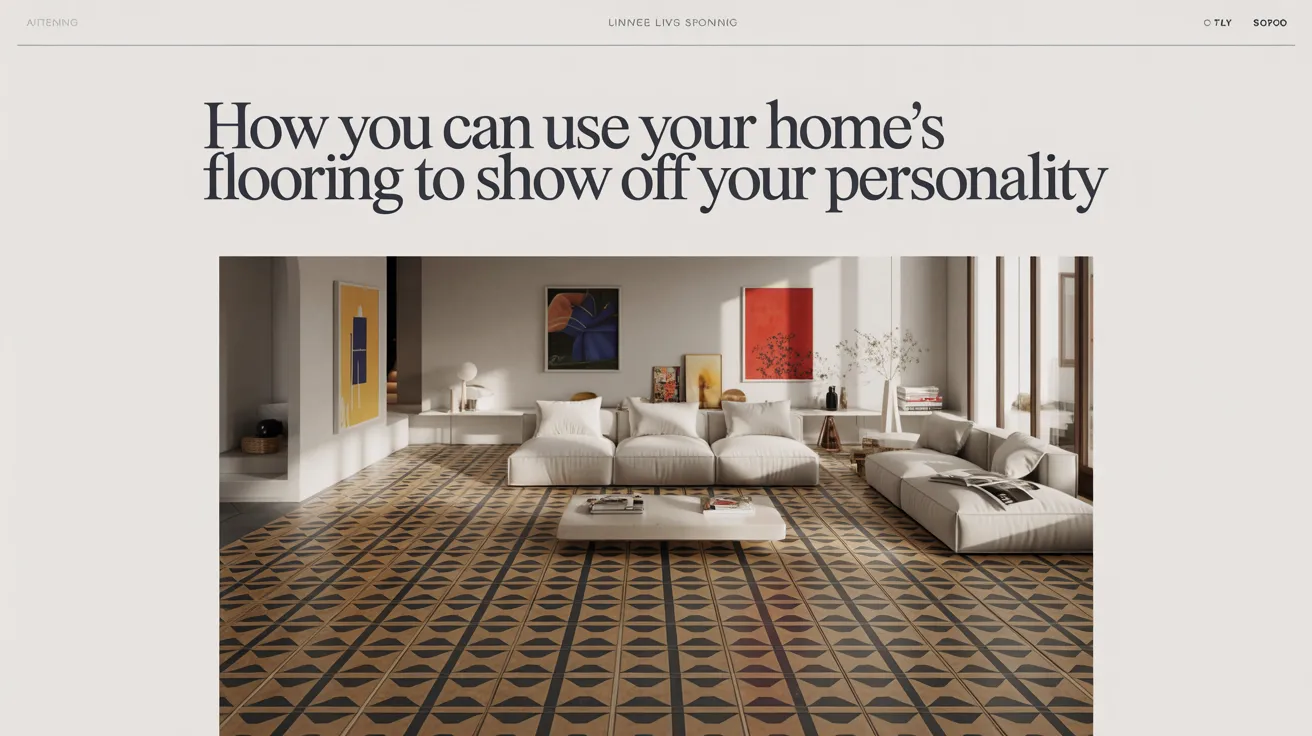
When people think about expressing personality in their home, they usually focus on wall colour, furniture, artwork, or accessories. Flooring, by contrast, is often treated as a purely practical decision, something neutral that fades into the background.
Yet flooring covers more surface area than almost any other design element, and because of that, it quietly but powerfully shapes how a home feels. The materials you choose underfoot can say just as much about you as the sofa you sit on or the art you hang on the walls.
Your flooring choices influence atmosphere, mood, and even how people behave in a space. They tell a story about what you value: comfort or drama, tradition or experimentation, calm or energy.
Whether you realise it or not, your floors are already communicating something. The question is whether they’re saying what you want them to say.
Why Flooring Is a Powerful Form of Self-Expression
Flooring works on both a conscious and subconscious level. Visitors may not immediately comment on it, but they will feel its impact. A warm wooden floor can make a room feel welcoming and grounded.
Polished stone can suggest elegance and confidence. Patterned tiles may signal creativity and boldness. Because flooring is constant, unlike cushions or décor that change with trends, it becomes part of your home’s identity rather than a temporary statement.
Classic and Grounded: What Traditional Flooring Says
If you’re drawn to timeless interiors and a sense of calm order, your flooring choices likely lean toward natural materials and restrained palettes. Stone, wood, and neutral tones suggest someone who values longevity, quality, and quiet confidence.
These floors don’t demand attention, but they command respect through their subtlety.
Traditional flooring doesn’t mean boring. Wide wooden boards, softly textured stone, or gently aged finishes reflect a personality that appreciates craftsmanship and history. These choices often suit people who enjoy hosting, value comfort, and prefer spaces that feel settled rather than constantly changing.
This type of flooring tells visitors that your home is a place of stability, designed to be lived in, not constantly reinvented.
Bold and Creative: Floors That Refuse to Blend In
For those who see their home as a form of creative expression, flooring can be a place to take risks. Patterned tiles, contrasting grout lines, geometric layouts, or unexpected colour choices immediately communicate confidence and individuality. These floors become talking points, anchoring a room with personality rather than neutrality.
Bold flooring choices often reflect people who are visually expressive, curious, and unafraid of standing out. Instead of treating the floor as a backdrop, they allow it to lead the design conversation.
This approach works particularly well in entryways, kitchens, and bathrooms, where flooring can set the tone from the moment someone steps inside.
The key to success here is intention. When bold flooring is chosen deliberately, it feels expressive and exciting rather than overwhelming.
Calm and Minimal: Flooring That Creates Space to Breathe
Minimalist personalities often gravitate toward flooring that creates visual quiet. Large-format tiles, seamless finishes, and restrained colour palettes reflect a desire for clarity and order. These floors don’t compete for attention; instead, they allow light, proportion, and negative space to do the work.
This approach often appeals to people who value mindfulness, simplicity, and function. Flooring becomes a tool for reducing visual noise and supporting a sense of calm. Pale stone, softly toned wood, or concrete-style finishes create an environment where every object feels intentional.
Rather than being cold or impersonal, minimalist flooring can feel deeply personal, especially when it reflects a conscious choice to prioritise balance and restraint.
Warm and Social: Flooring That Encourages Connection
Some homes are designed above all else to bring people together. In these spaces, flooring plays a subtle but important role in creating warmth and ease. Natural textures, softer finishes, and materials that feel good underfoot help spaces feel relaxed and inviting.
People who choose flooring with warmth and tactility in mind often value comfort, connection, and everyday enjoyment. They want their home to feel lived-in rather than styled.
Slight variations in tone or texture add character, making rooms feel human rather than polished.
Matching Personality with Practicality
Expressive flooring doesn’t mean ignoring function. In fact, the best choices balance personality with practicality. Someone who loves dramatic materials might still choose them in lower-traffic areas, while opting for more forgiving finishes elsewhere.
A minimalist may prefer seamless surfaces, but still consider warmth and acoustics.
Your lifestyle should inform how your personality shows up in your flooring. Busy households, pets, and frequent entertaining all influence how materials perform over time. Personality-driven design works best when it’s grounded in real life rather than idealised images.
Letting Flooring Guide the Rest of the Design
One of the advantages of expressive flooring is that it can simplify other design decisions. When the floor clearly communicates a mood, everything else can respond to it. Furniture, lighting, and accessories naturally fall into place when there’s a strong foundation.
Rather than layering personality on top through constant updates, you can let your flooring quietly anchor the space. This creates interiors that feel cohesive and intentional rather than styled piece by piece.
Evolving Without Starting Over
A common fear is that expressive flooring will feel limiting over time. In reality, the opposite is often true. When flooring reflects your core preferences rather than passing trends, it adapts easily to change.
Furniture can be swapped, colors refreshed, and layouts reimagined without clashing with the foundation beneath.
Neutral doesn’t have to mean anonymous, and bold doesn’t have to mean inflexible. The goal is alignment. You want to choose floors that feel like you, not like what you think you’re supposed to choose.
Final Thoughts
Your home’s flooring shapes how spaces feel, how people move through them, and how you experience daily life. By choosing flooring that reflects your personality, you create a home that feels honest, comfortable, and distinctly yours.
When floors are selected with intention rather than habit, they stop fading into the background and start working quietly in your favor, supporting not just your interior design, but the way you live within it.
