

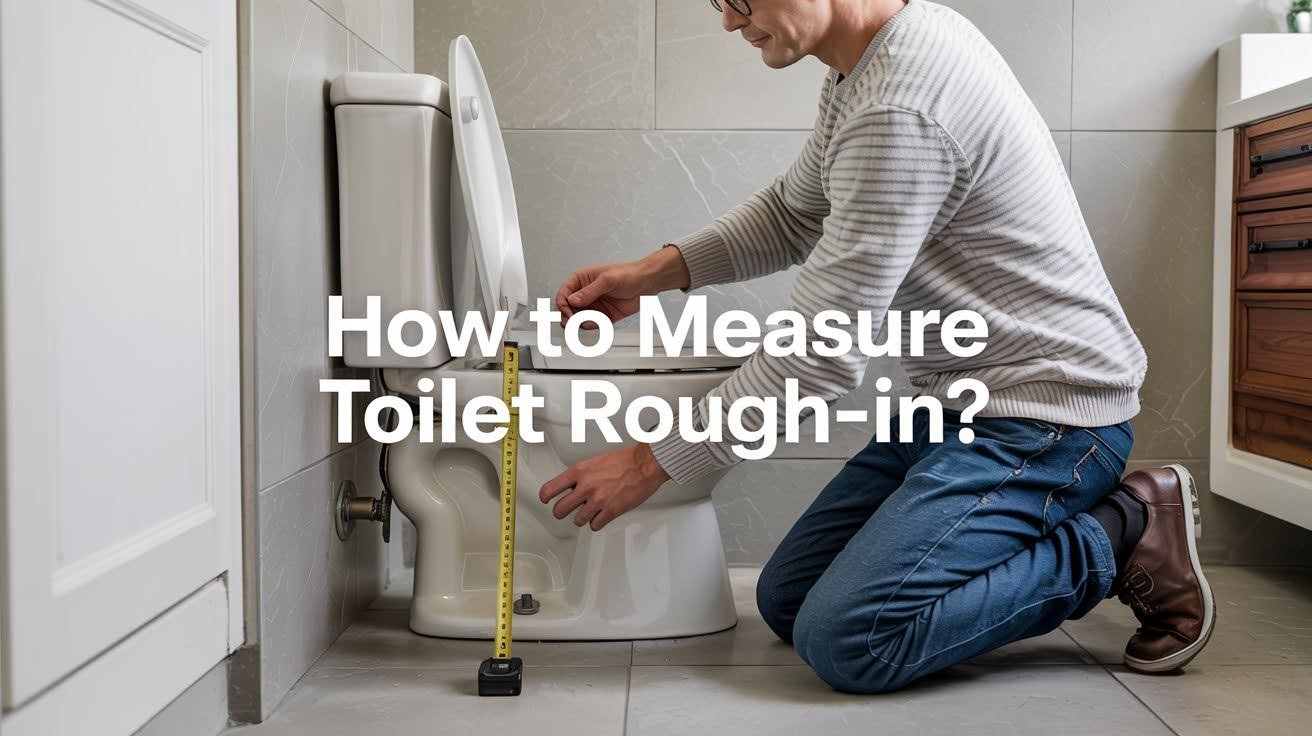
The distance between the center of the drainpipe and your wall is known as a toilet rough-in. Your new toilet won’t fit correctly if you take this measurement incorrectly, which is a costly and annoying issue.
To ensure that you purchase the correct toilet the first time, this guide explains how to measure toilet rough-in precisely.
I’ll go over the equipment you’ll need, detailed measurements, and how to handle odd sizes.
Standard rough-in sizes, typical blunders to avoid, and unique circumstances like corner toilets will all be covered.
Let’s ensure that your new toilet fits flawlessly.
What Is a Toilet Rough-In?
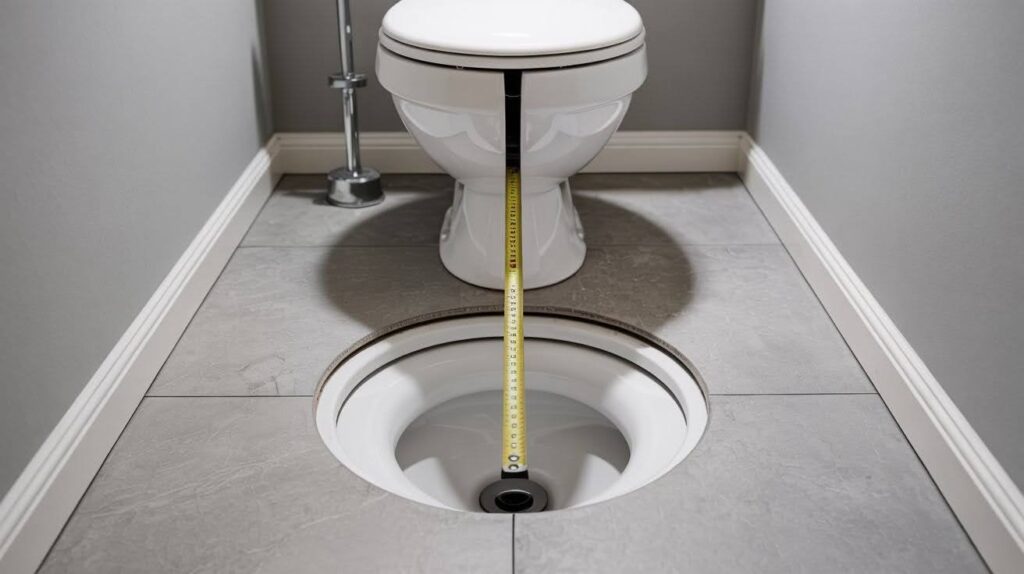
A toilet rough-in is the distance from the finished wall to the center of the toilet’s drainpipe or flange. This measurement determines which toilets will fit in your bathroom without plumbing modifications.
The rough-in measurement tells you how far the toilet sits from the wall. If your measurement doesn’t match the toilet’s specifications, the toilet won’t install properly or will leave unsightly gaps.
Standard rough-ins are 12 inches, which fits most modern homes. Non-standard sizes include 10 inches and 14 inches, which are less common but still available.
Older homes sometimes have unusual measurements like 9 or 13 inches that require special adapters or plumbing adjustments.
Tools You’ll Need
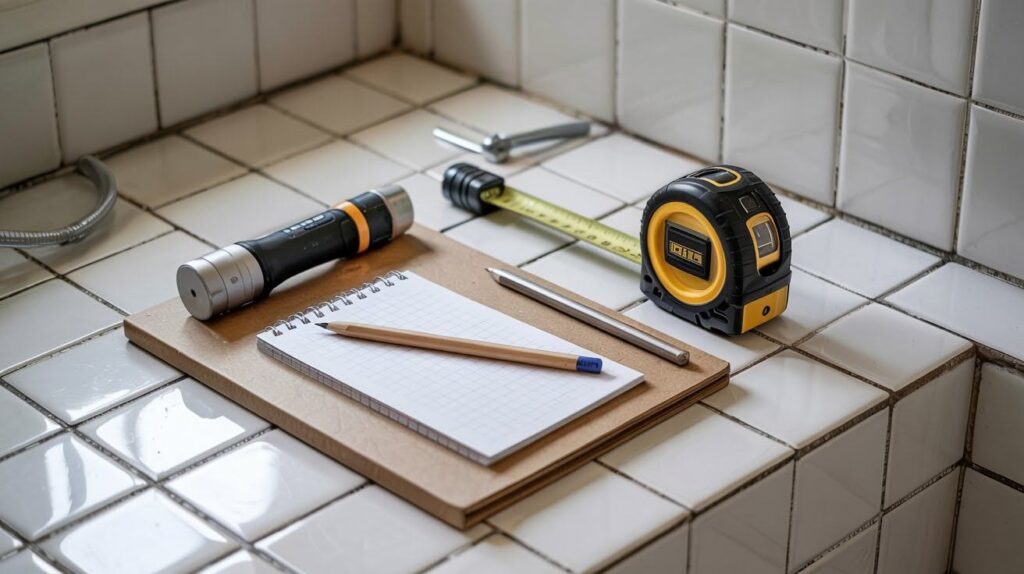
Gather a tape measure, pencil, notepad, and flashlight for accurate rough-in measurement in good visibility conditions.
Tape measure: Important for getting precise distances from the wall to the flange center.
Pencil or marker: Helps you mark reference points if needed during measurement.
Notepad: Lets you record measurements so you don’t forget them later.
Flashlight: Provides better visibility in dark bathroom corners or behind fixtures.
How to Measure a Toilet Rough-In
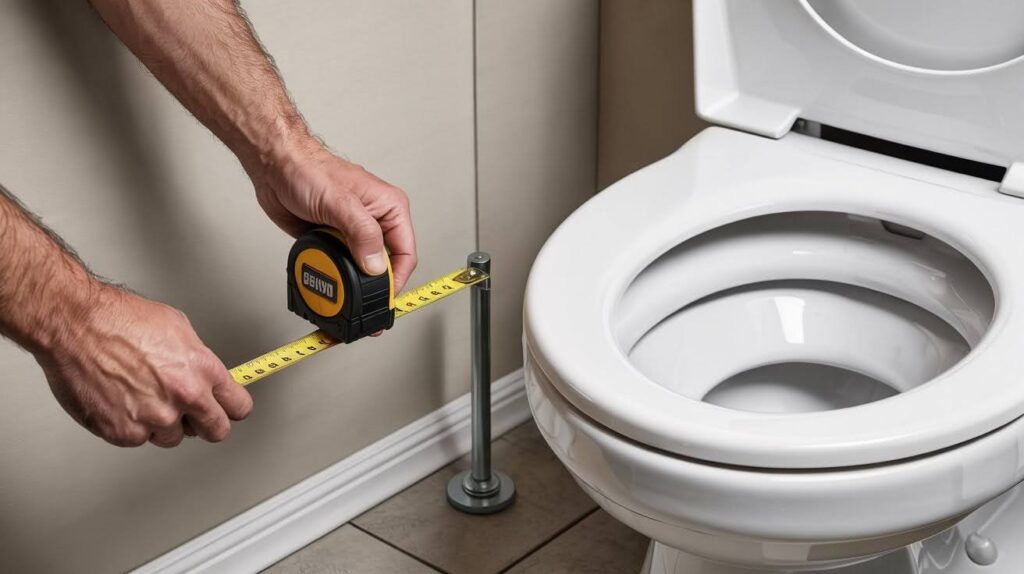
Measure from the finished wall to the flange center, verify against standard sizes, and double-check for accuracy.
Step 1: Identify Your Setup
Determine whether your toilet is still installed or has been removed. If the toilet is gone, locate the toilet flange on the floor. If the toilet is still in place, find the mounting bolts on each side of the base.
Step 2: Measure from the Finished Wall
Place your tape measure against the finished wall surface, not the baseboard or molding. Measure straight to the center of the toilet flange if the toilet is removed, or to the center of one of the mounting bolts if installed. Record the measurement precisely in inches.
Step 3: Double-Check Your Measurement
Common rough-in sizes are 10, 12, or 14 inches. If your measurement doesn’t fall close to one of these standards, measure again to verify.
Even a half-inch error can cause installation issues. Take multiple measurements to ensure consistency.
Special Situations
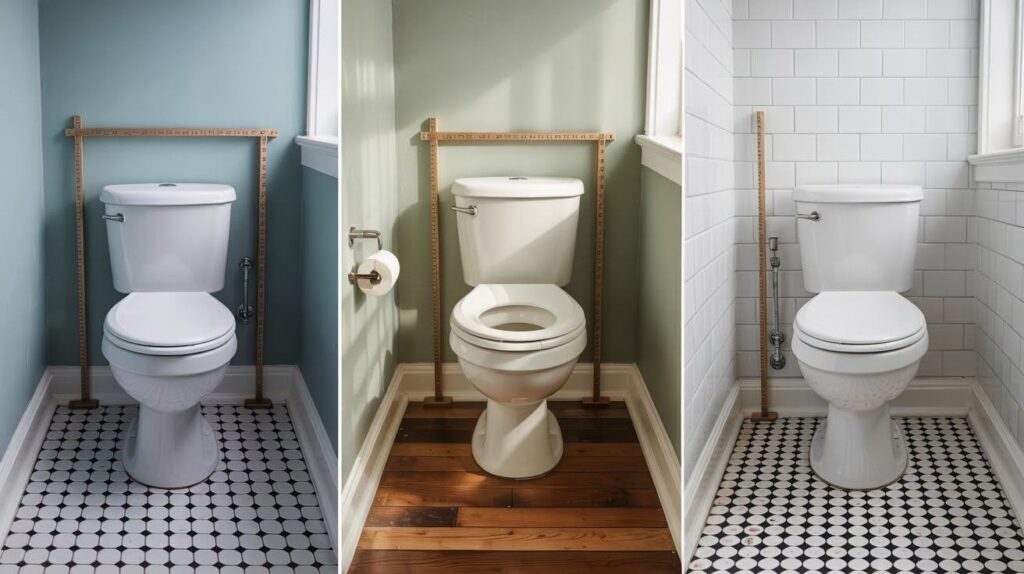
Corner toilets, hidden walls, and older homes require adjusted measuring techniques and sometimes adapter solutions for proper fit.
Measuring for Corner Toilets
Corner installations require measuring from both walls to the center of the flange. Take one measurement from each wall to the center point.
Both measurements should be equal if the toilet is centered properly in the corner. Unequal measurements indicate the flange is off-center.
When Measuring Behind Drywall or Baseboard
Always measure from the finished wall surface, not the stud or molding behind it. Remove or measure over the baseboard to reach the actual wall.
The finished wall is where your toilet tank will rest. Measuring from studs or baseboards gives you an incorrect rough-in distance.
Older Homes or Unusual Rough-Ins
Some older homes have rare rough-in sizes like 9 or 13 inches. These don’t match standard toilet specifications available today.
Your options include using a Unifit adapter like TOTO’s system that adjusts to multiple rough-ins. Alternatively, you can hire a plumber to adjust the drain location, though this costs more and requires floor work.
Distance from the Wall to the Center of the Toilet Flange
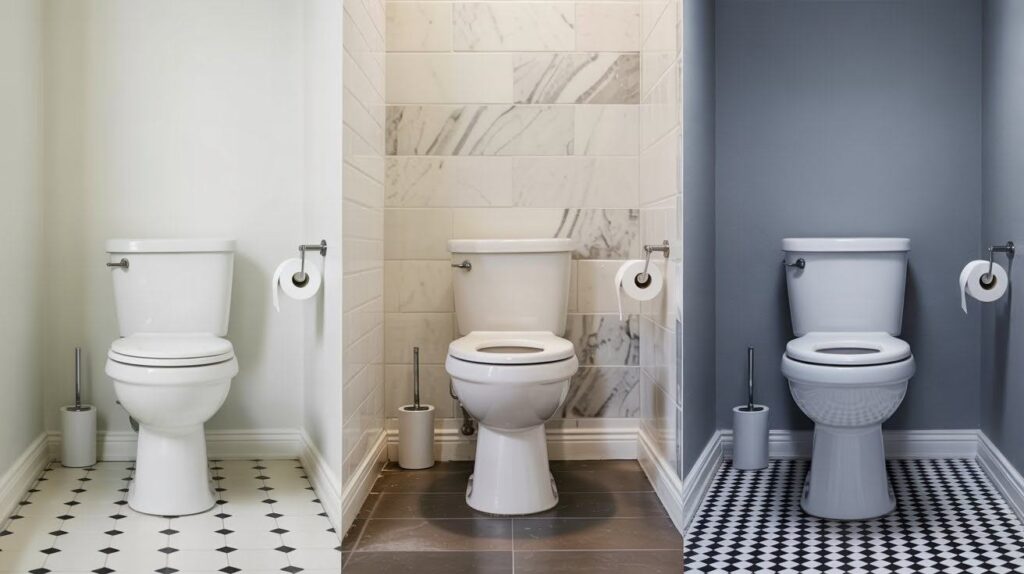
How to tell If you have a 10″, 12″, or 14″ Rough-In? Visual differences exist when a toilet is already installed. A 10-inch rough-in sits very close to the wall with minimal gap between the tank and wall surface.
A 12-inch rough-in is the standard and shows a normal, proportional gap. This is what most toilets are designed for and looks balanced.
A 14-inch rough-in leaves a larger, more noticeable gap between the tank and wall. The toilet appears to sit farther out into the room.
| Rough-In Size | Gap Between Tank and Wall | Common In |
| 10 inches | Very small gap | Tight spaces, powder rooms |
| 12 inches | Standard gap | Most modern homes |
| 14 inches | Larger gap | Older homes, specific designs |
Why Accurate Measurement Matters
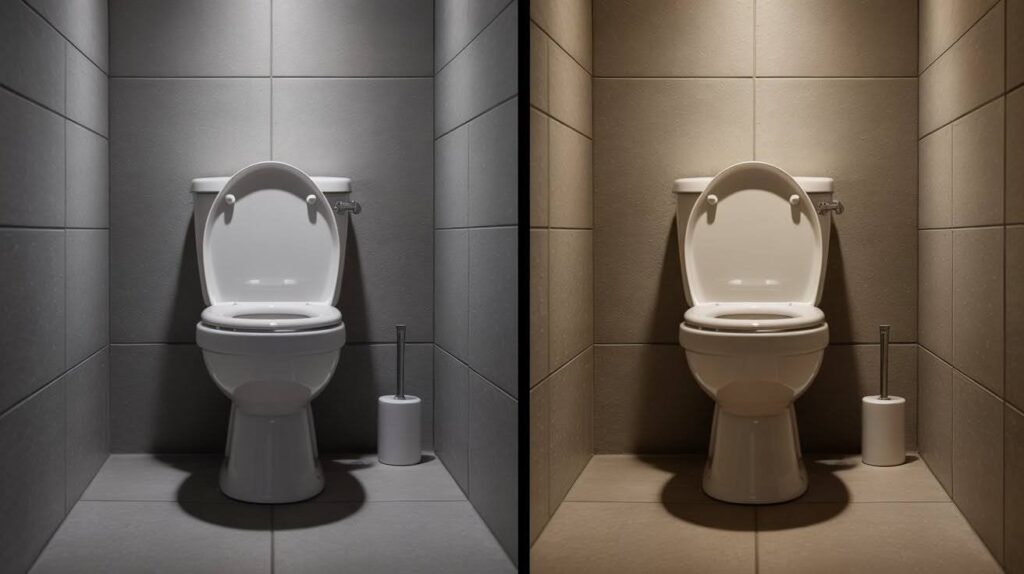
Accurate measurement ensures your new toilet fits properly without gaps or misalignment. A correctly fitting toilet sits flush against the wall and operates smoothly.
Incorrect measurements lead to costly plumbing or floor adjustments. Moving a drain location requires cutting the floor, relocating pipes, and refinishing surfaces.
Poor fit creates unsightly gaps between the tank and wall. These gaps collect dust and make your bathroom look unfinished or unprofessional.
Pro Tip: Using TOTO’s Unifit Rough-In Adapter
- TOTO’s Unifit system allows one toilet model to fit multiple rough-ins including 10, 12, and 14 inches without any plumbing changes
- Provides flexibility when you’re unsure of your exact rough-in or working with older homes that have non-standard measurements
- Saves renovation costs by eliminating the need to relocate drains or adjust floor plumbing
- Better fit for older bathrooms where original rough-ins don’t match modern standard toilet specifications
- Simplifies toilet shopping since you don’t need to find a model matching your exact rough-in measurement
Common Mistakes to Avoid
Avoid measuring from baseboards, measuring to flange edges, and ignoring clearance needs for proper toilet installation.
- Measuring from the baseboard instead of the finished wall: gives you an incorrect distance. The baseboard adds extra inches that throw off your calculation, resulting in a toilet that doesn’t fit properly.
- Measuring to the back edge of the flange rather than its center: is another frequent error. The rough-in measurement specifically refers to the center point, not any edge.
- Ignoring water line location or clearance for tank height: causes problems during installation. Make sure you have adequate space for connections and that the tank won’t hit shelves or windows.
Conclusion
I found the hard way that accuracy is crucial after measuring toilet rough-ins in three separate residences. You can now measure toilet rough-in precisely and avoid costly errors.
Before placing your new toilet order, take your time and measure twice. To make sure rough-in compatibility with your bathroom, consult the manufacturer’s specifications.
Hours of frustration and potentially costly plumbing work can be avoided with a few minutes of careful measurement. On the first try, your new toilet will fit flawlessly.
Do you have inquiries concerning your particular rough-in scenario? Leave them in the space provided below!
Frequently Asked Questions
What is the most common toilet rough-in size?
The most common toilet rough-in is 12 inches, which is standard in most modern homes built after the 1980s. This size fits the majority of toilet models available today.
Can I install a 12-inch toilet on a 10-inch rough-in?
No, you cannot install a 12-inch toilet on a 10-inch rough-in without modifications. You’ll need either a toilet specifically designed for 10-inch rough-ins or use an adapter system like TOTO’s Unifit.
Do I measure the bolt or the flange center?
Measure to the center of either one, as they should align. If the toilet is installed, measure to the center of a mounting bolt. If removed, measure to the center of the flange itself.
What if my measurement is between standard sizes?
If your measurement falls between standard sizes like 11 or 13 inches, remember carefully. If confirmed, consider a Unifit adapter toilet or consult a plumber about relocating the drain.
\\\\\Does rough-in measurement include the toilet tank?
No, rough-in measurement is only the distance from wall to drain center. It doesn’t include the toilet’s overall depth or how far the tank extends into the room.
