

When you’re building or remodeling your home, door dimensions can make or break your project.
I’ve learned this the hard way after ordering the wrong size twice. This guide covers standard door heights, widths, and thicknesses so you don’t repeat my mistakes.
You’ll find exact measurements for interior, exterior, and specialty doors. I’ll show you how homes built in different decades use different sizes.
Plus, you’ll learn how to measure correctly before buying.
Let’s solve this problem together.
What Is the Standard Height of an Average Door?
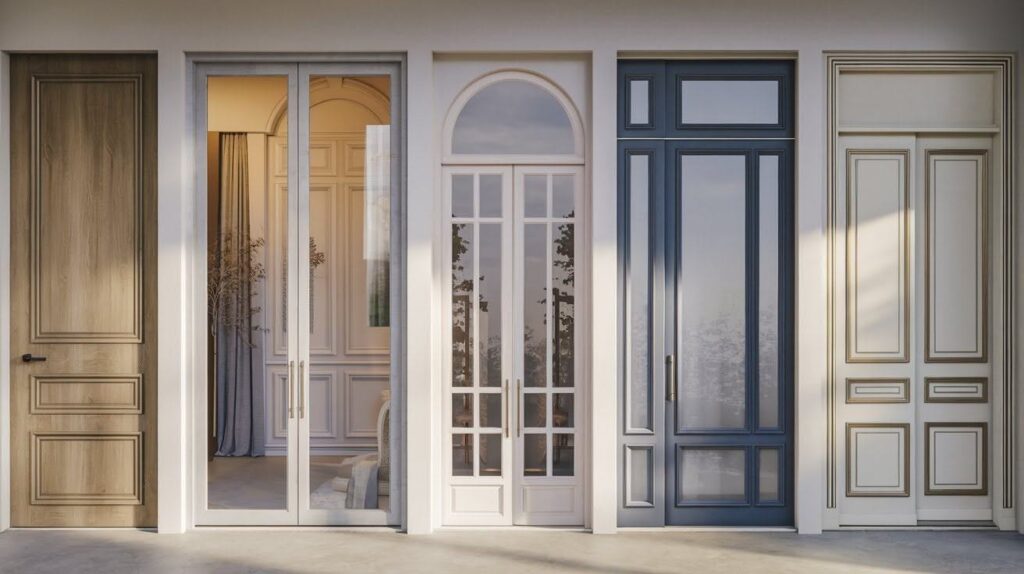
Door height varies by location and home age, with most residential doors standing 80 inches tall.
Most doors measure 80 inches tall. That’s 6 feet 8 inches from top to bottom. This applies to both interior and exterior doors.
Older houses sometimes have 84-inch doors. Newer construction often uses 96-inch doors to match taller ceilings. Luxury homes go even bigger, with some doors reaching 109 inches or more.
French doors and sliding doors usually stand 80 inches tall. But 8-foot versions (96 inches) are becoming popular. Different manufacturers offer various options for specific projects.
What Is the Standard Width of Residential Doors?
Door width depends on room type and purpose, ranging from 24 inches for closets to 42 inches for main entries.
Interior Door Widths
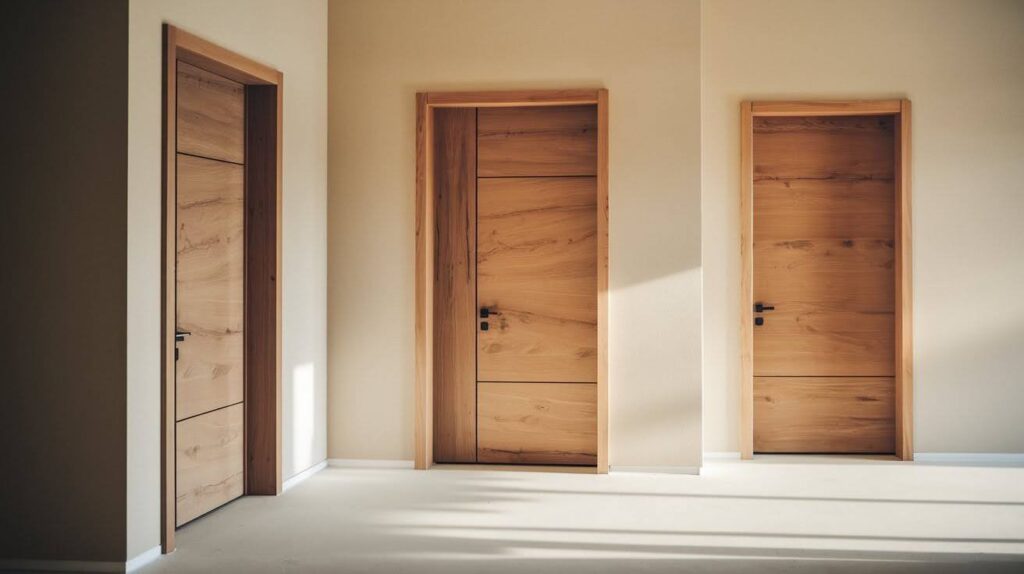
Common interior door widths include 24, 28, 30, 32, and 36 inches.
Here’s how to choose the right width:
- 24 to 28 inches work for closets and utility spaces.
- 30 to 32 inches fit bathrooms perfectly.
- 32 to 36 inches suit bedrooms and main hallways.
ADA guidelines require 36-inch minimum width for accessible spaces. This lets wheelchairs pass through easily.
I always measure the space before ordering. It saves time and money.
Exterior Door Widths
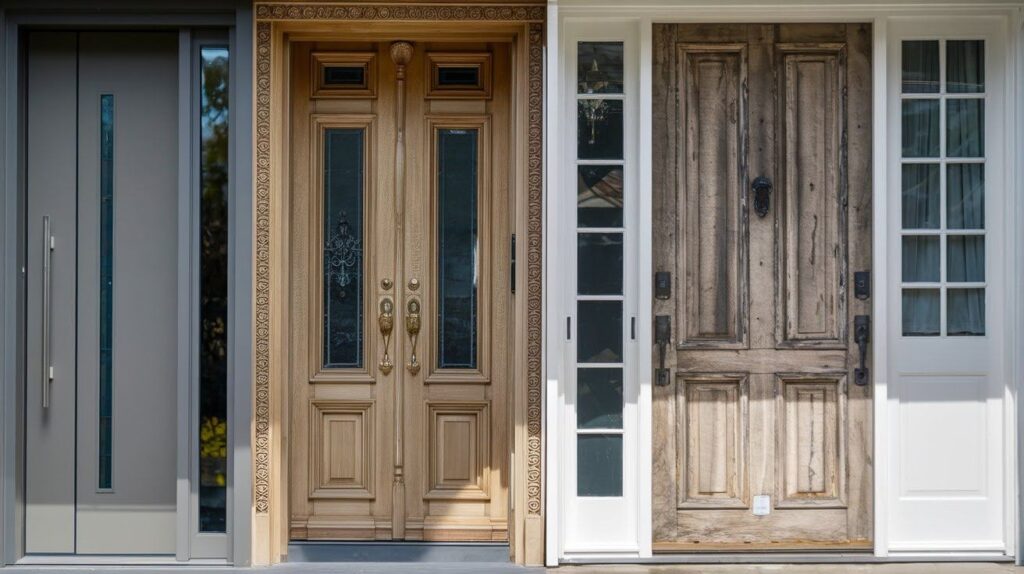
Most exterior doors are 36 inches wide. This is the standard you’ll find in most homes.
Stock sizes include:
- 30 inches
- 32 inches
- 36 inches
- 42 inches
Home improvement stores carry these regularly. Modern homes often use wider entry doors.
A 42-inch front door makes a strong first impression. Wider doors also help when moving furniture.
Sliding & French Door Widths

Standard sliding doors measure 6 feet wide by 6 feet 8 inches tall.
Other popular sizes include:
- 5 feet wide by 8 feet tall
- 6 feet wide by 8 feet tall
- 8 feet wide by 8 feet tall
Double-width French doors create wider openings. Each door panel swings open independently. This gives you flexible entry space.
Two 30-inch panels create a 60-inch opening when both doors open.
What Is the Standard Thickness of a Door?
Door thickness affects strength and insulation, with interior doors being thinner than exterior ones.
Interior Door Thickness
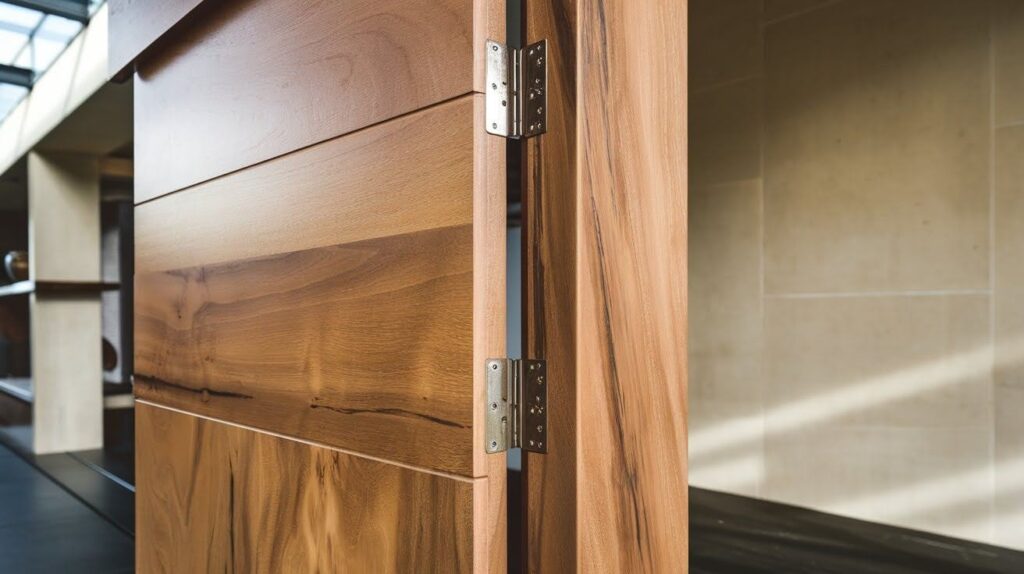
Standard interior doors are 1 3/8 inches thick. This works for most rooms in your home.
Thicker interior doors (1 3/4 inches) are needed sometimes. You’ll need them when doors are taller than 90 inches. You’ll also need them when doors are wider than 36 inches.
The extra thickness adds stability to larger doors.
Exterior Door Thickness
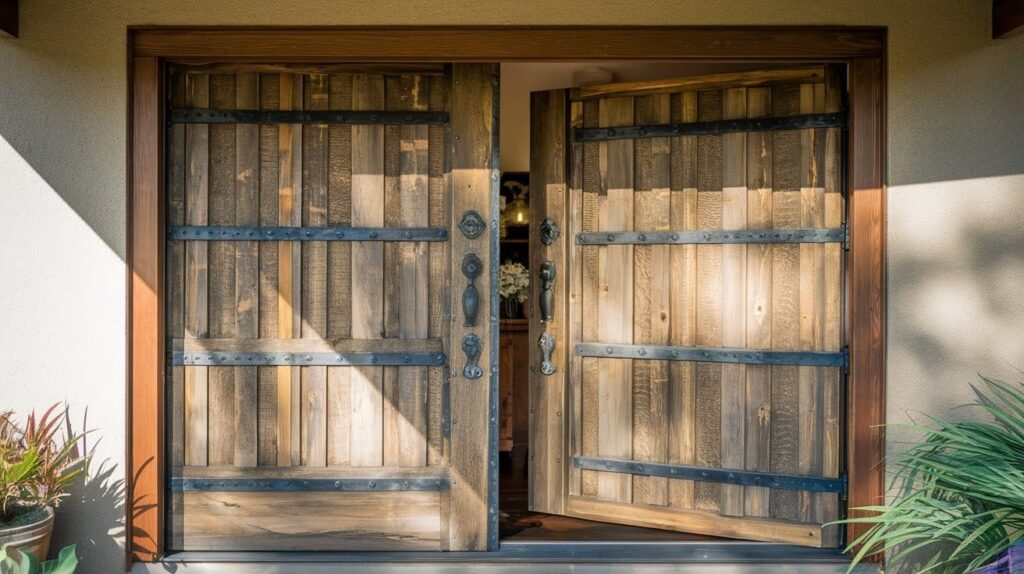
Exterior doors are always 1 3/4 inches thick. This extra thickness serves important purposes.
Thicker doors provide better insulation. They keep your energy bills lower.
They also offer more security. A solid 1 3/4-inch door resists forced entry better. Plus, they last longer in harsh weather.
Rough Opening Requirements for Standard Doors
Rough openings must be larger than the door itself to allow proper installation and adjustment.
How Height and Width Affect Rough Opening Size
Add 2 inches to both height and width when planning your rough opening.
Here’s a simple example: A 36-inch by 80-inch door needs a 38-inch by 82-inch rough opening.
This extra space allows for the frame and shimming. You need room to make adjustments during installation.
Pre-Hung vs. Slab Doors
Pre-hung doors come with frames already attached. Slab doors are just the door itself.
Rough openings differ between these types. Pre-hung doors need standard rough openings. Slab doors fit into existing frames.
Precise measurements matter for both types. Off by an inch? You’ll struggle with installation. Your door might not close properly.
I always measure twice and cut once.
How to Measure Door Height, Width & Thickness
Accurate measuring prevents costly mistakes and ensures your new door fits perfectly.
Step 1: Measure from top to bottom. Use the jamb as your starting point, not the trim. This gives you the actual door height you need.
Step 2: Measure the jamb and frame next. This tells you the actual opening size. The frame width matters for proper door installation.
Step 3: Exclude trim from your measurements. Trim adds extra width that doesn’t affect door fit. Only measure the opening itself for accuracy.
Step 4: Measure the thickness. Measure the edge of an existing door. Or measure the depth of the door frame opening.
Step 5: Write down every measurement. Check them twice. Keep these numbers handy when you shop for your new door.
Factors That Influence Door Dimensions
Multiple factors determine door size, from home age to room purpose and design preferences.
Age of Home
Older houses typically have shorter doors. Homes built before 1980 often use doors under 80 inches.
Modern builds favor taller doors. Some new homes use 96-inch or taller doors throughout.
This reflects changing design trends and ceiling heights.
Room Type & Function
Primary rooms get larger doors. Living rooms, master bedrooms, and main hallways often have 36-inch doors.
Closets and utility rooms use smaller doors. These spaces need less clearance.
Secondary bathrooms might have 30-inch doors. Guest rooms might have 32-inch doors. Function drives size choices.
Custom & Designer Doors
Sometimes standard sizes don’t work. You might need custom heights or widths. Custom doors cost more. Installation also takes longer.
But they solve specific problems. They fit unusual openings. They match special design visions. Work with a professional for custom orders. The measurements must be exact.
Conclusion
Now you know that most doors are 80 inches tall, 36 inches wide, and 1 3/8 to 1 3/4 inches thick.
But your home might be different. I always measure my openings carefully before ordering anything. You should too.
Check manufacturer specs for the exact door you want. When in doubt, ask a professional.
Trust me, getting it right the first time saves money and stress.
What door project are you working on? Drop a comment below and share your experience.
Frequently Asked Questions
What is the most common door height in homes?
The most common door height is 80 inches (6 feet 8 inches). This standard works for both interior and exterior doors in most residential buildings.
Can I install a taller door in an existing frame?
You can’t make an existing frame taller without major renovation. You’d need to modify the wall structure and create a new rough opening for a taller door.
Why are exterior doors thicker than interior doors?
Exterior doors are thicker (1 3/4 inches) for better insulation, security, and weather resistance. Interior doors only need 1 3/8 inches since they face less stress.
Do I need wider doors for wheelchair access?
Yes, ADA standards require 36-inch minimum width for wheelchair accessibility. Some homes use 42-inch doors for even better access and comfort.
How much space do I need around a door frame?
You need 2 extra inches in both height and width for the rough opening. This allows space for the frame, shims, and proper installation adjustments.
