

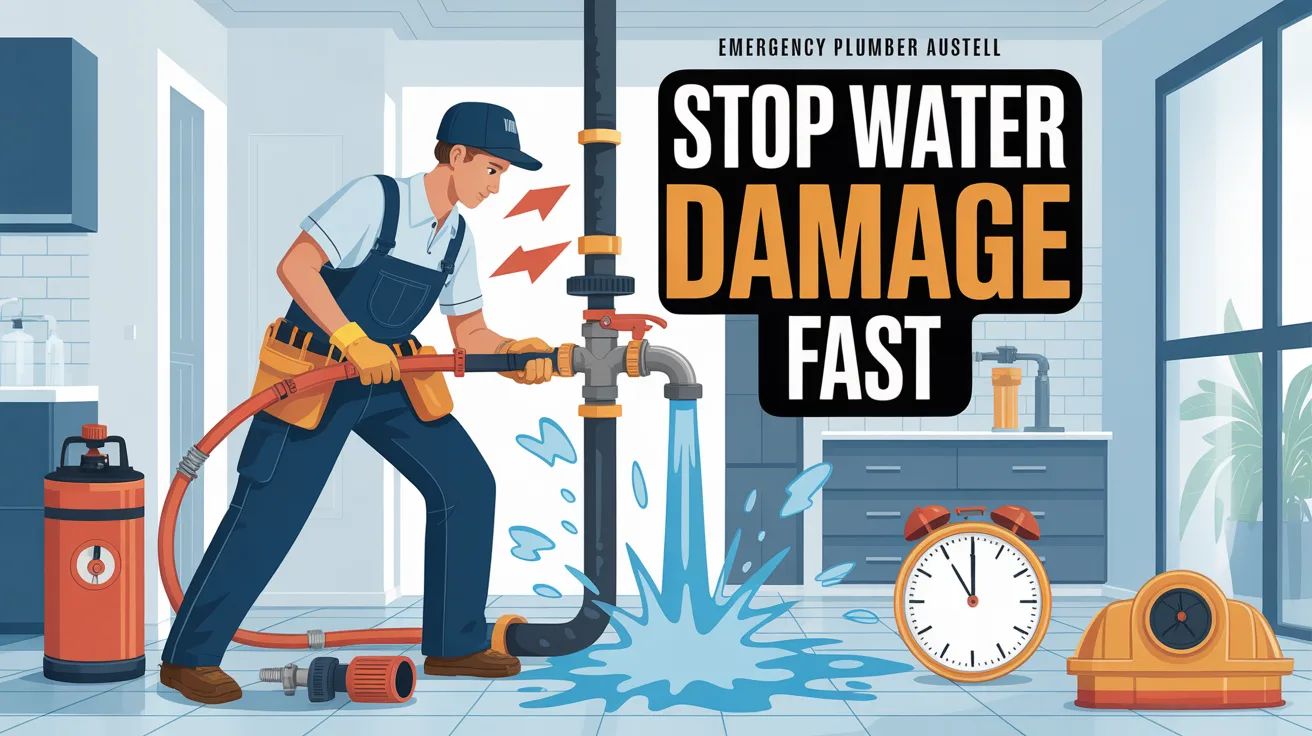
An emergency plumber in Austell is the first call many homeowners make when water starts spreading faster than towels can keep up.
I learned this lesson one night when a washing machine hose split without warning and sent water racing across the floor.
There was no dramatic explosion, just a steady flow that quietly turned into a serious problem within minutes.
Water damage never waits for a convenient time.
Pipes fail after midnight, toilets overflow during holidays, and water heaters break right before guests arrive.
When that happens, fast action is the only thing standing between a small repair and thousands in restoration costs.
When a Plumbing Issue Becomes an Emergency
Plumbing emergencies rarely announce themselves politely.
Sometimes it starts with a faint dripping sound behind a wall.
Other times, it is the shock of stepping into a puddle that was not there an hour ago.
In my case, the first sign was damp carpet creeping into the hallway.
At that point, panic can take over, but hesitation makes things worse.
Water spreads quickly through flooring, drywall, and insulation.
The longer it flows, the more damage it causes to structural materials and electrical systems.
Every minute of uncontrolled flow increases the risk of warped floors, mold growth, and electrical damage.
The goal is not just to stop the leak but to limit how far the damage spreads.
That is where rapid-response plumbing services come into play.
They arrive ready to isolate the problem, shut off the source, and stabilize the situation before repairs even begin.
For homeowners dealing with active leaks, this resource explains what not to do during those first stressful minutes from an experienced emergency plumber Austell.
What Fast Plumbing Response Really Means
Speed is not just about how fast someone shows up at the door.
It is about knowing exactly what to do the moment the issue is identified.
I watched a technician walk straight to the correct shutoff valve without asking questions because the signs were obvious to him.
That level of confidence only comes from handling burst pipes, leaking valves, and flooding scenarios every day.
Quick diagnostics prevent unnecessary damage.
Instead of cutting into walls blindly, skilled plumbers use pressure checks, moisture readings, and visual clues to pinpoint the failure.
That accuracy saves time and avoids turning one damaged area into three.
Once the water is controlled, temporary solutions like caps or bypass lines keep the home safe until permanent repairs are completed.
Common Plumbing Failures That Cause Serious Damage
Some emergencies are loud and dramatic.
Others start quietly and spiral out of control.
Burst supply lines release gallons of water per minute and can flood multiple rooms in a short time.
Overflowing toilets often point to deeper sewer line blockages that can back up into tubs and showers.
I once tried plunging what seemed like a simple clog, only to watch water rise in the bathtub moments later.
Water heater leaks are another common culprit.
A cracked tank may drip slowly for hours before giving way and emptying its contents onto the floor.
Hidden pipe leaks behind walls are especially dangerous because damage builds out of sight.
By the time stains appear, framing and insulation may already be soaked.
How Professionals Stop Water From Spreading
The first priority is always isolation.
Shutting off the correct valve stops additional water from feeding the leak.
Next comes relieving pressure and draining remaining water from the system.
Professionals then inspect surrounding materials like drywall, cabinets, and subflooring for saturation.
During one emergency visit, a technician recommended immediate drying equipment because moisture had reached the baseboards.
That single step prevented mold growth weeks later.
Emergency plumbing is about minimizing long-term damage as much as fixing pipes.
Stopping the water solves the immediate problem.
Protecting the structure solves the bigger one.
Why Quick DIY Fixes Often Backfire
In stressful moments, many homeowners attempt temporary fixes.
I have wrapped joints with tape and stuffed towels under sinks hoping it would buy time.
Instead, pressure built up and forced water into areas I could not see.
Improper patches can redirect leaks into walls or ceilings.
Over-tightening fittings can crack pipes.
Chemical drain cleaners can worsen blockages and weaken plumbing lines.
Experienced plumbers avoid these mistakes because they understand how pressure and flow behave throughout the system.
They know when a full shutoff is safer than a partial fix.
What Happens After the Leak Is Under Control
Once the immediate danger passes, clear communication becomes important.
A skilled plumber explains what failed and why it happened.
They outline repair options, timelines, and cost expectations without pressure.
That transparency helped me choose a long-term solution instead of a short-term patch.
Documentation also matters more than people realize.
Photos, moisture readings, and repair notes support insurance claims and future inspections.
Those details are useful long after the water is gone.
Reducing the Risk of Future Emergencies
Every plumbing emergency leaves behind a lesson.
After my experience, I replaced aging supply hoses and learned where every shutoff valve was located.
Routine inspections catch corrosion, loose fittings, and pressure issues early.
Leak detection devices near appliances add another layer of protection.
Preventive maintenance does not eliminate emergencies completely.
It reduces how severe they become.
That difference often determines whether repairs stay manageable or turn into major renovations.
Why Fast Action Makes All the Difference
Water damage escalates quickly once it starts.
Wood swells.
Drywall weakens.
Electrical systems become unsafe.
Fast response limits those consequences before they spread through the home.
Calling the right help immediately turns chaos into control.
When water is moving where it should not be, the right response protects both the plumbing system and the structure itself.
