

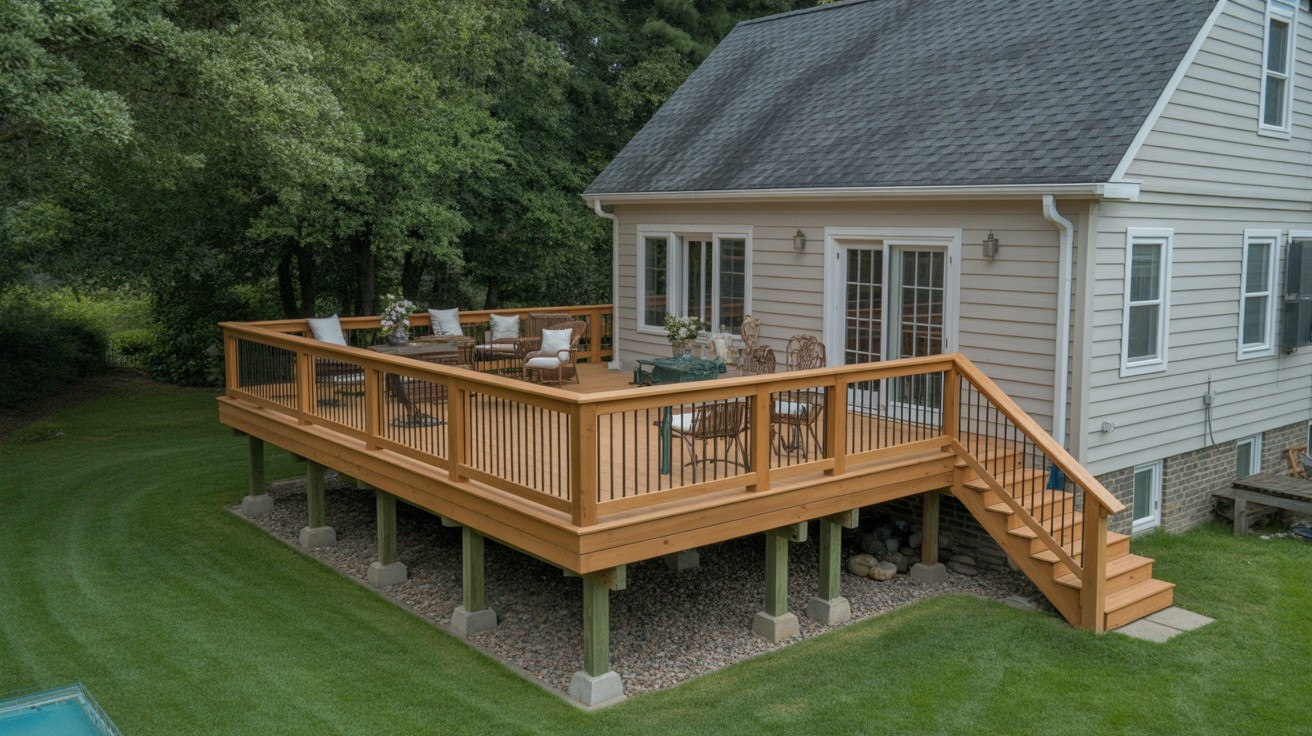
A sloped yard might look like a problem when you’re thinking about adding a deck. Most homeowners see the hill and think, “Well, that’s going to be expensive” or “Maybe we should just skip it.” But here’s the thing. Professionals actually love working with slopes. They turn what seems like a challenge into something pretty special.
When you search for “build deck near me” specifically for sloped properties, you’re looking for someone who knows how to work with gravity, not against it. The right builder uses engineering solutions that make your deck safer and more stable than a basic flat-yard project. Let me walk you through what actually goes into building on a slope and why it matters.
Why Sloped Terrain Requires Professional Engineering
Building on a slope isn’t the same as throwing up a deck on flat ground. The forces at play are completely different. Gravity pulls everything downward, which means posts on the lower side of your slope carry more stress than the ones higher up. The soil shifts differently too. Water runs downhill, soil erodes, and if your foundation isn’t engineered properly, you’ll see settling within a few years.
I’ve seen DIY deck projects on slopes that looked fine at first but started sagging after one winter. The problem? No proper load calculations. Each post needs to handle a specific amount of weight based on its position on the slope. Taller posts on the downhill side need more reinforcement. The connections between beams and joists need to account for lateral forces, not just vertical weight.
Then there are building codes. Most areas have stricter requirements for elevated structures. If your deck sits more than 30 inches off the ground, you’re looking at railing height requirements, specific footing depths, and inspections. A professional knows these codes inside and out. Going DIY on a slope? That’s a gamble you don’t want to take.
Foundation Options for Sloped Deck Construction
The foundation is where sloped deck building gets interesting. You can’t just dig a hole and pour concrete the same depth everywhere. Here are the main options pros use:
- Helical pile foundations are my favorite for tough slopes. These are basically giant screws that get twisted deep into the ground, way below the frost line. They anchor your deck so well that soil erosion becomes a minor issue instead of a major one. The installation is cleaner too. No big concrete trucks, no waiting for concrete to cure. Just screw them in and you’re ready to build.
- Adjustable post systems give you flexibility. These let builders fine-tune the height of each post to compensate for the slope. You get perfect leveling without having to cut posts 15 times or guess measurements. The adjustment hardware is built right in, which makes future tweaks possible if the ground settles a bit.
- Concrete pier foundations are the traditional route. When done right, they’re rock-solid. The key is getting the depth right at each location. The downhill side needs deeper piers because those posts are taller and carry more load. Builders will often go 12 inches below the frost line on the lower side and adjust from there.
- Post-and-beam systems work great for multi-level decks. Each level gets its own independent support structure. This means if one section settles slightly, it doesn’t drag the whole deck with it. The flexibility is worth the extra planning.
How do pros choose? They look at your slope angle first. Anything over 15 degrees usually needs helical piles or deep concrete piers. Then they test the soil. Clay soils hold water and shift more than sandy or rocky soils. A good builder will actually do a site assessment before recommending a foundation type.
Critical Drainage and Erosion Control
Water is your deck’s worst enemy on a slope. Rain doesn’t just fall and disappear. It runs downhill, and if it pools under your deck or around your posts, you’re asking for trouble. Wood rots, concrete weakens, and soil erodes.
Professional builders install drainage solutions as part of the foundation work. French drains are common. These are perforated pipes buried in gravel trenches that catch water and redirect it away from the deck’s footprint. Swales work too. These are shallow ditches that guide water around the deck area instead of letting it flow straight through.
Erosion control is just as important. If soil washes away from around your posts, the whole structure becomes unstable. Builders often integrate retaining walls on the downhill side to hold the soil in place. Even a small 12-inch retaining wall can make a huge difference in stability.
Ventilation under the deck matters more than you’d think. Trapped moisture creates mold and speeds up wood decay. Pros design the deck with enough clearance and airflow to keep things dry. If your slope is steep and the underside of your deck is basically a cave, they might add vents or use open skirting to improve air circulation.
Design Strategies for Sloped Properties
This is where sloped decks get fun. You’re not limited to a boring rectangle.
- Multi-level decks are perfect for slopes. You can create different zones at different heights. Maybe a dining area on top, a lounge space in the middle, and a fire pit zone at the bottom. The transitions between levels use wide steps or gradual ramps, making movement easy and safe.
- Cantilevered sections let you extend the deck’s footprint without adding posts in tricky spots. Say you have a tree or a rock outcrop right where a post should go. A cantilever lets the deck joist hang over the beam, supported by the structure behind it. You gain usable space without fighting the landscape.
- Terraced designs blend the deck into the hillside. Instead of one tall deck, you build multiple smaller platforms that step down the slope. It feels more natural and less imposing. Plus, each terrace can have its own purpose.
- Graduated post heights are the technical backbone. This means every post is cut to a different length to create a level deck surface on an uneven slope. It sounds simple, but getting the measurements right requires precision. Professionals use laser levels and detailed plans to nail it.
Orientation matters too. A smart builder positions your deck to maximize views, catch afternoon sun, or create privacy from neighbors. Slopes often give you elevation advantages. Use them.
Safety Engineering and Load Distribution
Safety isn’t optional. Sloped decks need extra structural reinforcement to handle the forces at play. Cross-bracing between posts adds stability. These are diagonal supports that prevent the deck from swaying or shifting sideways. They’re especially important on the tall posts.
Load calculations get complicated fast. A flat deck might assume 50 pounds per square foot as a standard live load. On a slope, you need to recalculate based on post height and position. Taller posts flex more, so connections need to be stronger. Builders use larger bolts, metal brackets, and sometimes doubled-up beams.
Reinforced connections are critical. Where joists meet beams, or where posts connect to footings, you need hardware rated for the specific loads. A standard joist hanger might not cut it. Pros use heavy-duty brackets designed for elevated structures.
Railing requirements change with height. If your deck is 8 feet off the ground on the downhill side, railings need to be at least 36 inches tall, and in some areas 42 inches. Balusters can’t have gaps wider than 4 inches. It’s not just about looks. It’s about keeping people safe.
Stair solutions vary. You might need multiple staircases to access different levels. Landings become important for comfort and code compliance. Long stair runs need a landing every 12 feet or so. All of this gets planned during the engineering phase.
Choosing the Right Builder
Here’s where things get practical. Not every contractor has experience with sloped terrain. When you’re ready to move forward and start looking to build deck near you, ask specific questions. Request to see photos of past projects on slopes. Ask about their foundation preferences and why. A good builder will explain their approach in plain English, not jargon.
Local experience matters more than you’d think. Soil types vary by region. Frost depths change. Local building codes have quirks. Someone who’s been building in your area for years knows what works and what doesn’t. They’ve probably dealt with your exact soil type and slope angle before.
A detailed site assessment is non-negotiable. The builder should visit your property, look at the slope, check drainage patterns, and maybe even dig a test hole to see the soil composition. If they’re quoting you a price without seeing the site first, run.
Ask about their portfolio. How many sloped projects have they completed? What was the steepest slope they’ve worked with? Do they have references you can contact? These questions separate the pros from the amateurs.
Foundation Comparison
| Foundation Type | Best For | Installation Time | Cost Range | Key Advantage |
| Helical Piles | Steep slopes, poor soil | 1-2 days | $$$ | Minimal erosion risk |
| Concrete Piers | Moderate slopes, stable soil | 3-5 days | $$ | Proven durability |
| Adjustable Posts | Variable terrain | 2-3 days | $$ | Easy height adjustment |
| Post-and-Beam | Multi-level designs | 4-6 days | $$$ | Independent support zones |
Final Thoughts
A sloped yard isn’t a dealbreaker. It’s an opportunity to build something unique that works with your property’s natural features. The engineering solutions professionals use make these decks incredibly stable and safe. They handle drainage, prevent erosion, and distribute loads properly so your deck lasts decades instead of years.
If you’re sitting on a sloped lot and thinking about a deck, don’t write it off as too complicated. Talk to experienced builders who understand the engineering side. Get a site assessment. Learn what’s possible with your specific slope and soil conditions. The right team will turn that challenging hillside into your favorite outdoor space.
