

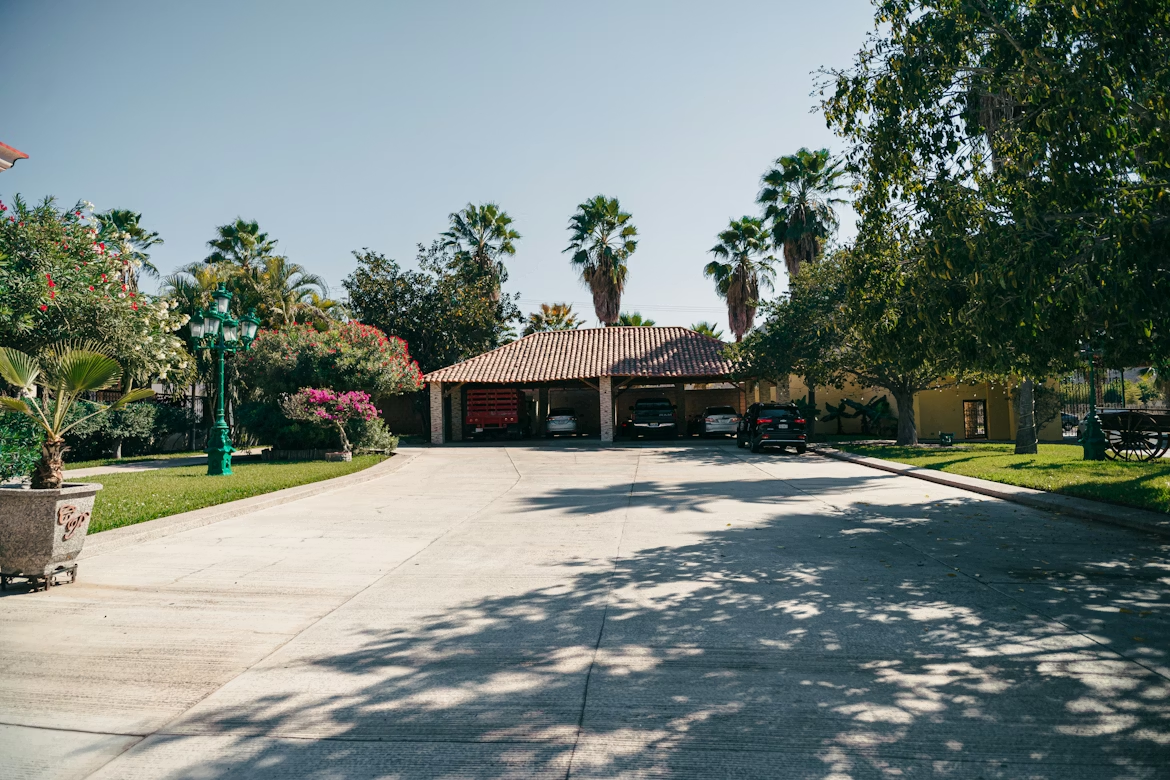
One of the first things people notice about your home is the driveway. Unfortunately, it is often one of the most abused parts of a property. Daily vehicle traffic, harsh weather, oil spills, and shifting soils can significantly impact a driveway.
Over time, that wear shows up as cracks, potholes, fading, uneven sections, and drainage issues that hurt curb appeal. They can also lead to safety hazards and even cause structural damage. Read on to discover the most common driveway problems and how to fix them.
7 Common Problems with Residential Driveways
Driveways often fail for multiple reasons. While faulty installation is sometimes to blame, simple wear and tear from daily use can also prompt the need for repairs or replacement. If you live in a region that gets very hot, you’ll need to maintain the driveway regularly.
Visible Cracks
One of the most common problems with residential driveways is the appearance of visible cracks. While small cracks may seem harmless, they allow moisture to seep in, expand, and worsen over time. This problem is often caused by:
- Temperature changes
- Water infiltration
- Heavy loads
- Soil movement
Cracks are a significant sign that your driveway needs to be replaced or repaired. One way to prevent more extensive structural damage is to repair these cracks as soon as you notice them.
Pooling Water and Icy Patches
Pools of water or icy patches form on your driveway when drainage is poor or the surface is uneven. When water has nowhere to flow, it collects in low spots, weakening the material and increasing the risks of cracks and potholes. In cold areas, this trapped water can freeze, creating slippery, dangerous conditions. Proper sloping and drainage solutions play a significant role in addressing this problem.
Sunken or Uneven Surface
A sunken or uneven surface often develops when the soil beneath erodes, shifts, or was not properly compacted during installation. This can sometimes create low spots, bumps, and sloping areas. All of these collect water and create tripping hazards. If you’re facing this kind of problem, consider fixing the underlying base and levelling the surface early to prevent further damage.
Potholes
Potholes form when water penetrates the driveway surface, weakening the base. In this situation, repeated traffic can cause the area to collapse. More than being an eyesore, potholes can damage vehicles.They also collect more water and expand rapidly if not addressed promptly. To prevent potholes from spreading, seal them and improve drainage on your property.
Loose Edges
Another common residential driveway problem is loose edges, which occur on asphalt surfaces that lack proper support along the sides. Without strong edging or a stable base, the borders can crumble, crack, or break away under the weight of vehicles.
This weakens the entire driveway and allows water to seep in. Loose edges can easily accelerate the deterioration of driveways. By reinforcing driveways, it becomes easier to preserve the structure’s integrity.
Discoloration and Fading
As driveways are exposed to rain, sunlight, oil stains, and everyday wear, discoloration and fading occur. Over time, the surface materials break down, causing asphalt to turn gray or concrete to look dull and blotted.
While it might only affect the surface, fading sometimes indicates that the surface is deteriorating. Protective coatings and frequent cleaning can slow aging and restore its appearance.
Weed Growth and Driveway Joint Problems
Joint problems and weed growth develop when cracks and expansion joints collect dirt and moisture. All of these create ideal conditions for plants to sprout. These weeds cause problems by:
- Widening openings
- Trapping more water
- Accelerating surface breakdowns
- Weakening the surface
Failing joints also allow sections to shift and separate. Routine cleaning, weed control, and joint sealing all help to prevent further structural damage.
6 Ways to Fix Problems with Residential Driveways
The good news is that most problems with residential driveways can be fixed. You do not need so much technical knowledge and effort to fix these problems. Here are six help ways to deal with these problems:
Fill up the Cracks
One of the simplest and most effective ways to stop cracks in your driveway from spreading is to fill them. Sealants and crack fillers block out water, debris, and dirt that cause surfaces to weaken and expand. Besides improving your driveway’s appearance, it also prevents minor issues from turning into significant structural problems.
Resurface the Driveway
By resurfacing the driveway, you’ll restore its look and performance without paying for a full replacement. This process strengthens the surface, improves drainage flow, and extends the driveway’s lifespan while boosting curb appeal. A new overlay creates a smooth and durable finishing while covering the following:
- Minor cracks
- Surface wear
- Discoloration
- Shallow blemishes and stains
- Small potholes
Reseal the Driveway
When you reseal the driveway, you create a protective barrier against moisture, sunlight, oil spills, and everyday wear and tear. Sealants help reduce cracking and keep the surface flexible. In addition to refreshing your driveway’s appearance, it prevents water from penetrating, which can create potholes and damage its base.
Apply New Asphalt or Concrete
Applying concrete or new asphalt is sometimes the best solution for severely damaged driveways. When potholes, cracks, and uneven sections are widespread, a fresh surface offers structural stability and long-term performance. You can hire asphalt maintenance services to deliver a smooth, durable finish that improves safety, functionality, and curb appeal.
Regrade the Slope
Regrading the driveway slope corrects drainage problems that lead to pooling water, erosion, and surface breakdown. By adjusting the base and the angle, water is directed away from the driveway and the foundation. Proper regrading reduces freeze-thaw damage, prevents potholes, and protects the underlying structure. This helps the driveway remain stable and long-lasting.
Remodel the Driveway
When you remodel your driveway, you can address recurring problems by redesigning its layout, materials, or drainage system. This approach is ideal when existing issues stem from poor design or aging infrastructure.
Remodeling can correct slopes, add proper edging, and upgrade materials. Even building a driveway from scratch results in a more functional and durable structure that better suits long-term needs.
Endnote
Residential driveways often develop several problems, including visible cracks, pooling water, icy patches, sunken or uneven surfaces, potholes, loose edges, discoloration, and joint problems. Fixing this problem involves filling up the cracks, resurfacing, resealing, applying new asphalt, remodeling the driveway, and regrading the slope.
