

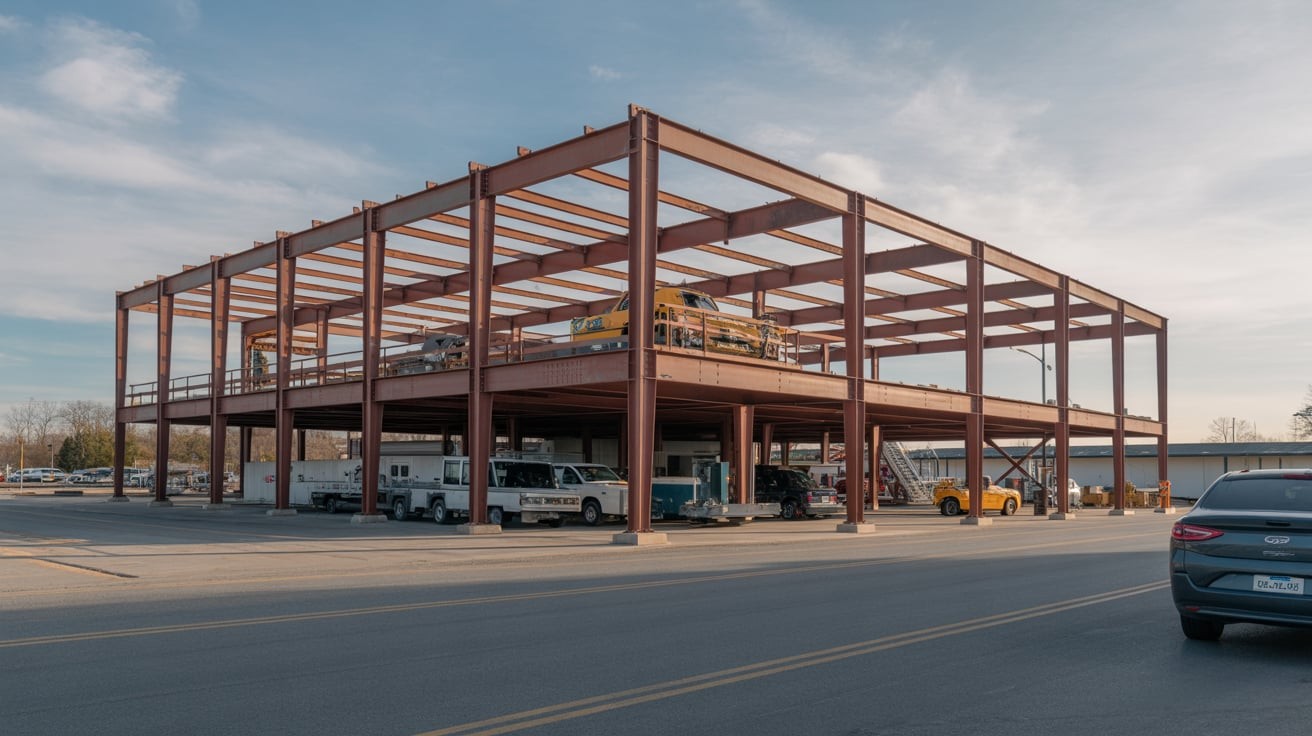
In today’s fast-paced construction world, commercial projects demand materials that exceed expectations. Structural steel fabrication stands out as the backbone of modern commercial construction, delivering reliability, efficiency, and long-term value. When done right, steel fabrication ensures that commercial buildings are capable of sustaining heavy use, change, and time.
What Is Steel Fabrication And Why It Matters
Steel fabrication refers to the process of transforming raw steel into building components through cutting, shaping, welding/bolting, and finishing. In commercial construction, these steel elements form the skeleton of a building, providing essential support for floors, roofs, walls, and mechanical loads. Because these components are manufactured under controlled conditions fabrication ensures consistent quality, precise tolerances, and predictable performance.
This process isn’t just about shaping metal. It’s about engineering structures that can safely carry heavy loads, respond to dynamic forces, and accommodate architectural ambition, all while staying on time and on budget.
Strength, Durability, and Long-Term Reliability
One of the greatest advantages of steel in commercial builds is its strength-to-weight ratio. Steel offers remarkable structural strength, enabling large spans, high loads, and multi-story designs with fewer support columns than traditional materials.
Because steel is manufactured to consistent standards and quality-checked throughout the fabrication process, buildings made with steel framing offer structural integrity and stability under a variety of stresses. Properly fabricated and treated steel resists many of the pitfalls that other building materials face: rot, mold, termite damage, and structural degradation over time.
Speed, Efficiency, and Cost-Effectiveness
Commercial developments often run on tight schedules and budgets. Steel fabrication shines in this environment. Since many components are prefabricated off-site under controlled conditions, they can be transported and assembled quickly on location, dramatically reducing the overall construction timeline compared to materials like concrete, which require curing times.
This faster build time translates into lower labor costs, reduced interest or financing expenses, and earlier occupancy, all important for commercial projects where time is money.
Additionally, steel’s predictable strength and reliability often lower maintenance and long-term repair costs. Buildings constructed with steel tend to require far less upkeep than those built with wood or other materials.
Flexibility, Adaptability, and Design Freedom
Steel fabrication isn’t a one-size-fits-all solution: it is highly adaptable. Steel components can be custom-designed to meet the unique demands of a commercial project, accommodating wide-open floor plans, large storage spaces, mezzanines, high ceilings, or specialized load-bearing requirements.
Because of steel’s structural capabilities, fewer interior columns are needed, creating large, column-free spaces that are ideal for retail floors, warehouses, manufacturing facilities, and office layouts.
What’s more, steel framing systems are often easier to modify or expand than traditional buildings. Whether adding extra floors, reconfiguring interior space, or integrating heavy equipment, steel buildings offer flexibility that accommodates business growth or changing use-cases.
Sustainability and Long-Term Value
In an era when sustainability matters as much as performance, steel offers compelling advantages. It is among the most recycled materials in construction, allowing buildings to be more environmentally responsible.
Because steel buildings require less maintenance, resist decay and pests, and often allow for modular adaptation or reuse, they deliver long-term value and resilience. This can translate into lower lifecycle costs, an important consideration for commercial property owners and developers.
Conclusion: Built for the Load, Designed for Growth
Commercial construction demands more than just functional design, it requires strength, reliability, adaptability, and efficiency. Steel fabrication delivers on all these fronts. Through precise manufacturing, engineered design, and the inherent advantages of steel, commercial buildings gain structural integrity that stands up under heavy loads, fast construction timelines, and evolving use cases.
