

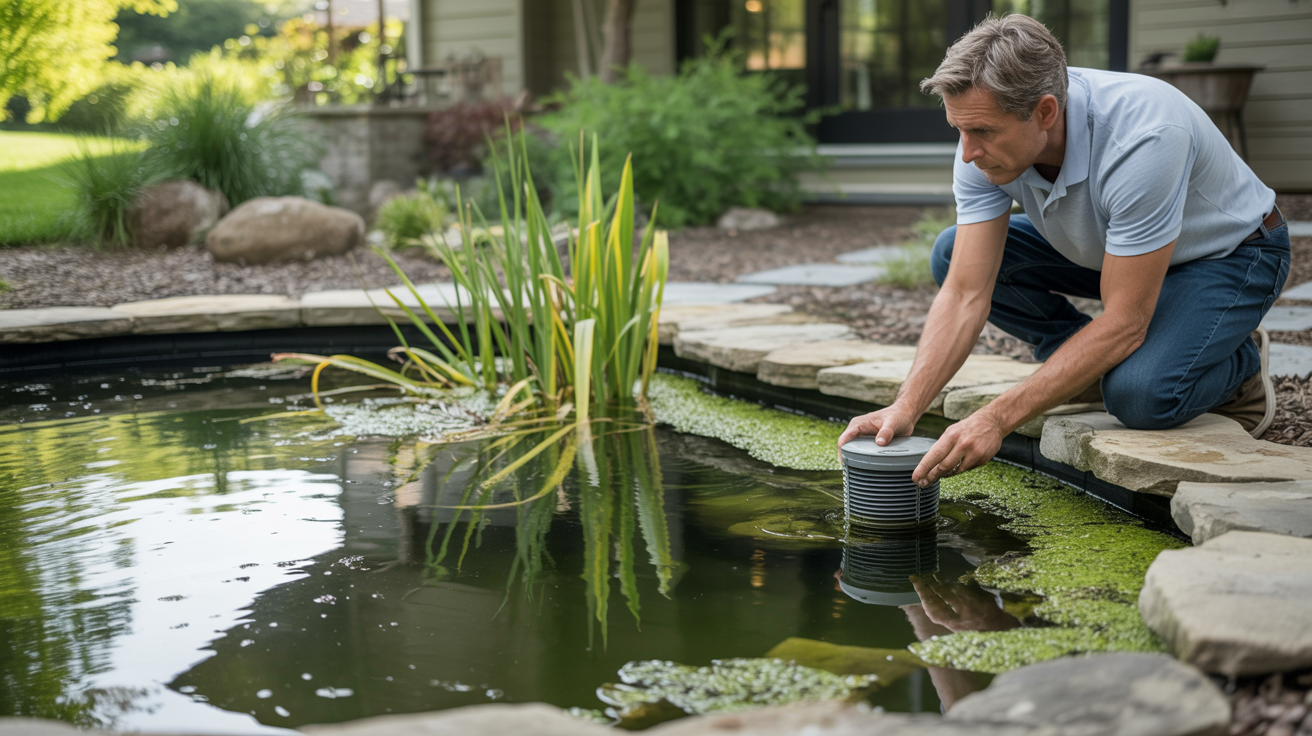
A healthy pond mostly runs itself. Plants oxygenate the water, beneficial bacteria break down waste, the pump cycles things along, and the whole system reaches a quiet balance.
Then one day, the water turns the color of pea soup. Or a koi shows up gasping at the surface. Or the waterfall sounds wrong.
Ponds are living systems, and living systems drift out of balance. Some shifts a homeowner can correct with a net and a water test kit. Others need a professional with the equipment and chemistry knowledge to bring the system back without making things worse. Knowing which is which is the whole game.
Why Regular Pond Maintenance Is Essential
A pond is not a swimming pool. Pools fight biology with chlorine. Ponds work with biology, which means the maintenance philosophy is completely different.
The water in a healthy pond is the visible result of dozens of invisible processes. Nitrifying bacteria are converting fish waste into safe compounds. Aquatic plants are pulling nutrients out of the water column. The pump is keeping oxygen levels high enough for fish, plants, and bacteria to do their work. Sunlight, temperature, and rainfall are constantly nudging all of it.
When that balance holds, the pond is clear, the fish are active, and the smell is faintly earthy at most. When it tips, problems compound quickly. Algae blooms feed on nutrients, fish stress lowers their immunity, sick fish add to the bioload, and the system spirals.
Regular maintenance is what keeps the system upstream of those failure points. Skipping it is how a beautiful water feature turns into a project nobody wants to deal with.
Clear Warning Signs Your Pond Needs Professional Help
Some pond problems will resolve on their own with patience and a small course correction. Others are signaling that something serious is going on under the surface.
Calling a professional makes sense when any of these appear:
- Persistent green water that doesn't clear with normal interventions. A short bloom in spring is normal as the pond wakes up. A bloom that hangs on for weeks despite UV treatment, water changes, and pump checks usually means the underlying nutrient load is wrong, which takes diagnostic work to fix
- Fish behavior changes. Fish hanging at the surface, gulping air, flashing against rocks, sitting motionless on the bottom, or showing patches, ulcers, or torn fins all point to water quality or disease problems that need real testing, not guesswork
- A sudden drop in water level. Evaporation accounts for some loss, especially in summer. An inch or more disappearing every few days suggests a leak somewhere, and finding it without damaging the system takes experience
- Foul odors. A healthy pond smells faintly of pond water. A pond that smells sour, sulfurous, or genuinely bad is signaling anaerobic conditions, decaying material, or a failing biological filter
- Pump or filter behavior that's gotten erratic. Reduced flow, strange noises, frequent clogging, or a waterfall that's slowed to a trickle usually means something more involved than a quick rinse will fix
- Algae that's gotten ahead of the system. String algae draped across rocks is one thing. A surface mat thick enough to walk on is another, and getting it back under control without crashing the biology takes a careful hand
A homeowner who notices any of these and acts quickly will spend a lot less than a homeowner who waits to see if it sorts itself out.
Problems That Can Get Worse Without Professional Maintenance
https://stock.adobe.com/ro/images/beautiful-landscaping-with-beautiful-plants/150951817
The expensive failures almost always start as small problems someone hoped would go away.
Liner damage is hidden under sediment. A small puncture or fold in the liner can leak quietly for months, lowering water levels, undermining edge stones, and eventually requiring a partial drain and rebuild. Caught early, it's a patch. Ignored, it's a renovation.
Sediment buildup on the pond floor. Every pond accumulates organic matter at the bottom. Decaying leaves, fish waste, plant debris, all of it. Past a certain point, the sediment goes anaerobic and starts producing hydrogen sulfide, which is toxic to fish and gives the pond that rotten-egg smell. Removing it safely requires a pump-out, careful biology preservation, and reintroduction protocols.
Filter failure that takes the biology with it. Biological filters house the bacterial colonies that keep the water safe for fish. When a filter fails and goes unaddressed for days, those colonies die off. Restarting a pond's biology after a crash takes weeks of careful work and often costs more than the original filter would have.
Disease outbreaks that spread through the population. A single sick koi, untreated, can take a whole stock with it. Professional diagnosis catches parasites, bacterial infections, and viral problems early enough for targeted treatment.
Pump failure during a heat wave. Without circulation, oxygen levels in a stocked pond can crash within hours on a hot summer day. Fish loss is the visible cost. The biological cascade that follows is the real one.
How Often Should a Pond Be Professionally Maintained?
Most residential ponds benefit from a professional cycle that looks something like this:
- Spring opening service to clean accumulated debris, restart equipment, check liner and edges, balance the chemistry, and prep the system for the active season
- Mid-summer check during the hottest stretch when oxygen levels and algae pressure are at their peak
- Fall closing service to net out leaves, prep equipment for cold weather, and set the system up to hold steady through winter
Larger ponds, koi ponds, and ponds with elaborate filtration often warrant a quarterly visit instead. Newly built ponds also tend to need closer attention through the first full year while the biology stabilizes.
Between professional visits, homeowners handle the ongoing work: skimming debris, topping off water, watching the fish, and monitoring the equipment. Those small habits are what keep the professional visits efficient instead of expensive.
Benefits of Hiring a Professional Pond Maintenance Service
A good pond maintenance crew brings three things a homeowner usually doesn't have.
Diagnostic equipment and experience. Water testing beyond pH and ammonia, equipment flow measurement, leak detection, and fish health assessment. A professional can rule out three causes in the time it takes a homeowner to research one.
The right products in the right doses. The pond aisle at a garden center sells dozens of treatments, most of them generic, some of them counterproductive when used together. A professional service uses commercial-grade products and knows the interactions.
Time, frankly. A spring opening done right takes a full day. A homeowner doing it on weekends ends up either rushing it or stretching it across a month, neither of which is good for the pond. Hiring it out frees up the season to actually enjoy the water feature.
There's also the long-term economics. A maintained pond holds its value as a landscape feature. A neglected pond becomes a property liability that the next buyer factors into their offer. The annual cost of maintenance is small compared to the cost of a rebuild.
Final Thoughts: When to Call a Pond Professional
A pond is meant to be enjoyed, not endured. When the maintenance is starting to feel like a second job, or when a problem keeps coming back despite homeowner's effort, that's the signal.
The other signal is timing. Spring openings and fall closings are the two service windows where professional help pays back the most, because both transitions involve equipment, biology, and seasonal prep all happening at once. A homeowner doing these alone is fighting on three fronts.
The right contractor will walk the pond, ask about what's been working and what hasn't, run real diagnostics before recommending anything, and explain the trade-offs in plain language. Specialists like Site Pros Landscaping handle the full maintenance cycle for residential ponds, from spring openings through fall closings, with the equipment and field experience to catch the small problems before they turn expensive.
