

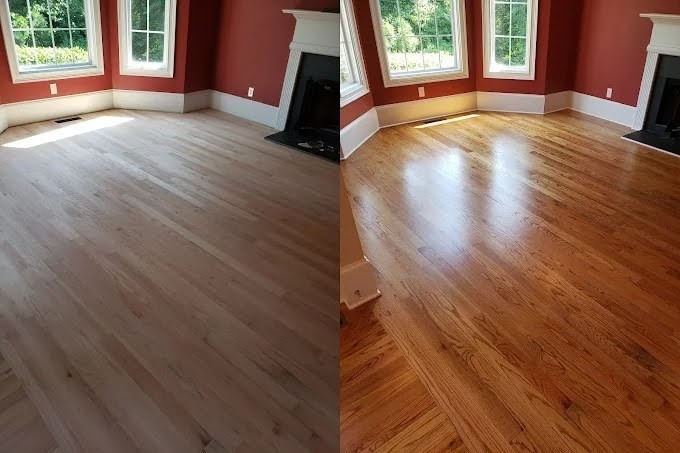
If you’re staring at worn-out hardwood floors and wondering whether refinishing is worth the money, you’re not alone. It’s one of the most common questions homeowners ask before committing to a project, and one of the hardest to answer without seeing the floors in person.
The truth is, hardwood floor refinishing costs vary widely depending on factors most homeowners don’t think about until they’re already getting quotes. This guide breaks down what actually drives the price, how to tell if refinishing is the right move for your floors, and how to get a realistic ballpark before picking up the phone.
Why Refinishing Costs Vary So Much
You’ll find wildly different numbers online because hardwood floor refinishing isn’t a one-size-fits-all job. Two homes with the same square footage can have completely different price tags. Here’s what moves the needle:
Square Footage
This is the most obvious factor, but it’s not as straightforward as it seems. Larger projects tend to cost less per square foot because the setup time (moving equipment in, covering cabinets and furniture with plastic, sealing doorways) stays roughly the same whether you’re doing 300 or 1,500 square feet. Smaller rooms often cost more per square foot because of that fixed overhead.
Floor Condition
A floor with minor surface wear that just needs a screen-and-recoat (a light buff and new finish coat) costs significantly less than a floor with deep scratches, water damage, or pet stains that require a full sand-down to bare wood. The worse the condition, the more labor and materials go into the job.
Wood Species
Not all hardwood is created equal. Softer species like pine are more prone to damage during sanding and require a more careful touch. Exotic hardwoods may need specialty finishes. Standard oak, the most common species in American homes, is the easiest and most affordable to refinish.
Stain vs. Natural Finish
If you want to change the color of your floors with a stain, that adds an extra step to the process. A natural finish (clear coat over bare wood) is faster and less expensive. Dark stains, gray tones, and custom color matching all add complexity and cost.
Number of Finish Coats
Most refinishing jobs include two to three coats of polyurethane. More coats mean more durability but also more material and dry time. High-traffic areas like entryways and kitchens benefit from an extra coat, while bedrooms may not need it.
Type of Finish
Water-based polyurethane dries faster and has less odor, but it typically costs more than oil-based. Oil-based finishes add a warm amber tone over time, while water-based stays clear. The choice affects both the look and the price.
Room Layout and Obstacles
Open floor plans are easier and faster to sand than rooms broken up by closets, hallways, and tight corners. Stairs are particularly labor-intensive because each tread and riser has to be sanded individually.
Refinishing vs. Replacing: How to Decide
Before you invest in refinishing, make sure your floors are actually candidates for it. Here are the key questions:
How thick is the wear layer? Solid hardwood floors can typically be refinished multiple times over their lifespan. If your floors have already been refinished several times, there may not be enough wood left to sand down again. A flooring professional can measure this in minutes.
Is there structural damage? Warped, buckled, or water-damaged boards may need to be replaced rather than refinished. Refinishing fixes the surface, but it can’t fix boards that have lost their structural integrity.
Are the floors engineered or solid? Engineered hardwood has a thin veneer of real wood on top. Some engineered floors can be lightly refinished once or twice, but many cannot withstand a full sanding. Check with the manufacturer before committing.
What’s underneath? Many older homes have original hardwood hiding under carpet or vinyl. Pulling up old flooring can reveal beautiful wood, or it can reveal floors too damaged to save. The only way to know is to look.
The Screen-and-Recoat Option
If your floors are in decent shape with just some dullness or light surface scratches, a screen-and-recoat might be all you need. This process lightly abrades the existing finish and applies a fresh coat of polyurethane on top. It’s faster, less expensive, and doesn’t involve sanding down to bare wood.
A screen-and-recoat typically costs 40-60% less than a full refinish and can be completed in a day. It’s a great option for maintaining floors that were refinished within the last 5-10 years and just need a refresh.
How to Get a Realistic Estimate
The best way to know what your specific project will cost is to get quotes from local contractors. But if you want a ballpark before making calls, we built a free online calculator that gives you an estimate in about 60 seconds. You enter your square footage and finish type, and it returns a range based on real pricing data. It won’t account for every variable listed above, but it covers the two biggest cost drivers and gives you a realistic starting range.
No phone call, no pressure, no one showing up at your door. Just a starting number so you know what you’re working with before you start the conversation.
What to Watch Out for When Getting Quotes
A few things to keep in mind as you compare estimates from contractors:
Get at least three quotes. Pricing varies significantly between contractors, and you want to understand the range in your market.
Ask what’s included. Some quotes include furniture moving and baseboards removal; others don’t. Make sure you’re comparing apples to apples.
Don’t automatically pick the cheapest option. In flooring, you usually get what you pay for. An unusually low bid often means corners are being cut: fewer coats, skipped sanding grits, or rushed dry times.
Ask about their process. A quality contractor should be able to walk you through their sanding sequence, what products they use, and how long the job will take. If they can’t explain it clearly, that’s a red flag.
Check reviews. Look for contractors with a strong track record of completed refinishing projects, not just installation or general contracting. Refinishing is a specialty, and experience matters.
The Bottom Line
Hardwood floor refinishing is one of the best investments you can make in your home. It costs a fraction of what full replacement would run and can dramatically transform the look and feel of your space. The key is understanding what factors affect your specific price and getting realistic numbers before committing.
If you want a quick starting point, try our free refinishing cost calculator. It takes less than a minute and gives you a range to work with. From there, you’ll be in a much better position to have informed conversations with local contractors.
Alex Veit is the owner of Oakerds Hardwood Floor Refinishing, a BBB A+ rated flooring contractor serving metro Atlanta with 200+ five-star Google reviews.
