

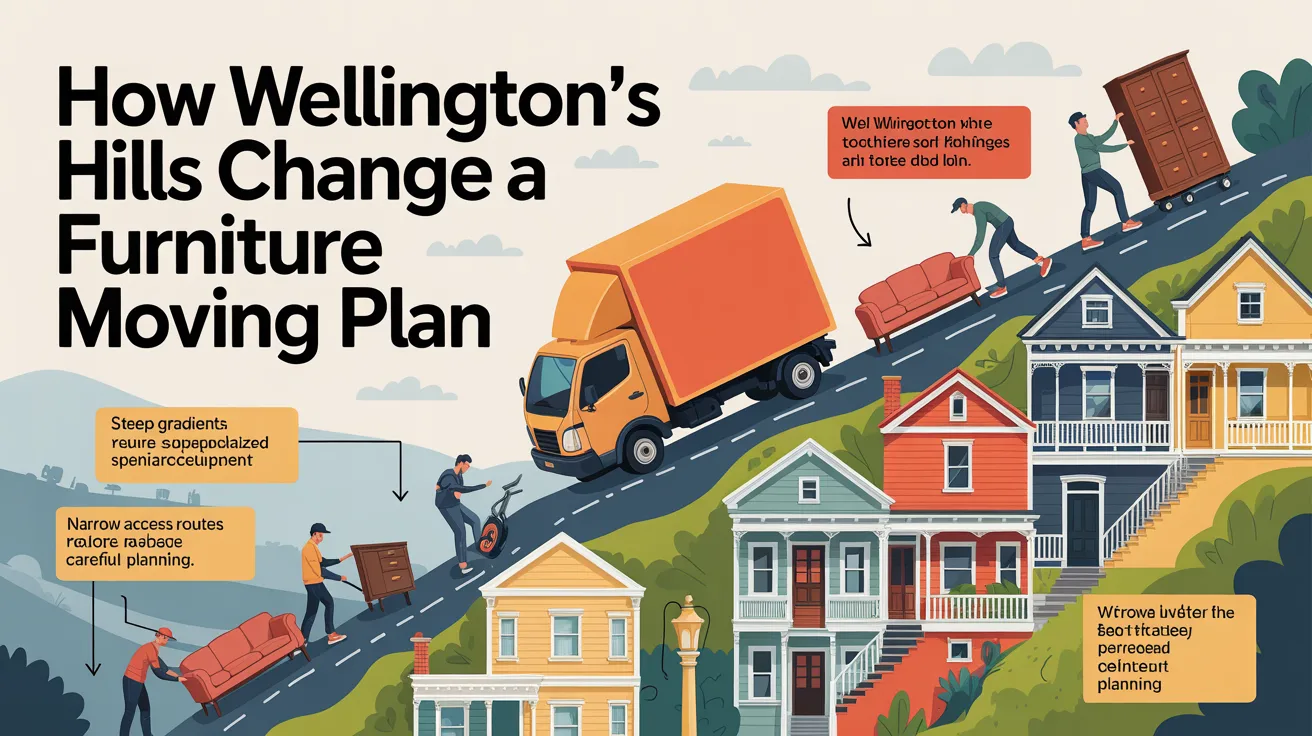
Wellington’s landscape is defined by steep hills, layered suburbs, and streets that often climb sharply from the waterfront into residential areas. While these features contribute to the city’s character, they also shape how household furniture moves are planned. Transporting large items across sloped streets, stair access, and elevated homes requires careful preparation to ensure furniture is handled safely and efficiently.
Understanding how the terrain affects access, handling methods, and vehicle positioning helps households plan a smoother relocation. In Wellington, the geography itself becomes one of the main factors influencing how furniture moving is organised.
Access Assessment Changes With Steep Terrain
One of the first adjustments in a Wellington furniture moving plan involves assessing property access. Many homes sit above street level, reached by long stairways, steep driveways, or narrow hillside paths. These access points determine how furniture will be transported from the house to the vehicle.
Because of this, access planning often becomes a key early step when coordinating with a Wellington furniture mover for local and regional moves. Evaluating elevation changes, entry points, and walkway space helps movers determine whether additional equipment, alternative loading positions, or staged handling will be required to safely transport large items down slopes or staircases.
Vehicle Parking And Positioning Constraints
Steep streets frequently limit where moving trucks can safely stop and load furniture. In many Wellington neighbourhoods, roadside space may be narrow or positioned on an incline, which changes how vehicles are positioned during the move.
Parking a truck on a slope requires careful consideration because furniture must be carried uphill or downhill during loading. Movers may need to position the vehicle at a stable angle or choose a nearby flat section of road if available. These adjustments ensure that heavy furniture can be loaded securely without creating unnecessary handling risks.
Carrying Large Furniture On Sloped Paths
The physical act of moving furniture becomes more demanding when steep gradients are involved. Carrying large pieces such as wardrobes or sofas down staircases or along sloping pathways requires controlled movement and coordination between movers.
These situations often involve additional handling precautions aligned with manual handling practices. Slower carrying speeds, balanced lifting positions, and protective coverings help prevent damage to both furniture and property surfaces while navigating hillside paths.
Loading Techniques On Uneven Ground
Loading furniture into a moving truck changes when the vehicle is parked on uneven ground. When the truck sits on an incline, furniture must be arranged carefully to prevent shifting during the loading process.
Movers may adjust the loading sequence so heavier pieces are secured early, stabilising the load before smaller items are added. This approach reflects principles used in load distribution, where weight balance inside the vehicle helps maintain stability during both loading and transport.
Route And Transport Planning Adjustments
Wellington’s hilly suburbs often include winding roads, tight turns, and limited turning areas for large vehicles. These conditions influence how moving routes are planned between homes and main transport corridors.
The region’s geography has long influenced how transport operates across Wellington. Descriptions of the regional transport network note that the city’s steep terrain and narrow streets shape how vehicles move through many suburbs, affecting route design and accessibility across the network. This geographic reality also influences how logistics providers plan vehicle access and movement within residential areas.
Route planning, therefore, becomes an important part of the relocation process because drivers must account for elevation changes, restricted streets, and safe manoeuvring space. This type of preparation falls within broader logistics planning, ensuring the transport stage of the move runs efficiently once furniture is loaded.
Planning Around Wellington’s Terrain
Wellington’s hills influence nearly every stage of a furniture move, from property access to transport logistics. Steep terrain changes how furniture is carried, where trucks can park, and how loads are organised inside moving vehicles.
By recognising how the city’s geography affects relocation logistics, households can prepare more effectively and reduce complications on moving day. Careful planning around elevation, access routes, and handling methods helps ensure furniture moves safely through Wellington’s unique landscape.
