

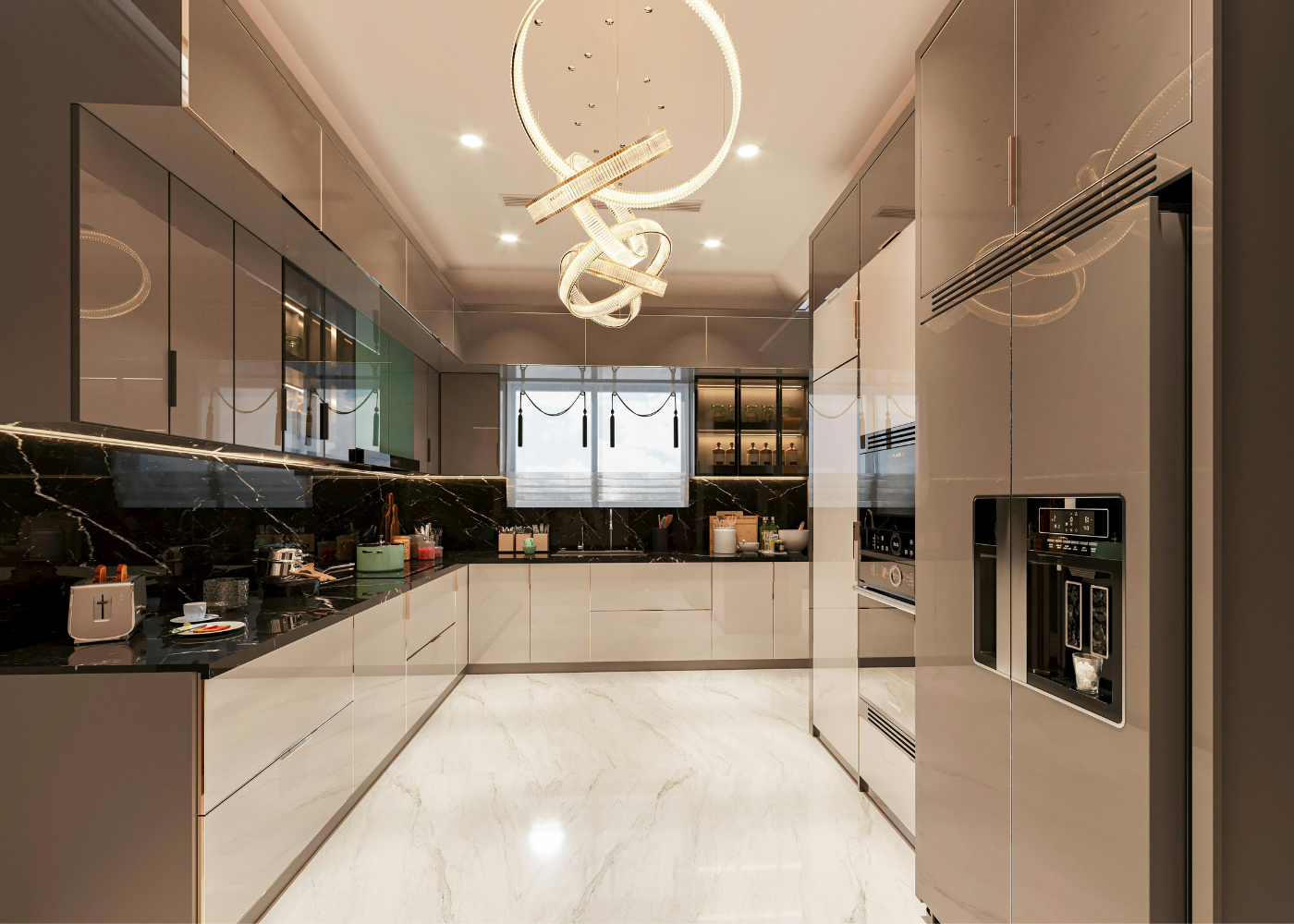
Delivering a truly bespoke luxury kitchen is about more than premium materials—it’s about precision, efficiency, and confidence at every stage. For professionals in design, manufacturing, or client-facing roles, interactive 3D technology has become indispensable.
When integrated with Configure, Price, Quote (CPQ) software and advanced 3D visual product builders, these tools streamline workflows, reduce errors, and enhance client experiences. Today, several leading platforms—including VividWorks, Threekit, and Zakeke—are helping brands bring this level of sophistication into their digital workflows. In particular, their solutions are built for modular and highly configurable products, combining embedded logic, seamless CPQ integration, and production-ready outputs that bridge creative design with operational execution.
Here are the most impactful ways interactive 3D technology is transforming bespoke kitchen production.
1. Converting Design Ideas into Production-Ready Specifications
Every bespoke project begins as a vision, but translating it into precise manufacturing instructions is challenging. Interactive 3D solutions capture every detail digitally, while CPQ integration ensures that these specifications link directly to pricing and production processes. This alignment guarantees accuracy and efficiency from the first concept to final delivery.
2. Reducing Risk in High-Value Projects
Errors in luxury kitchen production are costly. Using 3D visual product builders, teams can validate design configurations in real time. CPQ integration ensures only feasible, properly priced options progress, minimizing costly rework, wasted materials, and project delays.
3. Accelerating Design Without Compromising Craftsmanship
Clients expect both personalization and speed. Interactive 3D platforms allow designers to explore layouts, finishes, and materials rapidly. With CPQ support, pricing updates instantly, enabling confident, efficient proposals while preserving the quality and craftsmanship expected in luxury kitchens.
4. Enhancing Collaboration Across Teams
Bespoke kitchens involve multiple stakeholders: designers, sales consultants, engineers, and production planners. Misalignment is a common source of errors. A 3D visual product builder creates a shared environment where design, pricing, and production data are synchronized, ensuring clarity and smooth communication across all teams.
5. Scaling Bespoke Production with Modular Flexibility
Hybrid models combining modular elements with bespoke options are becoming the standard. Interactive 3D tools help manage complexity, and CPQ integration ensures cost and feasibility remain consistent. This allows brands to scale production efficiently while still offering highly personalized solutions.
6. Increasing Client Confidence and Streamlining Approvals
Clients investing in high-end kitchens need transparency. Interactive 3D visualization helps them explore layouts, finishes, and spatial relationships in detail. When coupled with CPQ software, pricing and cost considerations are instantly visible, reducing revisions and accelerating approvals.
7. Optimizing Planning, Costing, and Resource Allocation
Interactive 3D models provide accurate data for production scheduling, material planning, and cost management. Combined with CPQ systems, this data becomes actionable, enabling precise forecasting, resource allocation, and workflow efficiency—essential in low-volume, high-value bespoke projects.
8. Future-Proofing Luxury Kitchen Brands
Balancing creativity and operational efficiency is essential for long-term success. Integrating interactive 3D technology with CPQ software and selective 3D visual product builder tools creates a scalable workflow that preserves craftsmanship, ensures accuracy, and elevates client experiences—positioning brands for sustained competitiveness in the luxury market.
Closing Thought
Interactive 3D technology has evolved beyond visualization—it’s now a production enabler. Thoughtfully applied alongside Configure, Price, Quote (CPQ) software, it connects design, client engagement, and manufacturing into a seamless process. Brands that embrace this approach can deliver bespoke kitchens with precision, efficiency, and confidence, setting new standards for luxury design.
