

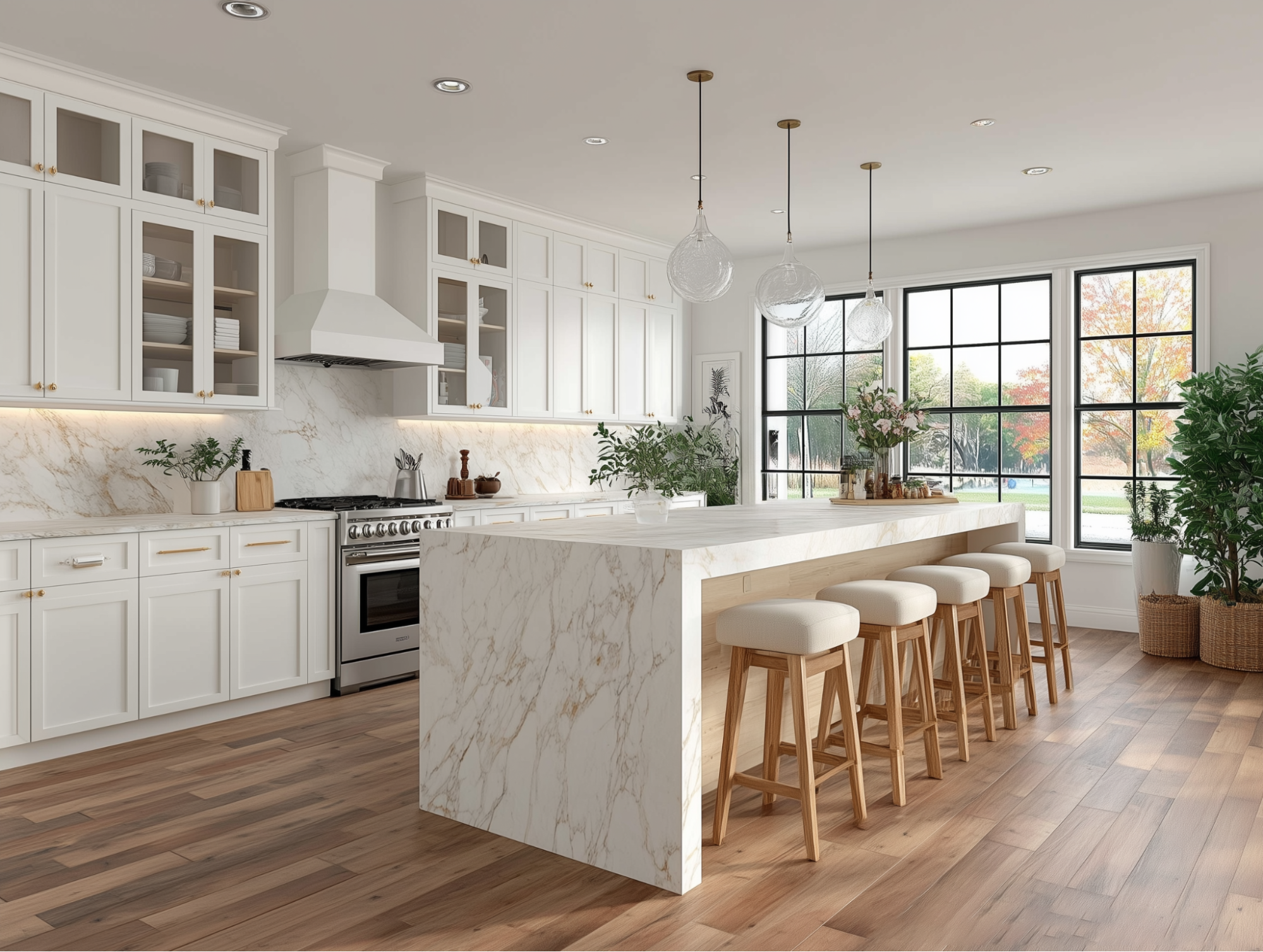
In modern kitchen design, cabinets do far more than provide storage. They define the visual structure of the space and strongly influence how open, balanced, and comfortable a kitchen feels. Thoughtful cabinet design can make a compact kitchen feel airy, while poor choices can overwhelm even generous square footage.
Understanding the relationship between cabinetry and spatial perception is essential to achieving a truly modern kitchen.
Color Sets the Foundation of Space
Cabinet color is one of the most powerful tools in shaping how a kitchen is perceived. Light tones — such as white, soft gray, warm beige, and light wood finishes — reflect natural and artificial light, helping kitchens feel brighter and more expansive. These shades are especially effective in smaller kitchens or homes with limited daylight.
Darker cabinets, including charcoal, deep blue, or muted black, are often used in modern interiors to add contrast and sophistication. However, when overused in tight spaces, they can visually compress the room. Many contemporary kitchens balance this by using darker base cabinets paired with lighter walls, countertops, or upper cabinetry to maintain openness.
Clean Lines Create Visual Breathing Room
Modern design favors simplicity, and cabinet door style plays a major role in maintaining visual calm. Flat-panel or slab doors, minimal hardware, and streamlined profiles allow the eye to move smoothly across the kitchen without interruption.
Highly decorative doors or heavy detailing introduce visual noise, which can make a space feel cluttered. In contrast, clean cabinet fronts help kitchens feel more organized and spacious, even when storage capacity is high.
Vertical proportions also matter. Taller cabinet doors and vertical grain patterns subtly draw attention upward, making ceilings feel higher and improving overall balance.
Layout Influences Flow and Openness
A successful kitchen layout prioritizes flow over quantity. While storage is important, excessive cabinetry — particularly upper cabinets — can make a kitchen feel boxed in.
Single-wall and L-shaped layouts often work best in smaller homes, while larger spaces may accommodate U-shaped designs or islands without sacrificing openness. The key is allowing enough negative space for movement and clear sightlines.
Full-Height Cabinets and Modern Proportions
Full-height cabinets that extend to the ceiling have become a defining feature of modern kitchens. By eliminating the visual gap above standard cabinets, they create a cleaner, more intentional look while visually increasing ceiling height.
Flexibility in Contemporary Design
Modern kitchens increasingly rely on flexible, modular cabinetry solutions that support clean lines and adaptable layouts. Many designers and homeowners turn to well-designed ready-to-assemble (RTA) cabinet systems to achieve a modern aesthetic while maintaining layout flexibility and budget control.
Final Thoughts
Modern kitchen design is less about size and more about proportion, clarity, and restraint. Through thoughtful cabinet color, simplified door styles, balanced layouts, and clean vertical lines, cabinetry becomes a powerful tool in shaping how a kitchen feels.
When cabinets are designed with both visual harmony and everyday function in mind, they help create kitchens that feel open, modern, and effortlessly livable.
