

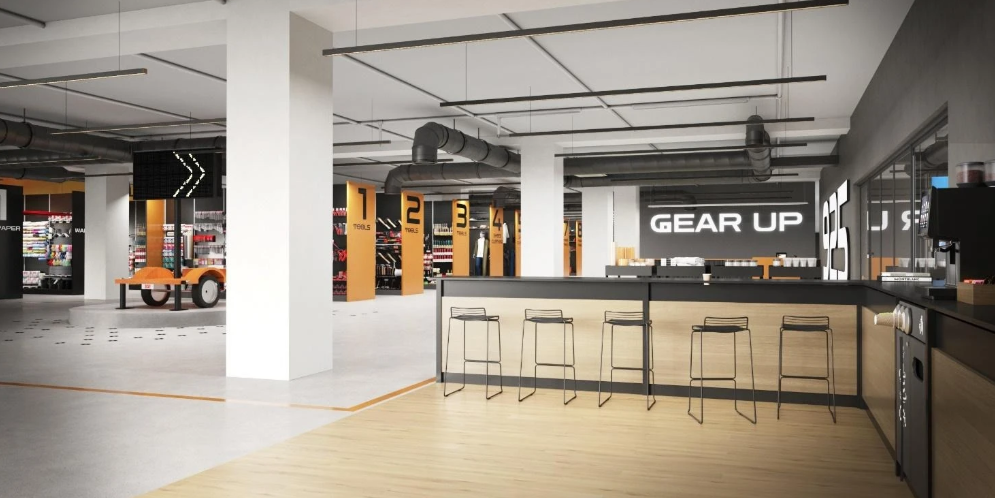
Virtual technology has reshaped how brands present their spaces. Retailers now use immersive 3D tools to show customers every corner of a store before it exists. VR and AR make it easier to understand layouts and explore products interactively. These tools help teams plan smarter and sell concepts faster. As a result, they have become essential for modern commercial spaces.
Why You May Need 3D, VR, and AR for Retail
Using 3D visualization can transform the way brands prepare and promote retail spaces. It allows teams to see the final store long before construction begins. A commercial rendering also helps decision-makers understand design choices with clarity. It becomes easier to share ideas and make confident decisions.
Sell Concepts Before They Are Built
Virtual tools let clients explore a space before a single display shelf is installed. They can walk through aisles, check lighting, and see product placement. Retailers can show multiple design versions without rebuilding physical mock-ups. As a result, marketing and sales teams work more efficiently.
Improve Team Communication
3D and VR tools put everyone on the same page. Designers, architects, and managers – everyone sees the same detailed visual. This reduces misunderstandings and speeds up project discussions. Stakeholders can request changes in real time. They can also compare different layouts quickly.
Benefits of Virtual Tours for Commercial Spaces
Virtual tours help illustrate how a project sits within its site context and how it fits into the surrounding fabric – whether that’s a tight retail layout, a larger city fabric, or a mix of adjacent development. They give a clear sense of how a space will feel and function long before anything is built.
These tours help clients understand how customers will move through the space. They also highlight important design features.
Clear Visualization for Decision-Making
Virtual tours show how elements work together. They reveal lighting, textures, product displays, and traffic flow. This clarity helps teams catch issues early. It also reduces the need for physical prototypes. By seeing the full concept at once, stakeholders can approve plans faster.
Improved Customer Engagement
Retailers use VR and AR to create interactive product experiences. Customers can zoom in, rotate items, or place them in virtual spaces. Many brands use this approach in showrooms to present large or customizable items.
How Virtual Tours Improve Retail and Showroom Planning
Virtual tours are more than presentations. They help teams test ideas and plan efficiently. They also provide practical insights that improve the customer journey.
Better Space Planning
Teams can analyze how people move through the store. They can test fixture placement, walkway width, and product visibility. These insights help improve customer flow. They also prevent design mistakes.
Accurate Lighting and Material Testing
Lighting is essential in retail. VR and 3D tools simulate different lighting conditions. Designers can see how products look under warm or cool light. They can also test materials and finishes. This helps create a strong brand atmosphere.
Faster Revisions and Updates
Virtual tools make updates simple. Designers can adjust colors, textures, or lighting instantly. They can also test seasonal layouts.
The Future of Retail: Fully Immersive Showrooms
VR and AR allow customers to explore products without limits. Virtual showrooms reduce the need for large physical spaces. They also help brands reach global audiences. Here are the key benefits of immersive showrooms:
- Lower display and construction costs
- Easier product updates
- Stronger customer engagement
- Better personalization
- Global reach through online access
These benefits show why many brands use virtual tools as part of their long-term strategy.
3D, VR, and AR technologies give retailers new ways to present their spaces. A detailed commercial rendering combined with a virtual tour helps teams sell concepts faster and engage customers more effectively.
